 Skip to content

TL;DR:
- Sleep is essential for effective weight loss, as it influences hunger hormones and fat metabolism. Poor sleep increases appetite, shifts food preferences toward high-calorie foods, and reduces fat loss while promoting lean muscle loss. Prioritizing consistent, high-quality sleep enhances hormone regulation and supports sustainable weight management. We cover all aspectes of role of sleep in weight loss in this blog.
Sleep is a direct driver of weight loss success, not a passive recovery state. When you sleep less than 7 hours a night, your body produces more ghrelin, the hormone that signals hunger, and less leptin, the hormone that signals fullness. That hormonal shift pushes you toward high-fat, high-carb foods before you’ve even had breakfast. Research shows that increasing sleep by 1.2 hours reduces daily calorie intake by roughly 270 calories and produces measurable weight loss over two weeks without any dietary changes. Sleep is not a lifestyle bonus. It is a metabolic tool.
How does sleep regulate appetite and hunger hormones?
Two hormones control most of your eating behavior: leptin and ghrelin. Leptin tells your brain you are full. Ghrelin tells your brain you are hungry. Sleep deprivation disrupts both at the same time, and the result is a double signal pushing you to eat more.
Short sleep lowers leptin and raises ghrelin, which increases appetite specifically for high-fat and high-carbohydrate foods. This is not a willpower problem. It is a biochemical response. People who sleep less consistently choose fewer fruits and vegetables and more sweets and fats throughout the day.
The calorie math compounds quickly. Adults sleeping under 7 hours consume up to 300–400 extra calories daily compared to those who sleep adequately. That surplus alone can erase a week of careful dieting in a single day.
Key hormonal effects of sleep deprivation on appetite:
- Ghrelin spikes within one night of poor sleep, increasing hunger signals by morning.
- Leptin drops reduce your sense of fullness, so meals feel less satisfying.
- Cravings shift toward calorie-dense foods, particularly sweets, chips, and processed carbs.
- Cortisol rises with sleep loss, further stimulating appetite and promoting fat storage around the abdomen.
- Insulin sensitivity falls, making it harder for your body to process blood sugar efficiently.
Pro Tip: Track your hunger levels on mornings after poor sleep versus good sleep for one week. The pattern will make the hormonal connection concrete and motivate consistent sleep habits.
Does sleep duration affect fat loss vs. lean muscle loss?
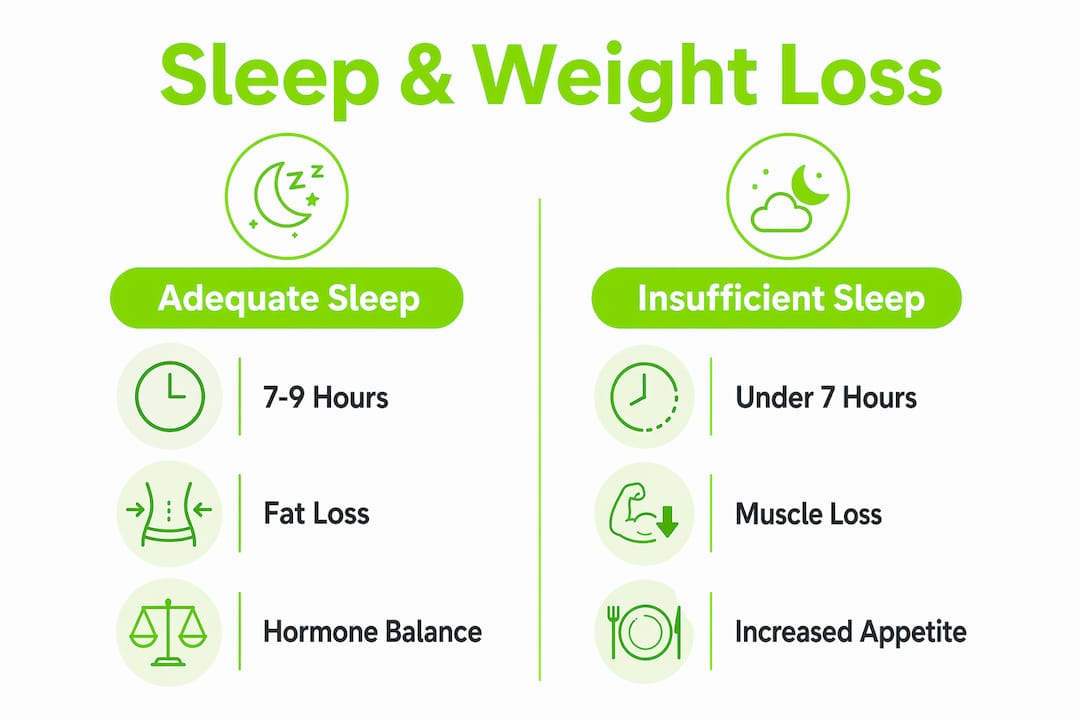
Sleep duration does not just affect how much weight you lose. It determines what type of tissue you lose. This distinction matters enormously for long-term metabolic health.
Research comparing people on identical calorie-restricted diets found that those sleeping 8.5 hours lost significantly more body fat, while those sleeping 5.5 hours lost mostly lean body mass. Sleeping less can reduce fat loss by up to 55%. That means the number on the scale may drop, but your body composition gets worse.
Lean muscle mass is metabolically active tissue. Losing it slows your resting metabolic rate, making future weight loss harder. Sleep deprivation favors lean tissue loss over fat during calorie restriction, and lean tissue loss can exceed fat loss by more than double when sleep is insufficient.
| Sleep duration | Fat loss outcome | Lean mass outcome |
|---|---|---|
| 8.5 hours nightly | High fat loss, preserved muscle | Lean mass maintained |
| 5.5 hours nightly | Reduced fat loss (up to 55% less) | Disproportionate lean mass lost |
| Under 6 hours | Minimal fat loss | Significant muscle breakdown |
| 7–9 hours (recommended) | Optimal fat loss | Muscle mass preserved |
Sleep quality matters as much as total hours. Deep and REM sleep stages regulate appetite hormones and support insulin sensitivity. Fragmented sleep, even if it totals 7 hours, disrupts these stages and impairs metabolic recovery. Consistent, consolidated sleep is the target, not just time in bed.
How does your diet affect sleep, and how does sleep affect your diet?
The relationship between diet and sleep runs in both directions. What you eat shapes how well you sleep. How well you sleep shapes what you eat the next day. Breaking one side of this cycle without addressing the other limits your results.

Eating heavy, sugary, or caffeinated foods close to bedtime impairs sleep quality directly. These foods interfere with melatonin and serotonin production, the hormones that regulate your sleep-wake cycle. Balanced meal timing, with lighter evening meals and adequate protein, supports the hormonal environment your body needs to fall and stay asleep.
The next-day effect is equally significant. Sleep quality influences breakfast composition and total calorie intake the following day. People who sleep poorly tend to reach for fast-digesting carbohydrates in the morning, which spikes blood sugar and sets up an energy crash by midday. That crash drives another round of poor food choices.
Practical steps to align your diet and sleep:
- Stop caffeine by 2:00 PM. Caffeine has a half-life of 5–7 hours and disrupts sleep architecture even when you feel like it has worn off.
- Eat your last large meal 2–3 hours before bed. Digestion raises core body temperature, which delays sleep onset.
- Include tryptophan-rich foods at dinner. Turkey, eggs, and dairy support serotonin and melatonin production naturally.
- Limit alcohol in the evening. Alcohol may help you fall asleep faster but fragments REM sleep significantly.
- Front-load calories earlier in the day. Larger breakfasts and lunches reduce evening hunger and late-night snacking.
Understanding meal timing for weight loss goes hand in hand with sleep optimization. The two systems reinforce each other when managed together.
Pro Tip: Prepare a high-protein breakfast the night before. When you wake up after poor sleep and ghrelin is elevated, having a ready meal removes the decision that often leads to a poor choice.
What are the best strategies to optimize sleep for weight loss?
Improving sleep for weight loss requires both behavioral changes and environmental adjustments. Consistency matters more than any single technique.
-
Target 7–9 hours of consolidated sleep nightly. This range is where fat loss, hormone regulation, and metabolic health all perform best. Partial sleep debt accumulates across the week and cannot be fully recovered on weekends.
-
Set a fixed wake time, seven days a week. Consistent sleep-wake timing stabilizes your circadian rhythm, which governs glucose control, appetite hormone release, and energy balance. Irregular schedules increase obesity risk even when total sleep hours look adequate.
-
Reduce light exposure 60 minutes before bed. Blue light from screens suppresses melatonin production. Dim overhead lights and switch screens to night mode or avoid them entirely in the hour before sleep.
-
Keep your bedroom cool. Core body temperature must drop to initiate sleep. A room temperature between 65°F and 68°F supports this process.
-
Avoid heavy meals and stimulants after 7:00 PM. Both raise alertness and body temperature, delaying sleep onset and reducing deep sleep time.
-
Build a wind-down routine. A consistent pre-sleep sequence, such as light stretching, reading, or a warm shower, signals your nervous system to shift from alert to rest mode. This reduces cortisol and prepares your body for quality sleep.
-
Track your sleep patterns. Identifying whether your issue is falling asleep, staying asleep, or waking too early points you toward the right fix. Wearable devices and sleep journals both work for this purpose.
For people managing busy schedules, weight loss strategies for busy people often include sleep as a non-negotiable priority rather than the first thing cut when time gets tight.
Key Takeaways
Sleep is the most underused tool in weight loss, and poor sleep quality actively works against fat loss even when diet and exercise are on track.
| Point | Details |
|---|---|
| Hormones drive hunger | Sleep deprivation raises ghrelin and lowers leptin, increasing daily calorie intake by 300–400 calories. |
| Sleep determines what you lose | Sleeping 5.5 hours shifts weight loss from fat to lean muscle, reducing fat loss by up to 55%. |
| Diet and sleep are linked | Evening food choices directly affect sleep quality, which then shapes the next day’s eating behavior. |
| Consistency beats duration alone | A fixed sleep-wake schedule stabilizes circadian rhythm and improves glucose control and appetite regulation. |
| Quality matters as much as quantity | Deep and REM sleep stages regulate metabolism; fragmented sleep undermines these benefits even at 7+ hours. |
Why sleep is the weight loss variable most people ignore
I’ve reviewed a lot of weight loss plans, and the pattern is almost always the same. Calories, macros, and exercise get detailed attention. Sleep gets a footnote, if it appears at all. That gap is a real problem.
The research on this is not subtle. Sleep should be integrated as a fundamental health behavior within weight loss programs, not treated as an afterthought. When someone hits a plateau despite eating well and training consistently, sleep is the first variable I look at. More often than not, it is the missing piece.
The uncomfortable truth is that weight management advice must move beyond “eat less and move more” to include sleep as a core pillar. Poor sleep creates a metabolic cascade that undermines dietary efforts regardless of how disciplined you are. You can eat perfectly and still gain fat if your hormones are working against you every night.
Quality matters as much as duration. Six hours of uninterrupted sleep outperforms eight hours of fragmented sleep for metabolic health. The goal is not just time in bed. It is time in the restorative stages that actually regulate your hormones and repair your body.
Sustainable weight loss requires three things working together: nutrition, movement, and sleep. Treating any one of them as optional produces results that stall, reverse, or require constant effort to maintain. Sleep is not a reward for a good day. It is a condition for the next one.
— Srasti
How Dietium supports your sleep and weight loss goals
Dietium’s personalized diet plans account for the full picture of weight management, including how meal timing and food choices affect sleep quality and next-day appetite. The platform’s AI-powered tools help you track calorie intake, body metrics, and nutritional balance in ways that directly support better sleep and fat loss outcomes. Rather than addressing diet in isolation, Dietium connects your food choices to your broader health behaviors. If you want a plan that works with your body’s hormonal rhythms rather than against them, Dietium’s personalized meal plans give you a structured, evidence-based starting point.
FAQ
How much does sleep affect weight loss?
Sleep directly controls the hormones that regulate hunger and fat storage. Adults sleeping under 7 hours consume up to 300–400 extra calories daily and lose significantly less fat compared to those sleeping 7–9 hours.
Does poor sleep cause weight gain?
Yes. Sleep deprivation raises ghrelin, lowers leptin, and increases cortisol, all of which drive overeating and fat storage. Short sleepers also show higher BMI and greater risk of metabolic disorders.
How many hours of sleep do you need to lose weight?
The optimal range for fat loss and hormone regulation is 7–9 hours of consolidated sleep per night. Sleeping 5.5 hours or less shifts weight loss away from fat and toward lean muscle loss.
Does sleep quality matter as much as sleep duration?
Yes. Deep and REM sleep stages regulate appetite hormones and insulin sensitivity. Fragmented sleep, even at adequate total hours, disrupts these stages and impairs metabolic health.
Can fixing your sleep break a weight loss plateau?
Correcting sleep duration and consistency can restore leptin and ghrelin balance, reduce daily calorie intake, and shift the body back toward fat loss. Sleep is often the overlooked variable behind stalled progress.


