 Skip to content

TL;DR:
- Consistent daily practice of stress reduction techniques can significantly lower stress and improve mental health. Personalizing methods through a stress diary helps identify triggers and build effective habits for long-term resilience. Combining fast-acting techniques like deep breathing with regular physical activity and journaling creates a sustainable stress management routine.
Stress reduction techniques are practical methods that lower your body’s stress response and improve mental well-being through consistent daily practice. The most effective approach combines mindfulness exercises, physical activity, controlled breathing, and journaling rather than relying on a single fix. The CDC, WHO, and NHS Inform all confirm that daily stress management prevents long-term harm to emotional and physical health. What separates people who manage stress well from those who don’t is not willpower. It is a personalized system built from small, repeatable habits.
What are the most effective stress reduction techniques?
Deep breathing is the fastest stress management practice you can use anywhere. It activates the parasympathetic nervous system, which slows your heart rate and lowers cortisol within minutes. Techniques like diaphragmatic breathing and box breathing (inhale 4 counts, hold 4, exhale 4, hold 4) require no equipment and produce measurable calm.
Meditation and progressive muscle relaxation (PMR) are two of the most researched relaxation methods available. PMR involves tensing and releasing muscle groups from your feet to your face, which teaches your body to recognize and release physical tension. Even five minutes of guided meditation using apps like Calm or Insight Timer produces a measurable shift in perceived stress.
Physical activity reduces stress hormones and boosts mood through endorphin release. The CDC recommends roughly 20–30 minutes daily as part of a target of 2.5 hours of moderate activity per week. That means a brisk walk after lunch counts as a legitimate coping strategy for stress, not just a fitness habit.

Journaling works by externalizing anxious thoughts onto paper, which reduces their emotional weight. Writing about what triggered your stress, how your body responded, and what helped gives you data to work with. Social connection and laughter also lower cortisol directly. A 10-minute conversation with a trusted friend after a hard day is not a distraction. It is a stress relief tool.
The WHO’s Doing What Matters guide confirms that brief daily self-help exercises are enough to manage stress effectively. You do not need an hour of meditation or an intense workout. A few focused minutes, practiced consistently, produce real results.
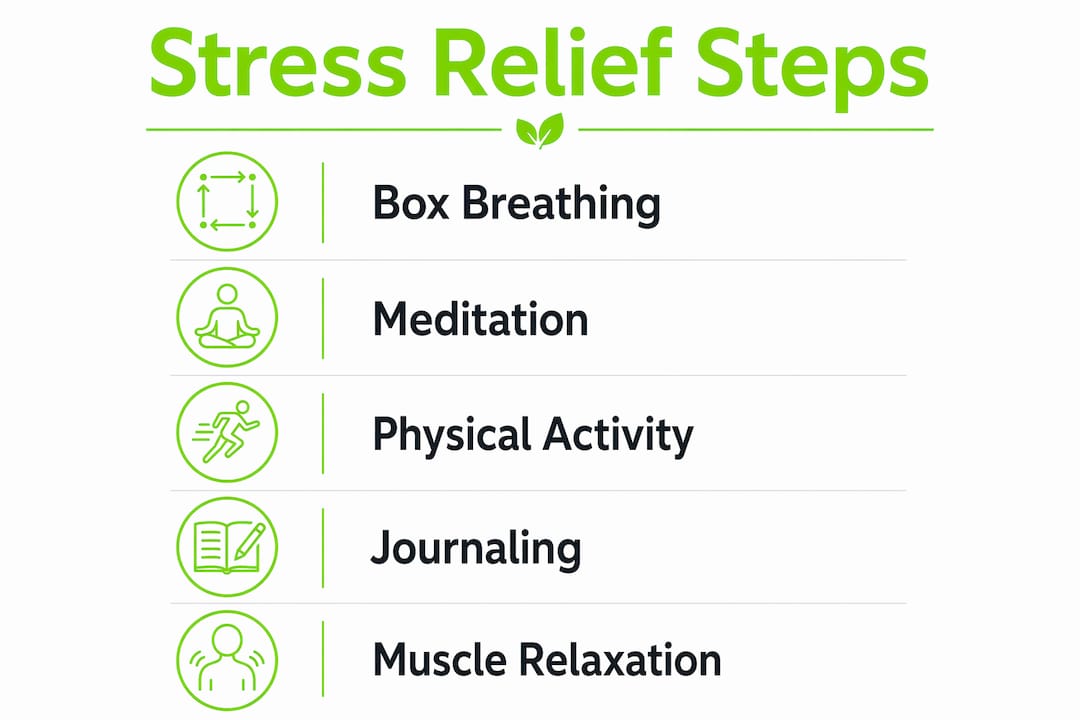
Key techniques at a glance:
- Deep breathing: Box breathing or diaphragmatic breathing, 5 minutes, anytime
- Meditation: Guided or silent, apps like Calm or Insight Timer help beginners
- Progressive muscle relaxation: Full body scan, 10–15 minutes before bed
- Physical activity: 20–30 minutes of walking, cycling, or yoga daily
- Journaling: Write triggers, physical responses, and stress ratings each day
- Social connection: Call a friend, join a group, or share a laugh
- Gratitude practice: Daily gratitude improves mood and builds stress resilience over time
Pro Tip: If you only have two minutes, try box breathing. It is the single fastest way to shift your nervous system out of a stress response without any tools or preparation.
How do you personalize stress management practices for your life?
No single method works for every person. Stress management is most effective when tailored with daily small steps matched to your specific triggers, schedule, and preferences. Experimenting with different techniques is not a sign of failure. It is the correct process.
NHS Inform recommends keeping a stress diary for 2–4 weeks to identify your personal stress patterns. Record the date, time, your emotional state, physical symptoms, and a stress rating from 1 to 10. After two weeks, patterns emerge. You may notice that Monday mornings, poor sleep, or skipped meals consistently spike your stress score. That data tells you exactly where to intervene.
Here is a practical process for building your personalized stress plan:
- Keep a stress diary for two weeks. Record triggers, physical responses, and stress ratings daily.
- Identify your top three triggers. Look for patterns in time of day, situations, or physical states like hunger or fatigue.
- Match techniques to triggers. If work deadlines spike your stress, try box breathing before meetings. If poor sleep is the trigger, prioritize sleep hygiene and PMR at night.
- Combine fast relief with daily habits. Use breathing or meditation for immediate relief. Use exercise and journaling as your long-term foundation.
- Use audio guides or apps. WHO’s self-help programs work without a therapist and pair well with audio support for low-motivation days.
- Adjust every two weeks. Review your diary, drop what is not working, and add one new technique at a time.
Short-term relief vs. long-term habits
| Technique | Best for | Time needed |
|---|---|---|
| Box breathing | Immediate calm before a stressor | 2–5 minutes |
| Progressive muscle relaxation | Physical tension relief at night | 10–15 minutes |
| Journaling | Identifying triggers over time | 5–10 minutes daily |
| Physical activity | Long-term mood and hormone regulation | 20–30 minutes daily |
| Gratitude practice | Building positive emotional baseline | 3–5 minutes daily |
Personalizing your approach improves both adherence and outcomes. People who experiment and adjust are far more likely to stick with stress management long-term than those who follow a rigid program that does not fit their life.
What does an effective daily stress reduction routine look like?
A daily routine works best when it combines fast-acting techniques with longer-term habits. The goal is not perfection. It is consistency across the week.
Sample daily routine:
- Morning (5 minutes): Start with box breathing or a short body scan before checking your phone. This sets a calm baseline before the day’s demands begin.
- Midday (20–30 minutes): Take a brisk walk outside. Physical activity at this intensity reduces stress hormones and improves afternoon focus.
- Evening (10 minutes): Write in your stress journal. Note your top stressor of the day, your physical response, and one thing that helped.
- Before bed (10–15 minutes): Practice progressive muscle relaxation or guided meditation. Follow WHO’s sleep hygiene advice and limit screen exposure for at least 30 minutes before sleep.
- Weekly check-in (15 minutes): Review your stress diary. Identify what worked, what did not, and adjust your plan.
Managing setbacks without losing momentum
Missing a day does not reset your progress. Stress management builds like a muscle. One skipped session matters far less than the overall pattern across the week. If you miss your walk, do two minutes of breathing instead. Something always beats nothing.
Limiting negative news exposure is also part of a daily routine. WHO recommends reducing screen time and scheduling tech-free periods. Constant news consumption raises background anxiety even when no immediate threat exists.
Pro Tip: Set a recurring 5-minute calendar block each morning labeled “breathing.” Treating it like a meeting makes it far easier to protect the time.
Daily routine at a glance
| Time of day | Activity | Duration |
|---|---|---|
| Morning | Box breathing or body scan | 5 minutes |
| Midday | Brisk walk or light exercise | 20–30 minutes |
| Evening | Stress journaling | 10 minutes |
| Before bed | PMR or guided meditation | 10–15 minutes |
| Weekly | Stress diary review | 15 minutes |
Common mistakes that make stress worse
The biggest mistake people make is waiting until stress becomes severe before acting. Stress compounds. Addressing it early with a diary or brief breathing practice prevents it from reaching a crisis point.
Avoid these common traps:
- Relying on caffeine or alcohol. Both disrupt sleep and amplify the stress response over time. Caffeine raises cortisol. Alcohol disrupts REM sleep, which is the stage most critical for emotional recovery.
- Avoidance behavior. Skipping difficult conversations or tasks provides short-term relief but increases stress long-term. Avoidance keeps the stressor active in your mind.
- Expecting fast results. Stress management techniques require weeks of consistent practice before the benefits become automatic. Stopping after three days because you “don’t feel different” is the most common reason people fail.
- Ignoring physical signals. Headaches, tight shoulders, and disrupted sleep are early stress indicators. A stress diary catches these patterns before they escalate.
- Excessive screen time. Too much time on social media increases anxiety. WHO recommends moderated, intentional use with scheduled breaks.
“When self-help is not enough, reaching out is the right next step. The NHS Breathing Space helpline offers personalized coping support on evenings and weekends for people who need more than solo practice.”
Support groups, professional counselors, and community resources are not last resorts. They are part of a complete stress management plan. Knowing when to ask for help is itself a coping skill. You can also explore cortisol-reducing supplements as a complementary approach alongside behavioral techniques.
Key Takeaways
Combining brief daily practices like breathing and journaling with consistent physical activity is the most effective way to reduce chronic stress and protect long-term mental well-being.
| Point | Details |
|---|---|
| Daily practice beats intensity | A few focused minutes each day produces better results than occasional long sessions. |
| Personalization drives results | Keep a stress diary for 2–4 weeks to identify your triggers and match techniques to them. |
| Physical activity is non-negotiable | 20–30 minutes of moderate exercise daily lowers stress hormones and improves mood. |
| Combine fast and slow techniques | Use breathing for immediate relief and journaling or exercise for long-term resilience. |
| Seek help when needed | Professional support and helplines like NHS Breathing Space are valid parts of any stress plan. |
What I’ve learned about stress management that most articles skip
Most stress content focuses on the techniques themselves and skips the harder truth: consistency is the actual skill. I have watched people try meditation for a week, feel nothing dramatic, and quit. The problem was not the technique. It was the expectation.
The research from WHO is clear that brief daily self-help practices reduce the barrier to starting and build the habit. That is the real insight. You are not trying to feel better today. You are training your nervous system over weeks. The results are real, but they are gradual.
What I find most underrated is the stress diary. People treat it as optional. It is not. It is the diagnostic tool that makes everything else more effective. Without it, you are guessing at your triggers. With it, you have a map. Knowing that your stress peaks on Sunday evenings before the work week, or after skipping lunch, changes what you do about it.
The other thing worth saying directly: self-compassion is not soft advice. It is a practical tool. People who beat themselves up for missing a session quit faster than people who shrug and restart. Treat your stress management practice the way you would treat a new fitness routine. Progress is not linear. Showing up imperfectly is still showing up.
If you want to know what to say to someone else who is struggling, Dietium’s guide on supporting stressed people covers it well. Stress is rarely a solo experience.
— Srasti
How Dietium supports your stress and wellness goals
Stress and nutrition are directly connected. Poor eating patterns raise cortisol, disrupt sleep, and reduce your capacity to handle daily pressure. Dietium’s personalized diet planning helps you build a nutrition foundation that supports both physical and mental resilience. The platform’s fitness tracking tools also let you monitor your daily activity, so the 20–30 minutes of movement the CDC recommends becomes a measurable, trackable habit rather than a vague intention. Dietium’s fitness tracking features give you real data on your activity patterns, helping you stay consistent with the physical habits that reduce stress most effectively. When your nutrition and movement are structured, stress management techniques work better.
FAQ
What are the best stress reduction techniques for beginners?
Deep breathing and journaling are the best starting points. Both require no equipment, take under 10 minutes, and produce measurable results within days of consistent practice.
How long does it take for stress management techniques to work?
Most people notice a difference within two to four weeks of daily practice. The CDC confirms that consistent daily management prevents long-term stress buildup and improves emotional well-being over time.
Can physical activity really reduce anxiety?
Yes. Even 20 minutes of moderate exercise lowers stress hormones and boosts mood through endorphin release. The CDC recommends approximately 2.5 hours of moderate physical activity per week as part of a complete stress management plan.
What is a stress diary and why does it matter?
A stress diary is a daily log of your triggers, physical responses, and stress ratings. NHS Inform recommends keeping one for 2–4 weeks to identify patterns and build a personalized coping plan.
When should I seek professional help for stress?
Seek professional help when self-help techniques are not reducing your stress after several weeks of consistent effort. Resources like the NHS Breathing Space helpline provide personalized support on evenings and weekends for people who need more than solo practice.


