 Skip to content

TL;DR:
- Evaluate recipes based on nutrient density, including fiber, sodium, and added sugars.
- Use a systematic approach, checking ingredients, cooking methods, and nutrition info.
- Leverage digital tools and AI to streamline healthy recipe selection and personalization.
Searching for healthy recipes online can feel like navigating a maze of conflicting claims, flashy labels, and nutrition buzzwords that rarely agree with each other. One source tells you to cut carbs; another says fat is the enemy. Meanwhile, “superfoods” trend on social media while basic vegetables get ignored. The reality is that most people are not failing at healthy eating because they lack willpower. They are failing because the information is genuinely confusing. This guide cuts through the noise with a clear, science-backed framework for evaluating any recipe, personalizing your choices, and using smart tools to make healthy cooking a consistent habit rather than a guessing game.
Table of Contents
- Set the foundation: What makes a recipe healthy?
- Step-by-step: How to evaluate any recipe for healthiness
- Smart integration: Using digital tools and AI to spot healthy recipes
- Common mistakes and myths in identifying healthy recipes
- Why recipe health is more than numbers: A holistic perspective
- Supercharge your healthy recipe journey with Dietium
- Frequently asked questions
Key Takeaways
| Point | Details |
|---|---|
| Use evidence-based criteria | Rely on proven guidelines like fiber, sodium, and protein benchmarks when judging recipe health. |
| Tech tools enhance meal planning | Apps and AI can simplify finding nutritious recipes but always verify final nutrition details yourself. |
| Embrace flexibility, not perfection | Enjoyable, flexible, and sustainable habits matter more than perfectly following every rule. |
| Avoid common myths | Don’t judge recipes by buzzwords like ‘organic’ or ‘clean’; focus on overall nutrient quality and variety. |
Set the foundation: What makes a recipe healthy?
Before you can evaluate a recipe, you need a clear definition of what “healthy” actually means in practice. Nutrient density is the starting point. It refers to how many beneficial nutrients (vitamins, minerals, fiber, protein) a food delivers relative to its calorie count. A recipe packed with vegetables, whole grains, and lean protein is nutrient-dense. A plate of refined pasta with cream sauce, less so.
The CDC outlines five core principles for healthy recipes:
- More plants: Prioritize vegetables, fruits, legumes, and whole grains as the base of every meal.
- Quality protein: Choose lean meats, fish, eggs, beans, or plant-based proteins over processed meats.
- Minimal processing: Limit ultra-processed ingredients with long additive lists.
- Controlled sugar, sodium, and saturated fat: Keep added sugars under 30g/day, sodium under 2,300mg/day, and saturated fat below 10 to 13% of total calories.
- Variety: Rotate ingredients and cuisines to cover a wide range of micronutrients.
The Healthy Eating Index (HEI) is a research-backed scoring system that measures how well a diet aligns with U.S. Dietary Guidelines. The average American scores 58 out of 100 on the HEI, well below the ideal range. A recipe that targets at least 3g of fiber per serving and stays under 600mg of sodium per serving already outperforms most standard American meals.
| Nutrient | Healthy target per serving |
|---|---|
| Fiber | ≥3g |
| Sodium | <600mg |
| Added sugar | <6g |
| Saturated fat | <4g |
| Protein | ≥15g (main meals) |
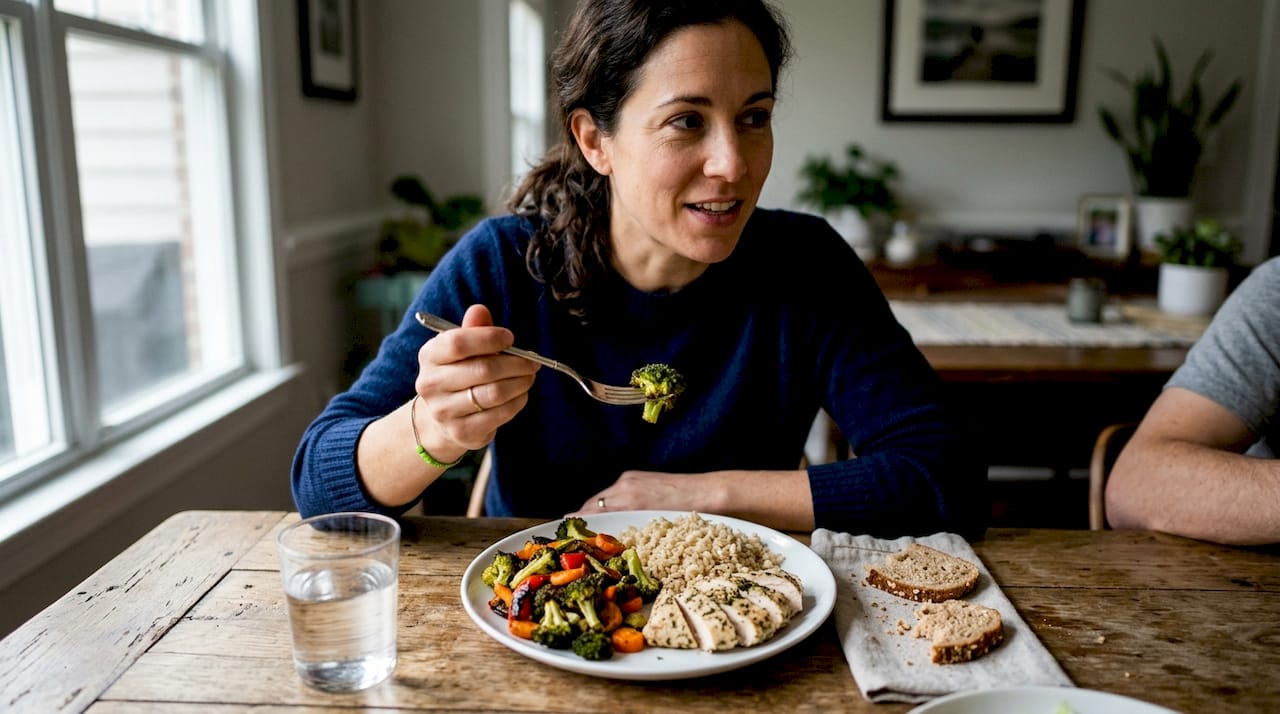
A useful mental model is the plate method: fill half your plate with vegetables or fruit, one quarter with whole grains, and one quarter with lean protein. This simple structure, backed by healthy diet principles from Harvard, works as a quick visual filter for any recipe before you even look at the nutrition label.
Getting familiar with meal prep basics can also help you apply these standards consistently across the week, not just for one meal.
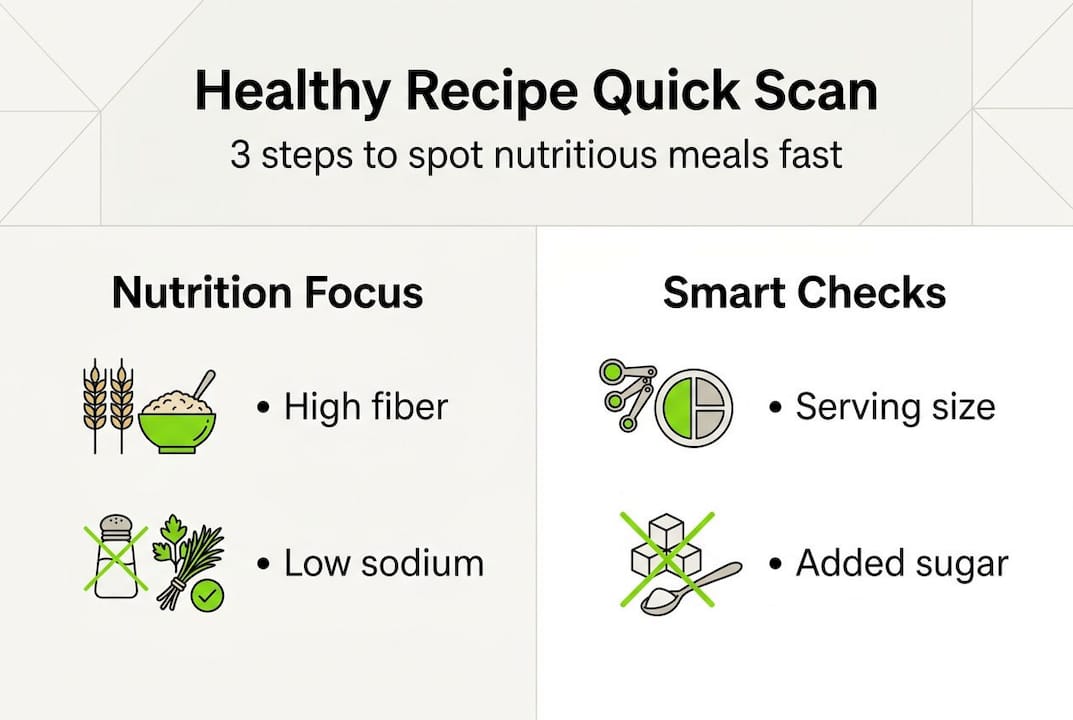
Pro Tip: When scanning a recipe quickly, check three numbers first: fiber, sodium, and added sugar per serving. If all three hit the targets in the table above, the recipe is likely worth a closer look.
Step-by-step: How to evaluate any recipe for healthiness
With the foundations in place, you can apply a repeatable process to any recipe you find, whether in a cookbook, a blog, or a meal planning app.
- Check the ingredient list first. Whole foods should dominate. If the first five ingredients are recognizable (oats, chicken breast, olive oil, spinach, garlic), that is a strong signal.
- Assess the cooking method. Steaming, roasting, grilling, and sautéing in small amounts of healthy oil preserve nutrients. Deep-frying or heavy cream-based sauces add saturated fat quickly.
- Pull the nutrition info. Look at fiber, protein, sodium, added sugar, and saturated fat per serving. Use the table from the previous section as your benchmark.
- Verify the serving size. A recipe may look low-calorie until you realize the serving is half a cup. Always calculate based on realistic portions.
- Score it against the HEI framework. The HEI-2020 system evaluates 13 dietary components on a 0 to 100 scale, covering everything from whole grains and seafood to added sugars and saturated fats.
- Apply the SWAP strategy. If a recipe scores low, modify it. Swap white rice for brown rice, full-fat dairy for low-fat, or refined flour for whole wheat. Small swaps add up fast.
Here is how two sample recipes compare using basic criteria:
| Criteria | Grilled salmon bowl | Creamy pasta bake |
|---|---|---|
| Fiber per serving | 6g | 2g |
| Sodium per serving | 420mg | 890mg |
| Added sugar | 0g | 3g |
| Saturated fat | 2g | 11g |
| Protein | 34g | 14g |
| HEI alignment | High | Low |
For beginners, Harvard’s guidance recommends starting with simple plate models, planning grocery lists around whole foods, and using frozen or canned low-sodium produce to keep costs and prep time manageable. Batch-prepping grains and proteins at the start of the week removes daily decision fatigue. You can also explore healthy eating tips to build a sustainable weekly rhythm.
Pro Tip: Always cross-reference nutrition data with the actual serving size shown in the recipe. Many online recipes underestimate portions, which skews the numbers significantly.
Smart integration: Using digital tools and AI to spot healthy recipes
Manual checks work well, but technology makes the process faster and more consistent. Modern meal planning apps and AI-powered platforms can filter recipes by fiber content, sodium limits, protein targets, and dietary preferences in seconds.
Key features to look for in a meal planning app:
- Nutrition filters: Sort recipes by fiber, sodium, protein, or calorie range.
- Dietary tags: Vegan, gluten-free, low-sodium, high-protein, and more.
- Ingredient substitution suggestions: Swap unhealthy ingredients automatically.
- Batch cooking templates: Plan multiple meals around shared ingredients.
- Integration with tracking tools: Sync with calorie counters or fitness trackers.
AI is becoming a reliable assistant in this space. Research shows that AI platforms achieve 67 to 88% ingredient match accuracy when generating or evaluating recipes against healthy benchmarks. That is a strong starting point, though it means you should still verify added sugar and sodium values manually, especially for complex dishes.
Tools like MyPlate Plan help individuals align daily intake with USDA guidelines, while apps designed for households can coordinate meal planning across different dietary needs. Research also confirms that technology supports diet quality by reducing decision fatigue and increasing consistency over time.
For a deeper look at how these platforms compare, the top meal planning apps guide breaks down features side by side. If you want to understand how AI is reshaping nutrition planning, AI meal planning facts covers the latest developments. And if your goal is truly customized eating, personalized meal plans can match recipes to your specific wellness targets.
Common mistakes and myths in identifying healthy recipes
Even with the right tools and criteria, certain misconceptions can derail your progress. Knowing what to avoid is just as important as knowing what to look for.
Myth 1: All ultra-processed foods are bad. The NOVA classification system labels foods by processing level, but not all ultra-processed foods are unhealthy. Wholegrain bread, for example, is technically ultra-processed but delivers meaningful fiber and nutrients. Focus on the actual nutrient profile, including sugar, salt, and fat content, rather than the processing category alone.
Myth 2: Organic equals healthy. Organic certification refers to farming practices, not nutritional quality. An organic cookie is still a cookie.
Common mistakes people make when evaluating recipes:
- Ignoring serving size and assuming the whole dish is one portion
- Prioritizing calorie count over nutrient density
- Overlooking sodium in sauces, condiments, and canned ingredients
- Dismissing enjoyment and sustainability as irrelevant to health
- Chasing “perfect” recipes instead of building consistent, balanced habits
“Healthy eating is ultimately about consistency, enjoyment, and meeting your nutrition goals over time. Perfection is not required, or realistic.”
For more context on how dietary guidelines insights are evolving, UT Southwestern offers a useful breakdown of recent updates. Applying these lessons to planning for fitness or revisiting meal prep tips can help you build a more resilient, enjoyable routine.
Pro Tip: Always interpret a single nutrition claim (“high protein,” “low fat”) in the context of your full day’s intake. One meal does not define a healthy diet.
Why recipe health is more than numbers: A holistic perspective
Nutrition scores and fiber targets are useful, but they tell only part of the story. A recipe that scores perfectly on the HEI but that you find bland and joyless will not serve your long-term health. You will stop making it within two weeks.
Real sustainability in healthy eating comes from recipes that fit your lifestyle, your schedule, your cultural preferences, and your taste. Research consistently shows that people who enjoy their meals and feel flexible in their choices maintain healthier eating patterns longer than those following rigid rules. The numbers matter, but so does the experience of eating.
This is why building flexible plans around your actual preferences is more effective than following a generic “clean eating” template. A recipe that is 80% optimized but that you genuinely look forward to is worth more than a perfect recipe you dread. Prioritize evidence-based choices, yes. But also prioritize meals that make you feel good, energized, and satisfied. That combination is what turns healthy eating from a short-term project into a permanent lifestyle.
Supercharge your healthy recipe journey with Dietium
Ready to put these expert tips into action? Dietium makes healthy recipe selection and meal planning straightforward, with tools designed around your specific goals and lifestyle. Start by using nutritional assessment tools to understand your current baseline, then move to building a truly personalized routine with a custom meal plan tailored to your wellness targets. If you are cooking for a household, the meal planning for families guide offers practical strategies for balancing different needs without doubling your prep time. Dietium combines AI-powered filtering, evidence-based nutrition guidance, and real-world practicality so you can spend less time second-guessing recipes and more time enjoying meals that actually support your health.
Frequently asked questions
What are the top signs a recipe is genuinely healthy?
Look for lots of vegetables, whole grains, and lean proteins, with fiber at ≥3g per serving and minimal added sugar, sodium under 600mg per serving, and low saturated fat.
Are tech tools reliable for finding or scoring healthy recipes?
Most top apps and AI tools are effective at filtering by nutrition, and AI platforms match 67 to 88% of key healthy ingredients, but always verify added sugar and sodium values yourself.
Do I need to avoid all ultra-processed foods?
No. Not all ultra-processed foods are harmful. Wholegrain bread is one example of a processed food with solid nutritional value. Focus on the actual nutrient content rather than the processing label.
How do I adapt recipes for a health goal like weight management or muscle gain?
Optimize portions and ingredients for higher protein and fiber, and use batch meal prep alongside digital planning tools. Modular planning and tech use consistently help people personalize and sustain healthy eating for specific wellness goals.


