 Skip to content

TL;DR:
- Emotional eating is a learned behavior driven by the brain’s reward system, not a character flaw. Managing it involves understanding triggers, mapping habit loops, and applying curiosity-based strategies like the Three Gears framework. Structured meal planning and professional support can also help break the cycle and build healthier habits.
Emotional eating is defined as using food to cope with feelings rather than to satisfy physical hunger. It is a learned behavior driven by the brain’s reward pathways, not a character flaw or lack of discipline. About 20% of people report stress eating as their primary coping mechanism. That number tells you this is a widespread, biological pattern, not a personal failing. Managing emotional eating is achievable when you understand your triggers, apply evidence-based tools like the Three Gears framework, and replace willpower tactics with curiosity-based strategies that actually work with your brain.
How to identify your emotional eating triggers
The first step in controlling emotional eating is mapping your personal habit loop. Every emotional eating episode follows the same three-part structure: a trigger, a behavior (eating), and a reward. The reward is rarely about the food itself. It is usually comfort, distraction, or a temporary numbing of an uncomfortable feeling.
Common emotional triggers include:
- Stress at work or in relationships
- Boredom with no clear activity or purpose
- Loneliness or social isolation
- Anxiety before an important event
- Fatigue that lowers your resistance to cravings
Awareness of triggers is the first difficult but necessary step. Many people do not realize they eat emotionally until they start tracking patterns. Vague recognition like “I eat when I’m stressed” is not enough. You need to identify the precise moment, emotion, and reward to create real change.
A food and emotion diary is the most direct tool for this. For one week, write down what you ate, what time it was, what you were feeling beforehand, and what you felt immediately after. You will start to see patterns that were invisible before.

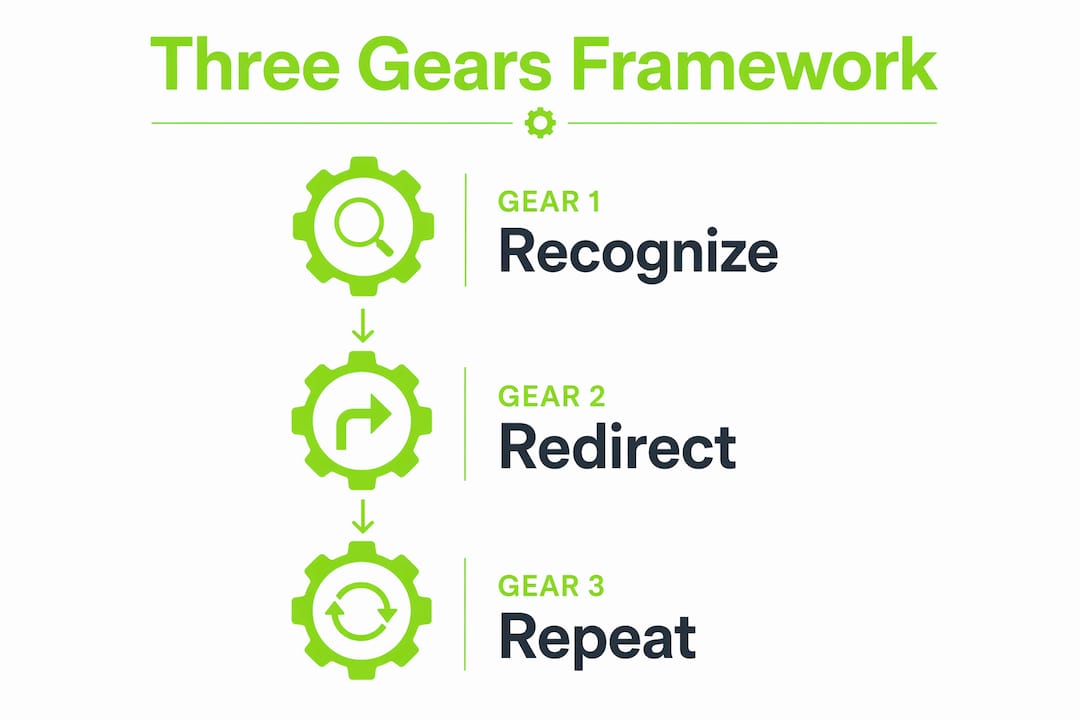
Pro Tip: Use the Three Gears framework to map your loop. Gear 1 is recognizing that you are in a craving. Gear 2 is getting curious about what the craving actually feels like in your body. Gear 3 is noticing what you truly get from eating. This sequence builds the self-awareness that makes change possible.
What neuroscience reveals about cravings and willpower
Willpower does not effectively update the brain’s reward learning for emotional eating. This is not a motivational problem. It is a biological one. The brain’s reward system reinforces behaviors that reduce discomfort, and food does that reliably. Every time you eat in response to stress, the brain strengthens that connection.
“Cravings are maintained by brain reward learning. Reducing the reward value of emotional eating, not fighting the craving, is the key to lasting change.” — Dr. Judson Brewer, psychiatrist and neuroscience researcher
The Three Gears framework, developed by Dr. Judson Brewer at Brown University, directly targets this reward loop. Research shows it produces a 40% reduction in craving-related eating. That is a clinically significant result, and it comes from curiosity, not restriction.
Here is how the three gears work in practice:
| Gear | Action | Purpose |
|---|---|---|
| Gear 1 | Recognize you are in a craving | Builds basic awareness of the habit loop |
| Gear 2 | Get curious about the craving’s physical sensations | Interrupts automatic behavior with observation |
| Gear 3 | Notice what you actually get from eating | Reduces the perceived reward value over time |
Mindful curiosity during cravings decreases activity in the brain regions that drive urges. This means the craving literally becomes weaker each time you observe it without acting on it. You are not suppressing the craving. You are teaching your brain that food does not actually solve the underlying emotion.
Pro Tip: When a craving hits, pause and ask: “Where do I feel this in my body right now?” Describe the sensation to yourself. This Gear 2 move shifts your brain from automatic pilot to active observation, and that shift is where change begins.
Practical strategies to stop emotional eating
Overcoming emotional eating requires a set of concrete, repeatable actions. The goal is not to eliminate emotions. It is to build a wider menu of responses so food is no longer the only option.
Build a habit interruption toolkit
- Pause for 10 minutes. When a craving hits, set a timer. Most emotional urges peak and fade within 10–15 minutes if you do not act on them immediately.
- Name the emotion. Say out loud or write down exactly what you are feeling. Labeling an emotion reduces its intensity in the brain.
- Move your body. A 5-minute walk, stretching, or even standing up changes your physiological state and breaks the craving loop.
- Call or text someone. Social connection directly addresses loneliness and stress, two of the most common emotional eating triggers.
- Practice box breathing. Inhale for 4 counts, hold for 4, exhale for 4, hold for 4. This activates the parasympathetic nervous system and lowers stress within minutes.
Address the stress that fuels the cycle
Chronic stress links directly to anxiety, poor digestion, and cardiovascular strain, all of which reinforce unhealthy eating patterns. Managing stress at the source is a stress eating solution, not just a wellness bonus.
Effective stress management methods include:
- Sleep consistency. Poor sleep raises cortisol and ghrelin, the hormones that drive hunger and cravings. Aim for 7–9 hours on a consistent schedule.
- Regular physical activity. Exercise reduces cortisol and releases endorphins, giving your brain a non-food reward.
- Mindfulness practice. Apps like Headspace or Calm offer structured programs that build the same curiosity-based awareness as the Three Gears framework.
Know when to seek professional support
Therapy and counseling help identify underlying issues and develop coping strategies that go beyond simple habit substitution. Cognitive Behavioral Therapy (CBT) and Dialectical Behavior Therapy (DBT) both have strong evidence for treating emotional eating. If you find that emotional eating is significantly affecting your health, daily functioning, or self-esteem, professional support is the right next step, not a last resort.
Setbacks are part of the process. When you eat emotionally, the most productive response is curiosity, not self-criticism. Ask what triggered it, what reward you were seeking, and what you could try differently next time. Self-compassion is not soft. It is the mechanism that keeps you in the process long enough to see results.
You can also explore intuitive eating principles as a complementary framework for rebuilding trust with your body’s hunger signals.
Does meal planning help with emotional eating?
Structured meal planning directly reduces the conditions that make emotional eating more likely. When you skip meals or eat inconsistently, blood sugar drops, cortisol rises, and the brain’s craving for quick-reward foods intensifies. Consistent, balanced meals remove that biological pressure.
Avoiding deprivation is central to this approach. Eliminating all treats or cutting calories aggressively tends to backfire, increasing preoccupation with food and making emotional eating episodes more intense when they occur.
Here is how structured nutrition compares to unplanned eating for emotional eaters:
| Approach | Effect on cravings | Effect on emotional eating risk |
|---|---|---|
| Consistent balanced meals | Stabilizes blood sugar, reduces urges | Lower risk due to reduced hunger-driven reactivity |
| Skipping meals or restricting | Spikes hunger hormones | Higher risk as deprivation amplifies emotional triggers |
| Including planned healthy snacks | Maintains energy between meals | Reduces the urgency that turns a craving into a binge |
| Eliminating all “treat” foods | Increases food preoccupation | Can intensify emotional eating episodes |
A personalized meal plan accounts for your food preferences, lifestyle, and nutritional needs. It removes the daily decision fatigue around food, which is itself a stress trigger. Dietium’s approach to food cravings control connects structured nutrition with the behavioral patterns that drive emotional eating.
Pro Tip: Plan one or two satisfying, nutrient-dense snacks into your day intentionally. Almonds, Greek yogurt, or hummus with vegetables give your brain a reliable, non-depriving option when stress hits between meals.
Key takeaways
Managing emotional eating requires targeting the brain’s reward loop directly, not relying on willpower or restriction alone.
| Point | Details |
|---|---|
| Emotional eating is brain-based | It is a learned reward behavior, not a willpower failure, and must be addressed at the habit loop level. |
| Trigger mapping is non-negotiable | Vague awareness is insufficient; track the exact emotion, moment, and reward to create real change. |
| Curiosity beats suppression | The Three Gears framework reduces craving-related eating by 40% by lowering the brain’s reward response. |
| Meal structure reduces risk | Consistent, balanced meals stabilize blood sugar and remove the biological pressure that amplifies emotional triggers. |
| Professional support accelerates results | CBT and DBT are evidence-based options when emotional eating is hard to manage independently. |
What I have learned about emotional eating after years of watching people struggle with it
Most people come to this topic expecting to be told they need more discipline. That expectation is the first thing worth correcting. The individuals I have seen make lasting progress are not the ones who white-knuckled their way through cravings. They are the ones who got genuinely curious about what was happening inside them.
The most underrated shift is moving from “I need to stop eating this” to “I wonder what I am actually feeling right now.” That single reframe changes the entire dynamic. Food stops being the enemy and starts being a signal worth listening to.
I also think the role of meal structure is consistently underestimated. People focus on the emotional side of emotional eating and overlook the fact that hunger itself is a powerful amplifier. A person who is both stressed and physically hungry is far more vulnerable than someone who is stressed but well-nourished. Fixing the nutrition side does not fix the emotional side, but it removes one layer of vulnerability.
The hardest truth I have observed is that progress is not linear. You will have weeks where the old patterns come back. That is not failure. That is the brain reverting to familiar territory under pressure. The goal is to shorten the recovery time and lengthen the gaps between episodes. Patience with that process is not optional. It is the strategy.
— Srasti
How Dietium supports your path to healthier eating habits
Dietium combines personalized nutrition planning with evidence-based tools to help you reduce the conditions that make emotional eating more likely. A personalized diet plan built around your goals, preferences, and lifestyle removes daily food decision fatigue and keeps your blood sugar stable, two factors that directly lower emotional eating risk. Dietium’s Recipians app delivers custom meal plans and recipe suggestions tailored to your individual needs, so you always have a structured, satisfying option ready. Explore meal plans for every health goal and take the guesswork out of eating well.
FAQ
What is emotional eating exactly?
Emotional eating is the practice of using food to manage feelings rather than physical hunger. It is a learned coping behavior reinforced by the brain’s reward system, not a sign of weakness.
Why does willpower fail to stop emotional eating?
Willpower does not update the brain’s reward learning. Cravings persist because the brain has learned that food reduces discomfort. Reducing the reward value of eating through curiosity-based awareness is more effective than resisting cravings by force.
How do I know if I am eating emotionally?
Track what you eat, when you eat, and what you were feeling beforehand for one week. If eating consistently follows emotional states rather than physical hunger, that is a clear pattern of emotional eating.
Can a meal plan help with stress eating?
Yes. Consistent, balanced meals stabilize blood sugar and reduce the biological pressure that amplifies emotional triggers. Avoiding food deprivation is a direct stress eating solution because restriction intensifies cravings over time.
When should I seek professional help for emotional eating?
Seek professional support when emotional eating significantly affects your health, daily functioning, or self-esteem. CBT and DBT are both evidence-based therapies with strong results for this pattern.


