 Skip to content

You stare at your favorite snack, knowing you are not really hungry, yet the urge feels impossible to ignore. For many urban adults balancing nutrition goals with busy schedules, food cravings involve more psychology than true hunger. Emotional triggers, sensory cues, and even a glimpse of colorful packaging can spark cravings stronger than any need for nutrients. This guide unpacks the hidden science behind cravings and helps you choose tech-powered, personalized solutions that fit your lifestyle.
Table of Contents
- Defining Food Cravings And Common Myths
- Types Of Cravings And Why They Occur
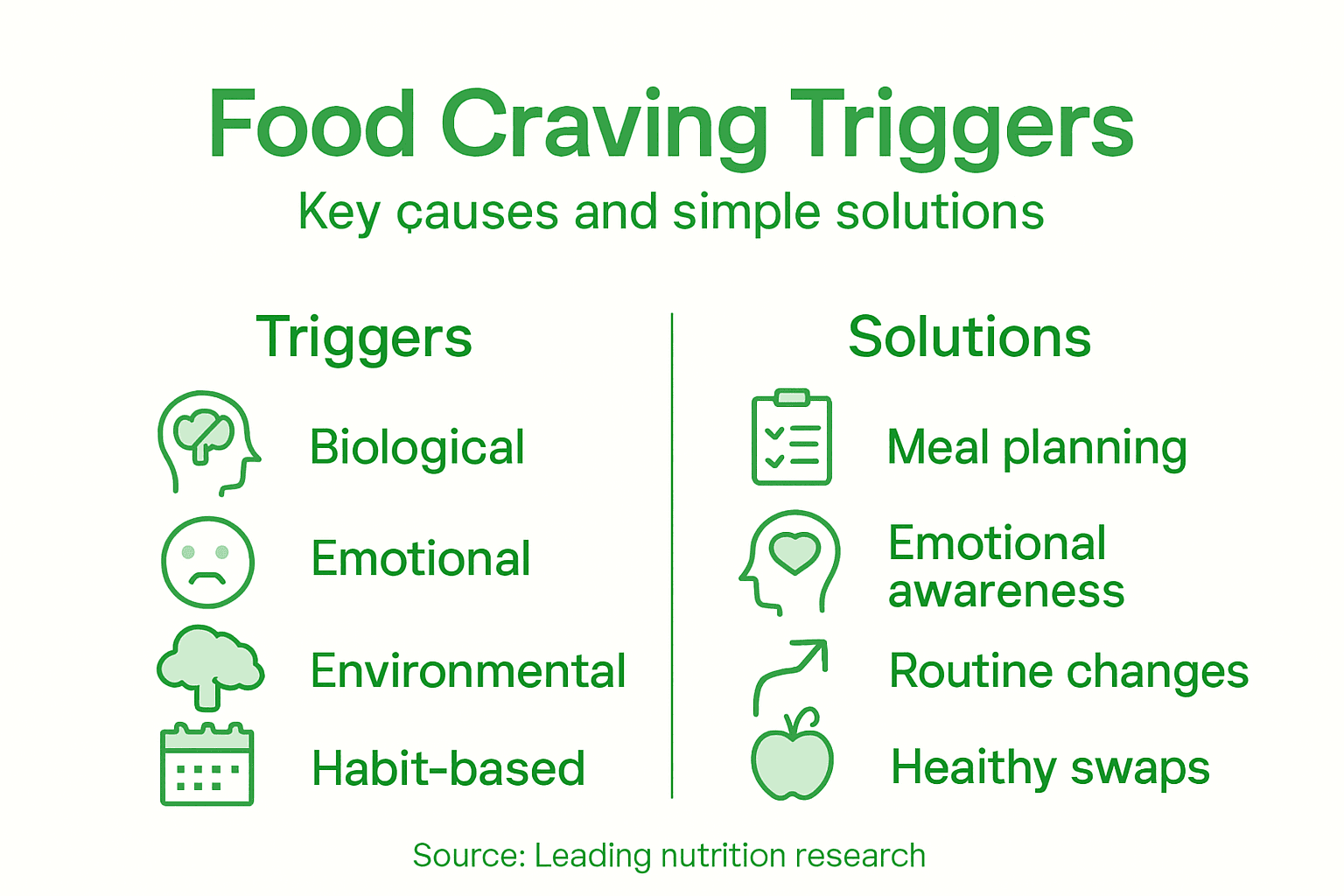
- Biological, Emotional, And Environmental Triggers
- Personalized Techniques To Manage Urges
- Risks, Setbacks, And Long-Term Success
Key Takeaways
| Point | Details |
|---|---|
| Cravings are driven by emotions and environment | Food cravings often stem from emotional states, such as stress or boredom, and environmental cues, rather than true physical hunger. |
| Understanding craving types is essential | Distinguishing between physical, emotional, and habit-based cravings allows for more effective management strategies. |
| Personalized strategies enhance effectiveness | Tailoring craving management techniques to individual triggers and preferences significantly improves adherence and success. |
| Setbacks are a natural part of the process | Recognizing that setbacks can occur helps maintain progress and encourages a proactive response rather than self-criticism. |
Defining Food Cravings and Common Myths
Food cravings are far more complex than simply wanting a snack. They’re intense, recurring desires to eat specific foods—often triggered by emotional states, sensory cues, or environmental factors rather than true physical hunger.
Unlike regular hunger, which builds gradually and can be satisfied by various foods, cravings target particular items with surprising specificity. You might desperately want chocolate while completely uninterested in fruit, even if both would fill your stomach equally.
What Actually Drives Your Cravings
Your brain’s reward system plays the leading role here. When you see, smell, or even think about a craved food, your brain releases dopamine in anticipation of pleasure—before you’ve tasted anything.
This explains why emotional and psychological responses often override nutritional needs. Stress, boredom, loneliness, and anxiety can all trigger intense food cravings as your brain seeks a quick mood boost.
Environmental cues matter tremendously too. The aroma of fresh bakery items, colorful product packaging, or even the time of day can activate cravings through pure association and conditioning.
Common Myths That Miss the Mark
Myth 1: Cravings mean your body needs that food
This is backward. Wanting pizza doesn’t mean you’re deficient in wheat and tomato sauce. Cravings rarely signal genuine nutritional gaps and usually reflect emotional or habit-based patterns instead.
Myth 2: Willpower alone can eliminate cravings
Willpower helps temporarily, but it’s not a sustainable solution. Fighting cravings through pure willpower exhausts mental energy and often backfires into binges. Understanding and addressing underlying triggers works far better.
Myth 3: All cravings indicate unhealthy eating patterns
Occasional cravings are completely normal and don’t signal disordered eating. However, persistent cravings paired with uncontrollable eating warrant professional attention, as they can relate to broader behavioral concerns.
True food cravings aren’t hunger signals—they’re your brain seeking reward, comfort, or distraction through familiar food associations.
Key Points to Remember
- Cravings involve psychology more than nutritional deficiencies
- Emotional triggers like stress and boredom activate reward pathways
- Environmental cues condition your brain to expect certain foods
- Occasional cravings are normal; persistent compulsive eating requires professional guidance
When building a healthy relationship with food, distinguishing cravings from actual hunger becomes essential for lasting success.
Pro tip: Track the circumstances around your cravings—time of day, emotional state, what you were doing—to identify patterns and understand whether you’re actually hungry or seeking comfort through food.
Types of Cravings and Why They Occur
Not all cravings are created equal. Understanding the different types helps you recognize what’s actually driving your urges and respond more effectively.
Some cravings stem from genuine physiological needs, while others emerge purely from emotional states or learned associations. The distinction matters because your strategy for managing them should match their root cause.
Physical Cravings
Physical cravings arise from your body’s actual nutritional needs or hormonal fluctuations. You might crave salty foods when sodium levels drop or iron-rich foods during menstruation.
These cravings usually feel less intense than emotional ones and can be satisfied by alternative foods with similar nutrient profiles. A craving for red meat might disappear after eating nuts or legumes with comparable iron content.
However, physical cravings remain relatively uncommon compared to psychological triggers. Most intense, specific cravings point elsewhere.
Emotional Cravings
Emotional cravings dominate most food urges. Stress, loneliness, boredom, and fatigue activate your brain’s reward system, prompting cravings for comfort foods—usually high-calorie, ultra-palatable options.

You’re not actually hungry; you’re seeking the emotional relief that food provides. Visual cues like colorful packaging and artificial food coloring amplify these emotional cravings by triggering dopamine release before you even taste the food.
These cravings often target specific foods linked to positive memories or comfort, creating powerful psychological associations.
Habit-Based Cravings
Habit cravings develop through repetition and timing. If you always eat popcorn during movie nights, your brain eventually craves popcorn automatically when that context appears.
These cravings follow environmental and temporal patterns rather than emotional or physical needs. Breaking them requires disrupting the associated trigger or replacing the habit entirely.
The Restriction Paradox
Interestingly, attempts to restrict foods intensify cravings through a psychological cycle. Denying yourself a food makes it more desirable and increases urges to overeat when willpower weakens.
This explains why strict diets often backfire into binges. Your brain rebels against deprivation.
Quick Reference Guide
- Physical cravings: Nutritional deficiencies or hormonal shifts
- Emotional cravings: Stress, boredom, sadness seeking comfort
- Habit cravings: Learned associations with specific times or activities
- Restriction cravings: Psychological rebellion against food denial
Emotional and habit-based cravings outnumber physical ones by a significant margin, making psychological strategies far more effective than nutritional adjustments alone.
Proper meal planning strategies address multiple craving types simultaneously by reducing emotional eating triggers and building sustainable eating patterns.
Pro tip: Identify your craving type by asking yourself: “Am I physically hungry, or am I seeking comfort, distraction, or fulfilling a habit?” This single question transforms your ability to respond strategically rather than automatically.
Biological, Emotional, and Environmental Triggers
Your cravings don’t emerge from a single source. They result from a complex interplay of biological wiring, emotional states, and environmental design—all working together to push you toward specific foods.
Understanding each trigger category helps you identify which forces are most powerful in your life and where to focus your management strategies.
Here’s how different craving triggers compare in their characteristics and management approaches:
| Trigger Type | Typical Causes | Craving Intensity | Effective Management |
|---|---|---|---|
| Biological | Nutrient or hormone shifts | Moderate, often short-lived | Adjust meals, address deficiencies |
| Emotional | Stress, boredom, loneliness | High, linked to comfort foods | Emotional regulation, alternative coping |
| Environmental | Sights, smells, social cues | Varies, often sudden | Modify environment, remove triggers |
| Habit-Based | Repetition, routines | Predictable, context-specific | Replace routine, disrupt patterns |
Biological Triggers
Your body sends constant signals about hunger, nutrient status, and hormonal balance. The hypothalamus, your brain’s control center for feeding behavior, responds to internal biological signals that regulate when and what you want to eat.
Hormonal fluctuations during your menstrual cycle, blood sugar swings, and neurotransmitter levels all influence cravings. Low serotonin during winter months might intensify chocolate cravings; dropping blood glucose triggers urgent hunger signals.
Interestingly, early life experiences shape biological pathways that later influence food preferences. Childhood stress or malnourishment can create lasting biological predispositions toward certain foods, demonstrating how past experiences literally rewire your brain.
Emotional Triggers
Negative emotions drive more cravings than positive ones. Stress, anxiety, boredom, loneliness, and sadness all activate your brain’s reward system, making high-calorie comfort foods intensely appealing.
Food becomes a coping mechanism—a quick, reliable way to soothe difficult feelings. This explains why stress-eating feels so natural and why willpower collapses when emotions run high.
Positive emotions can trigger cravings too. Celebrations and social gatherings often pair specific foods with joy, creating powerful associations you’ll crave when seeking that emotional state again.
Environmental Triggers
Your surroundings constantly nudge you toward eating. Food availability, visual cues, time of day, social context, and marketing all influence cravings without conscious awareness.
The smell of fresh bread activates cravings before rational thought kicks in. Colorful packaging, strategic product placement, and food advertisements bypass your logical brain entirely, triggering automatic desire through sensory stimulation.
Social settings amplify cravings too. Eating with others often increases consumption, and watching others eat triggers mirror-neuron responses that make you crave the same foods.
Common Trigger Patterns
- Biological: Hormonal shifts, blood sugar crashes, neurotransmitter imbalances
- Emotional: Stress, boredom, loneliness, celebrations, anxiety
- Environmental: Food availability, visual cues, social situations, time of day
Most intense cravings combine all three categories simultaneously—biology plus emotion plus environment create unstoppable urges that willpower alone cannot override.
Pro tip: Track one craving episode by noting the biological state (tired, hungry, hormonal), emotional context (stressed, bored, celebrating), and environmental factor (saw advertisement, smelled food, with friends) to understand which triggers dominate your personal craving patterns.
Personalized Techniques to Manage Urges
One-size-fits-all craving management fails because your triggers are unique. What works for your coworker might backfire completely for you. The solution lies in developing personalized strategies that align with your specific patterns, preferences, and lifestyle.
Your individual strengths, weaknesses, and food preferences deserve a tailored approach rather than generic rules.
Identify Your Personal Trigger Hierarchy
Start by ranking which triggers dominate your cravings. Do you crave most during stress, boredom, or specific times of day? Are emotional triggers stronger than biological ones?
Keep a simple craving log for one week, noting what you craved, when, and what was happening around you. This data reveals patterns invisible without tracking, showing which triggers drive your urges most consistently.
Your unique trigger hierarchy becomes your starting point for strategy selection. Attack the biggest triggers first for maximum impact.
See how strategies differ depending on the main craving trigger:
| Primary Trigger | Personalized Strategy | Why It Works |
|---|---|---|
| Biological | Scheduled nutrient-rich snacks | Prevents true hunger spikes |
| Emotional | Mindful distraction or self-soothing | Addresses emotional root |
| Environmental | Store tempting foods out of sight | Removes visual/sensory cues |
| Habit-Based | Swap snack for a healthy alternative | Maintains ritual, improves nutrition |
Match Strategies to Your Specific Triggers
Biological triggers need different solutions than emotional ones. If hormonal swings drive cravings, nutrient timing and strategic snacking work better than willpower-based approaches.
For emotional triggers, distraction, mood regulation, or alternative coping mechanisms prove more effective. Environmental triggers respond best to removal or substitution strategies—clearing trigger foods from your home or replacing them with preferred alternatives.
The most effective craving management strategy is one you’ll actually use consistently, not the one that theoretically works best for everyone else.
Leverage Personalized Nutrition Planning
Personalized recipe recommendations aligned with your actual preferences increase adherence dramatically. When healthy choices taste good to you specifically, cravings for less-healthy alternatives diminish naturally.
Instead of forcing yourself to eat foods you dislike, build your nutrition plan around options you genuinely enjoy. This removes the deprivation that intensifies cravings.
Key Personalization Strategies
- Track your unique patterns with a simple craving log for one week
- Identify dominant triggers and prioritize addressing the strongest ones first
- Choose strategies matching your triggers rather than following generic advice
- Build around preferences you actually enjoy rather than “healthy” foods you tolerate
- Test and adjust based on what actually works for your life, not theory
Adopting healthy eating habits naturally through personalization creates sustainable change impossible through restrictive, one-size-fits-all approaches.
Implementation Steps
- Track one craving episode completely, noting all biological, emotional, and environmental factors
- Identify which category dominated (typically 60-70% of urges trace to one factor)
- Select one strategy addressing that specific factor
- Test it for three to five days, noting results
- Adjust or try a different strategy if the first didn’t work
Pro tip: Your personalization strategy should evolve as your life changes—what manages cravings during low-stress periods may fail under pressure, requiring seasonal or situational adjustments rather than a fixed approach.
Risks, Setbacks, and Long-Term Success
Managing food cravings isn’t a straight line. You’ll experience setbacks, moments of weakness, and periods when old patterns resurface. Understanding potential risks and preparing for setbacks transforms them from failures into valuable learning opportunities.
Long-term success requires realistic expectations about the journey ahead and strategies for maintaining progress through inevitable challenges.
Common Risks and Complications
Untreated craving cycles can escalate into more serious concerns. What starts as occasional emotional eating might develop into patterns affecting your physical and mental health, particularly if cravings drive regular overeating or extreme restriction.
Restrictive dieting paradoxically intensifies cravings by triggering deprivation psychology, often leading to binge episodes that worsen guilt and repeat the cycle. This restriction-craving-binge pattern becomes progressively harder to break without intervention.
When cravings combine with emotional distress or compulsive eating patterns, professional support becomes necessary rather than optional. Ignoring warning signs allows problems to deepen.
Why Setbacks Happen
Setbacks aren’t failures—they’re inevitable parts of behavior change. High-stress periods, hormonal fluctuations, disrupted routines, and emotional triggers can temporarily overwhelm your management strategies.
One poor choice doesn’t erase your progress or define your trajectory. How you respond to setbacks determines whether they become temporary stumbles or permanent regression.
Recognizing Warning Signs
Early identification prevents small setbacks from becoming entrenched patterns. Watch for these signals:
- Increasing frequency of cravings you’d previously managed
- Loss of control during eating episodes
- Emotional distress about food choices or body image
- Isolation or avoiding social eating situations
- Using food primarily for emotional regulation
Long-term success requires addressing biological, psychological, and environmental factors together, not hoping willpower alone maintains progress indefinitely.
Building Sustainable Long-Term Success
Lasting change comes from systemic adjustments, not willpower surges. This means building support systems, developing realistic expectations, and creating accountability structures.
Regular check-ins with yourself, periodic reassessment of your craving triggers, and willingness to adjust strategies as your life changes all sustain progress. What works during calm periods may need modification during stressful seasons.
Keys to Staying on Track
- Accept setbacks as normal rather than signs of failure
- Identify triggers that preceded the setback
- Reconnect with your strategy without judgment or self-criticism
- Adjust as needed based on what you’ve learned
- Seek support when struggles exceed your coping capacity
Setting realistic, sustainable goals prevents the all-or-nothing thinking that sabotages long-term success by allowing temporary setbacks to derail permanent progress.
Pro tip: Create a “setback response plan” before you need it—decide in advance how you’ll handle cravings during high-stress periods, hormonal shifts, or disrupted routines so you’re not problem-solving in the moment.
Take Control of Your Food Cravings with Personalized Nutrition
Understanding that food cravings are often driven by emotional and environmental triggers rather than true hunger is the first step toward lasting change. If you struggle with intense urges fueled by stress or habits, you are not alone. Managing these cravings requires more than willpower it demands a tailored approach that fits your unique patterns and lifestyle. This is where Dietium.com becomes your essential ally.
Our advanced platform offers personalized meal planning and custom recipe suggestions designed to match your specific craving triggers and nutritional needs. With tools like the Recipians app you can enjoy delicious meals that satisfy your body without sacrificing flavor or enjoyment. Plus with seamless integration of AI-powered health calculators and real-time tracking you gain the support to break the cycle of emotional and habit cravings effortlessly.
Ready to transform your relationship with food through science-backed customization and ease Explore how personalized meal plans can help you overcome cravings effectively. Take the first step now by visiting Dietium Recipians and start your journey toward healthier eating habits tailored just for you. Your path to lasting craving control begins today.
Frequently Asked Questions
What are food cravings and how do they differ from hunger?
Food cravings are intense, recurring desires to eat specific foods, often triggered by emotional states or environmental factors, rather than true physical hunger, which builds gradually and can be satisfied by various foods.
What causes food cravings?
Food cravings can be driven by a combination of biological triggers (like hormonal shifts), emotional states (such as stress or boredom), and environmental cues (like the smell of food). Understanding these triggers helps in managing cravings effectively.
Are food cravings a sign of nutritional deficiency?
Not necessarily. Cravings often reflect emotional or habitual patterns rather than genuine nutritional needs. For example, wanting chocolate might not mean a deficiency in its components but rather an emotional desire for comfort.
How can I manage my food cravings effectively?
To manage food cravings, identify your personal triggers, track cravings to recognize patterns, and implement personalized strategies such as mindful eating, addressing emotional needs, or modifying your environment to reduce exposure to cravings.
Recommended
- How to Avoid Overeating Naturally with Smart Meal Planning – Dietium
- Master Intuitive Eating for Beginners: A Step-by-Step Guide – Dietium
- Healthy Relationship With Food: Complete Guide – Dietium
- Cortisol Addiction: 11 Shocking Cortisol Triggering Foods
- Health Claims und ihre Rolle in der Lebensmittelkennzeichnung


