 Skip to content

TL;DR:
- Plant proteins can fully meet daily nutrition needs and support muscle and heart health, challenging outdated animal-centric beliefs.
- Varying sources like legumes, soy, nuts, seeds, and grains throughout the day ensures complete amino acid profiles and optimal intake, with some plant foods being complete proteins themselves.
- Focusing on total protein intake and dietary variety is more important than the specific source, enabling effective, sustainable, plant-based nutrition aligned with individual goals.
Protein from plants can fully meet your daily needs, and the evidence is stronger than most people realize. The common assumption that animal proteins are the only reliable path to adequate nutrition is simply outdated. Plant protein sources are diverse, nutrient-rich, and increasingly backed by research showing they support muscle, heart health, and long-term wellness. Whether you are a fitness enthusiast tracking macros, a vegan looking to build a solid nutritional base, or simply curious about shifting your diet, this guide gives you the facts and practical tools to make it work.
Table of Contents
- Understanding plant protein sources: categories and benefits
- Comparing protein content: high-protein plant foods to know
- Protein quality and daily intake: what you need to know
- Practical tips for including plant proteins in your diet
- Why focusing on total protein and variety beats protein source debates
- How personalized nutrition plans can optimize your plant protein intake
- Frequently asked questions
Understanding plant protein sources: categories and benefits
Plant proteins fall into four main categories, and knowing them helps you build a diet that covers all nutritional bases. Plant-based protein can come from legumes (beans, lentils, peas), soy foods (tofu, tempeh, edamame), nuts and seeds, and whole grains like quinoa and farro. Each group brings something distinct to the table, not just protein but a full spectrum of supporting nutrients.
What sets these sources apart from animal proteins goes beyond the macros. Healthy plant proteins deliver fiber, antioxidants, B vitamins, iron, zinc, and magnesium alongside their protein content. That combination supports digestion, reduces inflammation, and contributes to stable blood sugar levels in ways that a chicken breast simply cannot replicate.
They also tend to be significantly lower in saturated fat and sodium, which matters if you are managing cardiovascular health or blood pressure alongside fitness goals. Learning about plant-based diet benefits can help you see why this nutritional profile makes a strong case for including more plant foods regularly.
Here is a quick breakdown of each main category:
- Legumes: Beans, lentils, chickpeas, and peas. High in protein and fiber, with a low glycemic index (meaning they digest slowly and help control blood sugar).
- Soy foods: Tofu, tempeh, edamame, and soy milk. Among the most protein-dense plant foods available, with soy being one of the few complete plant proteins.
- Nuts and seeds: Almonds, pumpkin seeds, chia seeds, hemp seeds, and peanuts. Calorie-dense but rich in protein, healthy fats, and micronutrients.
- Whole grains: Quinoa, farro, amaranth, and oats. Not as high in protein as legumes or soy, but they contribute meaningfully when combined with other sources throughout the day.
Comparing protein content: high-protein plant foods to know
Understanding the actual numbers behind plant-based protein options helps you plan meals that hit your targets without guesswork. Firm tofu provides about 17.3 g of protein per 100 g, tempeh about 19.9 g, and hulled hemp seeds an impressive 31.6 g per 100 g. Those are numbers that hold up against many animal-based options.
Pulses are reliable daily workhorses. Beans, lentils, chickpeas, and peas provide roughly 8 to 18 g of protein per cup, and quinoa delivers around 8 g per cup. These are some of the best protein sources for vegans because they are affordable, shelf-stable, and easy to add to almost any meal format.

Beverages and condiments count too. Soy milk provides about 8 g of protein per 8-ounce serving, and seeds like chia and pumpkin contribute approximately 8 to 10 g per serving. Those amounts add up fast when you are building a full day of eating.
| Food | Serving size | Protein (approx.) |
|---|---|---|
| Hemp seeds (hulled) | 100 g | 31.6 g |
| Tempeh | 100 g | 19.9 g |
| Firm tofu | 100 g | 17.3 g |
| Lentils (cooked) | 1 cup | 18 g |
| Chickpeas (cooked) | 1 cup | 14.5 g |
| Black beans (cooked) | 1 cup | 15 g |
| Pumpkin seeds | Per serving | ~8–10 g |
| Soy milk | 8 oz | 8 g |
| Quinoa (cooked) | 1 cup | 8 g |
Looking at the best vegan protein sources by density per gram, hemp seeds and tempeh stand out. But for volume eaters or anyone who prefers filling meals, legumes offer more bulk alongside their protein load.
Key takeaways for building your intake:
- Tempeh and hemp seeds are your best bet for protein density by weight.
- Legumes are the most practical daily protein source for most people.
- Combining soy milk with seeds or nut butters in smoothies adds 15 to 20 g of protein with minimal effort.
Pro Tip: Track your plant protein intake for three days using a food log. Most people find they are already closer to their protein target than they expected, and small swaps like switching to soy milk or adding a tablespoon of hemp seeds fill the gap quickly.
Protein quality and daily intake: what you need to know
One concern that comes up repeatedly is protein completeness. A complete protein contains all nine essential amino acids (the building blocks your body cannot produce on its own). Soy and quinoa are among the few plant foods that qualify as complete proteins on their own. Most other plant sources are incomplete, but that is far less limiting than it sounds.
Here is how to approach protein quality practically:
- Vary your sources. Eating different plant proteins throughout the day means you naturally cover the full amino acid spectrum. Rice and beans together, for example, supply complementary amino acids.
- Prioritize total intake first. Plant proteins meet nutrient goals just as animal proteins do, especially when you consume a variety across meals.
- Adjust for activity level. Sedentary adults need less protein than athletes or people in caloric deficit.
- Consider leucine. Animal proteins are higher in leucine, an amino acid that triggers muscle protein synthesis. If muscle building is your goal, slightly higher total protein intake from plants can compensate.
- Monitor over time, not per meal. Your body does not require all amino acids in a single sitting. Amino acid pools are maintained across hours, so what matters is consistent daily variety.
“Total protein adequacy and context such as energy intake and activity levels are more important than strict source swapping.” Research on long-term plant versus animal protein supplementation shows no significant difference in muscle or cardiovascular outcomes when overall protein needs are met.
Most active adults should target 1.2 to 1.6 g of protein per kilogram of body weight daily. A 70 kg person doing moderate training needs roughly 84 to 112 g of protein per day. That is very achievable through plant protein sources alone, particularly with foods like tempeh, lentils, and hemp seeds in regular rotation.
Pro Tip: If you are new to plant-based eating, use a protein calculator to set your personal daily target before changing your diet. Knowing your number prevents both under-eating and unnecessary anxiety about food choices. You can also read more about complete vegan protein myths to separate fact from common misconceptions.
Practical tips for including plant proteins in your diet
Knowing the nutrition is only half the work. The other half is making plant proteins a consistent, enjoyable part of your eating routine. The goal is sustainable habit change, not a temporary overhaul.
Start with what you already eat and build from there:
- Add legumes to meals you already make. Toss canned black beans into a grain bowl, stir red lentils into soup, or add chickpeas to a salad. These changes take under two minutes.
- Swap meat with tofu or tempeh in stir-fries. Cube and pan-fry tempeh in soy sauce and garlic. The texture is firm and satisfying, and it absorbs flavor well.
- Snack on roasted chickpeas or pumpkin seeds. Both deliver protein alongside crunch and flavor. Roasted chickpeas and seeds are simple additions that raise your daily total without extra meals.
- Blend nut butter into smoothies or oatmeal. Two tablespoons of almond or peanut butter adds 6 to 8 g of protein and pairs naturally with fruit, oats, or plant milk.
- Switch to soy milk. It is the only plant milk that closely matches cow’s milk in protein content. One simple swap with your morning coffee or cereal adds up over time.
Mixing legumes, grains, nuts, and soy foods throughout the day is the most practical way to get a complete amino acid profile without tracking every gram obsessively. Think of it as rotating your sources across breakfast, lunch, and dinner rather than hitting a single “perfect” meal.
For lunch ideas that put these principles into practice, explore easy plant-based lunch ideas that are built around real protein targets. And if you want a structured approach to meeting your protein goals naturally, having a clear daily framework makes the process far less complicated.
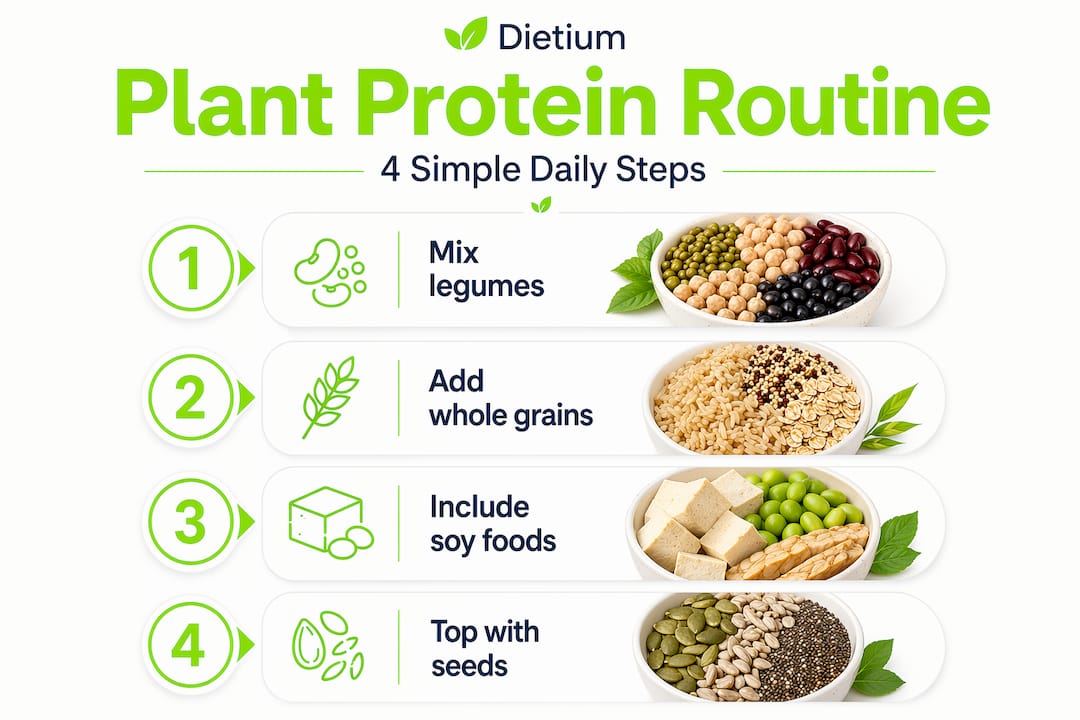
Pro Tip: Meal prep a large batch of cooked lentils or chickpeas on Sunday. Store them in the fridge and add them to three or four different meals through the week. This single habit can add 15 to 20 g of protein per day without any extra cooking.
Why focusing on total protein and variety beats protein source debates
The plant versus animal protein debate often distracts from the single most important variable: are you eating enough total protein consistently? For the vast majority of adults, the answer to that question matters far more than whether your protein came from a chicken breast or a bowl of lentils.
Animal proteins do have specific advantages. They are higher in leucine and digest more rapidly, which can be useful for maximizing muscle protein synthesis after training. But research is clear that these advantages are not absolute. They can be addressed by consuming slightly more total plant protein or combining sources that together provide a stronger amino acid signal.
Higher plant protein intake is linked to favorable cardiometabolic profiles, better gut health from increased fiber, and reduced environmental impact, while still supporting muscle health when intake is sufficient. That is a package of benefits you do not get from simply adding more animal protein to your diet.
The practical takeaway: focus on eating enough total protein from a variety of sources, track your intake for a short baseline period, and make adjustments based on data rather than debate. A diet built on high-protein plant meals with consistent variety will support your goals as reliably as any animal-based approach, with the added benefit of supporting your long-term metabolic and cardiovascular health. That is not a claim based on ideology. It is what the data currently supports.
How personalized nutrition plans can optimize your plant protein intake
Understanding plant protein sources is the first step. Applying that knowledge to your specific body, goals, and food preferences is where real results happen. A generic meal plan built for the average person rarely accounts for your protein target, calorie needs, activity level, or food preferences.
At Dietium, personalized nutrition plans are built around your individual data, incorporating your preferred plant protein sources into meals that align with your fitness and health goals. Whether you want to build muscle on a vegan diet, manage weight, or simply improve your metabolic markers, the approach is grounded in science, not guesswork.
The meal plan personalization features factor in your macros, dietary style, and daily schedule so you always know exactly what to eat and why. For those specifically focused on protein, the tools help you meet your protein goals naturally without stressing over every meal. Shifting to plant-based eating is much simpler when you have a structured, evidence-based plan behind you.
Frequently asked questions
Are plant protein sources complete proteins?
Some plant proteins, like soy and quinoa, are complete proteins containing all essential amino acids. Soy-based products are complete proteins, similar to meat and dairy, while most other plant sources are incomplete and work best when consumed in variety throughout the day.
Can plant protein support muscle growth as well as animal protein?
Yes, when total protein intake and distribution are adequate, plant proteins can match animal proteins for muscle growth. Long-term studies show no significant difference between plant-based and animal-based proteins for muscle strength and composition when protein needs are met.
How much protein do I need daily from plant sources?
Most adults should aim for 1.2 to 1.6 grams of protein per kilogram of body weight daily. Adults generally need 1.2 to 1.6 g/kg of protein per day, varying by weight, activity level, and individual health factors.
Do I need to eat all plant proteins in one meal to get complete protein?
No, spreading varied plant proteins across meals throughout the day is sufficient. You don’t need multiple protein sources at once as long as you consume a variety throughout the day, since your body stores amino acids for later use.


