 Skip to content

Trying to balance work, fitness, and nutritious meals can leave anyone questioning which dietary approach delivers real results. Plant based diets combine flexibility with proven benefits, challenging myths around protein and nutritional adequacy. Backed by research, these eating patterns support metabolic health, positively influence gut microbiota, and offer practical options for weight management and athletic performance. Discover how understanding plant based diets clears up common misconceptions and helps you make more informed nutritional choices.
Table of Contents
- Defining Plant Based Diets And Misconceptions
- Types Of Plant Based Eating Patterns Explored
- Nutritional Value And Core Health Benefits
- Weight Management And Athletic Performance Impact
- Pitfalls, Common Mistakes, And How To Avoid Them
Key Takeaways
| Point | Details |
|---|---|
| Diverse Plant Based Diets | Plant based diets include various patterns such as vegan, vegetarian, and flexitarian, allowing individuals to tailor their nutrition to personal preferences and health goals. |
| Nutritional Adequacy | Well-planned plant based diets can meet all essential nutrient requirements, debunking myths about deficiencies and promoting overall health. |
| Health Benefits | Plant based eating patterns can improve gut health, lower inflammation, and support metabolic processes, potentially reducing chronic disease risks. |
| Avoiding Common Pitfalls | Awareness of potential mistakes, such as nutrient deficiencies and reliance on processed foods, is crucial for maintaining a balanced plant based diet. |
Defining Plant Based Diets and Misconceptions
A plant based diet represents a nutritional approach centered on consuming foods derived exclusively or predominantly from plants, including fruits, vegetables, whole grains, legumes, nuts, and seeds. This dietary pattern is not just a temporary trend but a comprehensive lifestyle choice gaining significant momentum in health and wellness communities.
Plant based diets actually encompass multiple variations with distinct characteristics:
- Vegan Diet: Excludes all animal products completely
- Vegetarian Diet: Allows dairy and eggs but eliminates meat
- Flexitarian Diet: Primarily plant based with occasional meat consumption
- Whole Food Plant Based Diet: Emphasizes minimally processed plant foods
Contrary to popular misconceptions, plant based diets offer comprehensive nutritional adequacy when appropriately planned. Nutritional experts have consistently demonstrated that well-structured plant based diets can meet all essential nutrient requirements, challenging long-standing myths about protein deficiency and nutritional limitations.
The scientific community increasingly recognizes the potential metabolic and inflammatory benefits associated with plant based dietary patterns. Research indicates these diets can positively influence gut microbiota, potentially reducing chronic disease risks and supporting overall metabolic health. Microbiota interactions reveal complex inflammatory pathway modulations that extend beyond traditional nutritional understanding.
Below is a quick reference table summarizing ways plant based diets support metabolic health:
| Benefit Area | Associated Diet Action | Typical Result |
|---|---|---|
| Gut Microbiota | Increased fiber intake | Enhanced digestion and immunity |
| Inflammation | Rich in phytonutrients | Lower chronic inflammation |
| Metabolism | Less saturated fat consumed | Improved calorie utilization |
Pro tip: When transitioning to a plant based diet, gradually introduce new foods and consult a registered dietitian to ensure balanced nutrient intake.
Types of Plant Based Eating Patterns Explored
Plant based eating encompasses a diverse spectrum of dietary approaches, each offering unique nutritional strategies and health benefits. Plant based dietary patterns range from strict elimination to flexible integration of animal products, providing individuals with multiple options to align their nutritional choices with personal health goals and ethical considerations.
The primary plant based eating patterns include:
- Vegan Diet: Completely excludes all animal products
- Lacto-Ovo Vegetarian Diet: Includes dairy and eggs, excludes meat
- Pescatarian Diet: Includes fish, allows dairy and eggs, eliminates other meats
- Semi-Vegetarian/Flexitarian Diet: Primarily plant based with occasional meat consumption
- Mediterranean Diet: Emphasizes plant foods with minimal animal protein
Vegetarian dietary patterns offer comprehensive nutritional alternatives that can be carefully structured to meet essential nutrient requirements. Each approach provides distinct advantages, allowing individuals to customize their dietary strategy based on personal health needs, environmental considerations, and lifestyle preferences.
Here’s a concise comparison of major plant based dietary patterns across key attributes:
| Diet Type | Animal Product Inclusion | Typical Health Focus | Ideal For |
|---|---|---|---|
| Vegan | Excludes all animal products | Maximum ethics, lower cholesterol | Environmental advocates |
| Lacto-Ovo Vegetarian | Allows dairy and eggs | Moderate cholesterol reduction | Flexibility seekers |
| Pescatarian | Includes fish, dairy, eggs | Omega-3 & cardiovascular support | Those favoring seafood |
| Flexitarian | Occasional meat allowed | Balanced nutrient diversity | Gradual transitioners |
| Mediterranean | Minimal animal protein | Heart protection, longevity | Culturally diverse eaters |
The scientific community recognizes that these diverse plant based eating patterns can support metabolic health, potentially reducing chronic disease risks when implemented thoughtfully. Nutritional adequacy depends on careful meal planning, understanding nutrient sources, and potentially incorporating targeted supplementation to ensure comprehensive nutritional balance.
Pro tip: Consult a registered dietitian when transitioning between plant based eating patterns to ensure nutritional completeness and personalized dietary optimization.
Nutritional Value and Core Health Benefits
Plant based diets offer a powerful nutritional profile that goes far beyond simple food choices. Large-scale health studies reveal significant cardiovascular protection associated with consuming plant proteins from legumes, nuts, and seeds, demonstrating remarkable potential for long-term wellness.
The key nutritional advantages of plant based diets include:
- Nutrient Density: High concentrations of vitamins, minerals, and antioxidants
- Low Saturated Fat: Minimal cholesterol and reduced inflammatory markers
- High Fiber Content: Supports digestive health and metabolic function
- Essential Micronutrients: Abundant sources of vitamin A, vitamin C, calcium, and iron
- Phytochemical Richness: Natural compounds that support cellular health
Raw vegetables provide critical nutritional elements that contribute to reducing risks of chronic diseases like diabetes and heart disease. These nutritional powerhouses deliver essential nutrients with minimal caloric intake, making them ideal for supporting metabolic health and longevity.
The scientific consensus indicates that well-planned plant based diets can provide comprehensive nutritional support, potentially surpassing traditional animal-protein-centered dietary approaches. By emphasizing whole, minimally processed plant foods, individuals can optimize their nutrient intake while simultaneously reducing potential health risks associated with high animal product consumption.
Pro tip: Gradually introduce diverse plant protein sources and consider consulting a nutritionist to ensure balanced micronutrient intake during dietary transitions.
Weight Management and Athletic Performance Impact
Plant-based dietary patterns demonstrate remarkable potential for supporting both athletic performance and weight management, challenging traditional nutritional assumptions about muscle building and energy production.
Key performance and weight management benefits include:
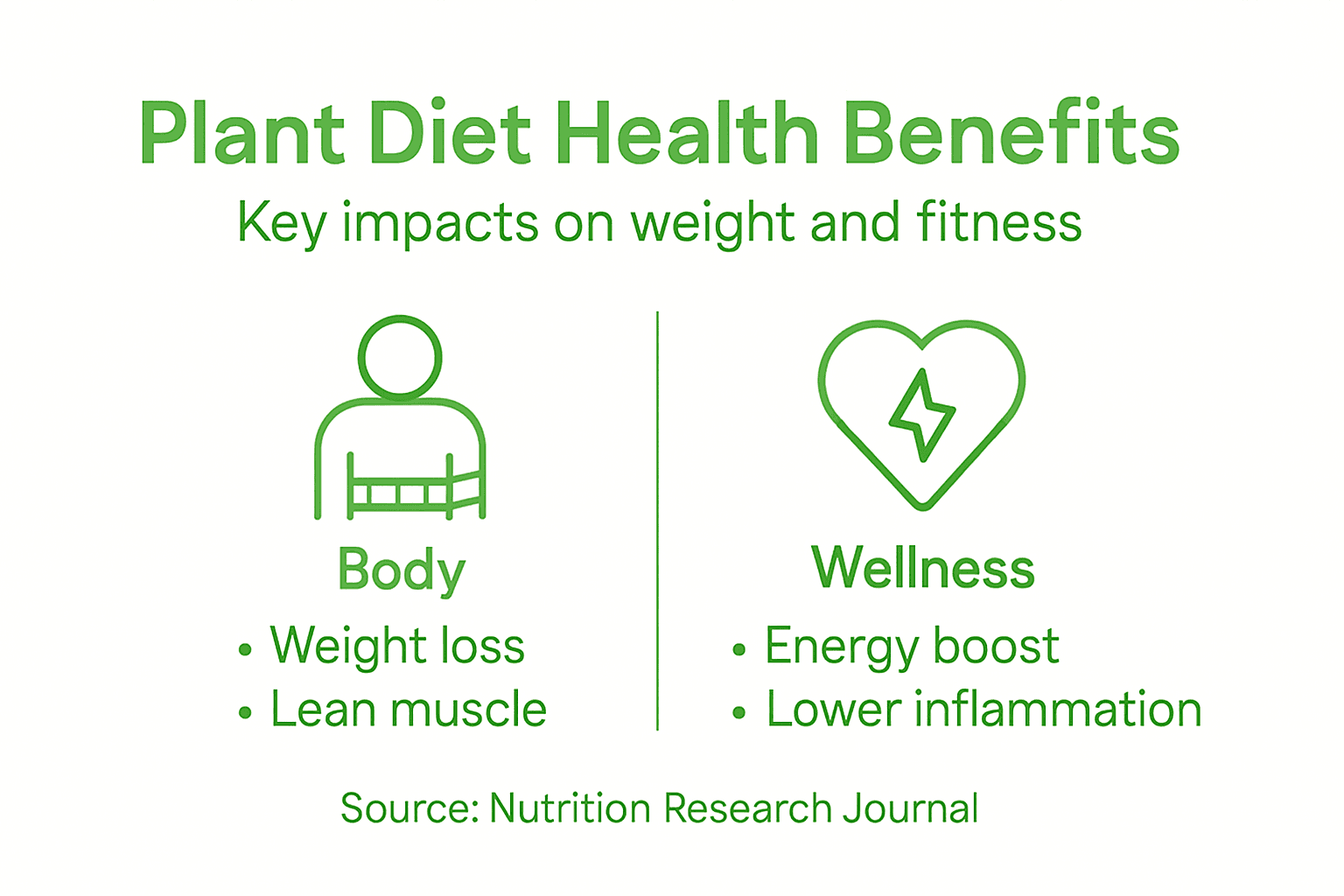
- Metabolic Efficiency: Enhanced calorie utilization and reduced body fat percentage
- Aerobic Performance: Moderate positive impacts on endurance and cardiovascular capacity
- Muscle Recovery: Faster healing and reduced inflammation
- Body Composition: Natural tendency toward lean muscle development
- Sustained Energy: Consistent metabolic fuel without significant weight fluctuations
Dietary supplements and nutritional strategies play a critical role in supporting athletes practicing plant based nutrition. Research demonstrates that well-planned plant based diets can effectively meet protein requirements, support muscle function, and optimize energy metabolism without compromising physical performance.
Athlete performance studies reveal that plant based nutrition can deliver comparable, and sometimes superior, results compared to traditional meat-based diets. The key lies in strategic meal planning, understanding protein combinations, and ensuring comprehensive nutrient intake through diverse plant protein sources.

Pro tip: Gradually incorporate plant protein sources and track your body’s response, consulting a sports nutritionist to customize your dietary approach.
Pitfalls, Common Mistakes, and How to Avoid Them
Common pitfalls in plant based diets can derail even the most well-intentioned nutritional strategy, making awareness and proactive planning crucial for long-term success. Understanding these potential challenges allows individuals to navigate dietary transitions more effectively and maintain optimal health.
Key potential mistakes and their solutions include:
- Nutrient Deficiency: Neglecting critical micronutrients like vitamin B12, iron, and calcium
- Solution: Regular blood testing and targeted supplementation
- Processed Food Trap: Over-relying on vegan junk food and packaged alternatives
- Solution: Focus on whole, minimally processed plant foods
- Protein Misconceptions: Assuming all plant proteins are equivalent
- Solution: Understand protein diversity and complementary amino acid combinations
- Portion Control: Overeating under the assumption that plant foods are inherently low-calorie
- Solution: Track caloric intake and practice mindful eating
- Inadequate Meal Planning: Inconsistent nutritional balance
- Solution: Develop structured weekly meal plans with diverse nutrients
Mindful eating practices and strategic nutrition planning are essential for avoiding common dietary pitfalls. Successful plant based nutrition requires more than simply eliminating animal products; it demands a comprehensive approach to holistic nutritional management.
Transitioning to a plant based diet is not about restriction, but about discovering a rich, varied nutritional landscape. By understanding potential challenges and implementing strategic approaches, individuals can transform potential obstacles into opportunities for enhanced health and wellness.
Pro tip: Consult a registered dietitian specializing in plant based nutrition to develop a personalized strategy that addresses your unique nutritional needs and health goals.
Unlock Your Weight and Fitness Goals with Personalized Plant Based Meal Plans
Transitioning to a plant based diet can be challenging when trying to balance nutrient intake, weight management, and athletic performance without falling into common pitfalls like nutrient deficiencies or processed food traps. This article highlights how thoughtful meal planning and understanding of metabolic needs are essential for success.
At Dietium.com, we offer tailored solutions designed to tackle these challenges head-on. Our Recipians app creates personalized meal plans and recipe suggestions that align perfectly with your plant based nutrition goals. Using advanced AI-powered tools, you can track your calorie needs and optimize macronutrient balance while ensuring you get the essential nutrients your body requires for peak fitness and sustained energy.
Ready to transform your weight management and athletic performance through informed plant based eating? Start your journey today with custom meal plans and fitness routines crafted just for you. Don’t wait to experience the benefits of a well-planned plant based lifestyle—visit Dietium.com now and take control of your health with data-driven guidance and expert support.
Frequently Asked Questions
What are the benefits of a plant-based diet for weight management?
A plant-based diet can enhance metabolic efficiency, promote a natural tendency toward lean muscle development, and support calorie utilization, all of which contribute to effective weight management.
How does a plant-based diet impact athletic performance?
Plant-based diets can support both aerobic performance and muscle recovery while providing sustained energy levels, making them effective for athletes seeking to maintain or improve their performance without compromising nutrition.
Can a plant-based diet provide enough protein for athletes?
Yes, well-planned plant-based diets can effectively meet protein requirements through diverse sources such as legumes, nuts, seeds, and whole grains, ensuring that athletes receive adequate nutrition to support muscle function and energy metabolism.
What common mistakes should I avoid when adopting a plant-based diet?
To maximize health benefits, avoid nutrient deficiencies by ensuring adequate intake of micronutrients like vitamin B12, iron, and calcium, and focus on whole foods instead of processed vegan alternatives.


