 Skip to content

Finding time to prepare healthy, satisfying plant-based lunches can feel overwhelming when you’re juggling work, family, and personal commitments. You want meals that nourish your body, align with your values, and don’t require hours in the kitchen. The good news is that plant-based eating doesn’t have to be complicated or time-consuming. This guide presents research-backed lunch ideas that deliver complete nutrition, vibrant flavors, and practical preparation methods. Whether you’re new to plant-based eating or looking to expand your rotation, you’ll discover simple strategies and delicious recipes that make healthy lunches effortless and enjoyable.
Table of Contents
- Key takeaways
- Criteria for choosing easy plant-based lunches
- Top easy plant-based lunch options with nutrition details
- Comparing plant-based lunch options: nutrition, prep, and sustainability
- Making the best plant-based lunch choices for your lifestyle
- Take your plant-based nutrition to the next level with Dietium
- FAQ
Key Takeaways
| Point | Details |
|---|---|
| Whole foods focus | Prioritize fresh vegetables, legumes, whole grains, nuts, and seeds to maximize nutrition and reduce reliance on highly processed foods. |
| Batch cooking strategy | Spend an hour on Sunday batch cooking base components like brown rice, roasted vegetables, and cooked beans to assemble quick, varied lunches all week. |
| Nutrient planning | Supplement vitamin B12, pair plant foods to boost iron absorption with vitamin C, and monitor zinc and omega 3 intake to avoid gaps. |
| Seed topping tip | Keep a jar of mixed seeds and sprinkle two tablespoons over any lunch to boost protein, healthy fats, and minerals. |
Criteria for choosing easy plant-based lunches
Selecting the right plant-based lunch starts with understanding what makes a meal both nutritious and practical for your lifestyle. The foundation of any healthy plant-based lunch is whole, minimally processed foods. Fresh vegetables, legumes, whole grains, nuts, and seeds provide superior nutrition compared to packaged meat alternatives or refined products. Prioritizing whole foods while supplementing B12 and monitoring iron, zinc, and omega-3 levels ensures you maximize benefits while avoiding nutritional gaps.
Protein deserves special attention when planning plant-based meals. Legumes like chickpeas, lentils, and black beans offer substantial protein along with fiber and complex carbohydrates. Quinoa stands out among grains as a complete protein source, containing all nine essential amino acids. Combining different plant proteins throughout your day creates a complete amino acid profile without needing perfect pairing at every meal. Seeds like hemp, chia, and pumpkin add protein density and healthy fats to salads and bowls.
Practical preparation methods make the difference between sustainable habits and abandoned intentions. Batch cooking transforms your approach to plant-based lunches. Spend an hour on Sunday preparing base components like brown rice, roasted vegetables, and cooked beans. Store them in separate containers, then mix and match throughout the week for varied meals. This strategy reduces daily cooking to simple assembly while maintaining freshness and flavor.
Nutrient planning requires awareness of potential gaps in plant-based diets. Vitamin B12 exists naturally only in animal products, making supplementation essential for anyone eating primarily plants. Iron from plant sources absorbs less efficiently than heme iron from meat, but pairing iron-rich foods with vitamin C sources dramatically improves absorption. Zinc and omega-3 fatty acids also warrant attention. Including nutrient dense vegan foods like leafy greens, fortified plant milks, and walnuts helps cover these bases naturally.
Pro Tip: Keep a jar of mixed seeds (sunflower, pumpkin, hemp, chia) in your desk or bag. Sprinkle two tablespoons over any lunch to instantly boost protein, healthy fats, and mineral content without cooking.
Sustainability and cost considerations make plant-based lunches attractive beyond health benefits. Legumes and grains cost significantly less per serving than meat or processed alternatives. Buying dried beans instead of canned reduces costs further while eliminating added sodium. Environmental impact matters to many health-conscious eaters, and plant-based meals consistently demonstrate lower carbon footprints and water usage compared to animal-based options.
Top easy plant-based lunch options with nutrition details
Real meal examples bring nutritional criteria to life with specific recipes you can prepare this week. These options balance nutrition, flavor, and convenience based on empirical testing and expert recommendations.
Smashed chickpea salad delivers impressive nutrition in minimal time. This option requires just 10 minutes of preparation, provides 267 calories, and offers high fiber content that keeps you satisfied through afternoon meetings. Mash canned chickpeas with a fork, leaving some chunks for texture. Mix with diced celery, red onion, and a dressing of tahini, lemon juice, and Dijon mustard. Serve over mixed greens or in a whole grain wrap. The combination of plant protein, healthy fats from tahini, and fresh vegetables creates a complete meal.
Curry chickpea wraps add international flavors while maintaining simplicity. These wraps take 30 minutes to prepare, contain 286 calories, and deliver 10 grams of protein per serving. Sauté chickpeas with curry powder, turmeric, and cumin until fragrant and slightly crispy. Add spinach until wilted, then wrap in whole wheat tortillas with sliced cucumber and a drizzle of coconut yogurt. The spices provide anti-inflammatory compounds while making the meal exciting enough to crave regularly.
Buddha bowls combine multiple components for nutritional completeness and visual appeal. Build your bowl with a base of brown rice or quinoa, add roasted or raw vegetables like kale, shredded carrots, and bell peppers, then top with chickpeas or edamame. Finish with a tahini-based dressing and garnish with sesame seeds. This format allows endless variation based on what you have available, preventing meal fatigue.
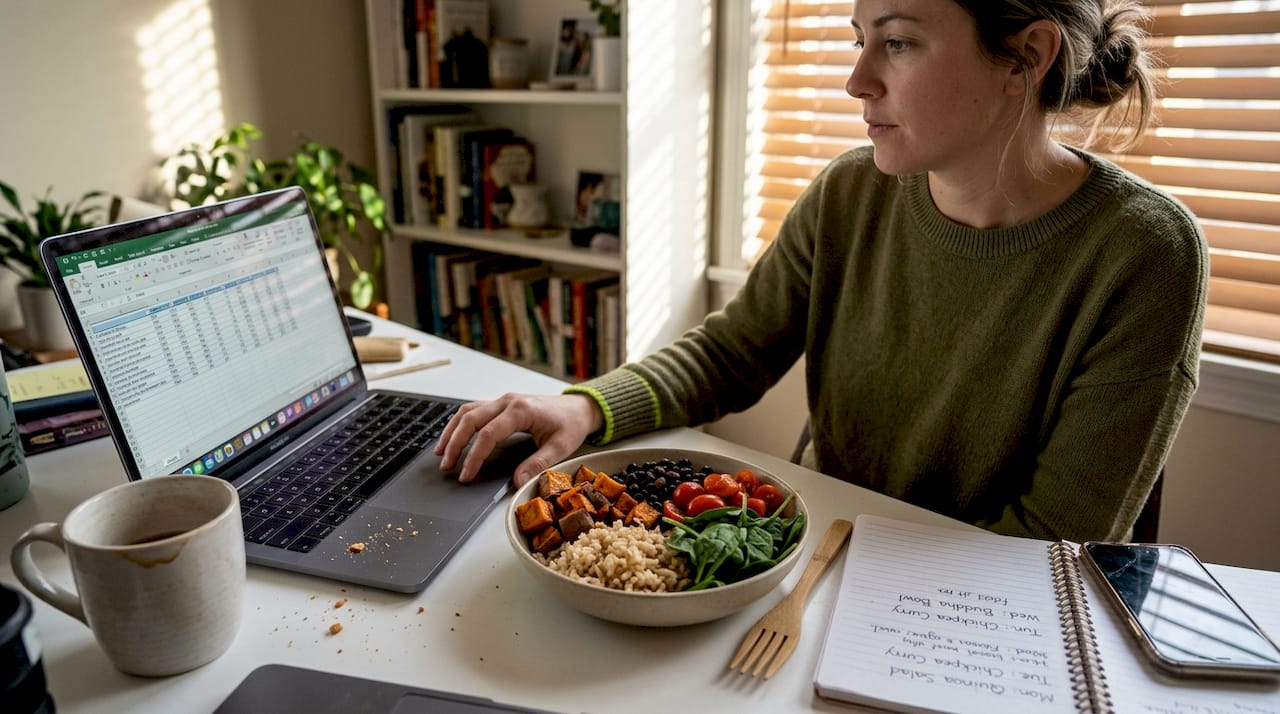
Grain bowls with quinoa, roasted sweet potatoes, and black beans offer balanced macronutrients and satisfying textures. Cook quinoa according to package directions. Cube sweet potatoes, toss with olive oil and smoked paprika, then roast at 425°F for 25 minutes. Warm black beans with cumin and garlic. Combine all components with fresh spinach and top with avocado slices and lime juice. This meal provides complex carbohydrates for sustained energy, complete protein, and healthy fats.
Pro Tip: Double or triple grain and legume portions when cooking. Cooked quinoa stays fresh for five days refrigerated, and beans freeze perfectly for up to three months. This transforms a 30-minute meal into a 5-minute assembly job.
Meal prep strategies maximize these recipes’ convenience. Follow this numbered approach:
- Choose two grain options and two legume varieties to cook in bulk
- Roast three types of vegetables on sheet pans simultaneously
- Prepare two different dressings or sauces in small jars
- Wash and chop raw vegetables for the week
- Store everything separately to maintain freshness and allow mixing
This system creates 20+ possible lunch combinations from one prep session. You can explore additional strategies through meal prep vegan naturally resources. For even more variety, check out quick healthy lunch ideas that complement these plant-based options.
| Recipe | Prep time | Calories | Protein | Key benefit |
|---|---|---|---|---|
| Smashed chickpea salad | 10 min | 267 | 12g | High fiber, quick assembly |
| Curry chickpea wrap | 30 min | 286 | 10g | Flavorful, anti-inflammatory spices |
| Buddha bowl | 15 min | 350 | 14g | Highly customizable, nutrient-dense |
| Quinoa grain bowl | 35 min | 420 | 16g | Complete protein, sustained energy |
Comparing plant-based lunch options: nutrition, prep, and sustainability
Understanding how different plant-based lunches stack up helps you make informed choices aligned with your priorities. Plant-based meals demonstrate superior nutrition scores, dramatically lower environmental impact, and reduced costs compared to meat-based alternatives. The nutrition richness factor (NRF) consistently favors plant-based options, measuring overall nutrient density per calorie.
Environmental metrics reveal striking differences. A vegan lasagne produces 15 times less global warming potential than the same dish made with beef. This gap exists across meal types, with plant proteins requiring substantially less water and land than animal proteins. For health-conscious individuals concerned about sustainability, these numbers provide concrete validation for dietary choices.
Preparation time varies significantly based on recipe complexity and your prep strategy. Raw salads require minimal cooking but more chopping. Grain bowls need cooking time but can be batch-prepared efficiently. Wraps offer quick assembly if components are ready. Matching meal types to your available time prevents frustration and supports consistency.
Cost analysis favors plant-based eating when you focus on whole foods rather than specialty products. Dried beans cost pennies per serving compared to dollars for meat or packaged vegan alternatives. Seasonal vegetables provide maximum nutrition at minimum expense. Grains bought in bulk reduce per-meal costs while offering versatility across recipes.
| Lunch type | NRF score | Prep time | Environmental impact | Weekly cost |
|---|---|---|---|---|
| Chickpea salad | High | 10 min | Very low | $8-12 |
| Grain bowl | Very high | 35 min (5 min with prep) | Very low | $10-15 |
| Tofu stir-fry | High | 25 min | Low | $12-18 |
| Lentil soup | High | 45 min (reheats well) | Very low | $6-10 |
| Veggie wrap | Medium-high | 15 min | Low | $10-14 |
Choosing based on your specific goals optimizes satisfaction and adherence. If weight management matters most, explore simple lunch ideas for weight loss that emphasize volume and satiety. If time is your constraint, prioritize recipes with minimal active cooking. If environmental impact drives your choices, focus on locally sourced, seasonal ingredients that reduce transportation emissions.
Nutritional priorities shift the equation too. Athletes or highly active individuals need higher protein and calorie density, making grain bowls with multiple legume sources ideal. Those managing blood sugar benefit from meals emphasizing non-starchy vegetables and moderate grain portions. Customizing your approach based on individual needs creates sustainable eating patterns rather than following generic advice.
Making the best plant-based lunch choices for your lifestyle
Personalizing your plant-based lunch strategy ensures long-term success and enjoyment. Your schedule, cooking skills, nutrition goals, and taste preferences all influence which approaches work best. Tailoring choices to your reality creates sustainable habits rather than temporary experiments.
Batch cooking and component prep remain the most powerful tools for busy schedules. Dedicate one or two hours weekly to preparing versatile ingredients. Cook three types of grains, two varieties of beans, and roast a large batch of mixed vegetables. Store everything separately in glass containers. This investment transforms weekday lunches from cooking projects into creative assembly sessions. You maintain variety by mixing components differently each day while minimizing active preparation time.
Weight management goals benefit from plant-based lunches’ natural advantages. Whole-food plant-based meals support weight loss and improved metabolism through high fiber content, lower calorie density, and better satiety signals. Focus on filling half your plate with non-starchy vegetables, one quarter with whole grains or starchy vegetables, and one quarter with legumes or other protein sources. This ratio maximizes volume and nutrition while naturally controlling calories.
Nutrient monitoring prevents the deficiencies that undermine health and energy. Track your intake of key nutrients weekly rather than obsessing daily. Use a nutrition app to spot patterns in your eating. If iron consistently falls short, add more lentils, pumpkin seeds, and vitamin C-rich foods. If omega-3 levels concern you, incorporate ground flaxseed or walnuts daily. Supplement B12 reliably since plant foods don’t provide adequate amounts.
Pro Tip: Set a recurring calendar reminder to review your nutrient intake monthly. This simple habit catches deficiencies before they cause symptoms and helps you adjust your meal rotation proactively.
Expert perspectives emphasize balancing multiple factors rather than optimizing single variables. Nutritionists recommend focusing on overall dietary patterns instead of individual meals. Your lunch contributes to total daily nutrition, so imperfect meals matter less than consistent, varied choices over time. Sustainability experts note that even imperfect plant-based eating reduces environmental impact compared to typical Western diets.
“The benefits of well-planned plant-based diets outweigh the risks when you prioritize whole foods, supplement appropriately, and monitor key nutrients. Success comes from sustainable systems, not perfect execution.” – Nutrition researcher
Skill building expands your options over time. Start with simple recipes requiring minimal technique, then gradually add more complex preparations as confidence grows. Master one new cooking method monthly, like pressure cooking beans, making creamy cashew sauces, or fermenting vegetables. Each skill unlocks new recipe possibilities and prevents boredom.
Social situations require flexible strategies. Pack portable lunches that travel well for office days. Choose restaurants with robust vegetable options when eating out. Communicate your preferences clearly but without evangelizing. Most social challenges diminish as plant-based eating becomes normalized in your circles and as restaurants expand their offerings.
For structured guidance on building these habits, explore meal prep tips for beginners that break the process into manageable steps. More comprehensive planning strategies appear in resources like master vegetarian meal planning, which address weekly rotation, grocery shopping, and seasonal adaptation.
Take your plant-based nutrition to the next level with Dietium
Ready to transform these lunch ideas into a complete nutrition strategy? Dietium offers personalized meal plans designed specifically for your health goals, dietary preferences, and lifestyle constraints. Our AI-powered platform analyzes your unique needs and creates customized weekly menus that take the guesswork out of plant-based eating. Explore personalized meal plans for health goals that adapt as your needs evolve. Track your progress with comprehensive nutritional assessment methods that identify gaps before they impact your energy or health. Access expert meal prep tips for beginners that streamline your kitchen routine and free up time for what matters most. Start building your healthiest eating pattern today with tools designed for real life, not theoretical perfection.
FAQ
What are some quick plant-based lunch options for beginners?
Smashed chickpea salad takes just 10 minutes and requires no cooking beyond opening a can. Quick wraps filled with hummus, vegetables, and greens assemble in five minutes when components are prepped. Simple grain bowls combine cooked quinoa or rice with raw vegetables, canned beans, and a store-bought dressing for minimal effort. Batch prepping base ingredients like grains and legumes on weekends reduces daily assembly to under five minutes while maintaining nutrition and variety. Check out vegan meal prep tips for systematic approaches that make plant-based lunches effortless.
How can I ensure I get enough protein in a plant-based lunch?
Include legumes like chickpeas, lentils, or black beans in every lunch, providing 12-18 grams of protein per cup. Add quinoa instead of rice for complete protein containing all essential amino acids. Incorporate tofu, tempeh, or edamame for concentrated protein sources that work in various recipes. Sprinkle seeds like hemp, pumpkin, or sunflower over salads and bowls for an additional 5-10 grams per serving. Combining different plant proteins throughout the day ensures you get all amino acids without needing perfect pairing at each meal. Explore protein-rich plant foods for comprehensive options that fit various taste preferences.
Are plant-based lunches cost-effective compared to meat-based ones?
Yes, plant-based meals cost significantly less than meat-based alternatives when you focus on whole foods rather than specialty products. Dried beans cost under $2 per pound and provide multiple servings, while comparable meat costs $5-15 per pound. Grains like rice, quinoa, and oats offer excellent nutrition at minimal expense when purchased in bulk. Seasonal vegetables provide maximum nutrition at the lowest prices, especially from farmers markets or discount grocers. The lower environmental impact of plant-based eating also reduces indirect societal costs related to climate change and healthcare, though these benefits extend beyond your personal budget.
What nutrients should I monitor when eating plant-based lunches regularly?
Vitamin B12 requires supplementation since it exists naturally only in animal products, with 2.4 micrograms daily recommended for adults. Iron absorption from plant sources improves dramatically when paired with vitamin C-rich foods like bell peppers, citrus, or tomatoes. Zinc intake deserves attention since plant sources contain compounds that reduce absorption, making seeds, legumes, and fortified foods important. Omega-3 fatty acids come from ground flaxseed, chia seeds, and walnuts, though some people benefit from algae-based DHA supplements. Calcium needs are easily met through fortified plant milks, leafy greens, and tofu processed with calcium sulfate.
How do I prevent plant-based lunches from becoming boring?
Rotate your base ingredients weekly rather than eating identical meals daily, choosing different grains, legumes, and seasonal vegetables. Experiment with international flavor profiles like Mediterranean, Asian, Mexican, and Middle Eastern cuisines that naturally emphasize plant foods. Keep five different sauces or dressings prepared so the same base ingredients taste completely different each day. Try one new recipe weekly to continuously expand your repertoire and discover unexpected favorites. Texture variation matters too, so mix raw and cooked vegetables, crunchy seeds, and creamy elements like avocado or tahini-based dressings to keep meals interesting and satisfying.


