 Skip to content

Only 12% of U.S. adults can fully understand nutrition labels, a gap that leads to poor food choices and health outcomes. Food literacy goes beyond knowing what’s healthy. It includes cooking skills, planning meals, evaluating sources, and making informed decisions at the grocery store. This article breaks down what food literacy means, how it improves diet quality and reduces disease risk, common misconceptions that hold people back, and practical frameworks to build these skills daily.
Table of Contents
- What Is Food Literacy? Defining The Core Concepts
- How Food Literacy Impacts Dietary Choices And Health Outcomes
- Common Misconceptions About Food Literacy
- A Practical Framework And Tools To Improve Food Literacy
- Bridging Knowledge To Action: Applying Food Literacy Daily
- Explore Dietium’s Tools To Enhance Your Food Literacy
Key Takeaways
| Point | Details |
|---|---|
| Food literacy is multidimensional | It combines nutrition knowledge, cooking skills, food safety, and sourcing behaviors. |
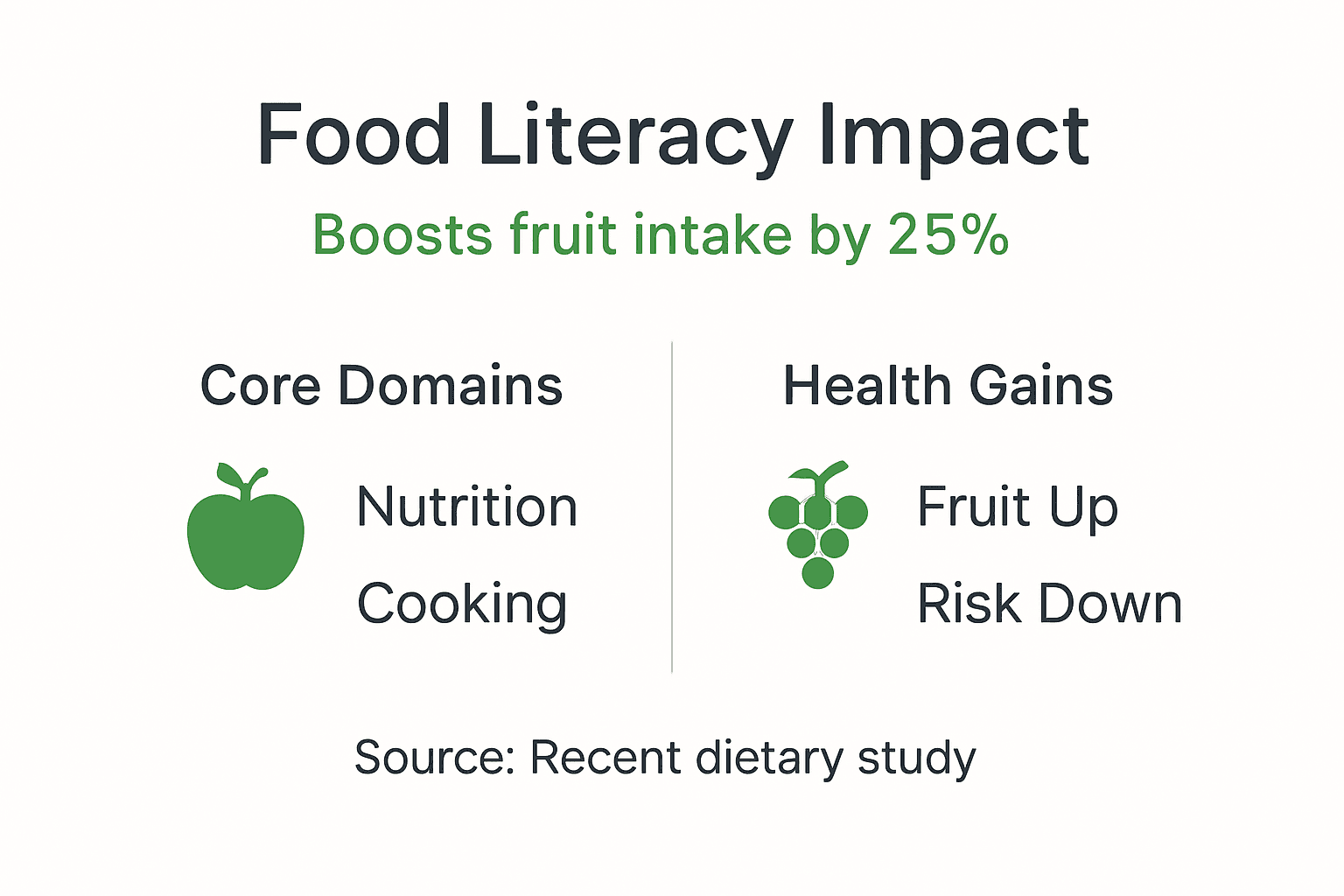
| Higher literacy improves diet quality | Individuals with higher food literacy demonstrate 25% more fruit/vegetable intake and 30% less processed food consumption. |
| Low literacy raises chronic disease risk | Low food literacy is linked to up to 40% higher incidence of obesity and chronic diseases. |
| Critical thinking is essential | Navigating conflicting nutrition information online requires evaluation skills. |
| Practical tools boost learning | Structured frameworks and digital planners make food literacy accessible and sustainable. |
What Is Food Literacy? Defining the Core Concepts
Food literacy describes the knowledge, skills, and behaviors that enable you to make informed food choices and prepare nourishing meals. It’s more than memorizing nutrient values or calorie counts. True food literacy empowers you to shop confidently, cook efficiently, and evaluate conflicting nutrition claims you encounter daily.
Four core domains define food literacy. First, nutrition knowledge covers understanding macronutrients, micronutrients, and portion sizes. Second, cooking skills involve meal preparation techniques that preserve nutrients and create balanced dishes. Third, food safety ensures proper handling and storage to prevent illness. Fourth, food sourcing means choosing quality ingredients from farmers markets, grocery stores, or community gardens based on availability and budget.
Food literacy differs from nutrition literacy, which focuses narrowly on interpreting nutrient information on labels and in dietary guidelines. While nutrition literacy teaches you to read a food label, food literacy teaches you to use that information to cook a balanced meal, plan a weekly menu, and evaluate whether an online health claim is credible. Both matter, but food literacy provides the practical foundation for daily decisions.
Basic reading and numeracy skills are prerequisites for label comprehension. You need to understand percentages to interpret Daily Values and recognize serving sizes to calculate your intake accurately. Without these foundational skills, even the best nutrition information becomes inaccessible.
For readers seeking to build healthy eating strategies, understanding these domains creates a roadmap for improvement. Each domain builds on the others, creating a comprehensive skill set that transforms how you approach food.
- Nutrition knowledge: understanding what your body needs
- Cooking skills: preparing meals that meet those needs
- Food safety: protecting your health during preparation
- Food sourcing: choosing quality ingredients within budget
How Food Literacy Impacts Dietary Choices and Health Outcomes
Research confirms that higher food literacy directly improves what you eat and how healthy you become. Individuals with higher food literacy demonstrate 25% more fruit/vegetable intake and 30% less processed food consumption. These improvements translate into measurable reductions in chronic disease risk.
The health stakes are significant. Low food literacy is linked to up to 40% higher incidence of obesity and chronic diseases. When you lack the skills to interpret labels, plan balanced meals, or cook nutritious dishes, you become more dependent on convenience foods high in sodium, added sugars, and unhealthy fats. This dependency fuels weight gain and metabolic disorders over time.
Cooking skills particularly drive dietary improvements. When you know how to roast vegetables, prepare whole grains, and season lean proteins, you naturally reduce your reliance on packaged meals. Meal planning reinforces these gains by helping you shop strategically, minimize food waste, and avoid last-minute takeout decisions.

Tracking diet quality improvements becomes easier with nutritional assessment methods that quantify your progress. These assessments measure not just calorie intake but nutrient density, food group variety, and meal timing patterns.
| Food Literacy Level | Fruit/Vegetable Intake | Processed Food Intake | Chronic Disease Risk |
|---|---|---|---|
| High | 25% above average | 30% below average | Baseline |
| Moderate | Average | Average | 15-20% elevated |
| Low | 20% below average | 40% above average | 40% elevated |
The connection between literacy and health extends beyond individual nutrients. Food literate individuals make better choices across multiple dimensions: they select fresher produce, prepare meals using healthier cooking methods, and critically evaluate nutrition claims before adopting new dietary trends.
Pro Tip: Combine label reading skills with basic cooking techniques to maximize your dietary improvements. Start by mastering five simple recipes that incorporate whole foods, then gradually expand your repertoire as confidence grows.
For practical application, reading nutrition labels becomes your first line of defense. Check serving sizes, compare similar products, and prioritize items with shorter ingredient lists featuring recognizable whole foods.
- Higher intake of fruits and vegetables improves micronutrient status
- Reduced processed food consumption lowers sodium and added sugar intake
- Better meal planning supports consistent healthy eating patterns
- Cooking skills enable nutrient-preserving preparation methods
Common Misconceptions About Food Literacy
Several persistent myths limit how people develop and apply food literacy. Recognizing these misconceptions helps you build a more complete skill set.
-
Food literacy equals nutrition facts knowledge. Many assume that memorizing vitamin content or understanding macronutrient ratios constitutes food literacy. In reality, true literacy encompasses cooking techniques, meal planning strategies, food safety protocols, and critical evaluation of nutrition information sources. You might know that spinach contains iron, but if you can’t prepare it in an appealing way or pair it with vitamin C sources to enhance absorption, your knowledge remains theoretical.
-
Knowing healthy foods means cooking skills don’t matter. Some believe that identifying nutritious options at the grocery store is sufficient for healthy eating. However, without cooking skills, you’re limited to pre-prepared items or raw foods, both of which restrict dietary variety and increase costs. Cooking unlocks affordable protein sources like dried beans, transforms inexpensive seasonal produce into delicious meals, and allows you to control sodium and fat content.
-
All nutrition information online is trustworthy. The internet overflows with dietary advice, much of it conflicting or poorly sourced. Food literacy includes the critical thinking skills to evaluate credibility, recognize commercial bias, and distinguish evidence-based recommendations from marketing hype. A single viral social media post can’t override decades of nutrition science, yet many people lack the tools to make this distinction.
Addressing these misconceptions redirects your learning efforts toward practical, comprehensive skill development. Education programs that blend knowledge transfer with hands-on cooking practice and media literacy training produce better outcomes than those focused solely on nutrition facts.
For readers who’ve experienced frustration with common dieting mistakes, understanding these misconceptions explains why information alone doesn’t change behavior. Skills and critical thinking matter just as much as knowledge. Similarly, awareness of weight loss mistakes often stems from incomplete food literacy that overemphasizes one domain while neglecting others.
Full food literacy requires balancing all four core domains. Prioritizing one area while ignoring others creates gaps that undermine your dietary goals. The most effective approach integrates nutrition knowledge with cooking practice, food safety awareness, and sourcing strategies.
A Practical Framework and Tools to Improve Food Literacy
Building food literacy requires a structured approach that progresses from foundational concepts to advanced application. This framework provides a roadmap for systematic skill development.
The framework rests on four pillars. Knowledge acquisition forms the base, covering nutrition basics, food groups, and label interpretation. Skill development builds hands-on competence through cooking practice, meal planning exercises, and shopping strategies. Critical reflection teaches you to evaluate nutrition claims, identify credible sources, and recognize marketing tactics. Behavior support provides ongoing motivation, accountability, and environmental modifications that sustain healthy habits.
Effective education integrates these pillars rather than teaching them in isolation. A comprehensive program might combine nutrition lessons with cooking demonstrations, followed by practice sessions where you plan weekly menus and shop for ingredients. Digital tools enhance this integration by providing personalized feedback, tracking progress, and adapting recommendations based on your goals.
| Learning Stage | Focus Areas | Tools and Resources | Expected Outcomes |
|---|---|---|---|
| Foundation | Basic nutrition, food groups | Educational websites, healthy eating strategies | Understanding of dietary principles |
| Skill Building | Cooking techniques, meal planning | Cooking classes, meal planning for families | Confidence in meal preparation |
| Critical Thinking | Evaluating sources, recognizing bias | Media literacy resources, fact-checking tools | Ability to assess nutrition claims |
| Application | Daily decision-making, habit formation | AI meal planners, intuitive eating guide | Sustained healthy behaviors |
AI-based meal planners exemplify how technology supports food literacy development. These tools analyze your dietary preferences, health goals, and available ingredients to generate personalized meal suggestions. They teach planning skills by modeling balanced combinations and introduce new recipes that expand your cooking repertoire. Over time, you internalize these patterns and make better decisions independently.
Targeted educational programs demonstrate measurable impact. Studies show that participants who complete structured food literacy courses increase vegetable consumption, reduce eating out frequency, and report greater confidence in cooking. The key is combining information with practice and reflection.
Pro Tip: Begin with one foundational concept like understanding serving sizes, then add one practical skill like preparing a simple vegetable side dish. Master these basics before advancing to complex meal planning or nutrition label comparison. Small, consistent progress builds lasting competence.
The most effective programs adapt to individual starting points. Someone with strong cooking skills but weak nutrition knowledge needs different instruction than someone who understands dietary guidelines but never cooks. Personalization increases engagement and accelerates learning.
- Start with self-assessment to identify current strengths and gaps
- Choose learning resources matched to your skill level and interests
- Practice new skills regularly to build automaticity and confidence
- Seek feedback from credible sources to refine your approach
- Gradually increase complexity as foundational skills become second nature
Bridging Knowledge to Action: Applying Food Literacy Daily
Food literacy becomes valuable only when you apply it consistently in everyday decisions. These practical strategies help you translate concepts into sustainable habits.
Mastering reading nutrition labels starts with identifying key elements: serving size, calories, sodium, added sugars, and fiber. Compare similar products by standardizing to the same serving size, allowing direct evaluation of nutrient density. Prioritize items with higher fiber, lower sodium, and minimal added sugars. Check ingredient lists for whole food sources listed first, avoiding products with lengthy chemical additive lists.
Balanced meal planning ensures you meet nutritional needs while enjoying food variety. Include protein sources at each meal to support satiety and muscle maintenance. Fill half your plate with colorful vegetables and fruits to maximize micronutrient intake. Add whole grains or starchy vegetables for sustained energy. Incorporate healthy fats from nuts, seeds, olive oil, or avocados in moderate amounts.
Personalized nutrition tools align food choices with your specific health goals, whether weight management, blood sugar control, or athletic performance. A meal planning guide helps you structure weekly menus that accommodate family preferences while meeting nutritional targets. These tools remove guesswork, reduce decision fatigue, and increase adherence to healthy eating patterns.
Consistent practice reinforces confidence and automaticity. The first time you plan a week of meals might take an hour, but with repetition, the process becomes faster and more intuitive. You develop mental shortcuts, recognize seasonal produce bargains, and adapt recipes based on available ingredients.
Pro Tip: Use digital meal planning apps to streamline daily decisions and track your progress over time. Many apps generate shopping lists automatically, calculate nutritional values, and suggest recipe modifications based on dietary restrictions. This technology support reduces barriers and maintains motivation during challenging periods.
Daily application also means cooking more meals at home. Even simple preparations like roasting vegetables, grilling proteins, or assembling grain bowls give you control over ingredients and portions. Batch cooking on weekends provides convenient options for busy weeknights, reducing temptation to order takeout.
- Read labels carefully before purchasing packaged foods
- Plan weekly menus incorporating diverse food groups and cooking methods
- Prep ingredients in advance to simplify weeknight cooking
- Use apps and digital tools for personalized meal suggestions and tracking
- Reflect regularly on what’s working and adjust strategies as needed
Explore Dietium’s Tools to Enhance Your Food Literacy
Transforming food literacy knowledge into consistent healthy eating requires support from evidence-based tools and resources. Dietium offers comprehensive solutions designed to bridge this gap.
Our scientifically-backed nutritional assessment methods identify your specific dietary needs, deficiencies, and optimization opportunities. These assessments move beyond generic advice to provide personalized insights based on your health status, activity level, and wellness goals. Understanding your starting point helps you prioritize which aspects of food literacy to develop first.
Personalized meal plans translate your assessment results into actionable daily menus. Each plan balances macronutrients, incorporates variety, and aligns with your preferences and cooking skill level. As your food literacy grows, the plans become more sophisticated, introducing new ingredients and preparation techniques that expand your culinary repertoire.
Additional resources like our meal planning guide provide step-by-step instruction for building this essential skill. From grocery shopping strategies to batch cooking tips, these guides address the practical challenges that often derail healthy eating intentions. Combining education with hands-on tools maximizes your success in applying food literacy for sustained wellness.
FAQ
What are the four core domains of food literacy?
The four core domains include nutrition knowledge (understanding nutrients and dietary needs), cooking skills (preparing balanced meals), food safety (proper handling and storage), and food sourcing (selecting quality ingredients). These domains work together to build practical competence in making daily food decisions that support health and wellness.
How does food literacy reduce the risk of chronic diseases?
Improved food literacy leads to better diet quality through increased fruit and vegetable consumption and reduced processed food intake. These dietary improvements lower risk factors for obesity, type 2 diabetes, and cardiovascular disease. Low food literacy is linked to up to 40% higher incidence of obesity and chronic diseases. Building these skills creates sustainable behavioral changes that protect long-term health.
What practical steps can beginners take to improve their food literacy?
Start by learning basic nutrition concepts like food groups and portion sizes, then develop foundational cooking skills through simple recipes. Practice reading and comparing nutrition labels at the grocery store. Use digital meal planning tools to structure weekly menus and track progress. Gradually build critical thinking skills by evaluating nutrition information sources for credibility and evidence quality.


