 Skip to content

TL;DR:
- Building a home gym is cost-effective, with a basic setup costing under $500 and paying for itself in a few years. Proper space assessment and prioritized equipment purchases ensure safety and long-term use, while regular maintenance extends equipment lifespan. Starting with simple, essential gear promotes consistent training and prevents wasted spending on unnecessary machines.
Setting up a home gym is the process of designing, equipping, and organizing a personal workout space tailored to your fitness goals and budget. A basic home gym build starts at $500 and pays for itself compared to a gym membership within 2–3 years. You get no commute, no wait times, and no monthly fees eating into your budget. This guide walks you through every step, from measuring your space to maintaining your equipment, so you build something you will actually use.
How to assess space and define your fitness goals
The right home gym starts with an honest look at your available space. Space requirements range from 50 sq ft for a minimal setup to 400–500 sq ft for a full garage gym. That range matters because it determines which equipment you can safely use and how you arrange it.
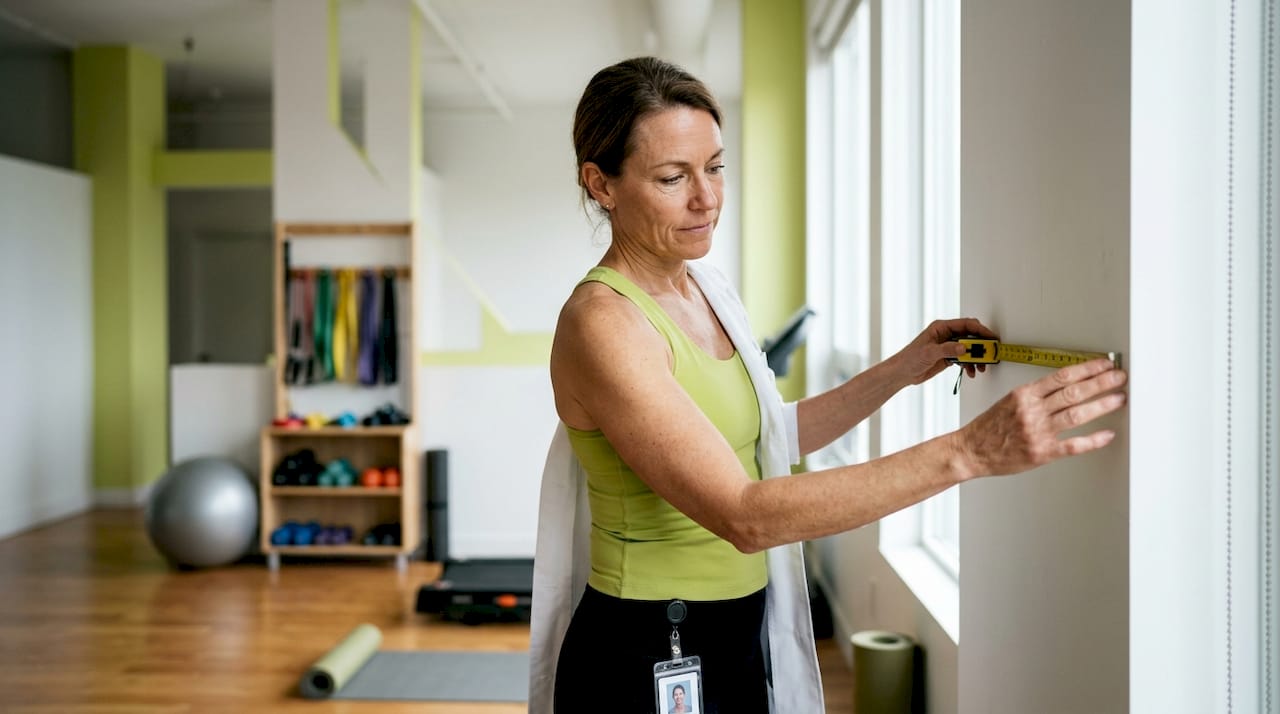
Measure your floor area, ceiling height, and door width before buying anything. A standard 7-foot Olympic barbell needs at least 8 feet of clearance to load and unload plates safely. Power racks have a footprint of roughly 4 by 7 feet, and you need room to walk around them. Ceilings below 8 feet rule out overhead pressing with a barbell.
Your fitness goals shape every purchase decision. Strength training requires a barbell, plates, and a rack. General fitness and cardio work well in 50–80 sq ft with resistance bands, a pull-up bar, and a jump rope. A spare bedroom averaging 100–150 sq ft handles a full beginner strength setup. A two-car garage gives you room to grow.
Apartment setups need special attention. Noise travels through floors, so rubber mats and foldable equipment are non-negotiable. Prioritize a minimal footprint and quiet movements like resistance training and bodyweight work.
- Garage: 400–500 sq ft, high ceilings, tolerates noise, ideal for barbells and racks
- Basement: 200–400 sq ft, check ceiling height and moisture levels before buying equipment
- Spare bedroom: 100–150 sq ft, fits a beginner barbell setup with careful layout
- Apartment corner: 50–80 sq ft, use foldable and quiet gear, prioritize bodyweight and bands
What equipment should you buy first for a home gym?
Experts recommend a specific purchase order to avoid wasting money on gear you will not use. Buy in this sequence: barbell and plates, then a power rack, then an adjustable bench, then flooring, then accessories, then cardio equipment, and finally specialty machines.
- Barbell and plates. A 45-pound Olympic barbell and 200–300 pounds of plates cover every major strength movement: squat, deadlift, bench press, and overhead press. This is the foundation of any serious home gym.
- Power rack or squat rack. A rack lets you train heavy without a spotter. It also adds pull-up bar functionality. Budget racks start around $300 and handle most beginner and intermediate loads.
- Adjustable bench. A flat-to-incline bench multiplies your barbell’s usefulness. It opens up incline pressing, dumbbell rows, and step-up variations.
- Flooring. Rubber stall mats (3/4-inch thick) protect your floor, reduce noise, and cushion dropped weights. They cost roughly $1.50–$2.00 per square foot at farm supply stores.
- Accessories. Resistance bands, a pull-up bar, and a dip attachment add variety without much cost.
- Cardio equipment. A jump rope costs under $20 and delivers serious conditioning. A stationary bike or rowing machine comes later, once your strength foundation is set.
- Specialty machines. Cable machines and leg press units are last-priority purchases for home gyms.
Pro Tip: Buy used barbells and plates from local classifieds or sporting goods resale shops. Cast iron plates hold their value and function identically to new ones at a fraction of the price.
Here is a realistic cost breakdown by tier:
| Tier | Core Equipment | Estimated Cost |
|---|---|---|
| Starter | Barbell, plates, resistance bands | $300–$500 |
| Intermediate | Starter + power rack + adjustable bench | $800–$1,200 |
| Complete | Intermediate + flooring + cardio + accessories | $1,500–$2,500 |
For those on a tight budget, homemade fitness equipment can fill gaps between purchases without compromising your training.
Step-by-step guide to setting up your home workout space
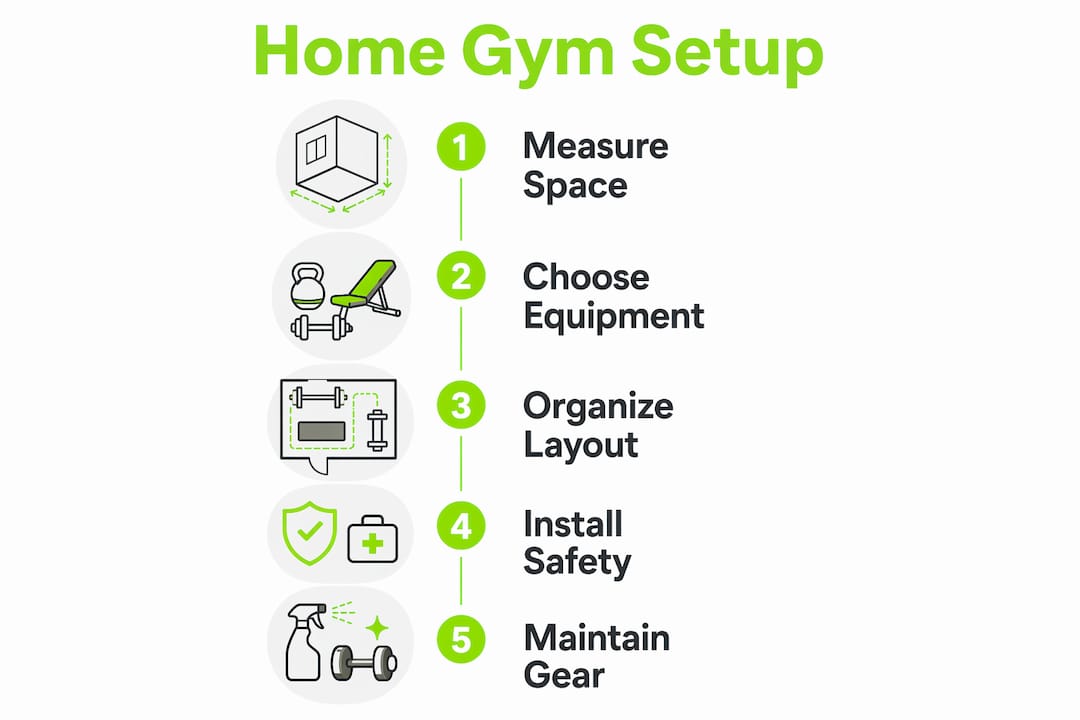
A structured 7-day setup plan breaks the process into daily tasks and gets your gym ready in one week. Breaking it down prevents you from making rushed decisions or buying the wrong gear.
- Day 1: Assess and measure. Measure floor area, ceiling height, and door width. Note any moisture, uneven floors, or electrical outlet locations.
- Day 2: Set your budget. Decide your total spend and rank purchases by priority. Commit to the expert-recommended order: barbell first, rack second.
- Day 3: Order or source flooring. Rubber stall mats ship within 1–2 days from most suppliers. Measure twice and order enough to cover your full lifting area.
- Day 4: Install flooring. Lay mats with seams tight and edges flush against walls. Trim with a utility knife for a clean fit.
- Day 5: Assemble the rack. Follow the manufacturer’s torque specs for every bolt. Power racks on uneven garage floors may need shims for stability.
- Day 6: Set up remaining equipment. Position the bench inside the rack. Load the barbell and confirm plate clearance on both sides.
- Day 7: Safety check and first session. Test all bolts, confirm safety bar height, and practice safe bailing with an empty bar before lifting heavy.
Pro Tip: Set your safety bars at the correct height before your first heavy set. For squats, place them just below the depth you reach at the bottom of your lift. Rehearse stepping out of a failed rep with an empty bar until it feels natural.
Lighting and airflow are two details most people skip. LED shop lights cost $20–$30 each and eliminate the shadows that make a garage feel unsafe. A box fan at $20 keeps air moving and prevents overheating during intense sessions.
Lay out equipment with clearance in mind. Leave at least 3 feet on each side of the barbell for plate loading. Keep the path to the exit clear. Wall-mount your accessories to free up floor space.
- Confirm ceiling height clears the bar during overhead press
- Check that the rack footprint allows full squat depth without hitting walls
- Secure any loose cables or cords away from the lifting area
- Store extra plates on the rack’s weight horns, not on the floor
How to maintain your home gym and protect your investment
Monthly maintenance takes about 15–20 minutes and significantly extends the life of every piece of equipment. Skipping it leads to rust, loose bolts, and worn flooring that costs more to replace than to prevent.
- Barbell care: Brush the knurling with a nylon brush to clear chalk and debris. Oil the sleeve bearings monthly with 3-in-1 oil or a dedicated barbell oil. This keeps the bar spinning smoothly and prevents rust.
- Rack inspection: Check and tighten every bolt monthly. Vibration from heavy lifts loosens hardware over time. A loose rack is a serious safety risk.
- Flooring check: Inspect rubber mats for cracks, curling edges, or compression wear. Replace mats that no longer lie flat, as uneven flooring creates instability under a loaded bar.
- Cast iron plates: Wipe plates dry after every session. Apply a light coat of WD-40 or oil to prevent rust, especially in humid garages or basements.
- Storage: Store barbells horizontally on a rack or vertically in a dedicated holder. Never lean a loaded barbell against a wall.
Pro Tip: Keep a small maintenance kit near your gym: a nylon brush, a bottle of barbell oil, a torque wrench, and a few spare bolts. Having everything in one place means you will actually do the monthly check instead of putting it off.
Linear progression training with three full-body sessions per week maximizes strength gains for beginners without requiring complex equipment. A well-maintained barbell and rack are all you need to run that program for 12–18 months of consistent progress. Pair your training with a 4-week fat-loss plan to align your workouts with a clear goal from day one.
Key Takeaways
A well-planned home gym built around a barbell, power rack, and rubber flooring delivers effective strength training for $500–$1,200 and pays for itself within 2–3 years.
| Point | Details |
|---|---|
| Space comes first | Measure floor area and ceiling height before buying any equipment. |
| Buy in priority order | Start with barbell and plates, then rack, bench, flooring, and accessories. |
| Safety is non-negotiable | Set safety bars correctly and practice bailing with an empty bar before lifting heavy. |
| Maintenance extends life | A 15–20 minute monthly routine prevents rust, loose bolts, and worn flooring. |
| Budget builds work | A starter setup costs $300–$500; a complete beginner gym runs $1,500–$2,500. |
What I’ve learned from building and using a home gym
I’ve seen people spend $3,000 on a home gym they stop using in six weeks. The reason is almost always the same: they bought too much too fast, before they had a consistent training habit.
The most effective home gyms I’ve encountered are boring by design. A barbell, a rack, a bench, and some rubber mats. That is it. The simplicity removes every excuse. You cannot blame a crowded gym or a broken machine. You show up, you lift, you leave.
The mistake I see most often is buying cardio equipment first. A treadmill feels productive. It is also expensive, large, and easy to ignore. Strength training with a barbell builds the habit faster because the benefits of strength training show up quickly and measurably. You add weight to the bar. You see the number go up. That feedback loop keeps people coming back.
Start with a $500 setup. Train on it for three months. Then decide what to add. You will make far better decisions once you know how you actually train, not how you imagine you will train.
— Srasti
Fuel your training with a plan that matches your effort
Building a home exercise area is only half the equation. What you eat before and after training determines how fast you recover and how much progress you make. Dietium’s personalized diet planning matches your calorie and macronutrient targets to your specific fitness goals, whether you are building strength, losing fat, or improving general health. The platform’s AI-powered tools calculate your body metrics and generate meal plans that work alongside your training schedule. If you want your nutrition to support the work you are putting in at home, Dietium gives you a data-driven place to start. You can also use Dietium’s fitness calculators to track body composition changes as your training progresses.
FAQ
How much does a basic home gym cost?
A starter home gym costs $300–$500 for a barbell, plates, and resistance bands. A complete beginner setup with a rack, bench, and flooring runs $1,500–$2,500.
How much space do I need for a home gym?
You need at least 50 sq ft for a minimal setup and 80–100 sq ft for a functional barbell gym. A garage averaging 400–500 sq ft gives you room for a full setup.
What equipment should beginners buy first?
Buy a barbell and plates first, then a power rack, then an adjustable bench. This priority purchase order avoids wasted spending on gear you will not use early in your training.
Is a home gym safe without a spotter?
A power rack with properly set safety bars makes solo lifting safe. Practice bailing with an empty bar before lifting heavy to learn how to exit a failed rep without injury.
How often should I maintain my home gym equipment?
Monthly maintenance takes 15–20 minutes and covers barbell cleaning, rack bolt tightening, and flooring inspection. Consistent upkeep prevents rust and equipment failure.


