 Skip to content

Most American adults struggle to meet recommended activity levels, yet making fitness accessible is simpler than many expect. Whether you are just starting out or shifting routines to complement your nutrition plan, a few basic steps can transform your progress. This guide reveals practical strategies anyone can use to assess their fitness, choose beginner workouts, and track results regardless of location or experience.
Table of Contents
- Step 1: Assess Current Fitness Level And Set Realistic Goals
- Step 2: Choose Suitable Beginner Workout Routines
- Step 3: Prepare Necessary Gear And Workout Space
- Step 4: Follow Planned Routines With Correct Form
- Step 5: Track Progress And Adjust Routines As Needed
Quick Summary
| Key Insight | Explanation |
|---|---|
| 1. Assess Your Fitness Level | Conduct self-tests to gauge fitness in key areas like strength, endurance, and flexibility. |
| 2. Set SMART Goals | Create specific, measurable, achievable, relevant, and time-bound fitness goals to track progress. |
| 3. Choose Appropriate Workouts | Start with full body, bodyweight exercises 3-4 times weekly for balanced fitness development. |
| 4. Prioritize Proper Technique | Focus on controlled movements and correct form to ensure safety and enhance workout effectiveness. |
| 5. Track and Adjust Regularly | Keep a log of workouts, body measurements, and energy levels to make informed adjustments as needed. |
Step 1: Assess current fitness level and set realistic goals
Successfully launching your fitness journey begins with a comprehensive understanding of your current physical condition. Setting realistic fitness goals requires honest self assessment and strategic planning.
To evaluate your baseline fitness, start with a personal inventory. Conduct simple self tests focusing on core fitness components: cardiovascular endurance, muscular strength, flexibility, and overall body composition. Perform standard assessments like tracking how many pushups you can complete in one minute, measuring your resting heart rate, checking your flexibility through basic stretching tests, and calculating your body mass index.
Once you understand your starting point, create specific goals using the SMART framework. Specific means defining precise workout targets like “complete 15 consecutive pushups” instead of vague statements like “get stronger.” Measurable objectives allow you to track progress, such as running a specific distance in a set time. Achievable goals match your current fitness level, preventing burnout and maintaining motivation. Relevant goals align with your broader health objectives, whether weight loss, muscle building, or general wellness. Time bound goals create accountability by establishing clear deadlines for achievement.
Pro tip: Take progress photos and measurements at the start of your fitness journey to track subtle changes that a scale might not reveal.
Here’s how common fitness assessment methods compare for beginners:
| Method | What It Measures | Ease of Use | Useful Insights |
|---|---|---|---|
| Pushup Test | Muscular endurance | Very easy | Upper body strength level |
| Resting Heart Rate | Cardiovascular fitness | Very easy | Heart health baseline |
| Flexibility Stretch | Range of motion | Easy | Mobility limitations |
| Body Mass Index | Body composition | Easy, needs calculator | Weight category and risk |
Step 2: Choose suitable beginner workout routines
Selecting the right workout routine can make the difference between sustainable fitness progress and frustrating setbacks. Home workout essentials provide an accessible starting point for newcomers looking to build strength and endurance.
When choosing beginner workout routines, focus on full body exercises that engage multiple muscle groups and require minimal equipment. Bodyweight exercises like squats, lunges, pushups, and planks offer excellent starting points for building foundational strength. Consider incorporating a balanced mix of cardiovascular and strength training activities. Aim for 3-4 workout sessions per week, allowing adequate recovery time between exercises. Each session should include a brief warmup, main workout set, and cooldown period.
Start with lower intensity workouts and gradually increase difficulty. Circuit training or high intensity interval training (HIIT) work well for beginners because they can be modified to match individual fitness levels. For those with limited time or equipment, consider routines that combine strength and cardio elements like burpees, mountain climbers, and jumping jacks. These exercises provide comprehensive workouts that improve overall fitness without requiring specialized gym equipment.
Pro tip: Select workout routines that genuinely interest you and match your personality to increase long term adherence and motivation.
The table below summarizes beginner workout types and their advantages:
| Workout Type | Best For | Equipment Needed | Primary Benefit |
|---|---|---|---|
| Bodyweight Circuit | All-around fitness | None | Strength and endurance boost |
| HIIT | Fitness levels vary | Timer, floor space | Fast cardio improvement |
| Resistance Band | Strength building | Bands | Muscle tone and stability |
| Cardio Intervals | Heart health | Mat, timer | Burns calories efficiently |
Step 3: Prepare necessary gear and workout space
Transforming your fitness journey starts with creating an inviting and functional workout environment. Choosing the right workout gear will help you stay motivated and prevent potential injuries.
Begin by selecting appropriate athletic footwear that matches your primary workout type. Running shoes differ from cross training shoes in their support and cushioning, so invest in a pair specifically designed for your intended activities. For home workouts, create a dedicated space that is clear of obstacles and provides enough room for movement. This could be a corner of your living room, bedroom, or a section of your garage. Aim for an area at least 6 by 6 feet to accommodate bodyweight exercises and basic equipment.
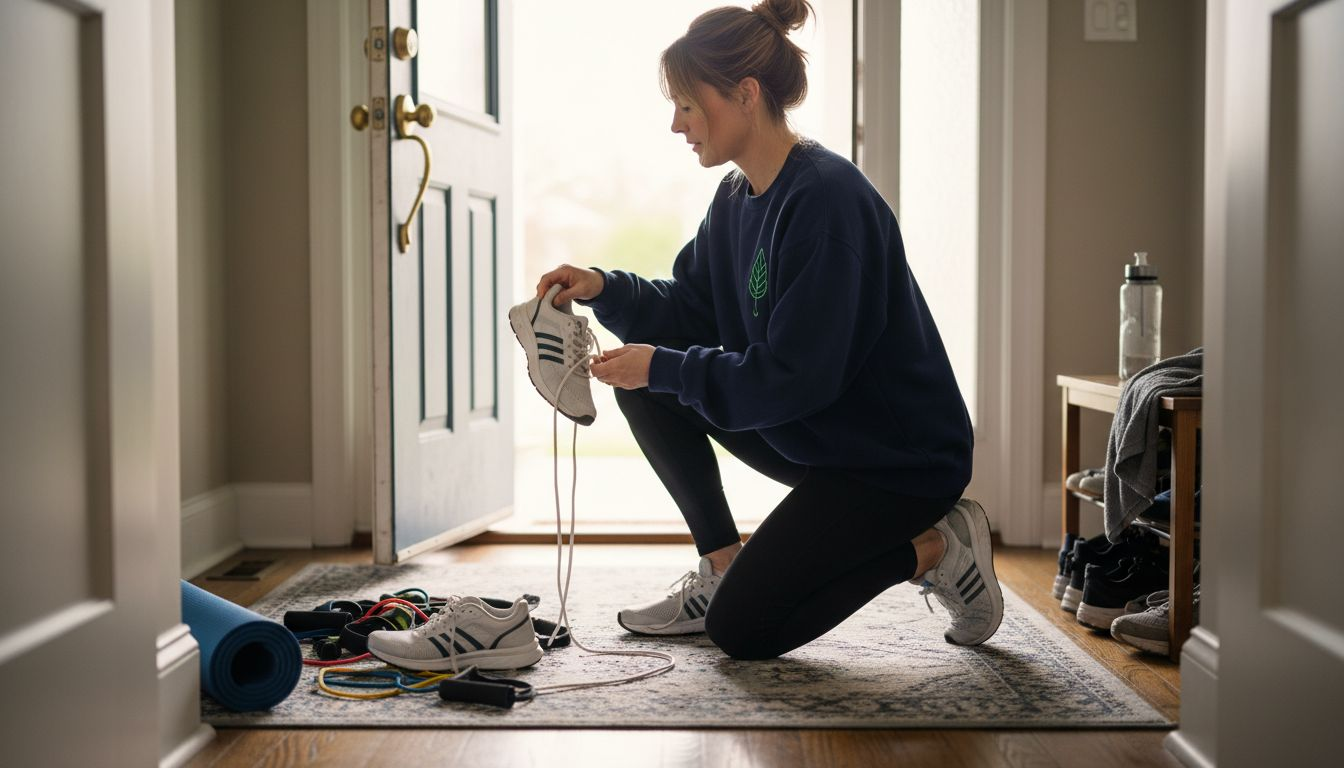
Gather essential workout gear that does not require significant investment. Resistance bands, a yoga mat, light dumbbells, and a water bottle are versatile tools that can enhance your fitness routine without breaking the bank. Consider comfortable moisture wicking clothing that allows full range of motion. For those with limited space, look for compact and multipurpose equipment like adjustable dumbbells or resistance bands that can be easily stored after use.
Pro tip: Invest in versatile gear that can be used across multiple workout types to maximize your budget and workout flexibility.
Step 4: Follow planned routines with correct form
Mastering proper exercise technique is crucial for preventing injuries and maximizing workout effectiveness. Workout routines for beginners emphasize the importance of controlled movements and precise body mechanics.
Pay close attention to your body alignment during each exercise. Start by watching tutorial videos or consulting fitness professionals to understand the correct form for each movement. Focus on maintaining a neutral spine during strength exercises, keeping your core engaged and avoiding unnecessary strain. Perform repetitions slowly and deliberately, prioritizing quality over quantity. This means executing each movement with full range of motion and maintaining tension in the targeted muscle groups.
For bodyweight and weight training exercises, break down complex movements into smaller components. Practice each phase of an exercise separately before combining them. For instance when doing squats, first practice the hip hinge movement, then add depth, and finally incorporate full range motion. Learn to distinguish between muscle fatigue and potential injury warning signs. If you feel sharp pain or unusual discomfort, stop the exercise immediately and reassess your technique. Remember that progress comes from consistent practice and gradual improvement of your form and technique.
Pro tip: Use mirror reflections or record short video clips of your exercises to analyze and improve your technique in real time.
Step 5: Track progress and adjust routines as needed
Tracking your fitness journey transforms good intentions into measurable results. Tracking body measurements for progress provides concrete evidence of your ongoing transformation and helps maintain motivation.

Establish a consistent tracking system that goes beyond simple weight measurements. Record key metrics like body measurements, workout performance, energy levels, and how your clothing fits. Take weekly progress photos and log your exercises including repetitions, weights, and perceived difficulty. This comprehensive approach helps you understand your body’s response to different workout routines and nutrition strategies.
Be prepared to modify your workout routine based on your tracking data. If you are not seeing desired results or experiencing plateaus, consider adjusting exercise intensity, changing exercise types, or modifying rest periods. Listen to your body and recognize that progress is not always linear. Some weeks you might see significant improvements while others might seem stagnant. The key is consistent effort and willingness to adapt your approach based on objective data and how you feel physically and mentally.
Pro tip: Create a simple spreadsheet or use a fitness tracking app to document your progress systematically and make data driven adjustments to your workout routine.
Unlock Your Best Fitness Start with Personalized Support
Starting a new workout routine can feel overwhelming especially when trying to set realistic goals and maintain proper form. Many beginners struggle with tracking progress and adjusting their routines in ways that fit their unique needs. The article highlights essential challenges like assessing fitness levels, choosing suitable exercises, and maintaining motivation through clear goals and correct technique.
At Dietium.com, we understand these hurdles and provide the perfect solution to keep you focused and empowered. Our innovative Recipians app delivers customized meal plans and fitness routines tailored specifically to your current fitness level and objectives. Complement this with our advanced AI-powered tools that track your body metrics such as BMI and calorie requirements to guide your progress effectively. Dive deeper into setting realistic fitness goals and explore home workout essentials for beginners to build a strong foundation.
Take control of your fitness journey today with the support of technology designed to adapt to you. Visit Dietium.com now and start transforming your beginner routines into lasting results.
Frequently Asked Questions
How do I assess my current fitness level before starting a beginner workout routine?
To assess your current fitness level, perform simple self-tests that measure cardiovascular endurance, muscular strength, flexibility, and body composition. Document results like the number of pushups completed in one minute, resting heart rate, or body mass index to establish a baseline.
What types of exercises should I include in my beginner workout routine?
In a beginner workout routine, focus on full-body exercises that engage multiple muscle groups. Incorporate bodyweight exercises like squats, pushups, and lunges, aiming for 3-4 sessions weekly to build foundational strength and endurance.
How can I ensure I am using the correct form during my workouts?
To use correct form during workouts, watch tutorial videos or consult fitness professionals to learn proper technique. Practice movements slowly and focus on alignment, gradually increasing intensity as you become more comfortable with each exercise.
What is the importance of tracking progress in my fitness journey?
Tracking your progress is essential for recognizing improvements and maintaining motivation. Log key metrics such as workout performance, body measurements, and energy levels to make informed adjustments to your routine every few weeks.
How can I make my workout environment more conducive to fitness?
Create a dedicated workout space that is clear of obstacles and at least 6 by 6 feet in size, allowing room for movement. Invest in essential gear like resistance bands and light dumbbells while ensuring your space is comfortable and safe for exercise.
What should I do if I hit a plateau in my fitness progress?
If you hit a plateau, reassess and modify your workout routine based on your tracking data. Increase exercise intensity, change exercise types, or adjust rest periods to stimulate progress and stay motivated.


