 Skip to content

Most people think strength training is only for bodybuilders pumping iron in gyms. That’s a myth. Strength training is a type of physical exercise specializing in resistance to induce muscle contraction and increase muscle strength, and it benefits everyone from complete beginners to seasoned athletes. Whether you want to build muscle, lose weight, improve bone health, or simply move better in daily life, strength training delivers results. This guide breaks down what strength training really is, why it matters for your health, the different types you can try, and how to start safely in 2026.
Table of Contents
- What Is Strength Training? An Essential Definition
- Health And Fitness Benefits Of Strength Training
- Common Types And Methods Of Strength Training
- How To Start Strength Training Safely And Effectively
- Explore Personalized Nutrition And Meal Planning To Fuel Your Strength Training
- Frequently Asked Questions
Key takeaways
| Point | Details |
|---|---|
| Definition | Strength training uses resistance to challenge muscles, improving strength, endurance, and overall fitness |
| Health benefits | Builds muscle mass, increases bone density, boosts metabolism, and reduces chronic disease risk |
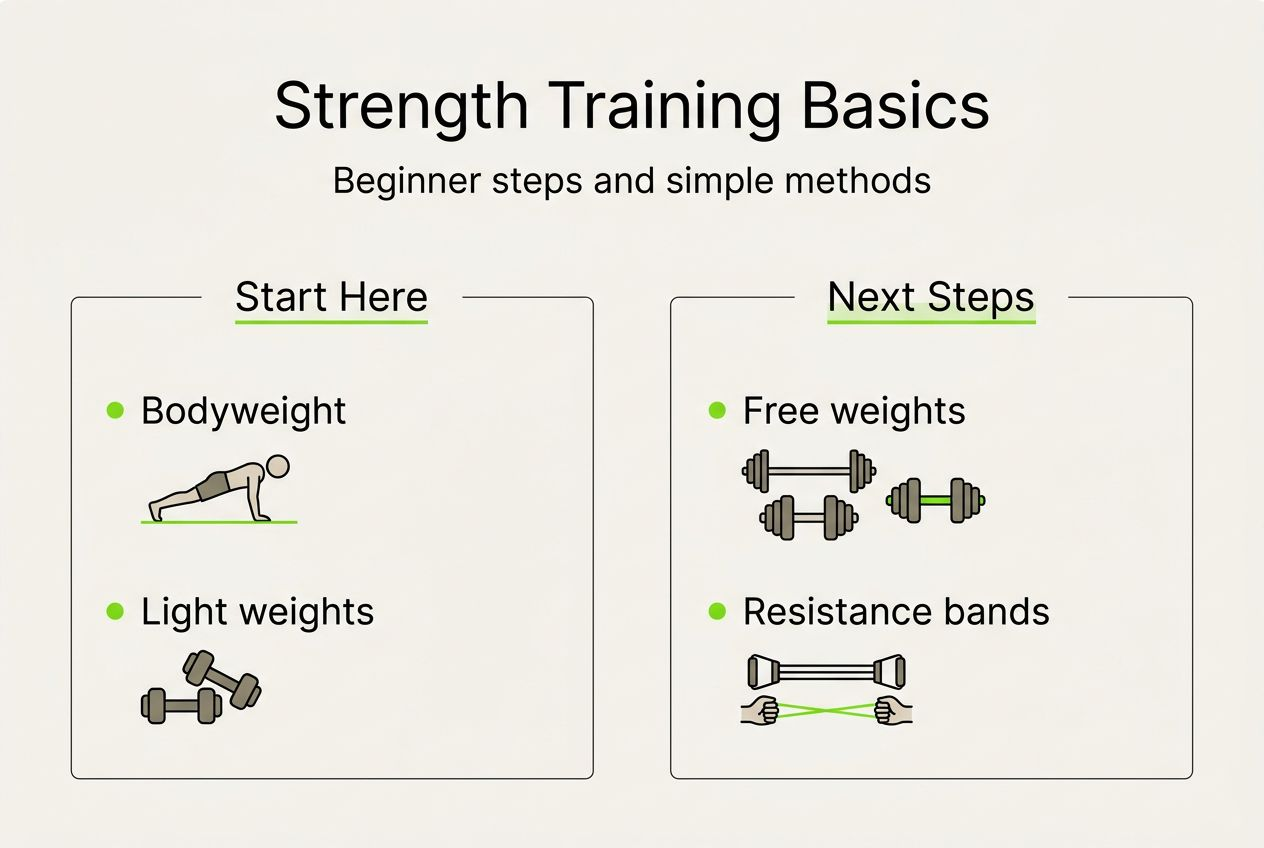
| Training types | Includes free weights, machines, bodyweight exercises, and resistance bands for varied workouts |
| Getting started | Begin with proper form, gradual progression, and adequate rest to maximize gains and prevent injury |
What is strength training? An essential definition
Strength training, also called resistance training, involves exercises that make your muscles work against a weight or force. This could be dumbbells, your own body weight, resistance bands, or weight machines. The goal is to challenge your muscles beyond their usual activity level, forcing them to adapt and grow stronger.
Unlike cardio exercises that primarily improve heart health and endurance, strength training specifically targets muscular strength and power. It differs from flexibility work like yoga or stretching, which focuses on range of motion. Each exercise type serves a purpose, but strength training uniquely builds the foundation for physical capability.
Common forms of strength training include:
- Weightlifting with barbells or dumbbells
- Bodyweight exercises like pushups, squats, and lunges
- Resistance band workouts
- Weight machine circuits at gyms
- Functional movements like carrying groceries or climbing stairs
The beauty of strength training basics lies in their accessibility. You don’t need expensive equipment or a gym membership to start. Bodyweight exercises provide effective resistance for beginners, while more experienced individuals can progress to heavier weights and complex movements. The key principle remains constant: apply resistance, challenge muscles, allow recovery, repeat.
Pro Tip: Start with movements that mimic daily activities. Squats mirror sitting and standing, while rows replicate pulling motions you use when opening doors or lifting objects.
Health and fitness benefits of strength training
The advantages of strength training extend far beyond bigger biceps. Regular strength training lowers mortality risk by around 20%, improves metabolic health, and enhances physical function across all age groups. These benefits compound over time, making strength training one of the most valuable investments in long-term health.
Physical health improvements include:
- Increased muscle mass that supports metabolism and daily function
- Enhanced bone density reducing osteoporosis risk
- Stronger joints and connective tissues preventing injury
- Better balance and coordination lowering fall risk in older adults
- Improved insulin sensitivity helping manage blood sugar
Metabolic benefits deserve special attention. Muscle tissue burns more calories at rest than fat tissue, so building muscle naturally elevates your resting metabolic rate. This makes weight management easier without extreme dieting. Combined with proper nutrition, strength training creates a powerful fat loss environment while preserving lean tissue.
Functional fitness gains translate directly to real life. Carrying children becomes easier. Climbing stairs feels less taxing. Playing sports improves. These practical benefits often matter more than aesthetic changes, especially for people focused on quality of life rather than appearance.
“Strength training isn’t about vanity. It’s about building a body that serves you well for decades, preventing disease, and maintaining independence as you age.”
Mental health advantages include reduced anxiety, improved mood, and better sleep quality. The sense of accomplishment from progressive strength gains builds confidence that extends beyond the gym. Many people report better stress management and mental clarity after establishing consistent strength training health benefits routines.

Pro Tip: Track your strength gains monthly rather than obsessing over daily changes. Seeing yourself lift heavier weights or complete more reps over weeks provides powerful motivation.
Common types and methods of strength training
Choosing the right strength training method depends on your goals, available equipment, experience level, and preferences. Each approach offers unique advantages, and many successful programs combine multiple methods for balanced development.
| Method | Pros | Cons | Best For |
|---|---|---|---|
| Free weights | Natural movement patterns, functional strength, versatile | Requires technique learning, needs spotter for heavy lifts | Building overall strength and coordination |
| Machines | Guided movement, safer for beginners, isolates muscles | Less functional, limited movement patterns | Targeting specific muscles, rehabilitation |
| Bodyweight | No equipment needed, can do anywhere, scalable difficulty | Progress harder to measure, limited resistance for advanced | Beginners, travel, functional fitness |
| Resistance bands | Portable, joint-friendly, variable resistance | Can break, less weight capacity | Home workouts, warm-ups, injury recovery |
Free weights like dumbbells and barbells remain the gold standard for many trainers. They require stabilizing muscles to control the weight, developing functional strength that transfers to real-world activities. Compound movements like squats, deadlifts, and presses engage multiple muscle groups simultaneously, maximizing efficiency.
Machines provide a controlled environment ideal for beginners learning movement patterns or people recovering from injuries. The guided path reduces injury risk and allows focus on specific muscles. However, machines don’t teach the body to stabilize loads naturally.
Bodyweight training offers unmatched convenience and scalability. Pushup variations range from wall pushups for absolute beginners to one-arm pushups for advanced athletes. Squats, lunges, planks, and pullups build impressive strength without equipment. Resistance training modalities include free weights, machines, bodyweight exercises, and resistance bands, each serving different needs.
Resistance bands provide variable tension throughout movements, challenging muscles differently than fixed weights. They’re portable, affordable, and gentle on joints, making them excellent for warm-ups or complementing other methods.
Pro Tip: Beginners should master bodyweight movements before adding external resistance. Perfect your squat form with body weight before loading a barbell on your back. This foundation prevents injury and accelerates long-term progress.
Varying your training methods prevents plateaus and keeps workouts interesting. A well-rounded program might include barbell compounds for primary strength, machines for targeted muscle work, and bodyweight exercises for conditioning. Explore beginner workout routines to find combinations that match your lifestyle.
How to start strength training safely and effectively
Beginning a strength training program requires smart planning to build habits that last while avoiding common pitfalls. Starting with proper technique, gradual progression, and rest days is critical to avoid injury and maximize gains. Follow these steps to establish a solid foundation.
-
Learn proper form before adding weight. Watch instructional videos, work with a trainer for initial sessions, or practice movements in front of a mirror. Quality movement patterns prevent injury and ensure you target intended muscles.
-
Start with a simple full-body routine 2-3 times weekly. Choose 5-7 exercises covering major muscle groups: legs, chest, back, shoulders, arms, and core. This approach builds balanced strength efficiently.
-
Warm up for 5-10 minutes before lifting. Light cardio increases blood flow, while dynamic stretches prepare joints and muscles for work. Never skip this step, especially as you age.
-
Begin with lighter weights or easier exercise variations. Focus on completing 8-12 repetitions with good form. If you can’t maintain form, reduce the resistance.
-
Rest 48 hours between sessions targeting the same muscle groups. Muscles grow during recovery, not during workouts. Adequate rest prevents overtraining and reduces injury risk.
-
Apply progressive overload gradually. Once you complete your target reps with good form, increase resistance by 5-10% or add one more repetition. Small, consistent increases compound into major strength gains over months.
-
Track your workouts in a notebook or app. Record exercises, weights, sets, and reps. This data shows progress that might not be visible in the mirror and guides adjustments.
Pro Tip: Schedule strength training sessions like important appointments. Consistency matters more than perfection. Two quality sessions weekly beat sporadic intense workouts every time.
Listening to your body distinguishes productive challenge from harmful strain. Muscle fatigue and mild soreness indicate effective training. Sharp pain, joint discomfort, or lingering soreness beyond 48 hours signal problems requiring rest or form correction. Building awareness takes time but prevents setbacks.
As you progress, consider creating a fitness routine that integrates strength training with other exercise types for comprehensive health benefits. Balance, flexibility, and cardiovascular fitness complement muscular strength for optimal wellness.
Explore personalized nutrition and meal planning to fuel your strength training
Strength training places unique demands on your body that proper nutrition must support. Adequate protein intake repairs and builds muscle tissue damaged during workouts. Carbohydrates provide energy for intense training sessions. Healthy fats support hormone production essential for recovery and adaptation.
Personalized nutritional assessment methods identify your specific calorie and macronutrient needs based on training intensity, body composition goals, and individual metabolism. Generic diet advice rarely accounts for the increased demands of regular strength training.
Custom personalized meal plans aligned with your training schedule optimize results. Timing nutrients around workouts enhances performance and recovery. Setting nutrition goals that complement your strength training objectives creates synergy between diet and exercise, accelerating progress toward better health and fitness.
Frequently asked questions
What is the difference between strength training and resistance training?
The terms are often used interchangeably, but resistance training is the broader category. It includes any exercise using resistance like weights, bands, or body weight. Strength training specifically focuses on increasing muscular strength and power, making it a subset of resistance training with targeted intensity and progression.
How many times a week should beginners do strength training?
Beginners should aim for 2-3 strength training sessions weekly with at least one rest day between workouts targeting the same muscles. This frequency allows adequate recovery while building consistency and habit formation. As you adapt over several months, you can increase frequency or split routines to train different muscle groups on different days.
Can strength training help with weight loss?
Yes, strength training supports weight loss through multiple mechanisms. Building muscle increases resting metabolic rate, burning more calories throughout the day. The exercise itself burns calories during and after workouts through elevated metabolism. Combined with proper nutrition and some cardiovascular activity, strength training preserves muscle mass during fat loss, improving body composition beyond what scale weight indicates.
What equipment do I need to start strength training at home?
Basic equipment includes resistance bands, a set of adjustable dumbbells, and an exercise mat for floor work. These items enable hundreds of effective exercises targeting all major muscle groups. However, bodyweight exercises like pushups, squats, lunges, and planks require zero equipment and provide excellent strength training for beginners. Check out home workout essentials for comprehensive equipment guidance as you progress.


