 Skip to content

Over one in three American adults do not meet recommended physical activity levels, yet setting personal fitness goals can be the game-changer for building lasting habits. For those juggling city life and busy schedules, finding accessible routines that work is more important than ever. Here you will discover how to map your fitness journey step by step, with practical strategies for goal setting, effective exercises, and simple tools to track real progress.
Table of Contents
- Step 1: Set Personal Fitness Goals
- Step 2: Choose Suitable Beginner Exercises
- Step 3: Design A Weekly Workout Plan
- Step 4: Prepare Your Workout Environment
- Step 5: Track Progress And Adjust Routine
Quick Summary
| Key Insight | Explanation |
|---|---|
| 1. Set clear fitness goals | Establish specific, measurable, and achievable objectives to guide your fitness journey. |
| 2. Select beginner exercises | Choose a mix of aerobic and strength training exercises suited to your current fitness level. |
| 3. Design a structured plan | Create a weekly workout routine including cardio, strength, and flexibility exercises for balance. |
| 4. Prepare your workout space | Ensure a clean, safe, and motivating environment that supports your exercise routine. |
| 5. Track progress and adjust | Regularly log your workouts and modify your routine based on your progress and energy levels. |
Step 1: Set personal fitness goals
Setting personal fitness goals is your strategic roadmap to transforming your health and creating meaningful progress. By establishing clear, actionable objectives, you give yourself direction and motivation for your fitness journey.
Start by assessing your current fitness level and understanding what you want to achieve. Your goals should be specific, measurable, and aligned with your lifestyle. The American Heart Association recommends targeting at least 150 minutes of moderate aerobic activity or 75 minutes of vigorous activity per week. But your goals can be more personalized – whether that means running a 5K, losing weight, building muscle, or simply feeling more energetic.
Consider creating both short-term and long-term goals. Short-term goals might include working out three times a week or learning proper form for specific exercises. Long-term goals could involve more significant transformations like reducing body fat percentage or training for an athletic event. Break these larger goals into smaller, achievable milestones to maintain motivation and track your progress.
Here’s a summary comparing common short-term and long-term fitness goals:
| Goal Type | Examples | Recommended Time Frame | Typical Measurement |
|---|---|---|---|
| Short-Term | Workout 3x weekly, learn exercise form | 1-4 weeks | Number of sessions, technique mastery |
| Long-Term | Lower body fat, complete a race | 3-12 months | Body composition, event completion |
Pro tip: Write down your fitness goals and place them somewhere visible to keep yourself consistently motivated and accountable.
Step 2: Choose suitable beginner exercises
Choosing the right exercises as a beginner is crucial for building a sustainable fitness routine that keeps you motivated and prevents injury. Your goal is to create a balanced workout that challenges your body without overwhelming it.
The Centers for Disease Control recommends a mix of aerobic and muscle strengthening activities for beginners. Start with moderate intensity exercises that match your current fitness level. This could include brisk walking, swimming, or cycling at a comfortable pace. For strength training, focus on bodyweight exercises like squats, push ups, and lunges that use your own body weight as resistance. Harvard Health suggests incorporating activities like Tai Chi for balance and light weight training to build muscle strength gradually.
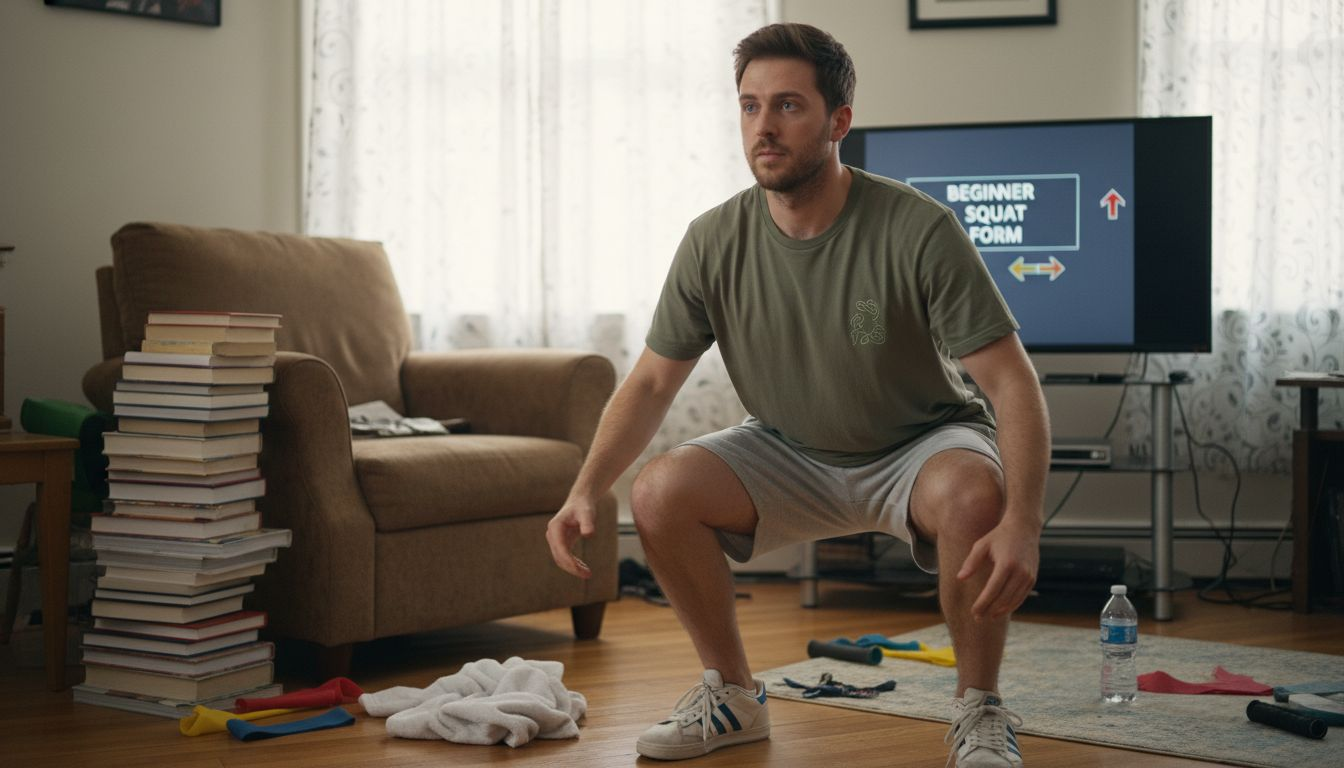
When selecting exercises, consider your personal preferences and physical condition. Not every workout suits everyone, so experiment with different activities to find what you enjoy. Some great beginner friendly options include walking, swimming, yoga, resistance band workouts, and basic strength training with light weights. Remember to start slowly, listen to your body, and progressively increase intensity as you build confidence and strength.
Pro tip: Consult with a healthcare professional before starting any new exercise program to ensure the activities are safe for your individual health needs.
Step 3: Design a weekly workout plan
Creating a weekly workout plan transforms your fitness journey from random exercises to a structured path toward your health goals. Your plan will be your roadmap for consistent progress and sustained motivation.
The Centers for Disease Control provides clear guidelines for weekly physical activity, recommending at least 150 minutes of moderate aerobic exercise or 75 minutes of vigorous activity spread across the week. A balanced plan should include three to five days of exercise with rest days strategically placed for recovery. Aim to incorporate a mix of cardiovascular activities, strength training, and flexibility work. For example, you might structure your week with two days of cardio (like brisk walking or cycling), two days of strength training targeting different muscle groups, and one day of flexibility work such as yoga or stretching.
When designing your plan, be realistic about your time and energy levels. Start with shorter workout sessions and gradually increase duration and intensity. Consider your personal schedule and choose workout times you can consistently maintain. Weekends can be great for longer sessions or active recovery, while weekdays might work best for shorter, more intense workouts. Remember that flexibility is key recovery time is just as important as active exercise time.
To help you design your workout week, here is a sample structure summarizing key elements:
| Day | Focus | Activity Example | Primary Benefit |
|---|---|---|---|
| Monday | Cardio | Brisk walking | Heart health |
| Tuesday | Strength | Bodyweight squats | Muscle building |
| Wednesday | Flexibility | Yoga/stretching | Mobility |
| Thursday | Strength | Push-ups/lunges | Functional strength |
| Friday | Cardio | Cycling/swimming | Endurance |
| Weekend | Recovery | Light stretching/walk | Active rest and repair |
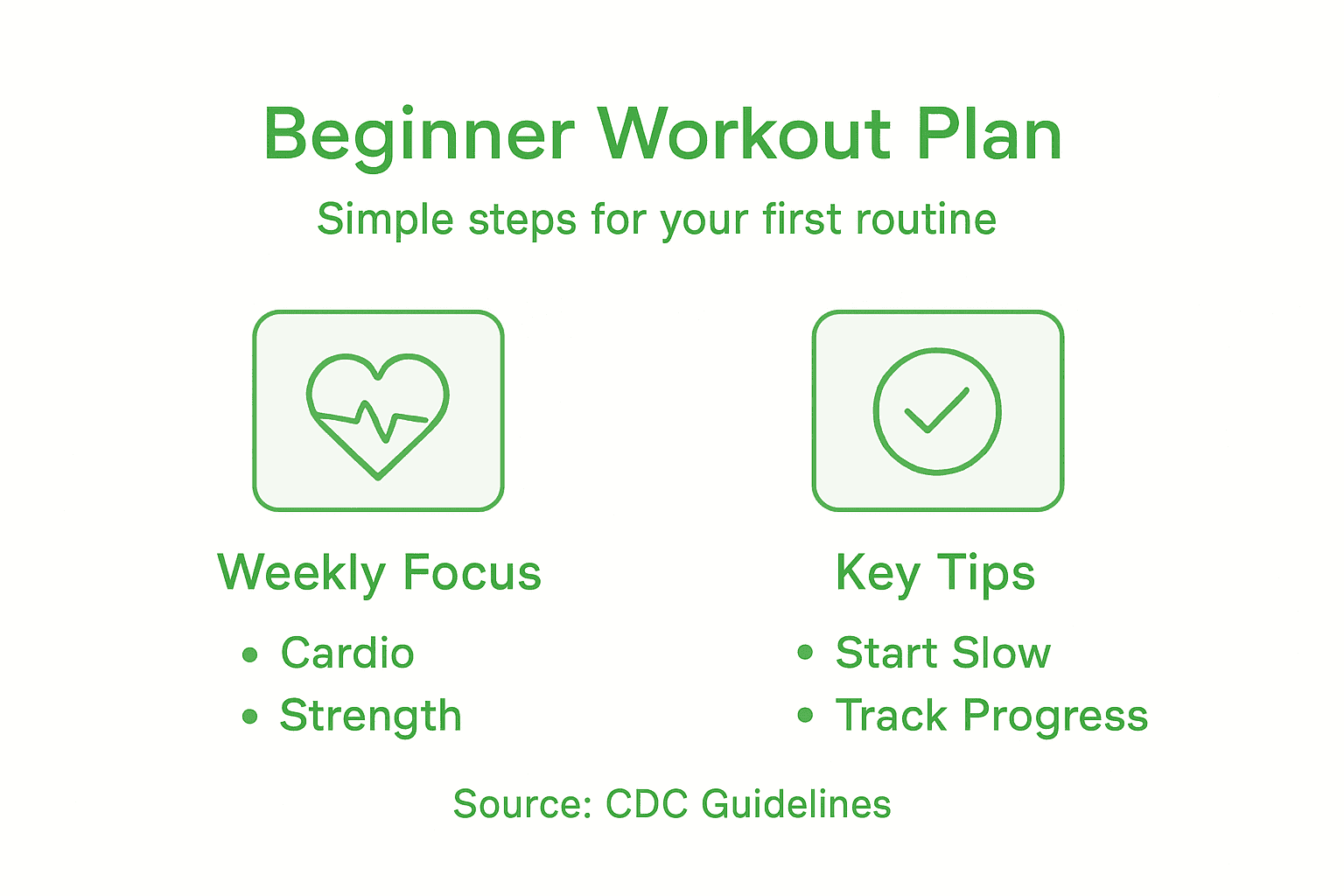
Pro tip: Keep a workout journal to track your progress and adjust your plan as you become stronger and more confident in your fitness routine.
Step 4: Prepare your workout environment
Preparing your workout environment is more than just clearing space its about creating a motivating atmosphere that supports your fitness goals and helps you stay consistent and safe during exercise.
Harvard Health emphasizes selecting a comfortable exercise environment that minimizes potential risks and maximizes your performance. Start by finding a space with good ventilation and enough room to move freely. Clear away any obstacles or clutter that could cause tripping. If you are working out at home, designate a specific area for your exercises. This could be a corner of your living room, a spare bedroom, or even a section of your garage. Ensure the space has good lighting and a comfortable temperature.
Gather all your workout equipment before you begin. This might include resistance bands, light weights, a yoga mat, or comfortable workout clothes. Having everything within reach prevents interruptions and helps you maintain focus during your exercise routine. Consider investing in a few basic pieces of equipment that match your workout plan. Create a small storage area for your fitness gear so its organized and easily accessible. Music can also be a great motivator consider setting up a playlist or speaker system that helps keep you energized and engaged during workouts.
Pro tip: Keep a small towel and water bottle in your workout space to stay hydrated and comfortable during exercise.
Step 5: Track progress and adjust routine
Tracking your fitness progress transforms your workout from a random activity into a strategic journey of personal improvement. Understanding how your body responds to exercise helps you make informed decisions about your fitness routine.
The Centers for Disease Control recommends recording physical activity frequency and intensity to maintain motivation and progress. Start by establishing baseline measurements such as body weight, body fat percentage, strength levels, and endurance metrics. Use a fitness journal or smartphone app to log your workouts, tracking details like exercise type, duration, repetitions, and how you feel after each session. Take progress photos or measurements every two to four weeks to visually and quantitatively monitor changes. Pay attention to how your body feels and performs during workouts noting improvements in energy levels, strength, and overall comfort with exercises.
Be prepared to adjust your routine based on your tracking data. If you notice youre not seeing progress or feeling consistently fatigued, it might be time to modify your workout intensity, change exercise types, or incorporate more rest. Fitness is not a linear journey some weeks youll see dramatic improvements, while others might feel stagnant. The key is consistent effort and willingness to adapt your approach. Consider consulting a fitness professional if you need help interpreting your progress data or designing a more effective workout plan.
Pro tip: Use progress photos and performance metrics to track improvements objectively rather than relying solely on the scale.
Take Control of Your Fitness Journey with Personalized Support
Building your first workout routine can feel overwhelming when you are trying to set clear fitness goals, choose exercises that suit your level, and track your progress effectively. The article highlights the importance of setting realistic goals, designing a balanced workout plan, and maintaining motivation—all common challenges for beginners starting out. You are likely seeking a clear path that combines personalized guidance with tools to monitor your body metrics like BMI and calorie needs.
At Dietium.com, we understand these exact concerns and offer a seamless solution through the Recipians app. Our platform supports you with AI-powered food and fitness calculators to tailor meal plans and workouts specifically to your personal fitness goals. Whether you want to build muscle, improve cardio endurance, or lose weight safely, our easy-to-use tools and expert-backed resources help you stay accountable and motivated. Access personalized fitness routines aligned with your progress and use real-time activity tracking to see measurable improvements.
Start your fitness transformation today by exploring our comprehensive health tools and custom routines on Dietium.com. Don’t wait to feel stronger and healthier Take advantage of smart technology that simplifies your journey and supports your success every step of the way.
Frequently Asked Questions
How do I set personal fitness goals as a beginner?
Setting personal fitness goals starts with assessing your current fitness level and determining what you want to achieve. Aim for specific and measurable goals, such as working out three times a week or training for a 5K. Write these goals down and keep them visible to stay motivated.
What exercises should I include in my beginner workout routine?
Include a mix of aerobic and strength-training exercises in your beginner workout routine. Start with moderate activities like brisk walking, swimming, and bodyweight exercises such as squats and push-ups. Experiment with different exercises to find what you enjoy and gradually build intensity.
How do I create a weekly workout plan?
To create a weekly workout plan, structure it around your fitness goals by including three to five days of exercise. Mix in cardiovascular activities, strength training, and flexibility work, ensuring you have rest days for recovery. For example, plan two days of cardio, two days of strength training, and one day of flexibility each week.
What should I do to prepare my workout environment?
To prepare your workout environment, designate a comfortable and clutter-free space for exercise. Ensure you have good ventilation, adequate lighting, and all your workout equipment within reach. Create an atmosphere that motivates you, such as having a music playlist ready to energize your workouts.
How can I track my fitness progress effectively?
Track your fitness progress by recording the frequency and intensity of your workouts in a journal or app. Log details like exercise types, duration, and your feelings after each session. Take measurements or progress photos every two to four weeks to visually track improvements and adjust your routine as needed.
What if I am not seeing progress in my fitness journey?
If you are not seeing progress, first evaluate your routine for potential needed adjustments. Consider changing the intensity of your workouts, the types of exercises you are doing, or adding more rest days. Continuously monitor how your body responds and be flexible in adapting your approach to achieve your fitness goals.


