 Skip to content

You’ve cut calories, logged hours at the gym, and tracked every macro, yet the scale won’t budge. The missing piece might be what happens when your head hits the pillow. Sleep quality and duration significantly influence weight regulation through hormonal pathways that control appetite and metabolism. This guide reveals how optimizing your sleep can accelerate fat loss and why ignoring it sabotages even the most disciplined diet and exercise plans.
Table of Contents
- Introduction To Sleep And Weight Loss
- Hormonal Mechanisms Linking Sleep And Weight Regulation
- Effects Of Sleep Deprivation On Metabolism
- Common Misconceptions About Sleep And Weight Loss
- Comparison Of Sleep Interventions For Weight Loss
- Practical Strategies To Improve Sleep For Weight Loss
- Summary And Path Forward
- Enhance Your Weight Loss Journey With Personalized Nutrition
- FAQ
Key takeaways
| Point | Details |
|---|---|
| Hormonal regulation | Quality sleep balances leptin and ghrelin, hormones that control hunger and satiety. |
| Metabolic impact | Sleep deprivation reduces leptin by up to 18% and increases ghrelin by 28%, driving appetite and weight gain. |
| Caloric intake | Poor sleep leads to a 23% increase in calorie consumption from snacks and unhealthy foods. |
| Combined approach | Integrating sleep optimization with diet and exercise produces measurably better weight loss outcomes. |
| Quality over quantity | Sleep quality matters as much as total hours for effective weight management. |
Introduction to sleep and weight loss
Sleep is not just rest for your body. It’s an active metabolic process that regulates critical hormones controlling appetite, energy expenditure, and fat storage. When you consistently sleep fewer than seven hours per night, your body enters a state that promotes weight gain through multiple physiological pathways.
Epidemiological studies consistently link poor sleep with higher obesity risk. Adults sleeping five hours or less per night have a 55% greater chance of becoming obese compared to those sleeping seven to eight hours. This relationship persists across age groups, genders, and cultures, indicating a fundamental biological connection.
The mechanisms explaining this connection involve hormonal disruption, metabolic slowdown, and behavioral changes. Your body’s ability to regulate energy balance depends on synchronized sleep cycles that allow proper hormone secretion and cellular repair. When sleep is compromised, these systems fail, creating conditions that favor fat accumulation over fat burning.
Key physiological pathways affected by sleep include:
- Appetite hormone regulation through leptin and ghrelin signaling
- Insulin sensitivity and glucose metabolism control
- Stress hormone production affecting cortisol and fat storage
- Resting metabolic rate and energy expenditure patterns
- Reward center activation influencing food choices and cravings
Hormonal mechanisms linking sleep and weight regulation
Sleep deprivation triggers a hormonal cascade that makes weight loss nearly impossible. Leptin levels drop by up to 18% while ghrelin increases by 28% after just two nights of restricted sleep. Leptin signals your brain that you have enough energy stored, suppressing appetite. Ghrelin does the opposite, stimulating hunger and food seeking behavior.
This hormonal imbalance creates a perfect storm for overeating. You feel hungrier, less satisfied after meals, and crave energy dense foods high in sugar and fat. Studies show sleep deprived individuals consume 23% more calories, primarily from snacks eaten between meals rather than during structured eating times.
Cortisol, your primary stress hormone, rises significantly with sleep loss. Elevated cortisol promotes fat storage, particularly in the abdominal region where it poses the greatest health risks. This visceral fat surrounds organs and releases inflammatory compounds that worsen insulin resistance and metabolic dysfunction.
Insulin sensitivity declines sharply after sleep restriction. Your cells become less responsive to insulin signals, meaning glucose remains elevated in your bloodstream longer. This triggers additional insulin release, which promotes fat storage and inhibits fat breakdown. Over time, this pattern can progress to type 2 diabetes while simultaneously making weight loss efforts futile.
Statistic: Adults who sleep fewer than six hours per night have a 30% higher risk of becoming obese and developing metabolic syndrome compared to those sleeping seven to nine hours consistently.
The brain’s reward centers also become hyperactive with sleep loss. Functional MRI studies reveal stronger responses to food images, particularly high calorie options, in sleep deprived individuals. This neurological change makes resisting temptation significantly harder, undermining willpower and dietary adherence.
Effects of sleep deprivation on metabolism
Your resting metabolic rate, the calories burned just to keep you alive, decreases when you don’t get adequate sleep. This metabolic slowdown can reduce daily energy expenditure by 200 to 300 calories, equivalent to a moderate workout. Over weeks, this deficit accumulates, preventing the caloric deficit necessary for fat loss.

Impaired insulin sensitivity extends beyond glucose control to affect how your body partitions nutrients. With reduced insulin sensitivity, incoming calories are more likely to be stored as fat rather than used for muscle repair or immediate energy. This shift in nutrient partitioning explains why meal timing strategies become less effective without proper sleep.
Behavioral changes compound these metabolic disruptions. Sleep deprived individuals tend to:
- Choose convenience foods over nutritious options due to reduced executive function
- Engage in less physical activity from fatigue and low motivation
- Eat larger portions because satiety signals arrive later and weaker
- Snack more frequently, especially in evening hours when willpower is depleted
Your body also experiences changes in fat oxidation, the process of breaking down fat for energy. Sleep restriction reduces fat oxidation rates while preserving carbohydrate oxidation, meaning your body preferentially burns sugar and preserves fat stores. This metabolic preference directly opposes weight loss goals and explains why the scale refuses to move despite dietary efforts.
Thermogenesis, heat production from digesting and processing food, also declines with poor sleep. This reduction in the thermic effect of food means you burn fewer calories processing the same meals compared to when well rested. Though individually small, these metabolic changes create a cumulative disadvantage that stalls weight loss progress.
Common misconceptions about sleep and weight loss
Many believe napping can compensate for lost nighttime sleep in terms of weight management. This assumption is incorrect. Napping does not significantly compensate for lost nighttime sleep in weight regulation because it fails to provide the complete sleep architecture needed for proper hormone secretion and metabolic function.
Nighttime sleep cycles through multiple stages, each serving distinct physiological functions. Deep sleep stages facilitate growth hormone release, which aids fat breakdown and muscle preservation. REM sleep supports cognitive function and emotional regulation, both critical for maintaining dietary discipline. Naps rarely provide these complete cycles, offering only superficial rest that does not restore metabolic balance.
Excessive napping can actually worsen the situation by disrupting circadian rhythms and making nighttime sleep more difficult. This creates a vicious cycle where daytime sleep interferes with night sleep quality, perpetuating the metabolic dysfunction that promotes weight gain.
Another misconception holds that sleeping more directly burns more calories. While resting metabolic rate does operate during sleep, the additional calories burned from an extra hour of sleep are minimal, around 50 to 70 calories. The weight loss benefits of adequate sleep come primarily from hormonal regulation and improved food choices rather than increased calorie expenditure during sleep itself.
“Sleep is not about burning more calories while unconscious. It’s about creating the hormonal environment that allows your body to respond properly to diet and exercise when you’re awake.”
Some also believe sleep quality and quantity are interchangeable, assuming six hours of deep, uninterrupted sleep equals eight hours of fragmented sleep. Research shows both duration and quality matter independently. You need sufficient total sleep time for complete hormonal cycles and uninterrupted sleep for proper metabolic restoration. Sacrificing either dimension compromises weight loss potential.
Comparison of sleep interventions for weight loss
Different approaches to improving sleep offer varying benefits for weight management. Understanding which strategies provide the most impact helps prioritize efforts for maximum results.
| Intervention | Duration Focus | Quality Focus | Weight Loss Impact | Implementation Difficulty |
|---|---|---|---|---|
| Sleep extension | Increases total hours | Moderate improvement | 1 to 2 kg over 6 months | Easy to moderate |
| Sleep hygiene protocols | Maintains current duration | Significant improvement | 1.5 to 2.5 kg over 6 months | Moderate |
| Combined sleep, diet, exercise | Optimizes both | Optimizes both | 2 to 3 kg over 6 months | Moderate to difficult |
| Medication assisted sleep | Variable | Variable improvement | Limited evidence | Easy but risks |
The most effective approach combines sleep optimization with dietary changes and physical activity. Behavioral sleep improvements integrated with diet and exercise produce 2 to 3 kg additional weight loss over six months compared to diet and exercise alone. This additive effect demonstrates that sleep acts as a force multiplier for conventional weight loss methods.
Sleep extension strategies focus on simply increasing time in bed. For chronically sleep restricted individuals, this can restore some hormonal balance and reduce appetite. However, extending sleep without addressing quality issues like sleep apnea or frequent awakenings provides limited benefits. The body needs both adequate duration and proper sleep architecture.
Sleep hygiene protocols target quality through environmental and behavioral modifications. These include consistent sleep schedules, optimized bedroom conditions, and pre sleep routines that promote relaxation. Quality improvements often yield faster results than duration changes alone because they address the root causes of disrupted sleep cycles.
Pro Tip: Track your sleep using a wearable device or sleep diary for two weeks before making changes. This baseline data helps identify specific issues like insufficient deep sleep or frequent awakenings, allowing you to target interventions more effectively.
Understanding the relationship between slow, steady weight loss and sleep becomes crucial here. Rapid weight loss approaches that create extreme caloric deficits can further impair sleep quality through increased cortisol and hunger hormones, creating a counterproductive cycle. Moderate deficits paired with sleep optimization avoid this trap.
Recognizing common weight loss challenges often reveals sleep as the underlying culprit. When progress stalls despite perfect dietary adherence, sleep quality deserves investigation before making drastic changes to your nutrition plan.
Practical strategies to improve sleep for weight loss
Implementing effective sleep improvements requires a systematic approach that addresses both behavioral and environmental factors.
-
Assess your current sleep patterns using tracking tools or journals. Record sleep and wake times, nighttime awakenings, sleep quality ratings, and next day energy levels. This data reveals patterns that pinpoint specific problems requiring attention.
-
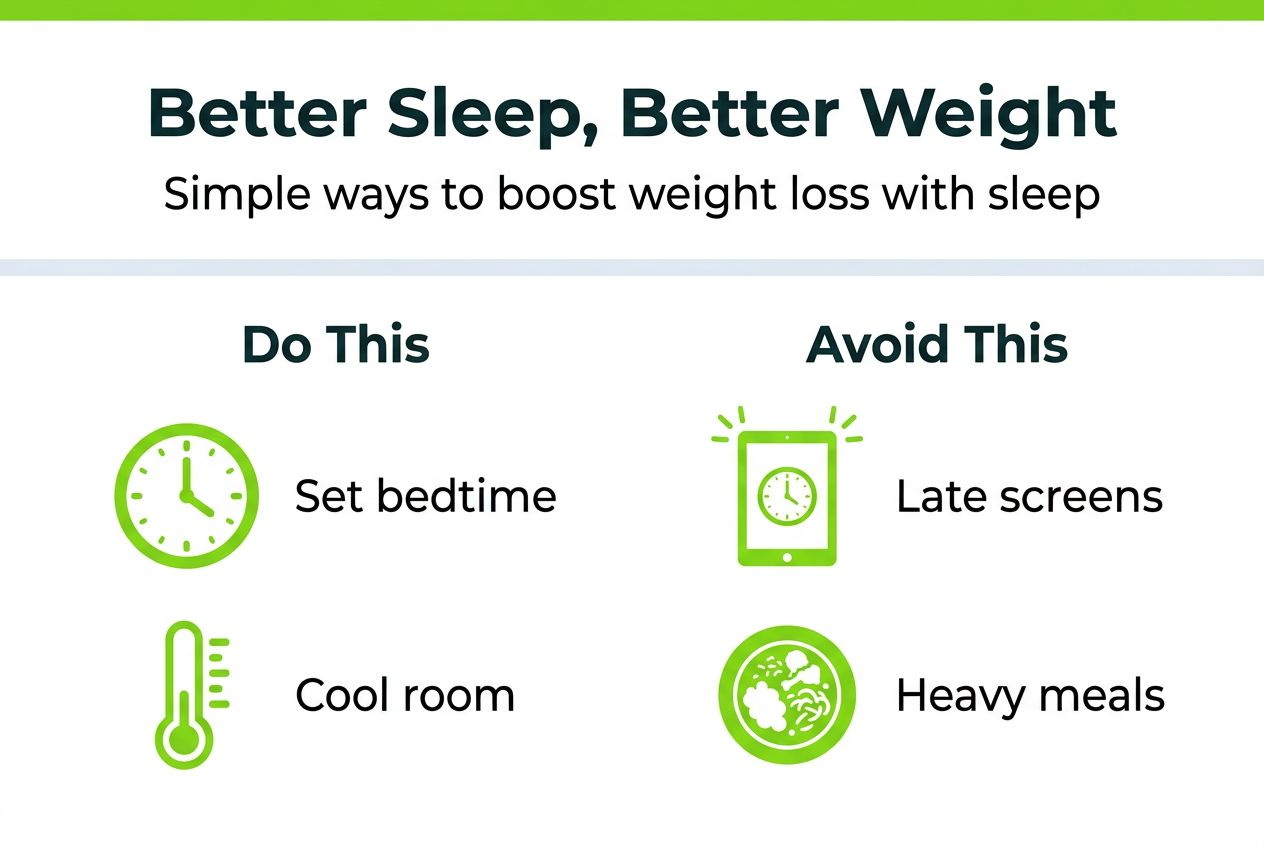
Establish a consistent sleep schedule by going to bed and waking at the same times daily, including weekends. Your circadian rhythm depends on consistency. Irregular schedules confuse your body’s internal clock, making quality sleep difficult even when you allocate enough time.
-
Optimize your sleep environment by controlling temperature, light, and noise. Keep your bedroom between 60 and 67 degrees Fahrenheit. Use blackout curtains or an eye mask to eliminate light exposure. Consider white noise machines if environmental sounds disrupt sleep.
-
Limit blue light exposure from screens for at least 90 minutes before bed. Blue light suppresses melatonin production, making it harder to fall asleep and reducing sleep quality. If screen use is necessary, use blue light filters or glasses.
-
Reduce caffeine intake after 2 PM. Caffeine has a half life of five to six hours, meaning half the caffeine from an afternoon coffee remains in your system at bedtime. This residual stimulation fragments sleep even if you fall asleep easily.
-
Monitor how sleep changes affect appetite and food choices. Better sleep should reduce cravings, particularly for high sugar and high fat foods. Track these behavioral changes alongside sleep metrics to confirm improvements are translating to weight loss benefits.
-
Integrate sleep goals with nutrition and exercise planning. Schedule workouts at least three hours before bed to avoid exercise induced alertness interfering with sleep. Time your largest meals earlier in the day to prevent digestive discomfort disrupting nighttime rest.
Using sleep quality metrics helps assess whether interventions are working. If self directed improvements fail after four weeks, consider consulting a sleep specialist. Conditions like sleep apnea require medical treatment and can completely undermine weight loss efforts regardless of diet and exercise quality.
Pro Tip: Set a consistent bedtime alarm, not just a wake alarm. Most people focus only on wake times, but a reminder to start your pre sleep routine ensures you allocate enough time for actual sleep, not just time in bed.
Applying principles from effective weight loss goal setting to sleep creates accountability. Set specific, measurable sleep targets like “achieve seven hours of sleep on five out of seven nights” rather than vague intentions to “sleep better.” This specificity allows objective progress tracking.
Avoiding common weight loss mistakes includes not prioritizing sleep as a fundamental weight loss tool. Many people focus entirely on cutting calories and increasing exercise while ignoring the hormonal chaos created by inadequate sleep. This oversight dooms efforts from the start.
Summary and path forward
Sleep regulates the hormonal and metabolic systems that determine whether your body stores or burns fat. Without adequate sleep duration and quality, even perfect nutrition and exercise programs cannot overcome the biological drive toward weight gain created by leptin suppression, ghrelin elevation, and insulin resistance.
The evidence is clear. Seven to eight hours of quality sleep per night reduces obesity risk by more than 50% compared to chronic sleep restriction. Behavioral interventions that improve sleep produce measurable weight loss, with effects that compound when combined with dietary and exercise modifications.
Your path forward requires treating sleep as equally important as diet and exercise, not as a luxury to sacrifice for other priorities. The strategies outlined here provide concrete steps to assess current sleep, identify problems, and implement evidence based solutions. Small, consistent improvements in sleep quality and duration create the hormonal environment necessary for successful, sustainable weight loss.
Applying these principles consistently transforms your body’s ability to lose weight. The metabolic advantages of proper sleep remove the constant uphill battle against hunger, fatigue, and cravings that characterize most weight loss attempts. With sleep optimized, your diet and exercise efforts finally produce the results you’ve been working toward.
Enhance your weight loss journey with personalized nutrition
Optimizing sleep creates the foundation, but personalized nutrition strategies ensure you capitalize on these improvements. Our platform offers comprehensive nutritional assessment methods that evaluate your unique metabolic profile, identifying specific dietary adjustments that complement your sleep optimization efforts. Combined with personalized meal plans tailored to your goals, you can synchronize eating patterns with your circadian rhythm for maximum fat loss. Setting clear nutrition goals aligned with your sleep improvements creates a comprehensive approach that addresses all factors influencing weight. Our AI powered tools track progress across sleep, nutrition, and activity, providing data driven insights that keep you on track toward sustainable weight loss success.
FAQ
How many hours of sleep are optimal for weight loss?
Seven to eight hours of quality sleep per night is optimal for weight regulation and supporting fat loss. Sleep quality matters as much as total duration, meaning eight hours of fragmented sleep provides less benefit than seven uninterrupted hours.
Can poor sleep quality undermine my dieting efforts?
Yes, poor sleep disrupts hormones controlling hunger and satiety, leading to increased cravings and appetite despite calorie restriction. Your metabolic rate also declines with inadequate sleep, making it harder to maintain the caloric deficit necessary for weight loss.
Is it true that napping can help recover lost sleep for weight loss?
Naps cannot replace consistent nighttime sleep for weight management because they do not provide the complete sleep architecture needed for proper hormone regulation. Excessive napping may actually disrupt circadian rhythms and worsen metabolic function.
What are practical ways to improve my sleep for better weight loss?
Maintain a consistent sleep schedule, going to bed and waking at the same times daily. Create a dark, cool bedroom environment and limit screen exposure before bed. Track your sleep patterns to identify specific issues, then apply effective goal setting strategies to your sleep improvements for measurable progress.


