 Skip to content

TL;DR:
- Metabolism encompasses all chemical reactions in the body that produce energy and support vital functions. It involves processes like anabolism and catabolism, driven by ATP, which are influenced by factors such as muscle mass, age, and hormones. Modern science emphasizes personalized metabolic profiling and flexibility over simplistic calorie calculations to improve weight management and overall health.
Metabolism is the sum of all chemical reactions your body uses to convert food into energy, sustain vital functions, and regulate weight. The science of metabolism covers everything from how your cells burn glucose to why your body stores fat when calories exceed demand. Understanding these processes gives you a concrete foundation for making smarter decisions about nutrition, activity, and long-term health. This is not abstract biology. It is the operating system running your body every second of every day.
What is the science of metabolism, really?
Metabolism is defined as the complete set of biochemical reactions that maintain life in living organisms. Every time you eat, breathe, or move, metabolic reactions are converting nutrients into usable energy or building the molecules your body needs to function.
The metabolism process splits into two directions. Anabolism builds and stores molecules, such as when your body synthesizes muscle protein after a workout. Catabolism breaks molecules down to release energy, such as when your liver converts stored glycogen back into glucose during a fast. These two states do not operate on separate tracks. Anabolic and catabolic pathways share fundamental biochemical routes and switch between states based on hormonal signals like insulin and glucagon.

The energy currency of all this activity is ATP (adenosine triphosphate). Every cellular task, from muscle contraction to nerve signaling, runs on ATP. Your body generates ATP by breaking down carbohydrates, fats, and proteins through a series of metabolic pathways including glycolysis, the citric acid cycle, and oxidative phosphorylation.
Here is a quick breakdown of how each macronutrient feeds into the energy metabolism process:
- Carbohydrates convert to glucose, the body’s preferred and fastest fuel source
- Fats break down into fatty acids and glycerol, providing dense, slow-burning energy
- Proteins are converted to amino acids, used primarily for tissue repair but also burned for energy when carbohydrates and fats are insufficient
Pro Tip: If you want to understand how your body uses fuel at rest versus during exercise, tracking your macros with a tool like Dietium’s Recipians app gives you a real-time picture of your energy intake against your metabolic needs.
BMR vs. RMR: what is metabolic rate and why does it matter?
Basal metabolic rate (BMR) and resting metabolic rate (RMR) are the two most cited measures of how much energy your body burns without deliberate activity. They are related but not identical, and the difference matters for anyone calculating calorie needs.
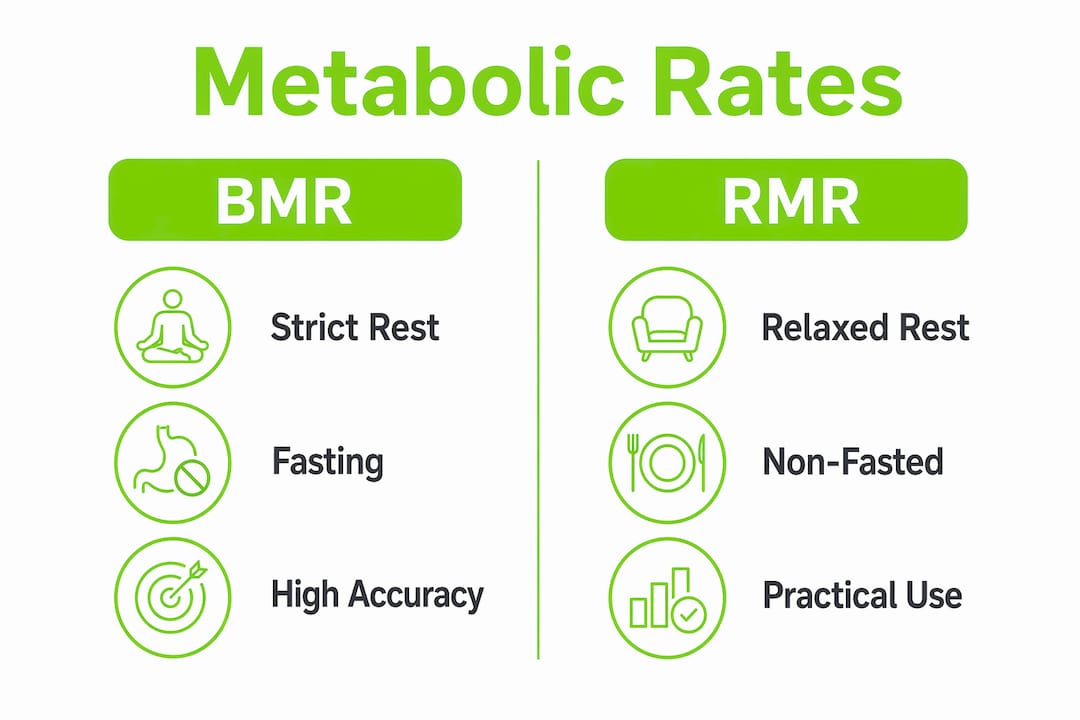
BMR is the energy your body requires under strict resting conditions: lying still, fasted for at least 12 hours, and in a temperature-controlled environment. It represents the absolute minimum energy needed to keep your heart beating, lungs breathing, and cells functioning. BMR accounts for approximately 70% of your total daily calorie expenditure. That figure means most of your daily calorie burn happens before you take a single step.
RMR is measured under more relaxed conditions, without the strict fasting and psychological rest requirements of a true BMR test. RMR measurements run 10–20% higher than BMR because they capture a slightly more active physiological state. For practical purposes, true BMR measurement is impractical for most people, so clinicians and nutritionists use RMR as the standard proxy. Both can be measured accurately using indirect calorimetry, which analyzes oxygen consumption and carbon dioxide production.
| Metric | Conditions | Typical Use | Relative Value |
|---|---|---|---|
| BMR | Strict fasting, complete rest | Research baseline | Lower |
| RMR | Relaxed, minimal activity | Clinical and practical settings | 10–20% higher than BMR |
BMR declines by 1–2% per decade after age 20. This gradual drop is one reason body composition tends to shift with age even when eating habits stay the same.
Pro Tip: You can estimate your RMR using Dietium’s BMR calculator without a lab visit. Pair that number with your activity level to get your total daily energy expenditure and set realistic calorie targets.
What factors affect metabolic rate and weight management?
Your metabolic rate is not fixed. Several variables push it up or down, and understanding them explains why two people eating the same diet can have very different outcomes.
The key factors that influence your metabolic rate include:
- Muscle mass. Muscle tissue burns more calories at rest than fat tissue. Building and maintaining lean mass through resistance training raises your baseline energy demand.
- Age. Fat-free mass naturally declines with age, which lowers BMR over time. Staying active and eating adequate protein slows this process. Dietium’s calorie needs by age guide breaks down how requirements shift across decades.
- Genetics. Metabolic variability between individuals is partly inherited. Some people are genetically predisposed to higher or lower BMR independent of body size.
- Hormones. Thyroid hormones, insulin, cortisol, and leptin all regulate how fast or slow your metabolism runs. Thyroid dysfunction, for example, directly alters BMR.
- Body composition. A higher ratio of muscle to fat increases total daily energy expenditure, even at rest.
The connection between metabolism and weight loss is real but often overstated. Weight balance depends on calorie intake versus energy expenditure, and excess calories are stored primarily as fat. The practical implication is straightforward: a sustained calorie deficit drives fat loss regardless of whether your metabolism is fast or slow.
What many people miss is that the body actively resists weight loss. When caloric intake drops, the body compensates by lowering BMR. This metabolic adaptation is why crash diets produce rapid initial results followed by a plateau. The body is not broken. It is doing exactly what it evolved to do: protect energy stores. Sustainable weight loss requires a moderate, consistent calorie deficit paired with enough protein and activity to preserve muscle mass. Dietium’s calorie deficit strategies are built around this principle.
What does recent science reveal about metabolic complexity?
The traditional view of metabolism as a simple calorie calculator is giving way to a far more detailed picture. Metabolism is now understood as a regulated, bidirectional system that manages energy through storage and mobilization over longer time scales, not just in response to the last meal you ate. Day-to-day feeding does not trigger instant metabolic shifts because hormonal buffering smooths out short-term fluctuations.
One of the most useful concepts emerging from this research is metabolic flexibility, the body’s ability to switch efficiently between burning carbohydrates and burning fat depending on availability and demand. People with high metabolic flexibility adapt quickly to fasting, exercise, and dietary changes. Those with low flexibility, often linked to insulin resistance, struggle to shift fuel sources and tend to store more fat. You can read more about metabolic flexibility and why it matters for energy and body composition.
The most forward-looking development in this field comes from research published in Nature Metabolism, which frames metabolism as a biochemical language linking molecular states to physiological function. This framing suggests that AI-driven models could replace simplistic calorie math with mechanistic, individualized metabolic profiles. The practical result would be personalized nutrition guidance based on your specific biochemistry rather than population averages.
Key directions shaping the future of metabolic science include:
- AI-powered tools that map individual metabolic responses to specific foods and activity patterns
- Continuous glucose monitors and wearable devices that track real-time metabolic signals
- Research connecting gut microbiome composition to metabolic efficiency
- Personalized dietary strategies built on metabolic phenotyping rather than generic macros
Understanding metabolic health as a system, not a single number, is the shift that makes personalized nutrition possible.
Key takeaways
Metabolism is a regulated biochemical system, and sustainable weight management depends on working with it through consistent calorie balance, muscle preservation, and diet quality.
| Point | Details |
|---|---|
| BMR drives most calorie burn | Basal metabolic rate accounts for roughly 70% of daily energy expenditure before any activity. |
| Anabolism and catabolism are linked | Both processes share biochemical pathways and switch via hormonal signals like insulin and glucagon. |
| Metabolic adaptation resists dieting | The body lowers BMR in response to caloric restriction, making crash diets self-defeating. |
| Muscle mass raises metabolic demand | Building lean mass through resistance training increases resting calorie burn over time. |
| AI is reshaping metabolic science | New research links metabolism to individualized molecular profiles, pointing toward personalized nutrition. |
Why most metabolism advice misses the point
By Srasti
After years of working with nutrition data and health research, the pattern I see most often is this: people treat metabolism like a dial they can simply turn up. They reach for green tea extracts, cold showers, or six small meals a day hoping to “boost” their metabolic rate. The evidence does not support most of these tactics in any meaningful way.
What the science actually shows is that metabolism is a system built for stability, not speed. Your body is remarkably good at defending its energy stores, and any strategy that ignores this will eventually hit a wall. The most reliable levers you have are resistance training to build muscle, adequate protein intake to preserve it, and a calorie deficit modest enough that your body does not aggressively compensate by lowering BMR.
The emerging research on metabolic flexibility is where I think the real opportunity lies. Training your body to switch efficiently between fuel sources, through a combination of varied nutrition and regular exercise, produces more durable results than any single supplement or meal timing trick. The goal is not a faster metabolism. The goal is a more adaptable one.
— Srasti
Put your metabolic knowledge to work with Dietium
Understanding how metabolism works is the first step. Applying that knowledge to your daily food choices is where results actually happen. Dietium’s personalized diet planning tools are built to align your nutrition with your individual metabolic profile, not a generic template. The Recipians app generates custom meal plans that account for your calorie needs, macros, and health goals in one place. If you want a plan that reflects your actual energy demands, Dietium’s tailored meal plans give you a structured, science-backed starting point.
FAQ
What is metabolism in simple terms?
Metabolism is the set of all chemical reactions your body uses to convert food into energy and maintain life. It includes both building processes (anabolism) and breakdown processes (catabolism).
What is basal metabolic rate and why does it matter?
BMR is the number of calories your body burns at complete rest to keep vital functions running. It accounts for roughly 70% of your total daily calorie expenditure, making it the single largest factor in your energy balance.
Can you actually speed up your metabolism?
Significantly increasing metabolic rate is difficult because the body compensates by lowering BMR when calorie intake drops. Building muscle mass and staying active are the most evidence-backed ways to raise resting energy expenditure over time.
How does metabolism affect weight loss?
Weight loss depends on burning more calories than you consume. Metabolism sets your baseline calorie burn, but a sustained calorie deficit is the primary driver of fat loss, not changes in metabolic speed.
What is metabolic flexibility?
Metabolic flexibility is the body’s ability to switch efficiently between burning carbohydrates and fats depending on energy availability. Higher flexibility is linked to better insulin sensitivity, more stable energy levels, and easier weight management.


