 Skip to content

TL;DR:
- Vitamins support metabolism primarily by correcting deficiencies rather than acting as performance boosters.
- B vitamins are essential cofactors for energy conversion, but supplementation is most effective when deficiencies are identified through testing.
- Supplementing vitamin D and minerals like iron and magnesium can aid metabolic health mainly in deficient individuals, with outcomes varying significantly.
Most people searching for vitamins for metabolism end up with a cart full of supplements that deliver little more than expensive urine. The market is cluttered with products promising to “fire up your metabolism” or “torch fat,” but the science tells a more specific story. Metabolism is not a single switch you flip with a B12 shot. It is a network of enzymatic processes, hormonal signals, and cellular energy pathways. And the vitamins that genuinely support it do so primarily by correcting deficiencies that quietly slow those processes down. Here is what the evidence actually shows.
Table of Contents
- Key takeaways
- How B vitamins power your metabolism
- Vitamin D and metabolism: what the evidence really shows
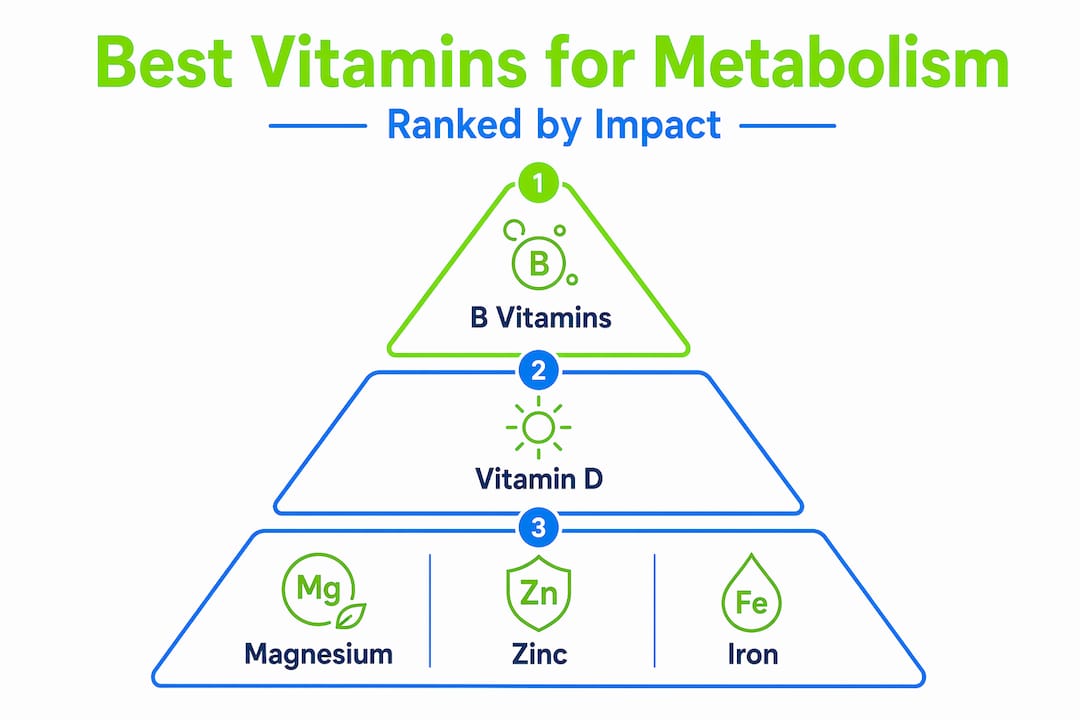
- Minerals that support metabolic function
- Other supplements marketed for metabolism: what to know
- Putting it all together: how to approach supplements for metabolism
- My take on what vitamins actually do for metabolism
- How Dietium helps you get this right
- FAQ
Key takeaways
| Point | Details |
|---|---|
| Deficiency first, supplement second | Vitamins support metabolism most when they correct a confirmed deficiency, not as general performance boosters. |
| B vitamins drive energy conversion | Eight distinct B vitamins serve as cofactors for enzymes that convert carbohydrates, fats, and protein into usable energy. |
| Vitamin D has limits | Supplementing vitamin D reliably raises serum levels but rarely improves metabolic markers unless you are already deficient. |
| Minerals matter too | Iron, magnesium, iodine, selenium, and zinc each play measurable roles in energy production and thyroid function. |
| Test before you supplement | A blood panel identifying your actual status saves money and avoids risks from over-supplementation. |
How B vitamins power your metabolism
B complex vitamins are not one nutrient. They are eight distinct compounds, each acting as a cofactor for specific enzymes involved in breaking down carbohydrates, fats, and protein into energy your cells can use. Without adequate levels of these vitamins, those enzymatic reactions slow down or stall. The result is fatigue, sluggish energy, and a metabolism that cannot perform at full capacity.
Here is a breakdown of each B vitamin and its primary metabolic role:
- B1 (Thiamine): Converts carbohydrates into energy; deficiency causes fatigue and nerve damage.
- B2 (Riboflavin): Supports the electron transport chain and fat oxidation; low levels reduce cellular energy output.
- B3 (Niacin): Central to NAD+ and NADH, two molecules that drive hundreds of metabolic reactions.
- B5 (Pantothenic acid): Required for synthesizing coenzyme A, which is critical for fat and carbohydrate metabolism.
- B6 (Pyridoxine): Supports amino acid metabolism and neurotransmitter production; deficiency affects protein processing.
- B7 (Biotin): Helps metabolize fats, carbohydrates, and amino acids; marketed heavily for hair and nail health, but metabolic function is its core job.
- B9 (Folate): Supports DNA synthesis and cell division; low folate impairs every rapidly dividing cell in your body.
- B12 (Cobalamin): Critical for nerve function and red blood cell production; deficiency causes measurable fatigue and cognitive effects.
B12 deserves a separate note on testing. Diagnosing B12 deficiency is not as simple as ordering one blood test. Clinicians use a stepwise approach: total serum B12 first, then active B12 and functional markers like methylmalonic acid and homocysteine to confirm a true deficiency. Relying on total serum B12 alone can miss deficiency in people with normal-looking levels but impaired cellular function. For more on sourcing and supplementing B12 correctly, Dietium’s resource on B12 sources is worth reading.
Pro Tip: Get a full B panel, not just B12, before purchasing any B complex supplement. Targeted replacement of a confirmed low nutrient works. Blanket supplementation often does not.
Vitamin D and metabolism: what the evidence really shows
Vitamin D gets a lot of credit it has not fully earned on the metabolism front. It is a genuine hormone precursor with documented roles in insulin signaling, immune regulation, and gene expression. That biological plausibility has led to dozens of supplement products claiming it will improve your body composition and metabolic health. The clinical data is more restrained.

Recent RCTs show that vitamin D supplementation reliably raises serum 25(OH)D levels. That part works consistently. What does not follow consistently is improvement in insulin sensitivity, glycemic control, or body weight. The benefits that do appear tend to show up in people who started with documented deficiency. For people with already-adequate levels, adding more vitamin D appears to do little for metabolic markers.
The prevalence of deficiency is worth noting, especially if you are overweight or obese. Low vitamin D is more common in people with higher body fat, partly because vitamin D is fat-soluble and gets sequestered in adipose tissue rather than circulating freely. This does not mean excess weight causes low vitamin D in every case, but it does mean this population should test their levels before assuming they are sufficient.
| Effect | Biochemical | Clinical |
|---|---|---|
| Serum 25(OH)D levels | Reliably increases with supplementation | Not a metabolic outcome on its own |
| Insulin sensitivity | Plausible pathway via VDR signaling | Inconsistent results in RCTs |
| Body weight / fat | Involved in adipogenesis regulation | Minimal change in most trials |
| Glycemic control | Affects pancreatic beta cell function | Modest, mainly in deficient individuals |
For a deeper look at vitamin D’s broader health effects, Dietium covers the health and fitness impact of vitamin D in detail.
Pro Tip: If your 25(OH)D level is below 20 ng/mL, supplementing with D3 (not D2) alongside a meal containing fat improves absorption significantly. Dose based on your lab result, not the bottle’s generic recommendation.
Minerals that support metabolic function
Vitamins take most of the spotlight in metabolism conversations, but minerals do equally critical work. Several key deficiencies are common enough in the general population to produce real metabolic consequences. Here are the five most relevant ones, ranked by the clarity of their metabolic evidence:
-
Iron: Iron forms hemoglobin, the protein that carries oxygen to your muscles and organs. Low iron impairs energy production directly, creating fatigue that is often misattributed to poor sleep or stress. People with obesity are at higher risk, partly due to chronic low-grade inflammation that disrupts iron absorption. Supplementing without confirmed deficiency, however, can cause toxicity. A serum ferritin test is the most informative first step.
-
Magnesium: Every ATP molecule in your body, the actual currency of cellular energy, requires magnesium to function. Up to half of Americans may not meet daily magnesium requirements, and low levels are strongly associated with metabolic syndrome. Magnesium deficiency also increases systemic inflammation, which compounds metabolic dysfunction over time.
-
Iodine: Your thyroid gland uses iodine to produce T3 and T4, the hormones that set your basal metabolic rate. Iodine deficiency directly slows thyroid hormone synthesis, which can reduce metabolic rate noticeably. Iodized salt has reduced severe deficiency in developed countries, but mild shortfalls still occur, particularly in people avoiding processed or iodized foods.
-
Selenium: Selenium is needed to convert the inactive thyroid hormone T4 into active T3. Without adequate selenium, this conversion slows even when iodine levels are fine. People with autoimmune thyroid conditions are especially sensitive to selenium status.
-
Zinc: Zinc supports both thyroid hormone conversion and immune function. Low zinc levels can blunt thyroid receptor sensitivity, meaning your cells respond less efficiently to the thyroid hormones that are present. Zinc also plays a role in insulin signaling, adding another layer of metabolic relevance.
All five of these minerals share a common theme: their metabolic benefits are most pronounced when correcting a real deficiency, not when adding more on top of already-adequate levels.
Other supplements marketed for metabolism: what to know
Green tea extract and caffeine are the two most commonly cited non-vitamin metabolism supplements, and they do have some research behind them. Green tea’s EGCG and caffeine may modestly increase metabolic rate and support fat oxidation. Green tea antioxidants appear to influence leptin levels, while caffeine directly stimulates the central nervous system and accelerates both fat and carbohydrate metabolism. The honest qualifier here is “modest.” Neither compound will produce meaningful fat loss without the accompanying calorie deficit and physical activity.
A few common claims worth scrutinizing:
- Conjugated linoleic acid (CLA): Mixed evidence at best; studies showing fat loss effects often used unrealistic doses.
- Raspberry ketones: No credible human clinical evidence supporting metabolism claims.
- L-carnitine: May support fat transport into mitochondria, but benefits are largely limited to people with confirmed deficiency, often vegetarians or vegans.
- Apple cider vinegar: No strong evidence for meaningful metabolic improvement.
The broader problem with these supplements is that they are often marketed using mechanism language without clinical outcome data. Saying something “activates fat-burning pathways” is not the same as saying it produces measurable fat loss in humans at typical doses.
Pro Tip: If you choose to add green tea extract or caffeine, start with the lowest effective dose and monitor your response. Both are stimulants with real cardiovascular effects at higher doses, and interactions with medications are possible. Consult a healthcare provider first.
Putting it all together: how to approach supplements for metabolism
Knowing which vitamins and minerals matter is only part of the equation. How you apply that knowledge determines whether you actually see results. Follow this practical sequence:
- Get tested first. A basic micronutrient panel covering B12, folate, vitamin D, ferritin, magnesium, and thyroid markers (TSH, free T3, free T4) gives you a factual starting point. Dietium’s micronutrient monitoring guide explains what to test and how to interpret results.
- Fix your diet before your supplement stack. Whole foods provide vitamins and minerals in forms your body absorbs well. Leafy greens, legumes, nuts, seeds, lean proteins, and fatty fish cover most of your B vitamin, iron, magnesium, and selenium needs without a single capsule.
- Supplement specifically. Replace what is actually low. If your B12 is confirmed deficient, supplement B12. If your vitamin D is below 20 ng/mL, supplement vitamin D3. Generic “metabolism boosters” with twenty ingredients are hard to evaluate and easy to waste money on.
- Support lifestyle factors that drive metabolism. Protein intake is the most underrated metabolic lever. The thermic effect of protein is roughly 20 to 30 percent, meaning your body burns more calories digesting protein than it does with carbs or fat. Resistance training increases resting metabolic rate by building muscle. Managing chronic stress keeps cortisol from disrupting insulin sensitivity.
- Retest after 90 days. Supplementing without follow-up testing is guesswork. A second panel at 12 weeks tells you whether your levels corrected and guides next steps.
- Seek professional evaluation if symptoms persist. If fatigue, unexplained weight gain, or poor recovery continue despite addressing known deficiencies, a thyroid workup or broader metabolic assessment is warranted.
My take on what vitamins actually do for metabolism
In my experience working with people chasing metabolic improvements, the pattern I see most often is this: someone starts five supplements at once, feels no different after a month, and concludes that supplements don’t work. What actually didn’t work was the strategy.
The metabolism supplement industry profits from vague language. I’ve seen clients spend hundreds of dollars on “fat-burning” stacks while being functionally iron deficient and mildly hypothyroid. Both of those conditions were directly affecting their energy and body composition. A targeted correction of those two issues, confirmed by testing, made a visible difference. The stack did nothing.
What I’ve found actually moves the needle is identifying the specific gap. If your magnesium is low, replacing it improves energy and sleep quality in ways that feel real. If your B12 is impaired, correcting it resolves a kind of fatigue that no amount of caffeine touches. That’s not magic. That’s physiology doing what it was always supposed to do.
The uncomfortable truth about micronutrient deficiencies is that they are often subtle. You may not feel dramatically unwell. You just feel less than your potential. That gap between where you are and where you could be is where evidence-based supplementation earns its place. Everything else is noise.
— Srasti
How Dietium helps you get this right
Reading about metabolism-boosting vitamins is a good start. Acting on accurate, personalized information is what produces results. Dietium’s platform is built around exactly that distinction.
The personalized diet plans at Dietium are designed around your individual metabolic needs, not a generic calorie template. They factor in the nutrients your body actually needs based on your goals, activity level, and health status. If micronutrient gaps are part of your picture, Dietium’s nutritional assessment tools help identify where your intake falls short and what to do about it. The Recipians app goes further, building meal plans that integrate real food sources of key nutrients like B vitamins, magnesium, and iron so you are covering your needs from the ground up, not just through supplements. Take the data-driven approach. Know your numbers, fix the gaps, and build a plan that actually fits your body.
FAQ
What vitamins are most important for metabolism?
B vitamins (B1, B2, B3, B5, B6, B7, B9, and B12) are the most directly involved in metabolism, serving as cofactors for energy-producing enzymes. Vitamin D, iron, magnesium, iodine, selenium, and zinc also play supporting roles in energy production and metabolic rate regulation.
Can taking vitamin B12 speed up metabolism?
Only if you are deficient. B12 supplementation corrects metabolic inefficiencies caused by low levels, but it does not accelerate metabolism beyond normal function in people who already have adequate B12 status.
Should I take a vitamin D supplement for weight management?
Test your levels first. Vitamin D supplementation reliably raises serum 25(OH)D levels, but clinical improvements in body weight or insulin sensitivity are inconsistent and mainly seen in people who were deficient to begin with.
How do I know which vitamins I actually need?
A blood panel covering B12, folate, vitamin D, ferritin, magnesium, and thyroid markers is the most direct way to identify true deficiencies. Supplementing based on confirmed lab results is far more effective than guessing based on symptoms alone.
Are metabolism-boosting supplements like green tea extract safe?
Green tea extract and caffeine have modest evidence supporting small increases in metabolic rate. Both are stimulants, however, and carry real risks at high doses, including cardiovascular effects and interactions with medications. Consult a healthcare provider before adding them to your routine.


