 Skip to content

Balancing fitness goals and busy city life means hydration often slips down the priority list for many health-focused millennials. Knowing exactly how much water your body needs is more than a generic recommendation—it’s a personalized key to unlocking better wellness and performance. With advances in smart apps and real-time trackers, you can move beyond guessing toward a unique, data-driven approach to meeting your hydration needs for both everyday energy and peak fitness.
Table of Contents
- Step 1: Assess Daily Hydration Needs Accurately
- Step 2: Choose The Best Hydration Strategies For Your Lifestyle
- Step 3: Incorporate Hydration Tracking With Health Apps
- Step 4: Optimize Daily Fluid Intake With Smart Nutrition
- Step 5: Verify Hydration Status Using Body Metrics
Quick Summary
| Main Insight | Detailed Explanation |
|---|---|
| 1. Assess Your Personal Hydration Needs | Calculate water intake based on factors like body weight, activity level, and climate to ensure adequate hydration. |
| 2. Implement Personalized Hydration Strategies | Tailor your hydration habits to fit your lifestyle for consistent fluid intake and overall well-being. |
| 3. Use Technology to Track Hydration | Leverage hydration apps and wearable devices to monitor your daily water intake effectively. |
| 4. Optimize Nutrition for Fluid Intake | Incorporate water-rich foods into your diet to supplement your hydration beyond just drinking water. |
| 5. Monitor Hydration Status through Body Metrics | Track hydration using methods like morning weight assessments and urine color to maintain optimal fluid balance. |
Step 1: Assess daily hydration needs accurately
Understanding your unique hydration requirements is crucial for maintaining optimal wellness and preventing potential health complications. Your daily water intake depends on multiple personalized factors that go beyond generic recommendations.
Medical experts suggest that water intake needs vary significantly based on individual characteristics like age, activity level, climate, and overall health. Most healthy adults require approximately 11.5 to 15.5 cups of total fluids daily, which includes water and other beverages.
To accurately assess your personal hydration needs, consider these key evaluation methods:
- Bodyweight Calculation: Multiply your weight in pounds by 0.5 to 1 ounce of water per pound
- Activity Level Assessment: Increase water intake by 12-16 ounces for every 30 minutes of exercise
- Climate Adjustment: Add extra water in hot or humid environments
- Urine Color Tracking: Aim for pale yellow urine as a hydration indicator
Drinking water consistently throughout the day helps maintain proper body function and prevent dehydration, which can impair cognitive and physical performance.
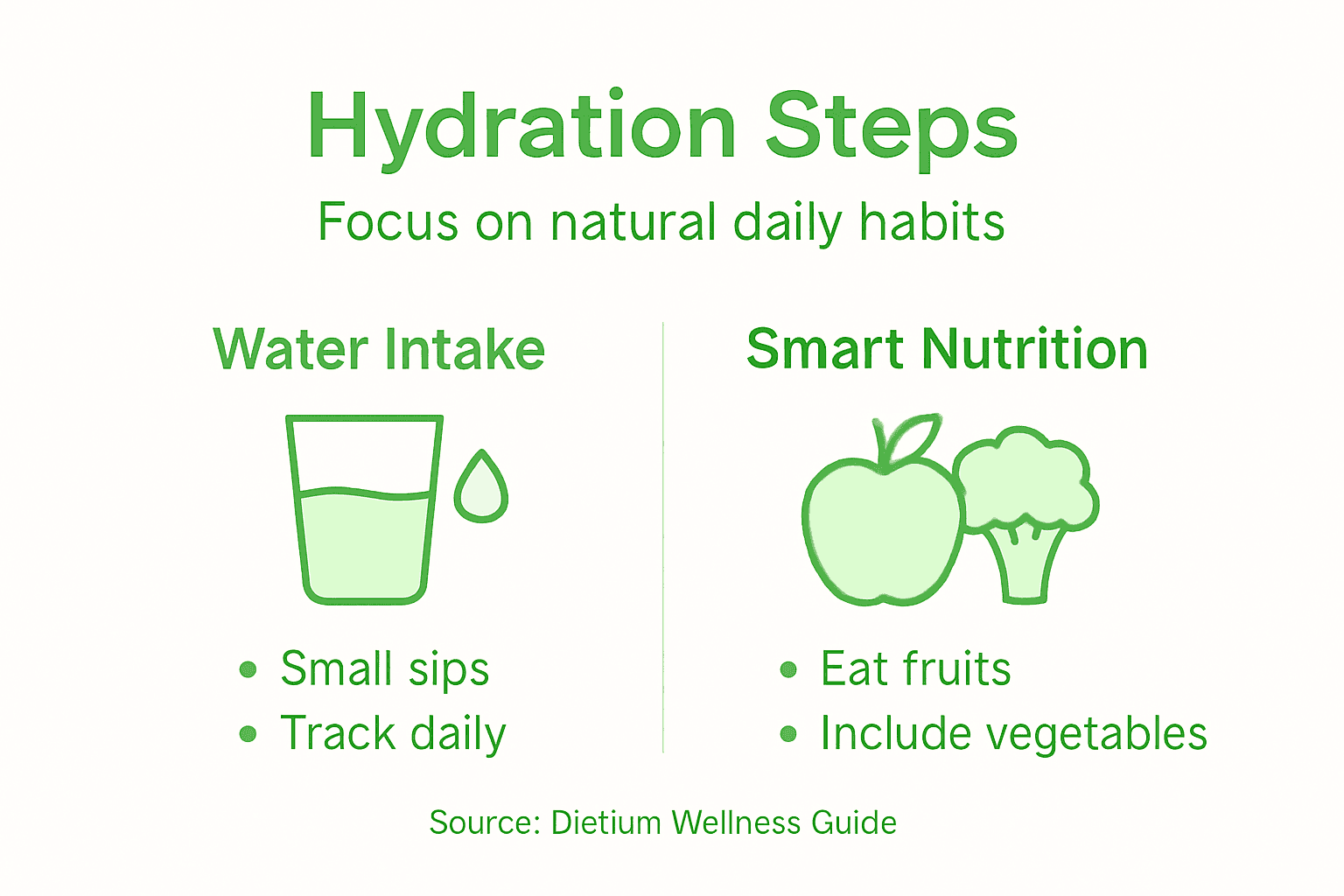
Here’s a quick comparison of hydration evaluation methods and their unique benefits:
| Method | What It Measures | Unique Benefit |
|---|---|---|
| Bodyweight Calculation | Fluid needs by weight | Personalized estimation of intake |
| Activity Adjustment | Exercise fluid loss | Prevents workout dehydration |
| Climate Consideration | Environmental factors | Adapts intake to weather |
| Urine Color Monitoring | Hydration status | Easy, real-time feedback |
Understanding your individual hydration needs is more important than following a one-size-fits-all approach.
Pro tip: Keep a digital water tracking app or journal to monitor your daily intake and identify patterns in your hydration habits.
Step 2: Choose the best hydration strategies for your lifestyle
Selecting personalized hydration strategies that align with your daily routine is essential for maintaining consistent fluid intake and supporting overall wellness. Your hydration approach should be flexible and adaptable to your unique lifestyle and physical needs.
Drinking water remains the most effective hydration method, offering zero calories and critical support for bodily functions. However, your strategy should extend beyond simply drinking water and incorporate multiple approaches to meet your fluid requirements.
Consider these targeted hydration strategies for different lifestyle contexts:
- Fitness Enthusiasts: Increase water intake before, during, and after exercise
- Office Workers: Keep a reusable water bottle at your desk
- Travelers: Pack a portable water filter or hydration pack
- Busy Professionals: Set smartphone reminders for regular water consumption
Additionally, incorporating water-rich foods can significantly supplement your fluid intake, especially when drinking water consistently feels challenging. Fruits and vegetables like cucumbers, lettuce, and watermelon can contribute substantial moisture to your daily hydration needs.
Hydration is not a one-size-fits-all approach but a personalized journey of understanding your body’s unique requirements.
Pro tip: Experiment with infusing water with natural ingredients like cucumber, mint, or berries to make hydration more enjoyable and sustainable.
Step 3: Incorporate hydration tracking with health apps
Modern technology offers powerful tools to help you monitor and optimize your daily hydration levels with unprecedented precision and convenience. By leveraging smart health applications and wearable technologies, you can transform your approach to staying hydrated.
Wearable hydration-monitoring technologies have advanced significantly, offering continuous, noninvasive tracking of your body’s fluid status using sophisticated sensors. These innovative devices provide real-time data that can be seamlessly integrated into your smartphone health applications.
Consider these strategies for effective hydration tracking:
- Download Dedicated Hydration Apps: Select apps with customizable tracking features
- Sync Wearable Sensors: Connect biosensors that monitor water loss and electrolyte balance
- Set Personalized Hydration Goals: Configure daily water intake targets based on your lifestyle
- Enable Smartphone Notifications: Create reminders for consistent water consumption
Wearable biosensors can transmit precise hydration data directly to your mobile devices, allowing you to proactively manage your fluid intake during workouts, travel, or daily activities.
Technology transforms hydration from a guessing game into a data-driven, personalized health strategy.
Pro tip: Choose health apps that integrate multiple tracking features, allowing you to correlate hydration with other wellness metrics like exercise and nutrition.
Step 4: Optimize daily fluid intake with smart nutrition
Elevating your hydration strategy beyond simple water consumption requires a holistic approach to nutritional fluid intake. By understanding how different foods and beverages contribute to your overall hydration, you can create a more comprehensive and effective wellness plan.

Choosing water as the primary hydration source remains foundational, but smart nutrition offers multiple pathways to maintain optimal fluid balance. Your body absorbs moisture from various dietary sources, not just beverages.
Consider these strategic approaches to nutritional hydration:
- Prioritize Water-Rich Fruits: Incorporate watermelon, strawberries, and citrus fruits
- Consume Hydrating Vegetables: Add cucumber, lettuce, and tomatoes to meals
- Include Liquid-Based Foods: Integrate soups, smoothies, and broths
- Select Nutrient-Dense Beverages: Choose herbal teas, low-fat milk, and electrolyte drinks
Smart food choices can significantly supplement fluid intake, helping you meet daily hydration requirements through a diverse and delicious diet.
The table below summarizes key hydration-supporting foods and their approximate water content:
| Food | Approximate Water Content | Nutritional Benefit |
|---|---|---|
| Watermelon | 92% | High in vitamin C and lycopene |
| Cucumber | 95% | Low calorie, vitamin K source |
| Strawberries | 91% | Rich in antioxidants |
| Lettuce | 96% | Contains folate and fiber |
| Tomatoes | 94% | Good source of potassium |
Hydration is not just about drinking water, but creating a holistic nutritional strategy that supports total body wellness.
Pro tip: Create a weekly meal plan that intentionally includes water-rich foods to naturally boost your fluid intake without feeling like you are forcing hydration.
Step 5: Verify hydration status using body metrics
Tracking your hydration status goes beyond simply drinking water – it requires understanding and interpreting your body’s unique signals through systematic measurement techniques. Body metrics provide objective evidence of your fluid balance that can help you make informed wellness decisions.
Body weight measurements offer an accessible hydration tracking method, allowing you to monitor fluid status with minimal equipment. Consistent morning weigh-ins can reveal subtle changes in your body’s hydration levels and help establish a personalized baseline.
Consider these precise body metric tracking strategies:
- Morning Weight Assessment: Record weight at the same time daily
- Urine Color Monitoring: Use a standardized urine color chart
- Body Weight Fluctuation Tracking: Note daily weight variations
- Skin Turgor Test: Check skin elasticity and rebound time
Hydration assessment techniques range from simple to complex, with urine specific gravity providing a practical and accurate measurement approach.
Precise hydration tracking transforms guesswork into a data-driven wellness strategy.
Pro tip: Create a digital tracking log or spreadsheet to record your hydration metrics consistently, enabling you to identify patterns and trends over time.
Take Control of Your Hydration and Wellness Today
Staying naturally hydrated for optimal wellness can feel overwhelming when trying to balance individual factors like activity level, climate, and nutrition. This article highlights the challenge of accurately assessing your hydration needs and tracking fluid intake effectively using personalized methods such as body metrics and hydration monitoring. If you find yourself struggling to maintain consistent hydration habits or unsure how to integrate hydration goals with your lifestyle and nutrition, you are not alone.
Dietium.com offers exactly the support you need to bridge these gaps with advanced, personalized wellness tools. With the Recipians app, you can access custom meal plans designed around your hydration and nutritional needs, plus fitness routines that align perfectly with your fluid balance goals. Use our AI-powered calculators to monitor your body metrics and hydration status effortlessly. Don’t wait to transform your hydration strategy into an empowering, science-backed journey toward better health.
Ready to optimize your hydration and discover tailored wellness solutions now Visit Dietium’s Recipians and start creating your personalized hydration plan today. Your body and mind will thank you.
Frequently Asked Questions
How can I accurately assess my daily hydration needs?
To assess your daily hydration needs, consider factors like your body weight, activity level, climate, and overall health. For a personalized estimate, multiply your weight in pounds by 0.5 to 1 ounce of water per pound, and adjust based on your exercise and environmental conditions.
What are some effective hydration strategies for different lifestyles?
Effective hydration strategies include increasing water intake for fitness enthusiasts and keeping a reusable water bottle at your desk for office workers. For travelers, packing a portable water filter can ensure easy access to hydration regardless of your location.
How can I track my hydration levels using technology?
You can track your hydration levels using dedicated hydration apps or wearable technologies that monitor fluid loss. Set personalized hydration goals within these apps and enable notifications to remind you to drink water throughout the day.
What nutritional foods help improve hydration?
Incorporating water-rich foods, such as watermelon, cucumbers, and lettuce, can substantially improve your overall hydration. Aim to include a variety of these foods in your meals daily to support your fluid intake naturally.
How do I verify my hydration status reliably?
To verify your hydration status, regularly assess your morning weight and monitor your urine color. Establish a consistent routine for these checks to identify patterns, and stay informed about your body’s hydration levels as your daily activities change.
What practical tips can I adopt to enhance my hydration habits?
You can enhance your hydration habits by experimenting with infused water, using fruits and herbs to make it more enjoyable. Additionally, keep a digital water tracking log to identify patterns in your hydration habits and adjust as needed.
Recommended
- How Much Water to Drink a Day Calculator (2025 Guide) – Dietium
- Importance of Hydration: Unlocking Peak Body Function – Dietium
- Daily Water Intake Calculator- How Many Water Bottles a Day?
- Hydration and Performance: The Athlete’s Key to Peak Results – Dietium
- 7 Effective Types of Therapy for Adults to Improve Well-Being – ReviveHealthTherapy


