 Skip to content

TL;DR:
- Genetic testing for nutrition identifies DNA variants that influence how the body absorbs and processes nutrients. It involves a simple cheek swab, with results typically received in two to four weeks and costing between $100 and $500. While this testing reveals predispositions, combining it with bloodwork and professional guidance offers the most effective approach for personalized nutrition.
Genetic testing for nutrition, known in clinical practice as nutrigenomics, is the analysis of specific DNA variants that affect how your body absorbs, converts, and uses nutrients. Companies like Nutrigenomix and GenoPalate have made this testing accessible to everyday consumers, moving personalized nutrition analysis far beyond generic food pyramids and calorie counts. Your genes influence whether you absorb folate efficiently, convert beta-carotene to vitamin A, or process vitamin D from sunlight. Understanding those differences gives you a starting point for dietary choices that actually fit your biology, not just population averages.
How does genetic testing for nutrition work?
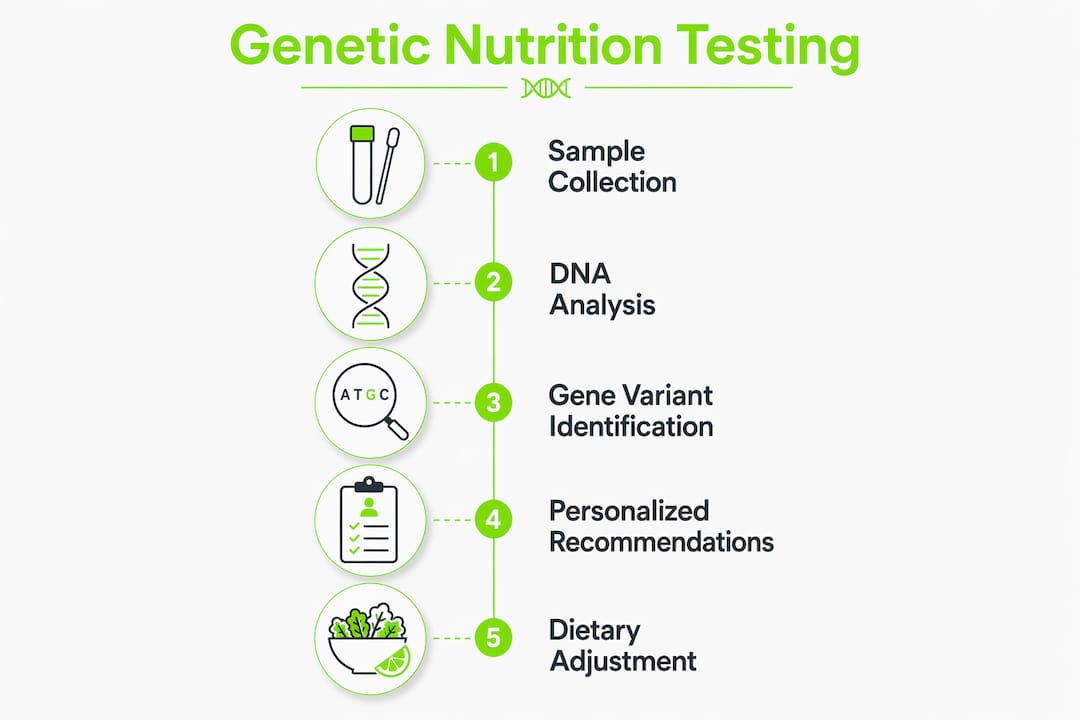
The process is straightforward and non-invasive by design. Most nutrigenomics tests use a simple cheek swab to collect DNA, which you mail to a certified laboratory. The lab then analyzes specific gene variants called single nucleotide polymorphisms, or SNPs, that are known to affect nutrient metabolism.
Here is what the typical process looks like from start to finish:
- Order your kit. You select a test from a provider such as Nutrigenomix, GenoPalate, or Decode+ and receive a collection kit at home.
- Collect your sample. Swab the inside of your cheek for 30–60 seconds and seal the sample in the provided container.
- Mail the sample. Ship it to the lab using the prepaid packaging included with your kit.
- Lab analysis. Scientists isolate your DNA and scan it for nutrition-relevant SNPs across key metabolic genes.
- Receive your report. Results arrive digitally, typically within 2–4 weeks, with a breakdown of how your variants affect specific nutrients.
Test costs range from $100 to $500 depending on the provider and the number of genes analyzed. Most U.S. insurance plans do not cover nutrigenomic testing. When you factor in professional counseling, which runs $150–$300 per session, the total out-of-pocket cost for testing plus two to four consultations lands between $400 and $1,700.
Pro Tip: Ask your provider whether they include a consultation with a registered dietitian or nutrigenomics specialist in the base price. Interpreting SNP data without professional guidance often leads to misapplied changes.
What genes and nutrition traits do these tests analyze?
Nutrigenomics tests focus on a defined set of genes with well-documented effects on nutrient metabolism. The six most commonly tested genes are:
- MTHFR — Controls folate metabolism. Variants in this gene reduce your ability to convert dietary folate into its active form, raising homocysteine levels and increasing the need for methylated B vitamins.
- VDR — The vitamin D receptor gene. Certain variants reduce how effectively your cells respond to vitamin D, meaning standard sun exposure or supplementation may not be enough.
- BCMO1 — Governs the conversion of beta-carotene (from carrots, sweet potatoes, leafy greens) into active vitamin A. Poor converters need preformed vitamin A from animal sources or supplements.
- FUT2 — Affects vitamin B12 absorption in the gut. A variant here can leave you deficient even when your diet includes plenty of B12-rich foods.
- TCN2 — Handles B12 transport through the bloodstream. Variants impair delivery of B12 to cells, compounding absorption issues from FUT2.
- COMT — Influences catechol metabolism, which affects how your body processes certain plant compounds and stress hormones tied to nutrient utilization.
A critical insight here: genetic variants can cause conversion or absorption problems that do not show up in standard blood tests. Your serum B12 level might look normal while your cells are functionally deficient because of a TCN2 variant. This is where nutritional profiling through DNA adds real value that bloodwork alone cannot provide.
Not every nutrient has a well-mapped gene. Tests cover the variants with the strongest published evidence. Nutrients like zinc, magnesium, and most omega-3 pathways have less definitive genetic markers and are often excluded from standard panels.

Pro Tip: Before ordering a test, check the provider’s gene list against published research. A panel that includes MTHFR, VDR, BCMO1, FUT2, TCN2, and COMT covers the most clinically relevant nutrient pathways available today.
What does the science actually say about effectiveness?
The evidence on nutrigenomics is real but more limited than marketing materials suggest. A 12-month randomized controlled trial comparing genotype-informed dietary advice against standard weight-loss counseling found no significant differences in weight, BMI, or metabolic markers between the two groups. That result matters. It means DNA diet recommendations alone do not produce better clinical outcomes than good conventional nutrition advice.
| What genetic testing does well | Where it falls short |
|---|---|
| Identifies hidden absorption or conversion issues | Does not diagnose disease or nutrient deficiency |
| Motivates sustained behavior change through personalized data | Does not outperform standard counseling for weight loss |
| Reveals predispositions not visible in blood tests | Genetic data is static; actual nutrient status changes daily |
| Guides targeted supplementation for specific gene variants | Requires confirmatory bloodwork for clinical decisions |
Recent research frames nutrigenomics as more motivational than clinically precise. Personalized DNA data tends to inspire people to make lasting dietary changes, even when those changes do not produce measurably better lab results than standard advice. That motivational value is real and should not be dismissed.
“Nutrigenomic test results should be used to inform lifestyle decisions, not to diagnose conditions. Confirmatory clinical testing remains the standard for any medical decision.” — MedlinePlus, National Library of Medicine
Direct-to-consumer test results should always be confirmed with clinical bloodwork before making significant dietary or supplement changes. Genetic predisposition and current nutrient status are two different things. Your genes tell you what might go wrong; your blood tests tell you what is actually happening right now.
How to interpret and apply your genetic nutrition results
Getting your report is the easy part. Applying it correctly requires a clear framework. The most common mistake people make is treating every flagged variant as an urgent problem requiring immediate supplementation. That approach wastes money and can create imbalances.
Follow these steps to apply your results effectively:
- Work with a specialist first. A registered dietitian or nutrigenomics counselor can distinguish between variants with strong evidence and those with weak or mixed research support.
- Identify your bottleneck genes. Focus on key gene variants like MTHFR that create clear, actionable nutrient needs rather than making broad dietary overhauls based on minor variants.
- Combine genetics with bloodwork. Genetic tests show predisposition; biochemical tests reveal current status. Use both together for decisions about supplementation.
- Avoid over-supplementing. A variant that reduces folate conversion does not automatically mean you are deficient. Confirm with a plasma homocysteine or red blood cell folate test before adding high-dose methylfolate.
- Consider uploading existing DNA data. If you have already tested with a service like 23andMe or AncestryDNA, you can upload raw DNA data to nutrigenomics platforms like Decode+ to get nutrition-specific analysis at a fraction of the cost. Check that the platform covers the relevant SNPs before purchasing.
Pro Tip: Ask your counselor to rank your variants by effect size. A homozygous MTHFR C677T variant has a much larger functional impact than a heterozygous VDR variant. Prioritizing by effect size keeps your interventions focused and cost-effective.
Practical application means building your customized nutrition plans around your confirmed bottlenecks. If your BCMO1 variant confirms poor beta-carotene conversion, you add eggs, liver, or a retinol supplement rather than just eating more carrots. That specificity is what separates gene-based meal planning from generic healthy eating advice.
Key takeaways
Genetic testing for nutrition identifies specific gene variants that affect nutrient metabolism, but it works best as a complement to clinical bloodwork, not a replacement for it.
| Point | Details |
|---|---|
| Testing process and cost | Cheek swab kits cost $100–$500; total cost with counseling reaches $400–$1,700 out of pocket. |
| Key genes to know | MTHFR, VDR, BCMO1, FUT2, TCN2, and COMT cover the most clinically relevant nutrient pathways. |
| Clinical evidence | A 12-month RCT found no significant weight or metabolic advantage over standard dietary counseling. |
| Best application | Combine genetic results with bloodwork and work with a specialist to target bottleneck genes only. |
| Cost-saving option | Upload existing 23andMe or AncestryDNA raw data to nutrigenomics platforms to reduce testing costs. |
My take on where nutrigenomics actually delivers
I have spent years reviewing nutrition research, and the nutrigenomics space is one of the most overpromised and underexplained areas in personalized health. The marketing often implies that a cheek swab will rewrite your entire diet. The science says something more measured and, honestly, more useful.
Where I see real value is in the MTHFR conversation. A significant portion of the population carries at least one MTHFR variant, and most of them have no idea. Standard folic acid supplements do not work well for poor methylators. Switching to methylfolate based on a confirmed MTHFR result is a concrete, low-risk intervention with solid evidence behind it. That is the kind of targeted change that genetic data does well.
What concerns me is the tendency to treat a 23-gene report as a complete nutrition prescription. Genetics are static. Your diet, gut microbiome, stress levels, and medication use all shift your actual nutrient status constantly. A test taken today reflects a predisposition, not a current deficiency. The evidence-based approach pairs genetic data with regular bloodwork and adjusts over time.
The motivational angle is also underrated. People who receive personalized genetic diet insights tend to stick with dietary changes longer than those who receive generic advice. That behavioral effect has real health value, even when the clinical markers do not diverge significantly between groups. If a DNA report gets someone to consistently eat more leafy greens and take the right form of B12, the outcome is positive regardless of whether the gene-based protocol technically outperformed standard counseling in a trial.
My practical advice: treat your genetic results as a map of your predispositions, not a diagnosis. Use them to ask better questions of your doctor or dietitian. Confirm the relevant findings with bloodwork. Then build a nutritional assessment plan that combines both data sources. That combination is where the real value lives.
— Srasti
Dietium and personalized nutrition planning
Genetic insights are most useful when they connect directly to what you eat every day. Dietium brings that connection to life through personalized diet plans built around your specific health goals, dietary preferences, and body metrics. The Recipians app generates custom meal plans and recipe suggestions that reflect your actual nutritional targets, not population averages. Whether you are working with genetic data, bloodwork results, or both, Dietium’s tools help you translate that information into real meals and measurable progress. For anyone ready to move from genetic insights to a structured eating plan, Dietium offers the practical framework to make it work.
FAQ
What is nutrigenomics testing?
Nutrigenomics testing analyzes specific DNA variants that affect how your body metabolizes nutrients like folate, vitamin D, and vitamin B12. It uses a cheek swab sample and returns results within 2–4 weeks.
Does genetic testing for nutrition replace blood tests?
No. Genetic tests reveal predispositions, while blood tests show your current nutrient status. Both are needed for accurate, clinically sound nutrition decisions.
How accurate are DNA diet recommendations?
A 12-month randomized controlled trial found no significant difference in weight or metabolic outcomes between gene-based and standard dietary advice. Results are most useful for identifying specific nutrient metabolism issues, not for general weight management.
Can I use my 23andMe data for nutrigenomics analysis?
Yes. Many nutrigenomics platforms accept raw DNA data from 23andMe or AncestryDNA, which reduces cost significantly. Confirm that the platform covers the specific SNPs relevant to nutrition before uploading.
Which genes matter most for personalized nutrition?
MTHFR, VDR, BCMO1, FUT2, TCN2, and COMT are the six genes with the strongest published evidence for nutrient metabolism effects. Panels that include all six provide the most clinically relevant nutritional profiling available.


