 Skip to content

Nearly 90 percent of american adults rely on food labels and online tools to guide their nutritional choices, yet few truly grasp how their meals are analyzed behind the scenes. With scientific advances shaping the way we understand what we eat, accurate nutritional analysis now plays a crucial role in shaping health outcomes, food policy, and everyday eating habits. This article untangles the methods and concepts used to assess nutrition, helping readers make sense of what fuels their bodies.
Table of Contents
- Defining Nutritional Analysis Methods And Concepts
- Types Of Nutritional Analysis Techniques Explained
- Laboratory Versus Digital Analysis: Key Differences
- Accuracy, Costs, And Compliance Factors
- Common Errors And How To Avoid Them
Key Takeaways
| Point | Details |
|---|---|
| Nutritional Analysis Importance | Understanding food composition and its impact on health is critical for effective dietary guidance. |
| Advanced Techniques | Modern methods like mass spectrometry and digital analysis enhance precision and speed in nutritional assessments. |
| Accuracy and Compliance | Maintaining high accuracy in measurements while adhering to regulatory standards is essential for trustworthy nutritional data. |
| Error Awareness | Recognizing potential errors in sampling and analysis is crucial to ensure reliable nutritional research outcomes. |
Defining Nutritional Analysis Methods and Concepts
Nutritional analysis is a systematic approach to understanding the complex composition and nutritional value of foods, beverages, and dietary patterns. At its core, this discipline involves detailed scientific techniques that break down and quantify the macronutrients, micronutrients, and bioactive compounds present in various nutritional sources. Body composition analysis provides critical insights into how these nutritional components interact with human metabolism and overall health.
The fundamental methods of nutritional analysis encompass several key techniques designed to assess the precise nutritional profile of food items. These methods typically involve sophisticated laboratory procedures such as spectrophotometry, chromatography, and mass spectrometry. Scientists use these approaches to determine key nutritional parameters like protein content, lipid concentrations, vitamin levels, mineral composition, and potential bioactive compounds. Researchers can extract detailed information about the nutritional density and potential health impacts of different dietary sources through these precise analytical approaches.
Understanding the nuanced landscape of micronutrient evaluation requires advanced technological interventions and rigorous scientific protocols. Modern nutritional analysis methods have evolved to include cutting-edge techniques that go beyond traditional chemical assessments. These include:
- Spectroscopic Analysis: Measuring light absorption and emission to determine elemental composition
- Chromatographic Separation: Isolating and identifying specific nutritional compounds
- Immunoassay Techniques: Detecting protein and hormone interactions
- Molecular Profiling: Examining genetic and metabolic markers related to nutritional intake
These sophisticated methods enable researchers and nutritionists to develop comprehensive understanding of how different foods contribute to human health, metabolism, and potential disease prevention strategies.
Types of Nutritional Analysis Techniques Explained
Nutritional analysis techniques represent a diverse array of scientific methodologies designed to comprehensively evaluate the chemical, physical, and biological characteristics of food and dietary components. Nutrition for athletes particularly demands precise analytical approaches to understand the complex nutritional profiles that support peak performance and metabolic efficiency. Modern research has developed sophisticated techniques that enable researchers and nutritionists to extract intricate details about food composition and nutritional value.

Traditional nutritional analysis methods include several core techniques that have been refined through decades of scientific research. Proximate Analysis remains a fundamental approach, breaking down food samples into key component categories such as moisture, protein, fat, carbohydrates, and ash content. Spectrophotometric methods allow scientists to measure specific nutrient concentrations by analyzing how different compounds interact with light wavelengths. Mass spectrometry provides an advanced technique for identifying and quantifying molecular components with extraordinary precision, enabling researchers to detect trace elements and complex nutritional compounds.
Advanced nutritional analysis techniques have emerged to address increasingly complex research needs. These methods include:
- Chromatographic Separation: Isolating individual nutritional compounds for detailed analysis
- Immunoassay Techniques: Detecting specific proteins and biological markers
- Molecular Spectroscopy: Examining chemical bonds and molecular structures
- Elemental Analysis: Precisely measuring mineral and trace element concentrations
The evolution of these techniques demonstrates the ongoing commitment to understanding nutritional composition with greater depth and accuracy. Researchers continue to develop more sensitive and sophisticated methods that provide increasingly nuanced insights into how different foods interact with human metabolism and contribute to overall health and wellness.
Laboratory Versus Digital Analysis: Key Differences
The landscape of nutritional analysis has dramatically transformed with the emergence of digital technologies, creating a fascinating intersection between traditional laboratory methods and innovative digital approaches. Balanced nutrition strategies now leverage both conventional scientific techniques and cutting-edge digital tools to provide comprehensive insights into dietary composition and metabolic interactions.
Traditional laboratory analysis represents the gold standard of nutritional assessment, characterized by direct chemical and physical examination of food samples. These methods involve complex procedures like spectrophotometry, chromatography, and mass spectrometry, which allow researchers to precisely measure nutrient concentrations, molecular structures, and trace elements. Digital analysis techniques, by contrast, harness artificial intelligence and machine learning algorithms to process and interpret nutritional data through advanced computational methods. The rise of deep learning food recognition systems has enabled rapid nutritional assessment by analyzing digital images and extracting detailed nutritional information with remarkable accuracy.
Key differences between laboratory and digital nutritional analysis include:
- Precision: Laboratory methods offer higher molecular-level accuracy
- Speed: Digital techniques provide near-instantaneous nutritional estimates
- Cost: Digital methods are significantly more cost-effective
- Accessibility: Digital tools can be used remotely, while lab tests require specialized equipment
- Data Processing: Digital techniques can handle massive datasets more efficiently
The convergence of laboratory and digital nutritional analysis represents an exciting frontier in nutritional science, where technological innovations continue to expand our understanding of dietary composition and metabolic interactions.
Accuracy, Costs, and Compliance Factors
Nutritional analysis methodologies are increasingly evaluated through the critical lenses of accuracy, cost-effectiveness, and regulatory compliance. Healthy eating strategies must consider these fundamental parameters to ensure reliable and practical nutritional assessments. Accuracy stands as the primary consideration, determining the scientific validity and trustworthiness of nutritional analysis techniques across both laboratory and digital platforms.
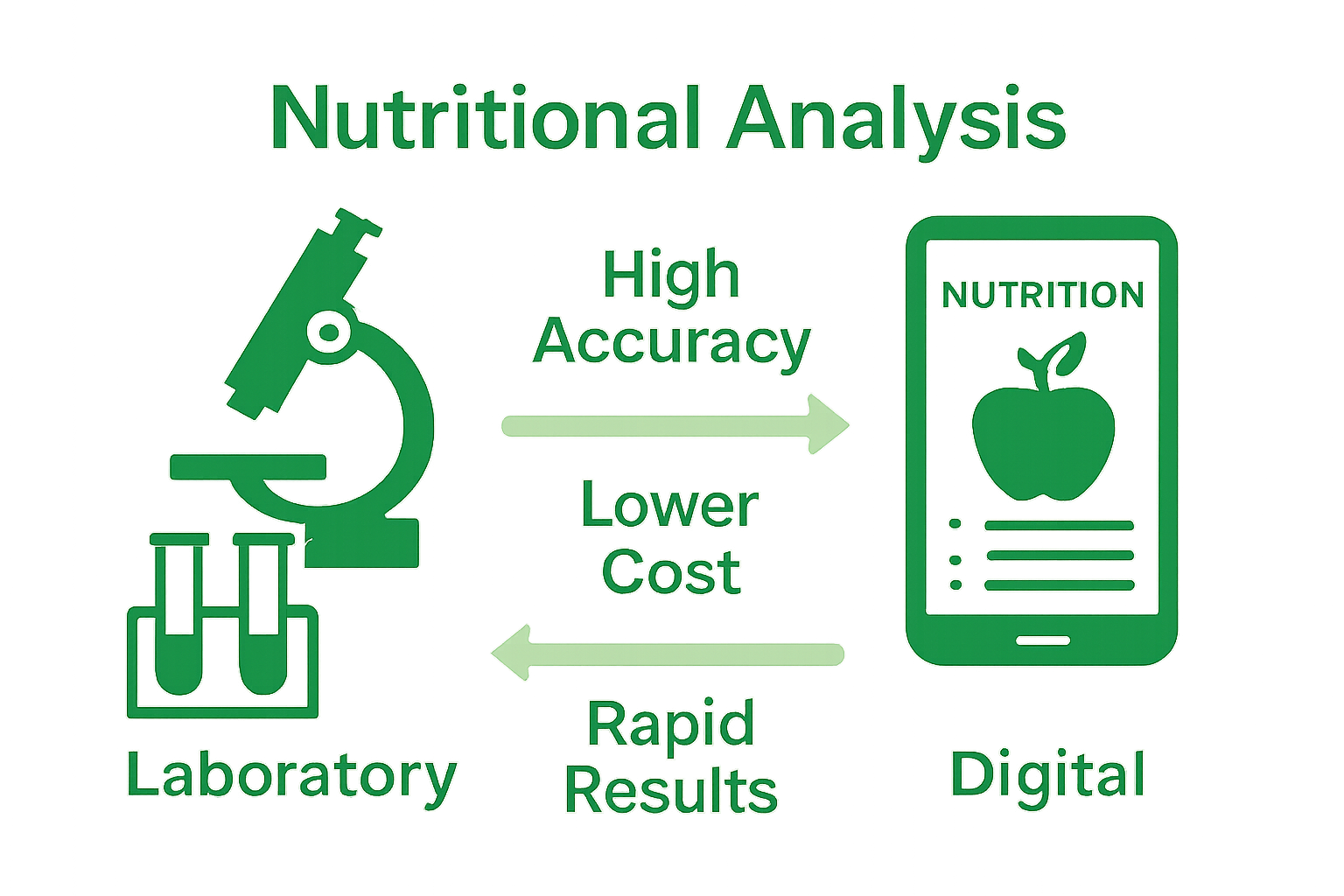
The landscape of nutritional analysis reveals complex trade-offs between precision, economic feasibility, and technological capabilities. Compliance factors play a significant role in determining the acceptability of different analysis methods, with regulatory bodies establishing stringent guidelines for nutritional reporting. Advanced computational techniques, particularly transformer-based networks, have demonstrated remarkable potential in bridging gaps between traditional laboratory methods and emerging digital assessment technologies. These innovative approaches can dramatically reduce analysis costs while maintaining high levels of nutritional data accuracy.
Key considerations for nutritional analysis methods include:
- Precision Metrics: Measuring the statistical reliability of nutritional assessments
- Economic Efficiency: Evaluating the cost per nutritional data point
- Technological Scalability: Assessing the ability to process large volumes of nutritional information
- Regulatory Alignment: Ensuring compliance with health and nutrition reporting standards
- Data Validation: Implementing robust verification mechanisms
The ongoing evolution of nutritional analysis techniques demonstrates a clear trajectory toward more sophisticated, cost-effective, and precise methodologies that balance technological innovation with scientific rigor. Researchers continue to develop increasingly nuanced approaches that can provide comprehensive nutritional insights while meeting increasingly complex regulatory and scientific standards.
Common Errors and How to Avoid Them
Nutritional analysis involves complex methodological challenges that can significantly impact the accuracy and reliability of dietary assessments. Understanding healthy eating strategies requires a critical awareness of potential errors that can compromise nutritional research and individual dietary evaluations. Systematic errors represent the most significant risk in nutritional profiling, potentially leading to misleading conclusions about dietary composition and nutritional intake.
Researchers and nutrition professionals must navigate multiple potential pitfalls in nutritional analysis. Sample preparation emerges as a critical stage where numerous errors can occur, including improper handling, contamination, and inadequate preservation techniques. Digital analysis methods introduce additional complexity, with potential errors arising from image recognition limitations, algorithmic biases, and inconsistent data processing protocols. Advanced computational techniques now offer sophisticated error detection and mitigation strategies, allowing for more robust and reliable nutritional assessments.
Key errors to watch for in nutritional analysis include:
- Sampling Bias: Selecting unrepresentative food samples
- Calibration Errors: Incorrect equipment settings or measurements
- Contamination: Introducing external substances during analysis
- Data Interpretation Mistakes: Misreading or misrepresenting nutritional data
- Technological Limitations: Relying on outdated or imprecise analysis methods
Successful nutritional analysis demands a meticulous approach that combines scientific rigor, technological sophistication, and continuous methodological refinement. Professionals must remain vigilant, implementing robust quality control measures and staying current with emerging analytical techniques to minimize potential errors and ensure the highest standards of nutritional research and assessment.
Unlock Precise Nutritional Insights Tailored to You
Understanding the complexities of nutritional analysis methods is just the first step toward achieving your health goals. The challenges of balancing accuracy, cost, and accessibility in nutritional data can often feel overwhelming. Whether you struggle with interpreting detailed nutritional profiles or want to bridge the gap between scientific rigor and everyday healthy eating, modern technology can help you take control of your wellness journey. Key concepts like micronutrient evaluation, body composition analysis, and balanced nutrition all point to one essential need: personalized, reliable data that works for your lifestyle.
Experience how Recipians combines cutting-edge nutritional science with user-friendly AI tools. Our platform supports you with custom meal plans, fitness routines, and real-time nutrient tracking based on proven scientific methods. Don’t let the complexity of nutritional analysis hold you back. Visit Dietium.com now to start your personalized nutrition experience and see how easy it is to make data-driven choices with confidence. Begin your journey toward better health today with tools designed for accuracy, convenience, and real results.
Frequently Asked Questions
What is nutritional analysis?
Nutritional analysis is a systematic process used to understand the composition and nutritional value of foods, beverages, and dietary patterns through various scientific techniques.
What are the common methods used in nutritional analysis?
Common methods include proximate analysis, spectrophotometry, chromatography, mass spectrometry, and immunoassay techniques that help assess macronutrients, micronutrients, and bioactive compounds.
How does laboratory analysis differ from digital analysis in nutritional assessment?
Laboratory analysis provides higher molecular-level accuracy, while digital analysis offers rapid estimates, cost-effectiveness, and greater accessibility, utilizing AI and machine learning for data interpretation.
What potential errors should be avoided in nutritional analysis?
Common errors include sampling bias, calibration errors, contamination, misinterpretation of data, and technological limitations. Implementing quality control measures is essential for accurate assessments.
Recommended
- Body Composition Analysis: Complete Guide for 2024 – Dietium
- Complete Guide to Body Composition Tracking – Dietium
- Complete Guide to Micronutrients for Optimal Health – Dietium
- Understanding Body Composition: The Key to Health Insight – Dietium
- How to Start Eating Healthy: A Simple Step-by-Step Guide – naturessoulshop


