 Skip to content

Weight loss plateaus affect nearly one in three American adults on their fitness journey, often leading to feelings of frustration and confusion. Living in fast-paced urban environments can make it hard to spot why progress stalls, especially when old routines stop delivering results. This guide examines the science behind plateaus, clears up myths, and reveals how personalized nutrition and smart technology can break through barriers for health-focused individuals worldwide.
Table of Contents
- Defining Weight Loss Plateaus And Common Myths
- How Plateaus Occur: Metabolic And Behavioral Factors
- Types Of Plateaus: Physical, Psychological, And Medication-Induced
- Evidence-Based Strategies To Restart Fat Loss
- Risks, Mistakes, And How Tech Tools Help
Key Takeaways
| Point | Details |
|---|---|
| Understanding Weight Loss Plateaus | Weight loss plateaus are natural responses from the body to maintain energy balance, involving metabolic adaptations that slow progress. |
| Complex Nature of Plateaus | Factors influencing plateaus include hormonal changes, psychological fatigue, and medication effects, requiring personalized strategies for overcoming them. |
| Evidence-Based Strategies | To restart fat loss, implement nutritional recalibration, exercise optimization, and metabolic support techniques as comprehensive solutions. |
| Technology’s Role | Utilize tech tools to track calories, activity, and body composition for data-driven adjustments that can effectively address weight loss barriers. |
Defining Weight Loss Plateaus and Common Myths
A weight loss plateau represents a frustrating period where your body stops responding to previous diet and exercise strategies, despite maintaining consistent efforts. Physiological changes can halt weight loss around 7-10% of total body weight reduction, triggering complex metabolic adaptations that challenge continued progress.
Contrary to popular belief, weight loss plateaus are not simply a result of personal failure or lack of motivation. Scientific research reveals these plateaus emerge from sophisticated biological mechanisms designed to protect your body’s energy balance. Metabolic adaptations occur around six months of consistent weight loss involving hormonal shifts that decrease resting caloric burn and increase appetite signals.
Common myths about weight loss plateaus include oversimplified solutions like extreme calorie cutting or believing you can target fat loss in specific body areas. In reality, the human body responds to weight loss through intricate neurological and metabolic adaptations. These adaptations include:
- Decreased resting metabolic rate
- Increased hunger hormones
- Reduced overall energy expenditure
- Neurological signals promoting energy conservation
Pro tip: Track your body’s measurements and metabolic markers beyond just weight to get a comprehensive understanding of your physiological changes during weight loss.
How Plateaus Occur: Metabolic and Behavioral Factors
Weight loss plateaus emerge from a complex interplay of physiological and psychological mechanisms that fundamentally challenge sustained weight reduction. Metabolic adaptations significantly impact weight loss by triggering biological responses designed to maintain your body’s current energy equilibrium.
The human body responds to caloric restriction through intricate survival mechanisms that slow metabolism and increase hunger signals. Specifically, these adaptations include hormonal shifts that decrease resting caloric expenditure and amplify appetite-related neurological signals. Multiple health factors influence weight management beyond simple diet and exercise, encompassing genetic predispositions, behavioral patterns, and complex physiological responses.
Key metabolic and behavioral factors contributing to weight loss plateaus include:
- Reduced basal metabolic rate
- Hormonal changes suppressing energy expenditure
- Psychological diet fatigue
- Decreased muscle mass and metabolic efficiency
- Adaptive thermogenesis limiting calorie burning
Understanding these mechanisms reveals why weight loss becomes progressively challenging. Your body perceives sustained calorie reduction as a potential threat to survival, activating sophisticated defense mechanisms that counteract continued weight loss.
Pro tip: Periodically adjust your diet and exercise routine to prevent metabolic adaptation and keep your body from settling into a predictable energy conservation pattern.
Types of Plateaus: Physical, Psychological, and Medication-Induced
Weight loss plateaus are not a one-size-fits-all phenomenon, but rather a complex interaction of different underlying factors that can uniquely challenge an individual’s weight management journey. Medication-induced weight challenges represent a significant and often overlooked dimension of weight loss resistance.
Physical plateaus emerge from direct metabolic adaptations, where the body’s physiological mechanisms actively work to conserve energy. These include reduced basal metabolic rate, decreased muscle mass, and hormonal changes that suppress energy expenditure. Clinical research identifies multiple plateau mechanisms that can interrupt weight loss progress, highlighting the body’s sophisticated survival strategies.
Three primary types of weight loss plateaus can be distinguished:
- Physical Plateaus
- Reduced metabolic rate
- Decreased muscle mass
- Hormonal suppression of energy expenditure
- Adaptive thermogenesis
- Psychological Plateaus
- Diminished motivation
- Increased stress levels
- Potential disordered eating patterns
- Mental fatigue from prolonged diet restrictions
- Medication-Induced Plateaus
- Beta-blockers
- Antidiabetic medications
- Antipsychotic drugs
- Steroids
- Antidepressants
Understanding these distinct plateau types allows for more targeted and personalized intervention strategies. Each type requires a nuanced approach that addresses its specific underlying mechanisms, moving beyond generic weight loss recommendations.
Here’s a comparison of weight loss plateau types and tailored solutions:
| Plateau Type | Key Challenge | Example Intervention | Who Should Consult |
|---|---|---|---|
| Physical | Slow metabolism, lost muscle | Strength training, protein | Nutrition specialist |
| Psychological | Loss of motivation, stress | Behavioral therapy, journaling | Mental health provider |
| Medication-Induced | Drug effects on appetite/metabolism | Medication review, doctor guidance | Physician |
Pro tip: Consult with healthcare professionals to develop a comprehensive weight management strategy that accounts for your unique physiological and psychological landscape.
Evidence-Based Strategies to Restart Fat Loss
Overcoming weight loss plateaus requires a strategic, multifaceted approach that goes beyond traditional diet and exercise recommendations. Evidence-based interventions target metabolic adaptations through comprehensive strategies designed to reengage your body’s fat-burning mechanisms.

Successful plateau disruption involves precise modifications across multiple dimensions of health and lifestyle. Nutrition and movement strategies play critical roles in restarting fat loss, requiring targeted interventions that challenge existing metabolic patterns and prevent energy conservation.
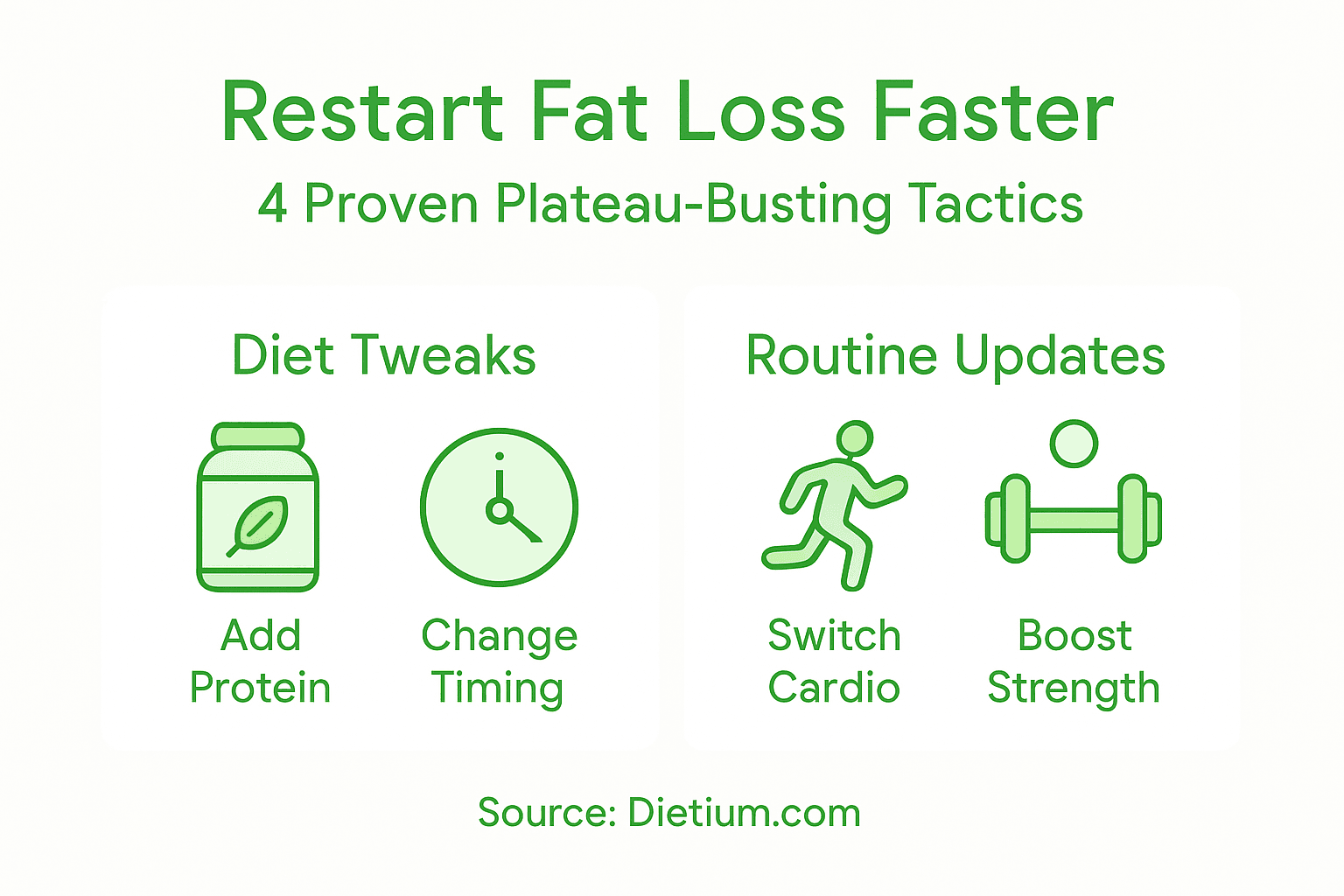
Key evidence-based strategies include:
- Nutritional Recalibration
- Increase protein intake
- Adjust macronutrient ratios
- Implement strategic calorie cycling
- Eliminate hidden calories
- Exercise Optimization
- Incorporate resistance training
- Introduce high-intensity interval training
- Vary workout intensity and duration
- Focus on muscle preservation
- Metabolic Support Techniques
- Manage stress levels
- Prioritize sleep quality
- Monitor hormonal balance
- Track body composition changes
These strategies work synergistically to signal your metabolism that consistent energy expenditure is required, effectively disrupting the plateau mechanism and reigniting fat loss potential.
Pro tip: Document your dietary and exercise changes meticulously, allowing for data-driven adjustments that can systematically overcome your weight loss plateau.
Risks, Mistakes, and How Tech Tools Help
Weight loss plateaus represent more than just a temporary frustration – they involve complex risks that can derail entire health transformation journeys. Tech tools help identify critical weight loss barriers by providing objective insights into metabolic behaviors that typically remain hidden from traditional tracking methods.
The most common mistakes during weight loss plateaus emerge from unintentional behavioral shifts and metabolic adaptations. These include subtle increases in calorie intake, reduced non-exercise activity, and insufficient muscle challenge. Generative AI technologies offer personalized intervention strategies that can detect and address these nuanced performance obstacles.
Key risks and technological solutions include:
- Hidden Calorie Risks
- Untracked snacking
- Portion size creep
- Liquid calorie consumption
- Unconscious eating patterns
- Movement Reduction Risks
- Decreased daily step count
- Reduced spontaneous activity
- Lower non-exercise thermogenesis
- Metabolic rate depression
- Technological Intervention Tools
- Wearable activity trackers
- AI-powered nutrition apps
- Metabolic rate calculators
- Personalized feedback systems
- Body composition analyzers
Technology transforms weight loss plateau management by providing granular, real-time data that empowers individuals to make precise, informed adjustments to their health strategies.
The table below summarizes how technology supports effective weight loss plateau management:
| Tech Tool | Primary Function | Unique Benefit |
|---|---|---|
| Wearable tracker | Activity monitoring | Highlights movement patterns |
| Nutrition app (AI-powered) | Tracks and suggests meals | Personalizes nutrition goals |
| Metabolic rate calculator | Estimates caloric expenditure | Enables targeted adjustments |
| Body composition analyzer | Measures muscle vs fat | Tracks progress accurately |
Pro tip: Select technology tools that offer comprehensive tracking beyond simple weight measurements, focusing on metrics like muscle mass, metabolic rate, and detailed nutritional analysis.
Break Through Your Weight Loss Plateau With Personalized Support
Struggling with a weight loss plateau means your body has adapted to your efforts and progress feels stuck despite your best motivations. The article highlights key challenges like decreased metabolism, hormonal shifts, and psychological fatigue that block continued fat loss. If you are facing these frustrating obstacles, targeted and adaptive strategies are crucial to restart your journey efficiently.
At Dietium.com we understand that overcoming plateaus requires personalized, data-driven solutions tailored to your unique body and lifestyle. Our Recipians app offers custom meal plans and fitness routines designed to combat metabolic adaptations by varying nutrition and exercise intelligently. With AI-powered calculators for calories, BMI, and body fat, you gain precise insights to adjust your approach based on real-time metrics. Explore evidence-based nutrition and movement modifications with seamless integration of tracking tools and expert guidance.
Unlock your progress today by visiting Dietium.com and discover how smart meal planning combined with adaptive fitness strategies can restart your fat loss and renew your motivation. The time to act is now because breaking plateaus means regaining control of your health journey with proven methods and technology designed specifically for your ongoing success.
Frequently Asked Questions
What causes weight loss plateaus?
Weight loss plateaus are primarily caused by metabolic adaptations, including a decrease in resting metabolic rate, hormonal shifts that increase appetite, and reduced overall energy expenditure as your body adjusts to caloric restriction.
How can I restart my weight loss after hitting a plateau?
To restart weight loss, consider recalibrating your nutrition by increasing protein intake, optimizing your exercise routine with resistance and high-intensity interval training, and employing metabolic support techniques like stress management and prioritizing sleep.
Are there psychological factors that contribute to weight loss plateaus?
Yes, psychological factors such as diminished motivation, stress levels, and mental fatigue can significantly impact weight loss efforts, leading to a plateau. Addressing these through behavioral therapy and mindfulness strategies can help.
Can medication interfere with weight loss progress?
Yes, certain medications can induce weight loss plateaus by affecting appetite and metabolism. It’s important to consult with a healthcare provider to understand potential impacts and explore alternative treatments if needed.


