 Skip to content

Wellness is no longer a one-size-fits-all routine for younger generations who want real results. As trends shift worldwide, many health-conscious millennials are turning to science-backed solutions that embrace individuality and the six key wellness dimensions identified by experts: health, sleep, nutrition, fitness, appearance, and mindfulness. With a rising demand for personalized, data-driven health management, this article uncovers how emerging wellness approaches in 2025 will empower you to design a truly holistic, sustainable lifestyle.
Table of Contents
- Defining Wellness Trends In 2025
- Personalized Nutrition And Gut Health
- Advanced Fitness Technology And Ai Tools
- Holistic Health: Mental, Sleep, And Longevity
- Sustainable And Ethical Wellness Innovations
- Risks, Limitations, And Considerations
Key Takeaways
| Point | Details |
|---|---|
| Holistic Wellness Redefined | By 2025, wellness integrates physical, mental, and emotional well-being, reflecting a comprehensive lifestyle rather than luxury. |
| Personalized Nutrition Importance | Nutrition is evolving into a precision science, tailored to individual genetic and microbiome profiles for optimal health outcomes. |
| AI in Fitness Technology | Advanced fitness technology will leverage AI for real-time tracking and personalized workout routines, enhancing individual performance. |
| Sustainability as a Core Principle | The wellness industry will prioritize sustainability through transparent sourcing and eco-friendly practices, reflecting consumer demand for responsible health solutions. |
Defining Wellness Trends in 2025
Wellness is rapidly transforming from a luxury concept to a personalized, holistic lifestyle approach. By 2025, consumers are redefining health through comprehensive strategies that integrate physical, mental, and emotional well-being. Global wellness market insights reveal an exciting shift towards personalized, proactive health management.
The wellness landscape in 2025 encompasses six critical dimensions that go far beyond traditional health perspectives:
- Health: Preventative and precision medicine approaches
- Sleep: Advanced recovery and optimization techniques
- Nutrition: Functional and personalized dietary strategies
- Fitness: Technology-integrated movement and performance tracking
- Appearance: Holistic beauty and self-care practices
- Mindfulness: Integrated mental and emotional wellness solutions
Consumers are increasingly viewing wellness as a dynamic, multifaceted practice rather than a static set of recommendations. Consumer behavior research indicates a growing demand for transparent, trustworthy wellness solutions that address individual needs with scientific precision.
The emerging wellness paradigm emphasizes proactive health management through personalized technologies, data-driven insights, and integrated lifestyle approaches. Younger generations are leading this transformation, viewing wellness not as an occasional intervention but as a continuous, adaptive journey of self-optimization.
Pro tip: Track your personal wellness metrics across multiple dimensions to develop a comprehensive, individualized health strategy.
Here’s a summary comparing key wellness dimensions for 2025:
| Dimension | Core Focus | Primary Tools/Approaches | Projected Impact by 2025 |
|---|---|---|---|
| Nutrition | Personalized dietary guidance | Genetic and microbiome tests | Improved disease prevention |
| Fitness | Integrated performance tracking | AI-powered wearables | Customized training effectiveness |
| Sleep | Recovery and optimization | Sleep analytics technology | Enhanced cognitive performance |
| Appearance | Holistic beauty | Sustainable self-care routines | Eco-conscious product adoption |
| Mindfulness | Mental and emotional resilience | Digital mental health apps | Reduced stress, better focus |
| Health | Preventative, precision care | Data-driven health platforms | Earlier detection, longer healthspan |
Personalized Nutrition and Gut Health
The landscape of nutrition is undergoing a revolutionary transformation, with personalized nutrition emerging as a powerful approach to individual health optimization. Nutrition trends for 2025 reveal a profound shift towards understanding nutrition as a highly individualized science that goes beyond generic dietary recommendations.
Key elements of personalized nutrition in 2025 include:
- Genetic Testing: Tailoring nutrition based on individual genetic profiles
- Microbiome Analysis: Understanding unique gut bacteria compositions
- Metabolic Tracking: Using wearable technologies to monitor real-time nutritional responses
- Functional Foods: Targeted nutrient-dense foods supporting specific health goals
- Gut-Brain Connection: Recognizing the intricate relationship between digestive health and mental wellness
Advanced nutritional strategies are increasingly focusing on the gut microbiome as a critical driver of overall health. The emerging understanding is that gut health is not just about digestion, but plays a crucial role in immune function, mental health, and disease prevention.

By 2025, nutrition is expected to become a precision science, where dietary recommendations are crafted with unprecedented specificity. Individuals will have access to comprehensive health insights that integrate genetic data, microbiome analysis, lifestyle factors, and real-time physiological monitoring to create truly personalized nutrition plans.
Pro tip: Invest in a comprehensive microbiome test to gain deeper insights into your unique nutritional needs and potential health optimization strategies.
Advanced Fitness Technology and AI Tools
Fitness technology is experiencing an unprecedented revolution, with artificial intelligence transforming how individuals approach personal health and exercise. Wearable technology trends are reshaping the fitness landscape, enabling unprecedented levels of personalized tracking and performance optimization.
Key innovations in AI-driven fitness technology include:
- Real-Time Data Collection: Continuous monitoring of heart rate, sleep patterns, and movement
- Personalized Training Algorithms: AI-generated workout routines tailored to individual fitness levels
- Predictive Health Analytics: Proactive injury prevention and performance enhancement
- Virtual Coaching: Adaptive digital training experiences
- Biometric Performance Tracking: Advanced metrics beyond traditional measurements
AI fitness applications are rapidly expanding, creating immersive and intelligent exercise ecosystems that blend physical activity with cutting-edge technology. These tools go beyond simple tracking, offering comprehensive wellness insights that adapt in real-time to an individual’s physiological responses and fitness goals.
The future of fitness is increasingly hybrid, combining digital experiences with traditional in-person training. Emerging technologies are making personalized fitness more accessible, efficient, and engaging than ever before, empowering individuals to take unprecedented control of their health and performance optimization.
Pro tip: Invest in a multipurpose wearable device that integrates AI-powered fitness tracking with comprehensive health monitoring capabilities.
Holistic Health: Mental, Sleep, and Longevity
The landscape of wellness is evolving towards a comprehensive, interconnected approach to health that recognizes the profound relationships between mental well-being, sleep quality, and long-term vitality. Mental wellness trends are highlighting the critical importance of integrating multiple dimensions of health for optimal human performance.
Key components of holistic health in 2025 include:
- Cognitive Fitness: Proactive brain health strategies
- Stress Management: Advanced mindfulness and resilience techniques
- Sleep Optimization: Personalized recovery and regeneration protocols
- Genetic Wellness: Precision health approaches based on individual genetic markers
- Integrative Mental Health: Comprehensive approaches bridging physical and psychological wellness
Personalized wellness programs are increasingly leveraging advanced technologies to create tailored health experiences. These innovations combine genetic testing, wearable technology data, and artificial intelligence to provide unprecedented insights into individual health trajectories, enabling more targeted and effective wellness interventions.
The emerging holistic health paradigm recognizes that mental, physical, and emotional well-being are deeply interconnected. By adopting an integrated approach that considers sleep, nutrition, movement, and mental resilience, individuals can develop more sustainable and comprehensive strategies for long-term health and vitality.
Pro tip: Develop a personalized wellness dashboard that tracks multiple health dimensions, allowing you to identify and address potential imbalances before they become significant issues.
Sustainable and Ethical Wellness Innovations
Wellness innovation is undergoing a profound transformation, with sustainability emerging as a core principle rather than a peripheral consideration. Integrative health trends reveal a comprehensive shift towards practices that prioritize both human and environmental well-being.
Key dimensions of sustainable wellness innovations include:
- Regenerative Agriculture: Food production that restores ecosystem health
- Transparent Supply Chains: Complete visibility into product sourcing
- Eco-Friendly Manufacturing: Minimizing environmental impact
- Circular Product Design: Creating zero-waste wellness solutions
- Ethical Sourcing: Fair compensation and environmental stewardship
Sustainable wellness practices are redefining industry standards by integrating technological innovation with ecological responsibility. This approach goes beyond traditional sustainability, focusing on creating systemic solutions that benefit both human health and planetary ecosystems.
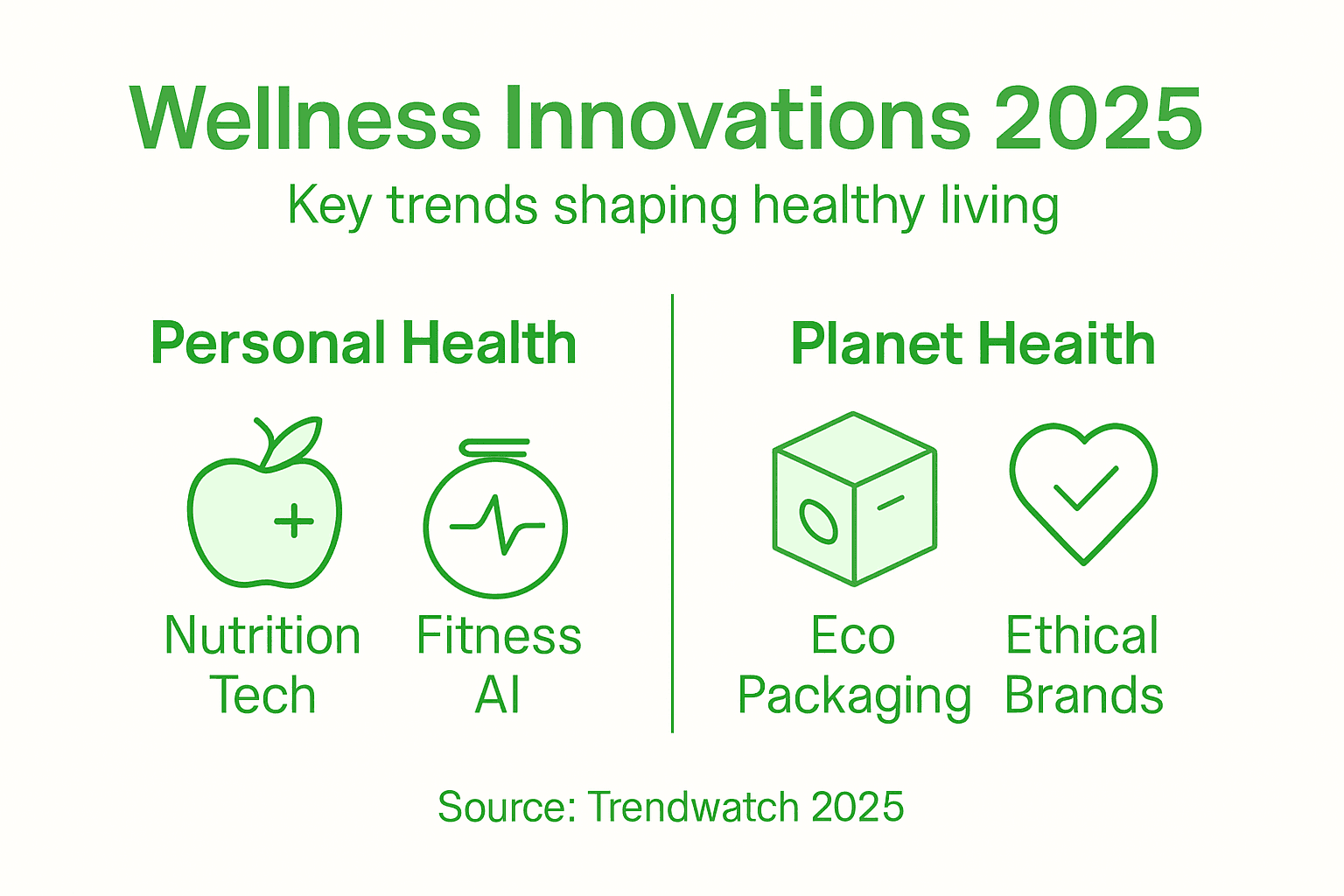
The emerging wellness paradigm recognizes that individual health is intrinsically linked to environmental health. Consumers are demanding more than green marketing – they want genuine commitment to sustainable practices that demonstrate measurable positive impact on global ecological systems.
Pro tip: Research and support wellness brands that provide transparent sustainability reporting and demonstrate genuine commitment to ecological regeneration.
See how new sustainable wellness innovations compare in their environmental impact:
| Innovation Area | Environmental Benefit | Consumer Benefit |
|---|---|---|
| Regenerative agriculture | Soil restoration, biodiversity | Healthier food, ecosystem support |
| Circular product design | Reduces landfill waste | Reusable, zero-waste products |
| Transparent supply chain | Tracks eco-footprint | Informs ethical purchasing |
| Eco-friendly manufacturing | Minimizes pollution | Safer products, lower emissions |
Risks, Limitations, and Considerations
The wellness landscape of 2025 presents a complex ecosystem of promising innovations and significant challenges. Wellness market insights reveal critical considerations that consumers and industry professionals must carefully navigate to ensure genuine health benefits.
Key risks and limitations in the wellness ecosystem include:
- Consumer Skepticism: Growing distrust of unverified health claims
- Regulatory Inconsistencies: Lack of standardized health product validation
- Affordability Barriers: High costs limiting broad accessibility
- Misinformation Proliferation: Unreliable health content spreading rapidly
- Technological Privacy Concerns: Data security in health tracking technologies
Wellness trend challenges demonstrate the critical need for transparency, scientific validation, and ethical marketing practices. The most successful wellness innovations will prioritize clear communication, evidence-based approaches, and demonstrable health outcomes.
Addressing these limitations requires a collaborative approach from technology developers, healthcare professionals, regulatory bodies, and consumer advocacy groups. Maintaining trust through rigorous scientific validation, transparent marketing, and accessible pricing will be essential to the continued growth and credibility of the wellness industry.
Pro tip: Always verify health claims by consulting multiple scientific sources and consulting healthcare professionals before adopting new wellness technologies or practices.
Take Control of Your Personalized Wellness Journey Today
Understanding the evolving wellness trends in 2025 reveals the crucial challenge of navigating personalized nutrition, advanced fitness technology, and holistic health strategies. Many are seeking trusted solutions to balance their nutrition, optimize fitness with AI-driven tools, and maintain mental and physical vitality through data-backed approaches. If you want to overcome the confusion and skepticism around health claims and gain precise insights tailored to your unique biology this is the time to act.
At Dietium.com Recipians we bring together cutting-edge AI-powered tools for personalized meal planning, fitness tracking, and body metrics analysis like BMI and calorie needs to help you build a comprehensive wellness routine. Our platform empowers you to transform trend insights into actionable plans with custom recipes and guided fitness routines based on your real-time data. Don’t wait for the future of wellness to pass you by embrace a smarter approach now by visiting Dietium.com Recipians and start crafting your individualized path to healthier living guided by science and technology.
Frequently Asked Questions
What are the main dimensions of wellness expected in 2025?
The main dimensions of wellness in 2025 include health, sleep, nutrition, fitness, appearance, and mindfulness, focusing on a holistic and personalized approach to well-being.
How will personalized nutrition impact health in 2025?
Personalized nutrition in 2025 will utilize genetic testing, microbiome analysis, and metabolic tracking to create tailored diet plans that meet individual health needs and goals, significantly improving health outcomes.
What role does technology play in fitness trends for 2025?
Technology in fitness for 2025 includes AI-driven wearables offering real-time data, personalized training algorithms, and virtual coaching, enhancing performance and providing comprehensive insights into individual fitness levels.
What are the environmental impacts of sustainable wellness innovations?
Sustainable wellness innovations focus on regenerative agriculture, circular product designs, and eco-friendly manufacturing, aiming to restore ecosystems, minimize waste, and foster ethical practices in wellness products.
Recommended
- Holistic Wellness Definition and Its Real-World Impact – Dietium
- Healthy Cooking Methods 2025: Easy Tips for Better Meals – Dietium
- Understanding Healthy Aging Tips for a Fulfilling Life – Dietium
- Diet vs Lifestyle Change – Impact on Lasting Health – Dietium
- Holistic Hair Care in 2025: Grow Stronger, Healthier Hair | MyHair


