 Skip to content

Most American adults still confuse holistic wellness with alternative medicine, yet recent research shows over 80 percent of people worldwide want a more integrated approach to health. For tech-savvy health enthusiasts, holistic wellness goes far beyond fad diets or fleeting trends. Understanding these common misconceptions opens up new possibilities for optimizing personalized nutrition and fitness, helping you build a sustainable foundation for lifelong well-being.
Table of Contents
- Holistic Wellness Defined And Common Misconceptions
- Major Dimensions Of Holistic Wellness
- Integrating Holistic Approaches In Nutrition And Fitness
- Personalization Through Technology And AI Tools
- Risks, Pitfalls, And Misunderstandings To Avoid
Key Takeaways
| Point | Details |
|---|---|
| Holistic Wellness Emphasizes Interconnectedness | It integrates physical, mental, emotional, social, and spiritual dimensions for comprehensive health. |
| Personalization is Key | Utilizing technology and AI tools allows for tailored wellness strategies based on individual health data. |
| Avoid Oversimplification of Holistic Approaches | Holistic wellness is not a quick fix; it requires understanding complex interactions among various health dimensions. |
| Caution Against Pseudoscience | It’s important to critically evaluate wellness information and consult healthcare professionals before making changes. |
Holistic Wellness Defined and Common Misconceptions
Holistic wellness represents a comprehensive approach to health that transcends traditional medical perspectives. Instead of focusing solely on physical symptoms, this concept recognizes human beings as complex, interconnected systems where mental, emotional, social, and physical dimensions are deeply intertwined. Wellness is a multidimensional concept that exists on a continuum, moving far beyond simple absence of disease.
Common misconceptions about holistic wellness often stem from oversimplification or misunderstanding. Many people incorrectly believe holistic wellness is synonymous with alternative medicine or requires radical lifestyle changes. In reality, it is a nuanced framework that integrates multiple health dimensions, emphasizing balance, prevention, and personalized well-being strategies. The salutogenic perspective underlying holistic wellness focuses on understanding factors that generate health, rather than exclusively examining disease origins.
At its core, holistic wellness involves intentional practices across different life domains. This includes maintaining physical fitness, nurturing mental health, cultivating meaningful social connections, managing emotional resilience, and pursuing spiritual or personal growth. Each dimension contributes to an individual’s overall sense of well-being, with improvements in one area potentially creating positive cascading effects across others.
Pro tip: Start your holistic wellness journey by conducting a personal wellness audit, systematically assessing your current health across physical, mental, emotional, and social dimensions to identify areas for balanced improvement.
Compare traditional wellness and holistic wellness approaches at a glance:
| Approach | Key Focus | Intervention Style |
|---|---|---|
| Traditional Wellness | Physical symptoms only | Symptom management |
| Holistic Wellness | Multiple life dimensions | Prevention and balance |
Major Dimensions of Holistic Wellness
Holistic wellness encompasses multiple interconnected dimensions that collectively contribute to an individual’s overall health and quality of life. Systematic reviews of wellness models reveal that while no universal consensus exists, most frameworks identify approximately five to seven core wellness domains. These dimensions interact dynamically, creating a comprehensive approach to personal well-being that extends far beyond traditional medical perspectives.
The primary dimensions typically include physical, psychological, social, emotional, intellectual, spiritual, and environmental wellness. Physical wellness focuses on bodily health through nutrition, exercise, and preventive care. Psychological wellness addresses mental health, emotional regulation, and cognitive functioning. Social wellness involves building meaningful relationships, communication skills, and community engagement. Emotional wellness centers on understanding and managing feelings, developing resilience, and maintaining positive mental states.

Comprehensive wellness models emphasize how these dimensions interconnect, highlighting that improvements in one area can positively influence others. For instance, regular physical exercise can enhance psychological well-being by releasing endorphins, while strong social connections can improve emotional resilience. Intellectual wellness involves continuous learning, creativity, and mental stimulation. Spiritual wellness relates to finding purpose, meaning, and inner peace, which can transcend religious practices and involve personal values and philosophical perspectives.
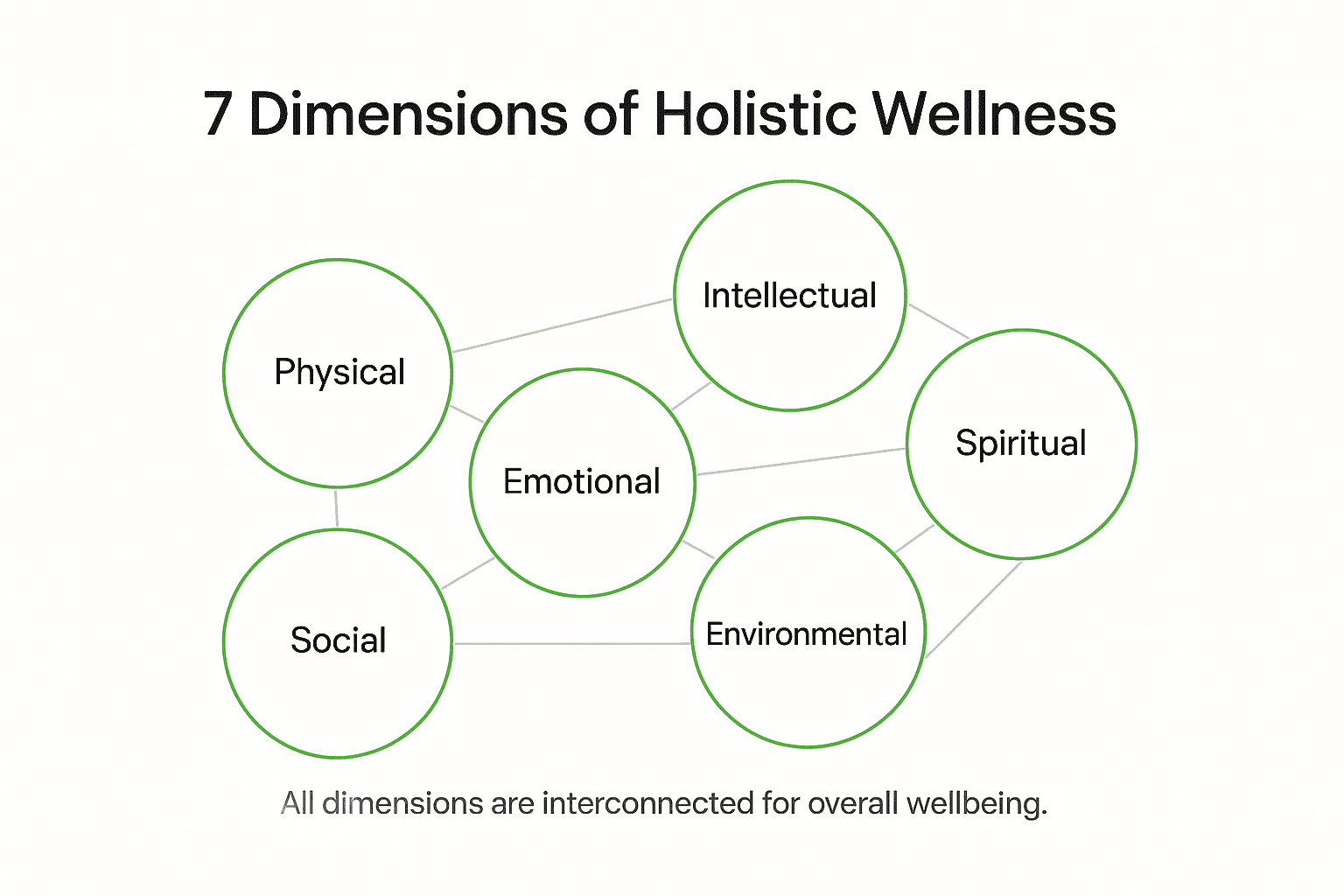
Pro tip: Create a personal wellness radar chart to visually map your current wellness levels across different dimensions, helping you identify areas needing focused improvement and development.
Here’s a summary of the core holistic wellness dimensions and their unique contributions:
| Dimension | Focus Area | Key Benefit |
|---|---|---|
| Physical | Body and movement | Enhances energy and vitality |
| Psychological | Thoughts and cognition | Promotes mental clarity |
| Emotional | Feelings and resilience | Strengthens stress response |
| Social | Relationships and support | Fosters belonging |
| Intellectual | Learning and creativity | Inspires personal growth |
| Spiritual | Meaning and purpose | Provides life direction |
| Environmental | Physical surroundings | Supports healthy habits |
Integrating Holistic Approaches in Nutrition and Fitness
Holistic mobile health interventions that integrate physical activity, nutrition, and mental health strategies demonstrate significant potential for comprehensive wellness improvement, addressing multiple interconnected components of individual health. This approach transcends traditional segmented health practices by recognizing the intricate relationships between dietary choices, physical movement, and mental well-being. Nutrition and fitness are not isolated domains but dynamic systems that profoundly influence each other, requiring a nuanced, interconnected approach to personal health management.
Effective integration begins with understanding individual metabolic needs, lifestyle patterns, and psychological factors. Empirical research from the Global Wellness Institute highlights how combined wellness practices can significantly enhance overall health and happiness. For instance, a nutrient-dense diet supports muscle recovery and energy levels during fitness activities, while regular exercise improves metabolic efficiency and mental clarity. This synergy means that understanding balanced nutrition becomes crucial for developing a comprehensive wellness strategy.
Practical integration involves creating personalized strategies that consider individual physical capabilities, nutritional requirements, and mental health goals. This might include developing meal plans that support specific fitness objectives, incorporating mindfulness practices during exercise, and tracking both nutritional intake and physical performance. The key is developing a holistic framework that views health as a dynamic, interconnected system rather than a collection of isolated interventions.
Pro tip: Design a weekly wellness plan that deliberately connects your nutrition, fitness, and mental health goals, creating intentional bridges between these typically separate domains of personal health.
Personalization Through Technology and AI Tools
Global health organizations recognize the transformative potential of technology and AI in creating personalized wellness interventions that can address individual health needs with unprecedented precision. Advanced algorithms and machine learning technologies now enable comprehensive analysis of personal health data, moving beyond traditional one-size-fits-all approaches to wellness. By integrating complex datasets including genetic information, lifestyle patterns, metabolic markers, and psychological assessments, AI tools can generate highly tailored health recommendations that adapt dynamically to an individual’s changing needs.
The practical applications of AI-driven personalization extend across multiple wellness domains. Interdisciplinary research demonstrates how emerging technologies can support resilience and reduce burnout in specific populations, such as healthcare professionals and students. These technologies enable real-time monitoring of physical and mental health indicators, providing proactive insights that can prevent potential health risks before they become significant challenges. Personalized meal plans represent a prime example of how AI can translate complex health data into actionable, individualized nutrition strategies.
Technology-enabled personalization represents more than just data analysis. It embodies a paradigm shift towards holistic, predictive, and preventive healthcare models that empower individuals to take control of their wellness journey. By leveraging machine learning, natural language processing, and advanced data analytics, AI tools can create comprehensive wellness profiles that consider the intricate interactions between physical, mental, and social health dimensions. These sophisticated systems can recommend lifestyle modifications, predict potential health risks, and provide customized guidance that evolves with an individual’s changing health status.
Pro tip: Explore AI-powered wellness tools that offer comprehensive health assessments, and commit to regularly updating your personal health data to receive increasingly refined and personalized recommendations.
Risks, Pitfalls, and Misunderstandings to Avoid
Holistic wellness approaches demand careful implementation to prevent common misconceptions and potential fragmentation of care. One significant risk is the tendency to oversimplify holistic wellness as a quick fix or magical solution, rather than understanding it as a complex, interconnected approach to personal health. Many individuals mistakenly believe that holistic wellness means completely abandoning traditional medical practices or replacing scientific interventions with alternative therapies, which can lead to dangerous oversights in personal health management.
Misunderstandings often arise from a lack of nuanced understanding of how different wellness dimensions interact. People might focus intensely on one aspect of wellness, such as physical fitness, while neglecting mental health or nutritional balance. This compartmentalized approach directly contradicts the core principle of holistic wellness, which emphasizes the interconnectedness of physical, mental, emotional, and social well-being. Another critical pitfall involves treating holistic wellness as a one-size-fits-all strategy, ignoring individual variations in metabolic processes, genetic predispositions, and personal life circumstances.
Professional practitioners and individuals alike must be cautious about potential information overload and pseudoscientific claims in the wellness industry. The proliferation of wellness trends can create confusion, making it challenging to distinguish between evidence-based practices and marketing-driven recommendations. Critical thinking and scientific skepticism are essential when evaluating wellness strategies. This requires a balanced approach that combines rigorous research, professional medical advice, and personalized insights tailored to individual health needs.
Pro tip: Always cross-reference wellness information with peer-reviewed scientific sources and consult healthcare professionals before making significant changes to your health routine.
Experience True Holistic Wellness with Personalized Nutrition and Fitness
The article emphasizes the importance of a balanced, multidimensional approach to wellness that integrates physical, mental, social, and emotional health. If you are struggling to connect the dots between these dimensions or seeking a practical way to personalize your journey, you are not alone. Many face challenges like inconsistent nutrition, unclear fitness goals, or lack of integrated support across wellness areas. Our platform understands these pain points and guides you through customized, evidence-based strategies to enhance every aspect of your well-being from physical vitality to mental clarity.
Discover how Dietium bridges the gap by offering AI-powered tools designed to assess your unique health metrics and tailor meal plans and fitness routines just for you. Whether you want to track your calorie needs, improve your emotional resilience through mindful eating, or synchronize your nutrition with exercise, the Recipians app is your companion for an intentional, holistic wellness plan. Don’t wait for another day to start transforming your health. Visit Dietium now and take control with personalized guidance that evolves with you.
Frequently Asked Questions
What is holistic wellness?
Holistic wellness is a comprehensive approach to health that recognizes the interconnectedness of physical, mental, emotional, and social dimensions of well-being, rather than focusing solely on physical symptoms or diseases.
How can I start my journey toward holistic wellness?
You can start by conducting a personal wellness audit to assess your current health across various dimensions, such as physical, mental, emotional, and social, to identify areas for balanced improvement.
What are the major dimensions of holistic wellness?
The major dimensions of holistic wellness typically include physical, psychological, social, emotional, intellectual, spiritual, and environmental wellness, each contributing uniquely to overall well-being.
How can technology and AI enhance my holistic wellness journey?
Technology and AI can provide personalized wellness interventions by analyzing health data, creating tailored recommendations for nutrition, fitness, and mental health, and adapting dynamically to changes in your health status.


