 Skip to content

Did you know that over half of adults who rely on weight alone miss key changes in their health? Understanding your true physical makeup goes far beyond stepping on the scale. Body composition tracking reveals the balance between fat, muscle, bone, and water, helping you see real progress and target your fitness goals more effectively. Exploring different methods can make all the difference in finding what works best for your unique body.
Table of Contents
- Defining Body Composition Tracking Methods
- Types of Tools and Technologies Used
- Key Metrics and Measurement Techniques
- Accuracy, Limitations, and Best Practices
- Integrating Tracking with Health Goals
Key Takeaways
| Method | Insight |
|---|---|
| Comprehensive Analysis | Body composition tracking exceeds traditional weight measurements by revealing detailed proportions of fat, muscle, bone, and water in the body. |
| Diverse Methods | Popular methods include BIA and DXA, each offering varying levels of accuracy, accessibility, and complexity for tracking body composition. |
| Technological Advancements | Modern tools like 3D body scanners and air displacement plethysmography enhance the precision and convenience of body composition analysis. |
| Best Practices | Effective tracking requires consistent measurement conditions and might benefit from using multiple methods to ensure accuracy and insights into physical changes over time. |
Defining Body Composition Tracking Methods
Body composition tracking represents a sophisticated approach to understanding your physical health beyond traditional weight measurements. Unlike simple scales that only reveal total body weight, body composition analysis provides a detailed breakdown of what your body is actually made of – revealing the precise proportions of fat, muscle, bone, and water.
Two primary scientific methods dominate body composition tracking: Bioelectrical Impedance Analysis (BIA) and Dual-energy X-ray Absorptiometry (DXA). According to Wikipedia, BIA estimates body composition by measuring the body’s resistance to a weak electric current, offering insights into body fat and muscle mass. This method works by sending a small, imperceptible electrical signal through your body and analyzing how quickly it travels through different tissue types.
The DXA method represents an even more advanced tracking technique. By utilizing two X-ray beams, DXA can precisely distinguish between bone, fat, and lean tissue, providing an incredibly accurate assessment of body composition. This technology allows health professionals and individuals to understand their body’s unique makeup with unprecedented detail.
Key body composition tracking methods include:
- Bioelectrical Impedance Analysis (BIA)
- Dual-energy X-ray Absorptiometry (DXA)
- Hydrostatic Weighing
- Skinfold Caliper Measurements
- 3D Body Scanning
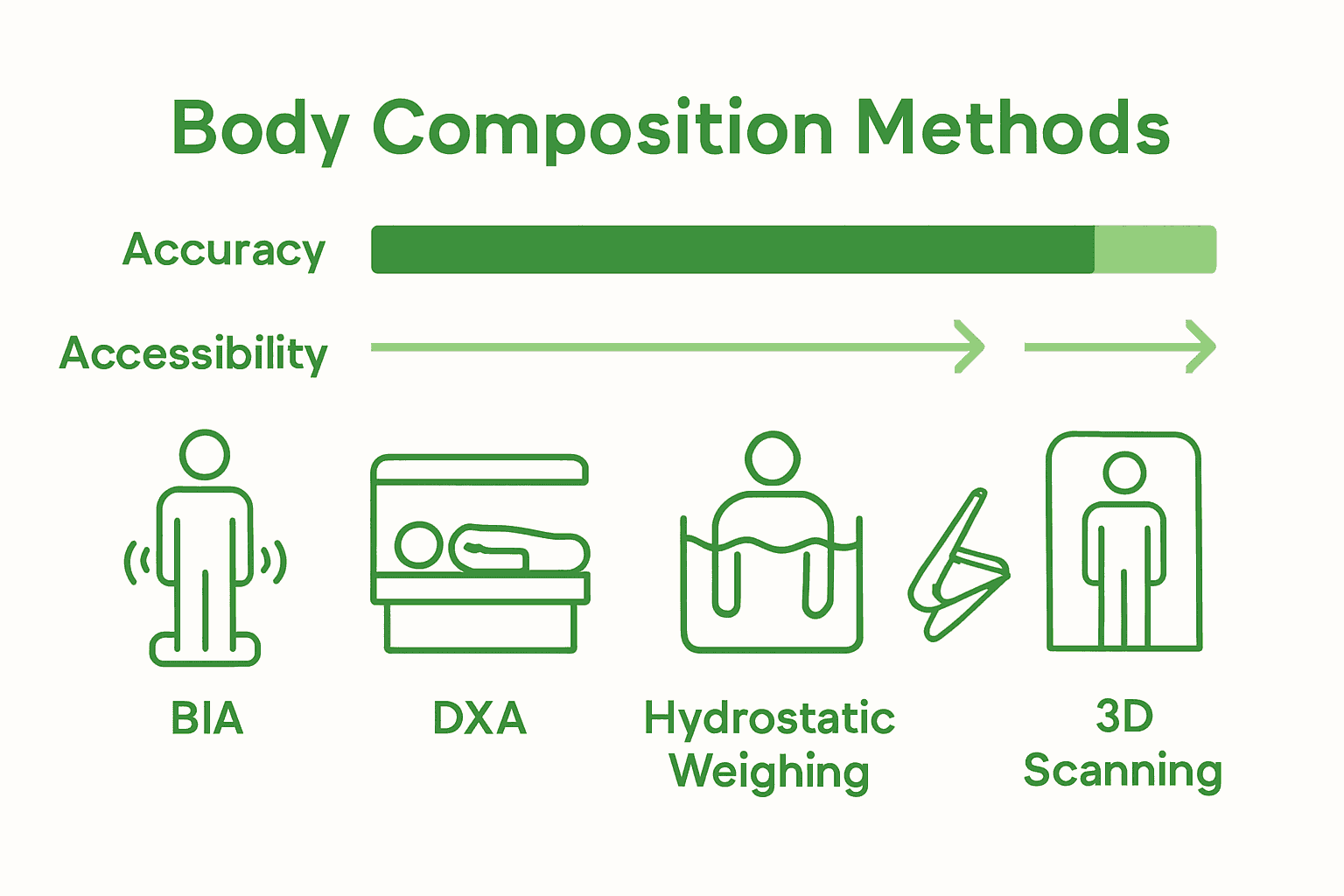
Each method offers different levels of accuracy, accessibility, and complexity.
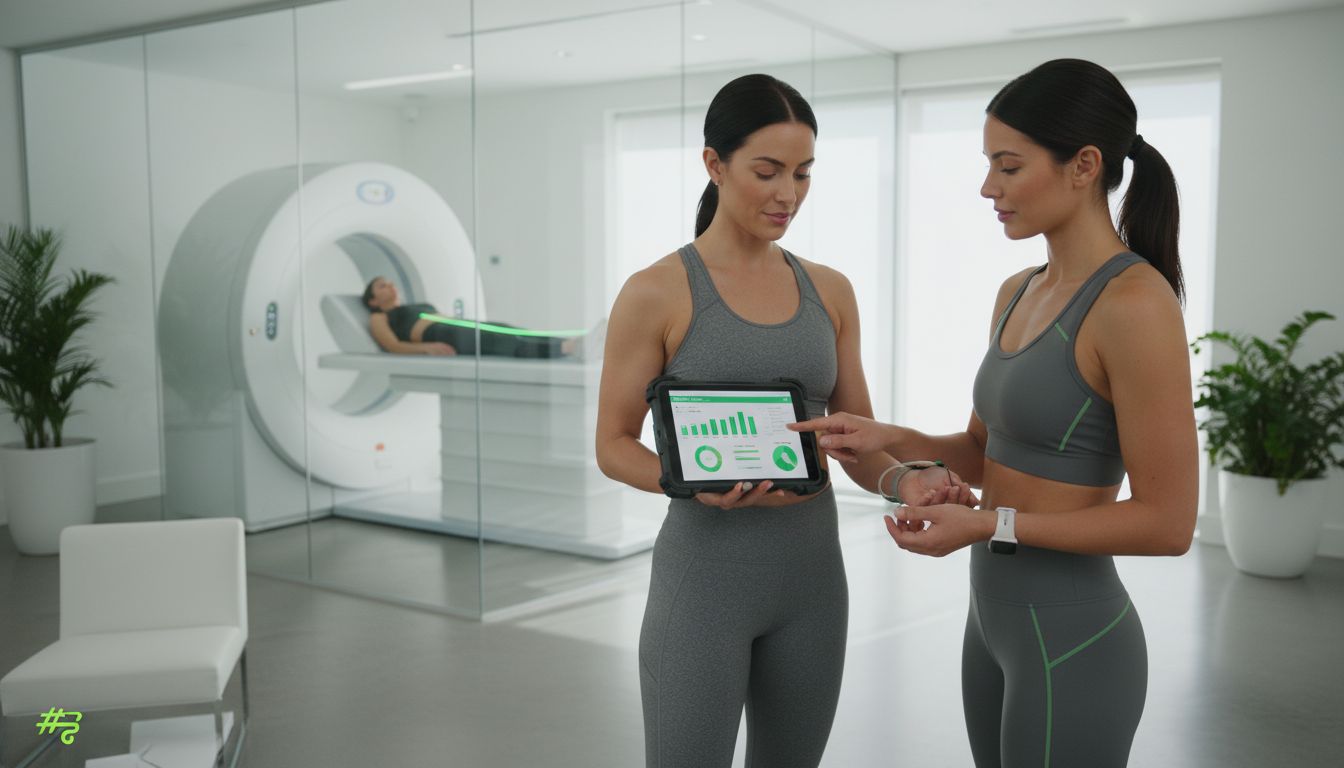 Understanding body composition tracking methods can help you choose the most appropriate approach for your personal health and fitness goals.
Here’s a comparison of common body composition tracking methods:
| Method | How It Works | Accuracy | Accessibility |
|---|---|---|---|
| Bioelectrical Impedance Analysis (BIA) | Electrical signal through body | Moderate Affected by hydration | Widely available At home & gyms |
| Dual-energy X-ray Absorptiometry (DXA) | Two X-ray beams scan body | High Detailed breakdown | Clinical settings Higher cost |
| Hydrostatic Weighing | Underwater body weighing | High Traditional reference | Specialized facilities Less common |
| Skinfold Caliper Measurements | Measures skinfold thickness | Moderate User-dependent | Affordable Requires training |
| 3D Body Scanning | Digital body model creation | Moderate to High Advanced visuals | Growing access New technology |
Types of Tools and Technologies Used
Body composition tracking has evolved dramatically with technological advancements, offering individuals multiple sophisticated tools to understand their physical makeup. Modern technologies range from simple handheld devices to complex scientific equipment, each providing unique insights into body composition.
Air displacement plethysmography (ADP) represents a cutting-edge measurement technique that determines body composition by measuring body volume through precise air displacement in a sealed chamber. This non-invasive method offers an alternative to traditional underwater weighing, providing accurate body density measurements without submerging participants.
3D body scanning technologies have revolutionized anthropometric assessments by creating detailed digital models of human physiques. These scanners use structured-light techniques to capture comprehensive body measurements, enabling unprecedented precision in tracking physical changes over time.
Modern 3D scanners can rapidly generate full-body models that reveal intricate details about body shape, proportions, and potential composition variations.
Key body composition tracking technologies include:
- Smart Body Fat Scales
- Bioelectrical Impedance Analysis (BIA) Devices
- Handheld Body Fat Analyzers
- DEXA/DXA Scanners
- Air Displacement Plethysmography Chambers
- 3D Body Scanning Systems
How to Calculate Body Fat Percentage can help you understand which technology might best suit your personal health monitoring needs, ensuring you select the most appropriate method for your specific goals.
Key Metrics and Measurement Techniques
Body composition tracking goes far beyond simple weight measurements, diving deep into the intricate details of your physical makeup. Understanding the key metrics allows you to gain comprehensive insights into your overall health, fitness progress, and potential areas of improvement.
According to Wikipedia, Bioelectrical Impedance Analysis (BIA) calculates total body water to estimate fat-free mass and, by difference with body weight, determines body fat percentage. However, it’s important to note that this method’s accuracy can be significantly influenced by hydration levels, making consistent measurement conditions crucial for reliable results.
Dual-energy X-ray Absorptiometry (DXA) provides an even more precise approach to body composition analysis. This advanced technique offers detailed measurements of bone mineral density, lean mass, and fat mass, revealing intricate insights into body fat distribution that go well beyond traditional measurement techniques.
Key body composition metrics include:
- Body Fat Percentage
- Lean Muscle Mass
- Bone Mineral Density
- Total Body Water
- Visceral Fat Level
- Muscle-to-Fat Ratio
Body Composition Analysis: Complete Guide for 2024 can help you understand how these metrics interconnect and what they mean for your personal health journey.
Accuracy, Limitations, and Best Practices
Body composition tracking requires a nuanced understanding of measurement techniques, their potential inaccuracies, and strategic approaches to ensure reliable results. No single method is perfect, and each technology comes with its own set of strengths and limitations that users must carefully consider.
According to Wikipedia, Bioelectrical Impedance Analysis (BIA) can be particularly sensitive to external factors. Its accuracy can be dramatically influenced by hydration status, potentially leading to underestimation of fat-free mass and overestimation of body fat percentage. This means that factors like recent exercise, meal consumption, and even time of day can significantly impact measurement precision.
Dual-energy X-ray Absorptiometry (DXA), while considered the gold standard for body composition analysis, is not without its own limitations. Despite providing extremely detailed insights, this method involves exposure to low-dose radiation and can be affected by variations in body size and composition. The technology’s precision comes with higher costs and less frequent accessibility compared to other methods.
Best practices for accurate body composition tracking include:
- Maintain Consistent Hydration Levels
- Measure at Similar Times of Day
- Avoid Measuring Immediately After Exercise
- Use Multiple Measurement Techniques
- Consult Professional Healthcare Providers
- Track Trends Over Time, Not Just Single Measurements
Understanding Body Composition Tracking Methods can provide additional guidance on navigating these complex measurement challenges.
Integrating Tracking with Health Goals
Body composition tracking transforms abstract health data into actionable insights, bridging the gap between measurement and meaningful personal transformation. It’s not just about numbers on a scale, but understanding how your body’s unique composition supports or challenges your specific wellness objectives.
According to Wikipedia, Bioelectrical Impedance Analysis (BIA) devices are powerful tools for monitoring body composition changes over time, providing individuals with concrete data to track progress towards their health and fitness goals. These measurements offer more than just a snapshot – they create a dynamic narrative of your body’s ongoing transformation.
Dual-energy X-ray Absorptiometry (DXA) scans take this integration a step further by providing comprehensive data that assists healthcare professionals in developing deeply personalized health and fitness plans. This technology doesn’t just measure – it illuminates the intricate details of your physiological journey, helping you make informed decisions about nutrition, exercise, and overall wellness.
Strategic approaches for integrating body composition tracking with health goals include:
- Set Specific, Measurable Objectives
- Establish Baseline Measurements
- Create Periodic Check-in Schedules
- Adjust Strategies Based on Tracked Data
- Combine Multiple Tracking Methods
- Consult Health Professionals for Interpretation
Tracking Fitness Progress can provide additional strategies for transforming your body composition data into meaningful personal growth.
Unlock Your Health Potential with Precise Body Composition Tracking
Understanding your body’s true composition can be challenging with so many measurement methods like Bioelectrical Impedance Analysis and DXA offering different insights. If you have struggled to translate complex data like body fat percentage or lean muscle mass into actionable steps you are not alone. Many face the frustration of tracking progress without clear guidance or tailored nutrition and fitness plans that align with their unique body metrics.
Dietium.com offers a solution designed to simplify this process by combining advanced AI-powered tools with personalized meal and fitness planning through the Recipians app. Whether you are looking to optimize your body fat levels, increase lean muscle, or improve overall wellness our platform helps you make sense of your data and turn it into real results. Explore resources like Tracking Fitness Progress and How to Calculate Body Fat Percentage to deepen your knowledge while actively transforming your habits.
Take control of your health journey today by visiting Dietium Recipians to start tracking smarter and living better. Don’t wait for tomorrow when your body composition can improve with the right tools and support now.
Frequently Asked Questions
What is body composition tracking?
Body composition tracking is a method to assess your physical health by analyzing the proportions of fat, muscle, bone, and water in your body, going beyond simple weight measurements.
What are the main methods of body composition tracking?
The primary methods include Bioelectrical Impedance Analysis (BIA), Dual-energy X-ray Absorptiometry (DXA), Hydrostatic Weighing, Skinfold Caliper Measurements, and 3D Body Scanning, each with varying accuracy and accessibility.
How accurate are different body composition tracking methods?
Bioelectrical Impedance Analysis (BIA) offers moderate accuracy but can be influenced by hydration levels. DXA is highly accurate and detailed but involves exposure to low-dose radiation and is more costly. Hydrostatic Weighing is also highly accurate but less commonly accessible.
How can I improve the accuracy of body composition tracking?
To enhance measurement accuracy, maintain consistent hydration levels, measure at similar times of day, avoid post-exercise measurements, and consider using multiple measurement techniques for comprehensive insights.


