 Skip to content

TL;DR:
- Most households waste more food than they realize, costing Americans around $3,000 annually.
- Reducing food waste involves smarter planning, proper storage, and creative reuse of leftovers.
Most households throw away far more food than they realize. The average American family of four wastes roughly $3,000 every year on food that never gets eaten. That is not a rounding error. It is a real, recurring cost that compounds month after month. Learning how to reduce food waste is not about perfection. It is about building smarter habits around planning, storage, and using what you already have. The strategies below are specific, practical, and designed to fit real household routines.
Table of Contents
- Key takeaways
- How to reduce food waste with smarter planning
- Best practices for food storage at home
- Using leftovers and creative cooking to avoid waste
- Understanding food labels before you throw anything away
- My take on building the habit that sticks
- Plan smarter meals and waste less with Dietium
- FAQ
- Quick summary
Key takeaways
| Point | Details |
|---|---|
| Inventory before shopping | Check what you already have before buying more to prevent duplicates and overbuying. |
| Use FIFO rotation | Move older food to the front of your fridge and pantry so it gets used before it spoils. |
| Flexible meal planning works better | Leaving one or two meals unplanned each week lets you use up leftovers and whatever needs to go. |
| Labels are not expiration dates | “Best by” and “sell by” dates describe quality, not safety. Trust your senses before discarding. |
| Batch cook and freeze strategically | Cooking in larger portions and freezing extras extends food usability and reduces daily decisions. |
How to reduce food waste with smarter planning
Most food waste starts before you even get home from the grocery store. Overbuying is the single most common cause, and it almost always stems from shopping without a clear picture of what you already have.
Take stock before you shop
Before writing a single item on your shopping list, do a quick inventory of your fridge, freezer, and pantry. Check for items you already have, especially perishables nearing the end of their usable period. Home inventory prevents impulse buys and keeps you from buying a second bag of spinach when you still have half of one at home.
Here is a repeatable system that works:
- Pull everything from the front of your fridge and check what is hiding in the back.
- Note items that need to be used within the next three to five days.
- Build your meal plan around those items first, then fill in the gaps with new purchases.
- Write your shopping list only after completing steps one through three.
This process takes about ten minutes, but it reframes shopping as the last step of planning rather than the first.
Build flexibility into your meal plan
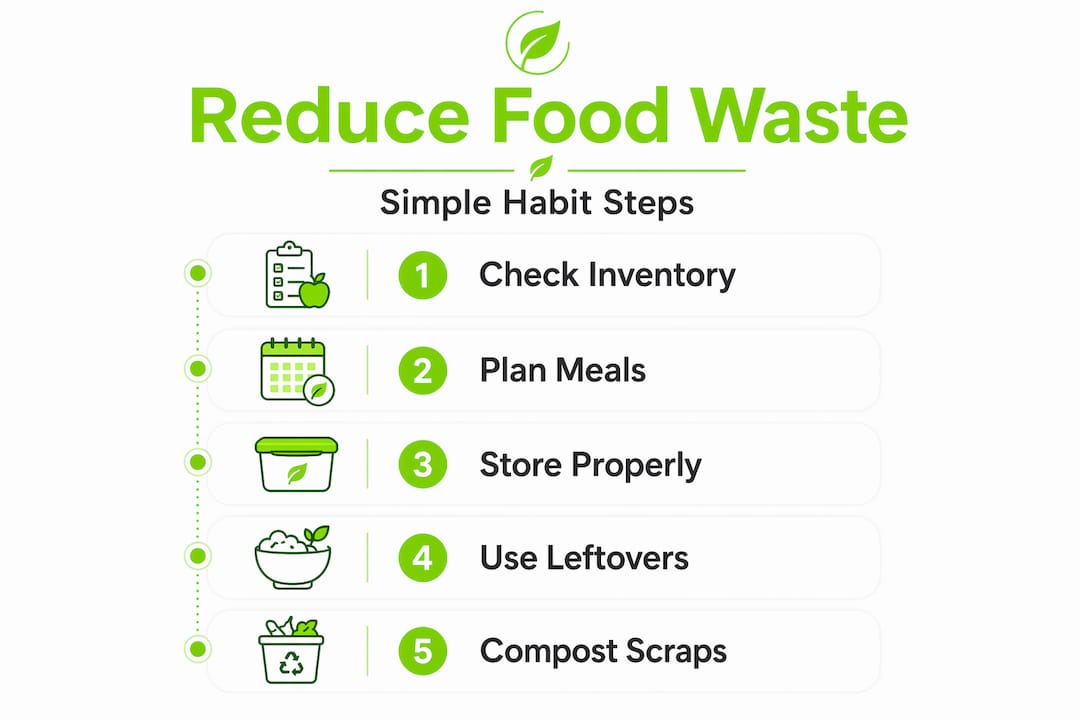
Rigid meal plans fail. Life intervenes, plans change, and food gets wasted when meals do not happen as scheduled. A better approach: plan five specific meals for a seven-day week, and leave two slots open. Leaving one or two meals unplanned per week gives you room to use leftovers, finish odds and ends, or adjust when your schedule shifts.
You do not need to plan by day either. Plan by week and eat meals in the order that best uses up what is freshest. That half-used bag of kale needs to go before the broccoli you bought today.
Pro Tip: Use a meal planning app or even a simple whiteboard on your fridge to track meals for the week and flag items that need to be used soon. Dietium’s smart meal planning tools make it easy to build flexible plans around what you already have.
Best practices for food storage at home
Buying thoughtfully gets you halfway there. Storing food correctly gets you the rest of the way. Most people know the fridge keeps food cold. Far fewer know that where you store food in the fridge matters just as much as the temperature.
Understand your fridge zones
Your refrigerator has distinct temperature zones, and placing food in the wrong zone accelerates spoilage. The coldest area is the back of the lower shelves, which is where raw meat and dairy belong. The door is the warmest area, and it is not the right place for eggs or milk despite what most manufacturers suggest. Crisper drawers with humidity controls are designed for produce. High humidity works for leafy greens and herbs. Low humidity works for fruits and vegetables that produce ethylene gas, like apples and pears.
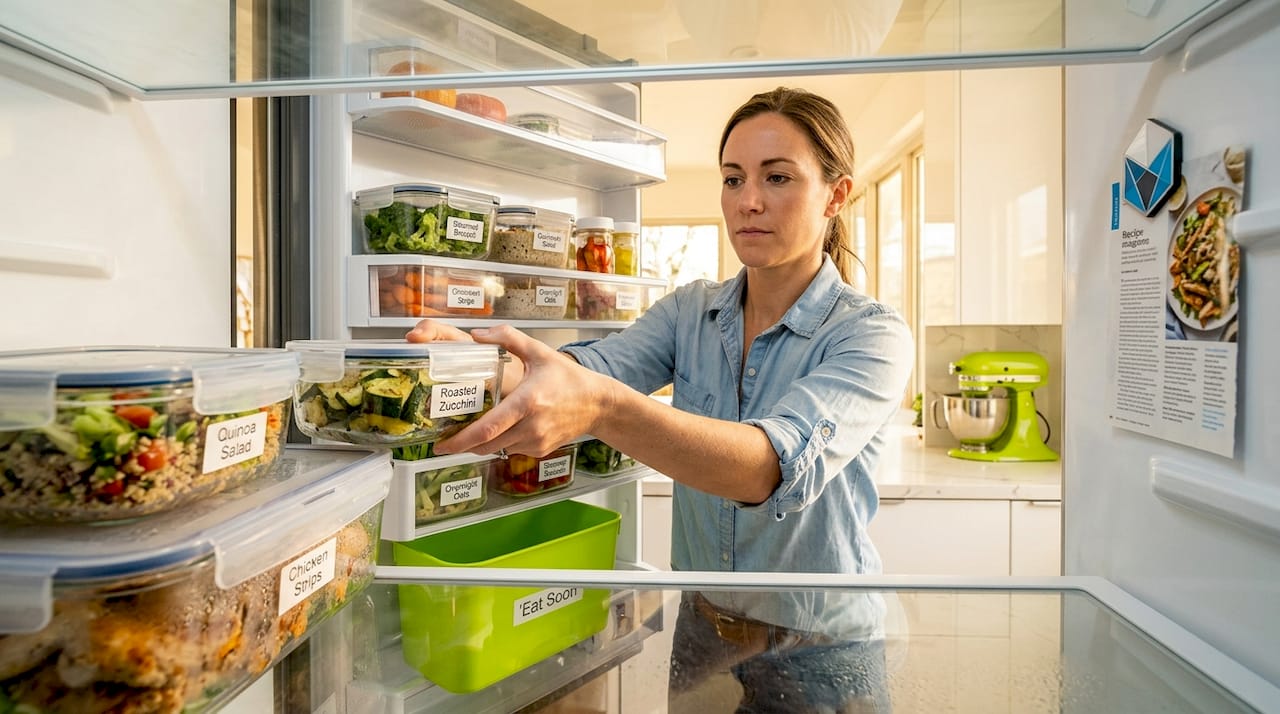
Using clear containers and proper fridge organization preserves food quality and reduces the “out of sight, out of mind” problem that leads to forgotten leftovers.
Storage practices that actually prevent spoilage
| Food Type | Best Storage Method | Shelf Life Tip |
|---|---|---|
| Leafy greens | Wrapped in a damp paper towel inside a container | Lasts 5 to 7 days longer |
| Fresh herbs | Standing in water like flowers, covered with a bag | Keeps for up to 2 weeks |
| Berries | Unwashed in a breathable container lined with paper towel | Prevents moisture buildup |
| Cooked leftovers | Airtight container, labeled with date | Use within 3 to 4 days |
| Bread | Room temperature in a bread box or paper bag | Freezer if not used in 3 days |
The key storage principle for reducing kitchen waste is the First In, First Out method. FIFO rotation means older items get used before newer ones. Every time you put away groceries, move existing items to the front and place new items behind them. This applies to the fridge, freezer, and pantry equally.
- Use clear bins in your fridge for categories like “eat this week” or “leftovers.”
- Label containers with the date they were prepared or opened.
- Keep a visible “use first” bin at eye level in the fridge.
- Store fruit and vegetables separately. Many fruits release ethylene gas that speeds up vegetable decay.
Pro Tip: Designate one shelf or clear bin in your fridge as the “eat soon” zone. Anything that needs to be used within two to three days goes there. You will see it every time you open the fridge door, and that visibility alone changes eating behavior.
Using leftovers and creative cooking to avoid waste
Leftovers are not a consolation prize. They are one of the most practical ways to prevent food waste and save both time and money. Batch cooking, recipe creativity, and freezing are the three habits that make the biggest difference.
Make leftovers part of your system
Start by cooking larger portions intentionally. A pot of grains, a roasted sheet pan of vegetables, and a batch of protein gives you components to assemble different meals throughout the week without eating the same thing twice. This is sometimes called component cooking, and it is more practical than traditional meal prep because you get variety without waste.
Here is how to repurpose common leftovers creatively:
- Roasted vegetables become frittatas, grain bowls, or blended soups the next day.
- Cooked chicken or beans fold into wraps, fried rice, or pasta with minimal effort.
- Overripe fruit goes into smoothies, baked oats, or homemade jam rather than the bin.
- Stale bread becomes breadcrumbs, croutons, or French toast. Do not throw it away.
- Vegetable scraps like onion peels, carrot tops, and celery leaves make excellent stock.
On the freezer side, keep a labeled freezer bag for vegetable scraps. Once it is full, simmer everything with water and basic seasonings for an hour. Strain it. You now have free, flavorful stock with zero additional grocery cost.
Pro Tip: Freeze in portions that match how you actually cook. A full quart of frozen soup is useful. A full gallon is harder to use and often gets forgotten.
Additional ways to prevent food waste through preservation:
- Quick pickling extends the life of cucumbers, onions, carrots, and radishes by weeks.
- Blanching and freezing fresh vegetables before they go bad preserves their nutritional value and texture.
- Making small-batch jams from bruised or overripe fruit takes about twenty minutes and keeps for months.
Understanding food labels before you throw anything away
One of the easiest food waste reduction strategies costs you nothing: stop automatically discarding food because of a date printed on the package. About 20% of consumer food waste results directly from confusion over date labeling.
Here is what those dates actually mean:
- “Best by” or “Best if used by”: A quality indicator set by the manufacturer. The food is typically still safe to eat after this date. Flavor or texture may be slightly different, but safety is not the issue.
- “Sell by”: A guide for retailers about how long to display the product. It is not a directive for you to discard it.
- “Use by”: This one is closer to a hard deadline, particularly for highly perishable items. Pay attention to this label on deli meats and packaged seafood.
- “Freeze by”: Tells you the ideal point to freeze for best quality, not a safety cutoff.
Many consumers discard food prematurely because they treat every date label as an expiration. Sensory checks are often a more reliable indicator of safety than a printed date. If something looks normal, smells fine, and has no unusual texture, it is almost always still good.
The one exception worth knowing: never apply the “use your senses” rule to infant formula or ready-to-eat deli meats for pregnant women or immunocompromised individuals. In those cases, date labels and safe handling guidelines are non-negotiable.
When in doubt, create a simple household reference. Post a small note on your fridge that distinguishes quality dates from safety dates. It takes two minutes to make and saves real food over time.
My take on building the habit that sticks
I did not start reducing food waste because of the environmental impact of food waste, though that matters. I started because I got tired of finding forgotten leftovers at the back of my fridge every single week.
The first thing I noticed when I actually started paying attention was how much I bought out of habit rather than need. I bought salad greens every week whether or not I had actually eaten the previous batch. I duplicated pantry items constantly because I never checked before shopping. These were not hard problems to fix. They just required a moment of attention I had not been giving.
What genuinely changed things for me was not a rigid system but a flexible one. I stopped trying to plan every meal to the letter and started cooking with what needed to go. That shift alone cut my weekly waste by more than half. The savings were real and immediate.
If you are starting out, pick one habit from this article and apply it for two weeks before adding another. The inventory check before shopping is probably the highest-leverage starting point. You will see results quickly, and that momentum carries you forward.
The goal is not zero waste on day one. The goal is less waste than last week.
— Srasti
Plan smarter meals and waste less with Dietium
If you want to make food waste reduction part of your long-term routine, having a clear and personalized meal plan is one of the most practical tools available. Dietium’s family meal planning guide walks you through building flexible weekly plans that account for what you already have, match your household’s nutritional needs, and reduce the guesswork that leads to overbuying.
For those focused on both budget and nutrition, the budget meal planning resource on Dietium combines cost-conscious strategies with smart grocery habits that naturally shrink kitchen waste. You can also explore Dietium’s personalized diet plans to align your meals with specific health goals while keeping your grocery list precise and waste-free.
FAQ
What is the fastest way to reduce food waste at home?
Start with a home inventory before every shopping trip. Knowing exactly what you have prevents overbuying, which is the leading cause of household food waste.
What does “best by” actually mean on food labels?
“Best by” is a quality indicator, not a safety date. Food is typically still safe to eat after that date. Use your senses to judge freshness rather than discarding based on the label alone.
How do I use leftovers without eating the same meal twice?
Repurpose leftovers as components in new dishes. Cooked grains become fried rice, roasted vegetables go into soups or frittatas, and leftover protein works in wraps or pasta.
Can composting really help with the environmental impact of food waste?
Yes. Composting food scraps returns nutrients to soil and significantly reduces methane emissions that occur when organic matter breaks down in landfills.
How often should I be doing a fridge inventory?
Once a week, ideally the day before your scheduled grocery shopping. A ten-minute check prevents duplicate purchases and helps you plan meals around what already needs to be used.
Quick summary
Reducing food waste at home comes down to three core habits: planning with what you have, storing food in a way that actually extends its life, and using leftovers before they become waste. A home inventory before every shop, flexible meal planning with open slots for using up odds and ends, and a simple FIFO rotation system in your fridge and pantry will eliminate most household food waste without significant effort. Understanding date labels correctly means you stop throwing away food that is still perfectly good. Batch cooking and freezing strategically handle the rest. Start with one habit, build from there, and the savings in both money and time add up fast.


