 Skip to content

Many vegans believe a whole food diet eliminates the need for fortified foods, yet up to 86% face vitamin B12 deficiency without them. This guide reveals which fortified foods deliver critical nutrients unavailable in unfortified plants, helping you prevent deficiencies and optimize your health through strategic food choices that work alongside your natural diet.
Table of Contents
- Introduction To Fortified Foods In Vegan Nutrition
- Key Nutrients In Vegan Diets That Need Fortification
- Common Misconceptions About Fortified Foods For Vegans
- How To Select And Use Fortified Foods Effectively
- Summary And Practical Recommendations For Health-Conscious Vegans
- Explore Personalized Nutrition Solutions At Dietium
- Frequently Asked Questions
Key takeaways
| Point | Details |
|---|---|
| Fortified foods fill critical nutrient gaps | Vegan diets naturally lack B12, D3, and adequate calcium without fortification. |
| Key fortified nutrients include B12, D3, calcium, omega-3s | These nutrients prevent deficiencies that lead to serious health complications. |
| Bioavailability matches or exceeds supplements | Fortified foods integrate nutrients naturally into meals with proven absorption rates. |
| Label reading prevents low-quality choices | Avoid excessive additives, sugar, and synthetic forms by selecting transparent products. |
| Combine fortified and natural sources | Pairing fortified foods with nutrient dense vegan foods maximizes absorption and benefits. |
Introduction to fortified foods in vegan nutrition
Fortified foods are plant-based products enhanced with essential micronutrients that are either absent or insufficient in unfortified vegan diets. These foods serve as a practical bridge between dietary preferences and optimal nutrition.
Vitamin B12 naturally occurs only in animal products, making fortified foods or supplements mandatory for vegans. Without adequate B12 intake, you risk nerve damage, cognitive decline, and severe anemia. Similarly, nutrients like iodine, zinc, iron, calcium, and vitamin D present challenges when sourced exclusively from plants.
Relying solely on unfortified plant foods significantly increases deficiency risks for these critical micronutrients. The consequences extend beyond fatigue and weakness. Prolonged deficiencies compromise bone density, immune function, and metabolic processes.
Common deficiency symptoms include:
- Persistent fatigue and muscle weakness
- Cognitive fog and memory problems
- Brittle bones and increased fracture risk
- Impaired immune response and slower wound healing
- Anemia and cardiovascular complications
Fortified foods offer a reliable prevention strategy by delivering bioavailable nutrients in familiar food formats. They integrate seamlessly into daily meals, providing consistent nutrient intake without requiring separate supplement routines. This approach ensures you maintain optimal health while honoring your dietary values.
Key nutrients in vegan diets that need fortification
Vitamin B12 stands as the most critical nutrient requiring fortification in vegan diets. Your body cannot synthesize it, and plants do not produce it naturally. Without intervention, deficiency becomes inevitable within months to years, depending on your existing stores.
Fortified plant milks provide calcium levels equivalent to dairy, supporting bone health effectively when consumed regularly. Calcium absorption from fortified products matches or exceeds that from cow’s milk when vitamin D is present. This combination protects against osteoporosis and maintains skeletal integrity throughout life.

Lichen-derived vitamin D3 shows similar bioavailability to animal sources, making it the superior vegan option over D2 supplements. Your body converts D3 more efficiently, supporting immune function, mood regulation, and calcium metabolism. This vegan-friendly form appears in premium fortified foods and dedicated supplements.
Omega-3 fatty acids present another gap. While flaxseeds and walnuts provide ALA, your body converts only 5 to 10% into EPA and DHA. Algae-derived EPA and DHA in fortified foods bypass this inefficiency, delivering the active forms your brain and cardiovascular system require.
| Nutrient | Vegan Challenge | Fortified Food Solution | Health Benefit |
|---|---|---|---|
| Vitamin B12 | Absent in plants | Fortified cereals, plant milks, nutritional yeast | Prevents nerve damage, supports red blood cell formation |
| Calcium | Lower bioavailability | Fortified plant milks, tofu, orange juice | Maintains bone density, supports muscle function |
| Vitamin D3 | Limited sun exposure, D2 less effective | Lichen-based D3 in plant milks, cereals | Enhances calcium absorption, immune support |
| Omega-3 EPA/DHA | Poor ALA conversion | Algae oil fortified products | Supports brain health, reduces inflammation |
| Iron | Non-heme form less absorbable | Fortified cereals, breads | Prevents anemia, supports oxygen transport |
| Iodine | Variable in plants | Fortified salt, plant milks | Supports thyroid function, metabolism |
| Zinc | Phytates reduce absorption | Fortified cereals, plant milks | Immune function, wound healing, protein synthesis |
Iron from plants exists as non-heme iron, which your body absorbs at 2 to 20% efficiency compared to 15 to 35% for heme iron from meat. Fortified cereals and grains boost your intake significantly, especially when paired with vitamin C sources.
Iodine content in plants varies wildly based on soil conditions. Fortified salt and select plant milks provide consistent amounts, protecting your thyroid function and preventing goiter.
Zinc absorption faces competition from phytates in beans and grains. Fortified foods deliver zinc in forms your body can utilize more readily, supporting immune defense and cellular repair.
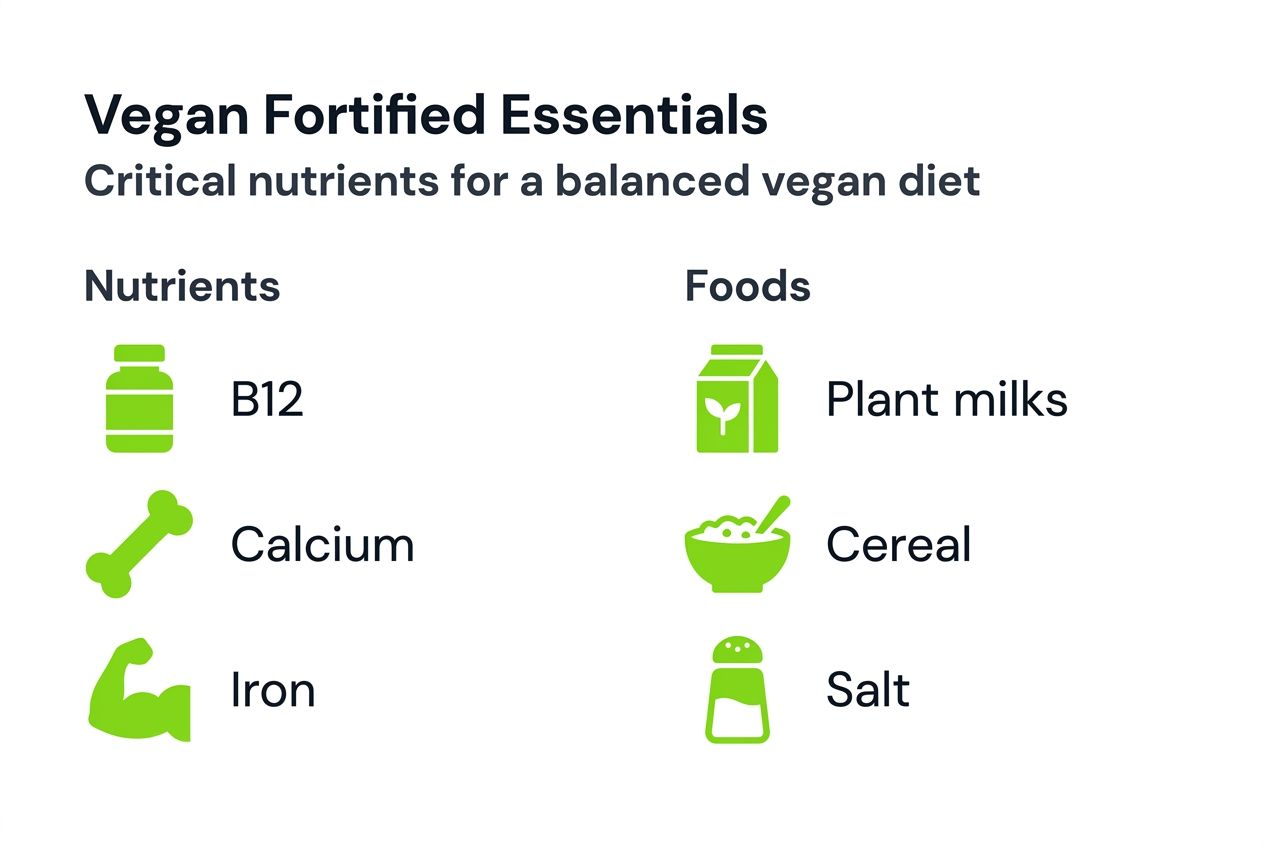
Pro Tip: Pair fortified cereals with citrus fruits or berries. The vitamin C enhances iron absorption by up to 300%, maximizing the nutritional value of your breakfast while supporting energy levels throughout the day.
Common misconceptions about fortified foods for vegans
Many vegans believe fortified foods are unnecessary if their diet includes diverse whole foods. This assumption ignores biochemical reality. No amount of varied plant consumption produces vitamin B12, and achieving adequate calcium or vitamin D from unfortified sources requires meticulous planning most people cannot sustain.
The myth that fortified foods are unnatural or inferior to whole foods persists despite evidence. Fortified foods deliver bioavailable nutrients as effectively as supplements, often with better compliance since they integrate into regular eating patterns. Your body does not distinguish between calcium from fortified almond milk and calcium from cow’s milk when absorption rates are equivalent.
Some claim vitamin D2 works as well as D3 for vegans. Research contradicts this. D3 raises and maintains blood levels more effectively, making lichen-based D3 fortification the smarter choice. Settling for D2 when D3 options exist means accepting lower efficacy without benefit.
Concerns about synthetic nutrients versus natural forms often lack nuance. Fortification uses forms selected for stability and bioavailability. Synthetic B12 in fortified nutritional yeast performs identically to the B12 bacteria produce in animal digestive systems. Your cells cannot detect the origin, only the molecular structure.
Regulatory oversight ensures fortified food safety:
- FDA monitors fortification levels to prevent excessive intake
- Manufacturers must meet strict purity standards for added nutrients
- Labels must accurately reflect nutrient content per serving
- Regular testing verifies nutrient stability throughout shelf life
The fear that fortified foods encourage poor dietary habits misses the point. They complement complete protein vegan sources and whole foods, not replace them. Strategic fortification addresses specific gaps while you continue eating vegetables, legumes, and grains for fiber, phytonutrients, and macronutrients.
Pro Tip: Trust brands that list specific nutrient forms on labels, such as methylcobalamin for B12 or cholecalciferol for D3. This transparency indicates higher quality control and better bioavailability compared to generic vitamin listings.
How to select and use fortified foods effectively
Reading labels separates quality fortified foods from marketing gimmicks. Look beyond the front panel claims to the nutrition facts and ingredient list. The nutrient form matters as much as the amount.
Seek these indicators of superior fortified foods:
- Methylcobalamin or cyanocobalamin for vitamin B12, not generic cobalamin
- Cholecalciferol for vitamin D3, not ergocalciferol (D2)
- Calcium carbonate or calcium citrate, clearly identified
- Algae-derived DHA and EPA with specific milligram amounts
- Minimal added sugars (under 5 grams per serving)
- Short ingredient lists with recognizable components
Some fortified products contain excessive additives that undermine health benefits. Avoid products with artificial colors, high fructose corn syrups, or hydrogenated oils. The fortification cannot compensate for these detrimental ingredients.
Balancing fortified foods with natural nutrient sources creates synergies. Vitamin C from bell peppers or strawberries dramatically increases iron absorption from fortified cereals. Healthy fats from nuts enhance vitamin D uptake from fortified plant milk.
Integrating fortified foods daily:
- Start mornings with fortified cereal or oatmeal topped with fortified plant milk
- Use fortified nutritional yeast as a cheese substitute in lunch dishes
- Drink fortified orange juice with iron-rich meals to boost absorption
- Choose fortified plant milks for smoothies, coffee, and cooking
- Select fortified tofu processed with calcium sulfate for dinner proteins
- Snack on fortified energy bars when whole food options are limited
Timing matters for optimal absorption. Calcium and iron compete for absorption, so separate high-calcium fortified foods from iron-rich meals by two hours when possible. Take vitamin D with your fattiest meal of the day since it is fat soluble.
Fortified foods work best as part of a diverse diet that includes nutrient dense vegan foods like leafy greens, legumes, nuts, and whole grains. No single food provides everything you need.
Rotate fortified products to ensure varied nutrient intake. Different brands use different fortification forms and amounts. This variety prevents both deficiencies and excessive intake of any single nutrient.
Pro Tip: Most consumers miss checking the serving size when comparing fortified products. A cereal fortified with 100% daily value of B12 means nothing if the serving size is unrealistically small. Calculate nutrients per realistic portion to make meaningful comparisons.
Summary and practical recommendations for health-conscious vegans
Fortified foods serve as non-negotiable tools for preventing deficiencies in vitamin B12, vitamin D3, calcium, omega-3 fatty acids, iron, iodine, and zinc. These nutrients either do not exist in plant foods or appear in forms your body struggles to absorb adequately.
Comparing fortified foods to supplements reveals distinct advantages. Fortified foods integrate nutrients into enjoyable meals, improving compliance over pill routines. They provide nutrients alongside complementary compounds that enhance absorption. However, supplements offer precise dosing for addressing diagnosed deficiencies or meeting higher therapeutic needs.
Daily incorporation tips:
- Consume at least two servings of fortified plant milk for calcium and D3
- Include fortified breakfast cereal or nutritional yeast for B12 coverage
- Choose algae-fortified products or direct algae oil for EPA and DHA
- Use fortified salt in cooking to meet iodine requirements
- Pair iron-fortified foods with vitamin C sources at the same meal
Balanced nutrition requires combining fortified foods with nutrient dense vegan foods rich in fiber, antioxidants, and phytonutrients. Fortification addresses micronutrient gaps while whole foods provide the foundation for optimal health.
Monitor your nutrient status through periodic blood tests, especially for B12, vitamin D, iron, and omega-3 index. These objective measures reveal whether your fortified food strategy succeeds or requires adjustment before symptoms develop.
Your fortified food choices today determine your health trajectory tomorrow. Preventing deficiencies proves far easier than reversing their consequences. Invest time in selecting quality fortified products and using them consistently within a varied, whole food diet.
Explore personalized nutrition solutions at Dietium
Optimizing your nutrient intake requires more than knowing which fortified foods to buy. Understanding your unique nutritional needs through comprehensive nutritional assessment methods reveals precisely which nutrients you should prioritize and in what amounts.
Dietium offers personalized meal plans that strategically incorporate fortified foods alongside whole plant foods, creating balanced nutrition tailored to your health goals, activity level, and preferences. These plans eliminate guesswork while ensuring you meet all micronutrient requirements.
The role of functional foods nutrition extends beyond basic fortification. Dietium’s approach combines fortified foods with naturally nutrient-rich options, creating synergies that enhance absorption and utilization throughout your body.
Start with a professional assessment to identify your specific nutrient gaps and receive evidence-based recommendations for fortified food selection. This foundation supports confident decision-making and sustainable dietary habits that protect your health long term.
Frequently asked questions
What are fortified foods and why are they important for vegans?
Fortified foods are plant-based products enhanced with vitamins and minerals that are naturally absent or insufficient in vegan diets. They prevent deficiencies in nutrients like B12, calcium, vitamin D3, and omega-3s that you cannot obtain adequately from unfortified plant sources. These foods offer a practical, evidence-based solution for maintaining optimal health while following vegan dietary principles.
Which nutrients do vegans most need to get from fortified foods?
Vitamin B12 tops the list since it exists only in animal products and B12-fortified foods. You also need fortified sources of vitamin D3, calcium, omega-3 fatty acids EPA and DHA, iodine, iron, and zinc. These nutrients either do not appear in plants or exist in forms your body absorbs poorly without strategic fortification.
Are fortified foods better than supplements for vegans?
Fortified foods integrate nutrients into regular meals, improving compliance and providing nutrients alongside absorption-enhancing compounds. Supplements allow precise dosing and work well for addressing diagnosed deficiencies or meeting higher therapeutic needs. The best approach often combines both, using fortified foods as your foundation and supplements to fill remaining gaps identified through testing.
How can I tell if a fortified vegan food is high quality?
Look for transparent labeling that specifies nutrient forms like methylcobalamin for B12 or cholecalciferol for D3 rather than generic vitamin names. Choose products with minimal additives, low sugar content under 5 grams per serving, and short ingredient lists. Avoid products containing artificial colors, hydrogenated oils, or high fructose corn syrup regardless of their fortification levels.


