 Skip to content

Most American vegans face the challenge of getting enough healthy fats while keeping nutrition and weight in check. The rise of plant-based eating means more people are rethinking fat sources, especially as experts reveal that over 65 percent of vegans need guidance to balance their intake for metabolic support. Discover how strategic choices can help tech-savvy, health-conscious vegans worldwide upgrade their diets and achieve lasting wellness.
Table of Contents
- What Healthy Fats Are in Vegan Diets
- Main Types of Vegan Healthy Fats
- Top Plant-Based Sources for Daily Intake
- How Healthy Fats Support Vegan Wellness
- Common Pitfalls and What to Avoid
Key Takeaways
| Point | Details |
|---|---|
| Importance of Healthy Fats | Healthy fats are crucial in vegan diets, supporting wellness and reducing chronic disease risk through unsaturated fatty acids. |
| Main Sources | Key sources include nuts, seeds, avocados, and plant-based oils, providing essential omega-3 and omega-6 fatty acids. |
| Omega-3 Considerations | Vegans should be mindful of potential omega-3 deficiencies and consider supplements for long-chain forms like EPA and DHA. |
| Avoid Processed Options | Prioritize whole food fat sources over processed options to maintain nutritional integrity and support overall health. |
What Healthy Fats Are in Vegan Diets
Healthy fats represent a crucial nutritional component for vegans, offering essential nutrients that support overall wellness and metabolic function. Plant-based diets can provide an impressive array of beneficial fat sources, characterized primarily by unsaturated fatty acids that contribute to cardiovascular and inflammatory health. Emerging research demonstrates that vegan diets typically emphasize monounsaturated and polyunsaturated fats, which play a significant role in reducing chronic disease risk.
The primary healthy fat sources in vegan diets include nuts, seeds, avocados, and plant-based oils. Specifically, omega-rich foods like chia seeds, flaxseeds, hemp seeds, and walnuts provide excellent alternatives to animal-based fat sources. Comparative studies reveal that vegans often exhibit higher levels of unsaturated fatty acids such as linoleic acid and oleic acid, which contribute to improved metabolic profiles.
While plant-based diets offer numerous fat sources, vegans must be strategic about obtaining long-chain omega-3 fatty acids like EPA and DHA. These nutrients are typically less abundant in vegan diets and may require targeted supplementation or careful dietary planning. Algae-based omega-3 supplements, for instance, can help bridge potential nutritional gaps and ensure comprehensive fatty acid intake.
Some excellent vegan healthy fat sources include:
- Nuts: Almonds, walnuts, macadamia nuts
- Seeds: Chia, flax, hemp, pumpkin
- Oils: Olive, avocado, coconut
- Whole foods: Avocados, olives, dark chocolate
Pro tip: Incorporate a diverse range of plant-based fat sources to ensure comprehensive nutrient absorption and metabolic support.
Main Types of Vegan Healthy Fats
Vegan diets offer a diverse spectrum of healthy fats, characterized by their unique nutritional profiles and health-promoting properties. Emerging nutritional research demonstrates that vegan fat sources primarily comprise monounsaturated and polyunsaturated fatty acids, which play critical roles in metabolic function and overall wellness. These plant-based fat types differ significantly from animal-derived fats, providing distinct health advantages.
Monounsaturated Fats represent one primary category of vegan healthy fats, found abundantly in foods like avocados, olive oil, and nuts. These fats are known for their heart-protective qualities, helping to reduce bad cholesterol levels and support cardiovascular health. Polyunsaturated Fats, including essential omega-3 and omega-6 fatty acids, are equally crucial. These fats cannot be produced by the human body and must be obtained through dietary sources such as chia seeds, flaxseeds, and walnuts.
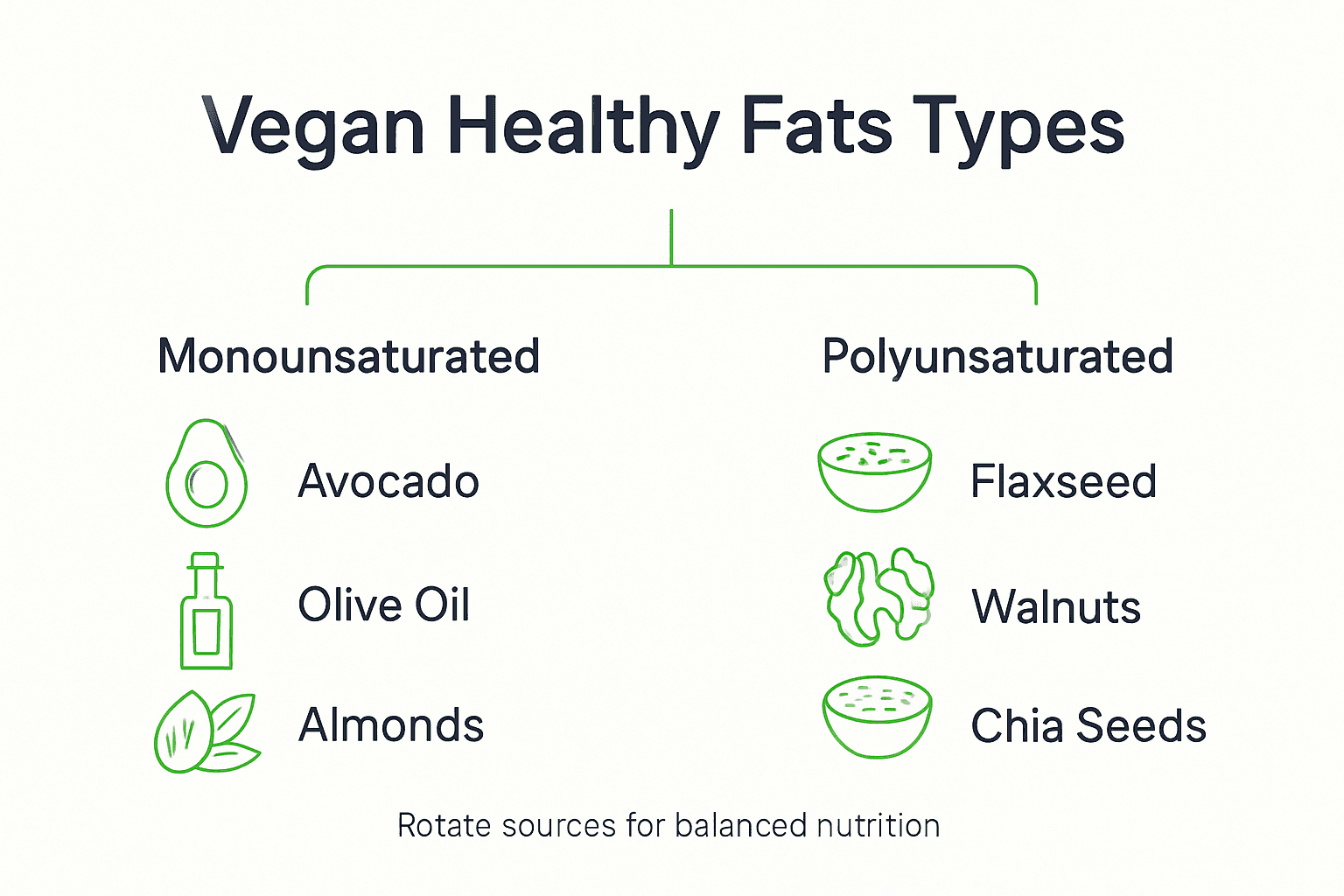
Within the polyunsaturated fat category, two key subtypes emerge: omega-3 and omega-6 fatty acids. Alpha-linolenic acid (ALA), a plant-based omega-3, and linoleic acid, an omega-6 fatty acid, are particularly important for vegans. While these fats are essential for inflammatory regulation, brain function, and cellular health, vegans must be strategic about obtaining adequate amounts, especially long-chain omega-3s like EPA and DHA.
Key vegan fat types include:
Here is a quick comparison of key vegan fat types and their unique contributions:
| Fat Type | Main Sources | Key Health Benefit |
|---|---|---|
| Monounsaturated | Avocado, olive oil, almonds | Lowers LDL cholesterol |
| Omega-3 Polyunsaturated | Chia, flaxseed, hemp seeds | Supports brain and heart health |
| Omega-6 Polyunsaturated | Sunflower, pumpkin seeds, walnuts | Essential for cell function, may reduce inflammation |
- Monounsaturated Fats: Avocados, olive oil, almonds
- Omega-3 Polyunsaturated Fats: Chia seeds, flaxseeds, hemp seeds
- Omega-6 Polyunsaturated Fats: Sunflower seeds, pumpkin seeds, walnuts
Pro tip: Rotate your fat sources regularly to ensure a comprehensive intake of different fatty acid profiles and maximize nutritional benefits.
Top Plant-Based Sources for Daily Intake
Comprehensive nutritional research reveals that vegan diets can obtain essential healthy fats through a strategic selection of plant-based sources. Nuts, seeds, and plant oils emerge as nutritional powerhouses, providing critical fatty acids that support overall metabolic and cardiovascular health. Understanding these sources becomes crucial for vegans seeking to maintain optimal nutritional balance and wellness.
Nuts and Seeds stand out as premier sources of healthy fats. Walnuts, almonds, chia seeds, flaxseeds, and hemp seeds are particularly noteworthy, delivering concentrated omega-3 and omega-6 fatty acids. These nutritional gems not only provide essential fats but also contribute important antioxidants and additional nutrients that enhance overall dietary quality. Plant-based nutrition experts recommend incorporating a diverse range of these foods to ensure comprehensive nutrient intake.

Plant oils represent another critical category of healthy fat sources for vegans. Olive oil, flaxseed oil, and canola oil offer unique fatty acid profiles that support heart health and reduce inflammation. Avocados and olives provide additional monounsaturated fat options, presenting versatile and delicious ways to incorporate healthy fats into daily meals. The key is variety and strategic combination of different plant-based fat sources.
Top plant-based healthy fat sources include:
- Nuts: Walnuts, almonds, macadamia nuts
- Seeds: Chia, flaxseed, hemp seeds
- Oils: Olive oil, flaxseed oil, avocado oil
- Whole Foods: Avocados, olives
- Supplemental Sources: Algae-based omega-3 oils
Pro tip: Aim to consume a minimum of 1-2 tablespoons of mixed nuts and seeds daily to ensure consistent healthy fat intake and nutritional diversity.
How Healthy Fats Support Vegan Wellness
Advanced metabolic research demonstrates that healthy fats play a transformative role in vegan wellness, extending far beyond basic nutritional requirements. These essential nutrients act as powerful metabolic modulators, influencing body composition, energy utilization, and overall physiological function. By strategically incorporating diverse plant-based fat sources, vegans can optimize their nutritional profile and support long-term health outcomes.
Metabolic Regulation represents a critical aspect of how healthy fats support wellness. These nutrients contribute to improved fat loss mechanisms, muscle preservation, and systemic inflammation reduction. Unlike traditional dietary approaches, vegan-sourced fats offer unique cellular benefits that help regulate metabolism, enhance nutrient absorption, and support optimal energy production. The intricate interplay between healthy fats and metabolic processes underscores their significance in maintaining comprehensive wellness.
Beyond metabolic functions, healthy fats are instrumental in supporting critical physiological systems. They play essential roles in hormone production, cell membrane integrity, and neurological health. Omega-3 fatty acids, particularly from sources like algae and seeds, contribute to brain function, potentially reducing inflammation and supporting cognitive performance. The anti-inflammatory properties of plant-based fats can help mitigate chronic disease risks and promote overall immune system resilience.
Key wellness benefits of vegan healthy fats include:
- Enhanced metabolic efficiency
- Improved body composition
- Reduced systemic inflammation
- Better nutrient absorption
- Support for hormone balance
- Cognitive function enhancement
Pro tip: Combine different plant-based fat sources in each meal to maximize nutritional diversity and optimize your body’s metabolic responses.
Common Pitfalls and What to Avoid
Navigating healthy fat consumption in vegan diets requires strategic awareness and thoughtful nutritional planning. Many individuals encounter common mistakes that can compromise their nutritional intake and overall wellness. Understanding these potential pitfalls becomes crucial for maintaining a balanced and nutritionally robust vegan diet.
Omega-3 Deficiency represents one of the most significant challenges for vegans seeking optimal healthy fat intake. Many plant-based eaters inadvertently consume insufficient long-chain omega-3 fatty acids like EPA and DHA, which are critical for brain health, inflammation reduction, and cardiovascular function. Relying exclusively on ALA-based sources like flaxseeds and chia seeds without considering algae-based supplements can lead to suboptimal nutritional profiles. Vegans must be proactive in diversifying their fat sources and potentially incorporating targeted omega-3 supplements to address potential nutritional gaps.
Another common pitfall involves overconsumption of processed vegan fat sources. Not all plant-based fats are created equal, and many processed alternatives can introduce inflammatory compounds and empty calories. Processed vegan foods often contain refined oils, hydrogenated fats, and excessive saturated fat content that can counteract the health benefits of a well-planned vegan diet. Prioritizing whole food fat sources like nuts, seeds, and minimally processed plant oils becomes essential for maintaining nutritional integrity.
This summary outlines the differences between whole and processed vegan fat sources:
| Source Type | Example Foods | Health Impact |
|---|---|---|
| Whole Foods | Nuts, seeds, avocados | High nutrient density, promotes wellness |
| Plant Oils | Olive, flaxseed, avocado oil | Beneficial in moderation, supports heart health |
| Processed Fats | Refined oils, vegan snacks | May increase inflammation, less desirable |
Common vegan healthy fat pitfalls include:
- Neglecting omega-3 supplementation
- Overreliance on processed vegan foods
- Consuming limited fat source varieties
- Ignoring fat quality and processing methods
- Underestimating individual nutritional requirements
- Failing to balance fat intake with overall diet
Pro tip: Conduct a quarterly nutritional audit of your fat sources, ensuring diversity, minimizing processed options, and addressing potential supplementation needs.
Unlock the Power of Healthy Vegan Fats with Personalized Nutrition
Understanding the essential role of healthy fats in vegan diets is one thing. Putting that knowledge into action to optimize your wellness and prevent common pitfalls like omega-3 deficiency or overconsumption of processed fats is another. If you want to take control of your nutrient intake and ensure you are getting the right balance of monounsaturated and polyunsaturated fats for metabolic health, Dietium.com is here to help.
Our Recipians app offers custom meal plans and recipe suggestions tailored specifically to your unique nutritional needs. Combined with advanced AI tools for tracking body metrics and calorie requirements, you can easily monitor your intake of plant-based fats and identify when you might benefit from supplements like algae-based omega-3 oils. Start improving your heart health, cognitive function, and overall wellness today by making informed food choices backed by science and supported by technology. Visit Dietium.com to discover how personalized nutrition can transform your vegan lifestyle without guesswork.
Frequently Asked Questions
What are the main sources of healthy fats in a vegan diet?
The primary sources of healthy fats in a vegan diet include nuts (like almonds and walnuts), seeds (such as chia and flaxseeds), avocados, and various plant-based oils (like olive and avocado oil).
How do healthy fats support overall wellness in vegans?
Healthy fats support overall wellness by enhancing metabolic efficiency, improving body composition, reducing inflammation, aiding nutrient absorption, and supporting hormone balance and cognitive function.
Why is it important for vegans to ensure they get enough omega-3 fatty acids?
Vegans need to ensure adequate intake of omega-3 fatty acids, particularly long-chain fatty acids like EPA and DHA, which are crucial for brain health and inflammation reduction, as these are less abundant in plant sources compared to animal products.
What are the potential pitfalls when consuming healthy fats in a vegan diet?
Common pitfalls include omega-3 deficiency, overconsumption of processed vegan fats, limited variety in fat sources, and neglecting fat quality. It’s essential to prioritize whole food sources and monitor dietary diversity.


