 Skip to content

Traveling can derail even the most disciplined health routines. Research shows travelers consume up to 25% more calories from processed foods during trips compared to regular days, often without realizing it. You face irregular meal times, limited workout options, and constant temptation. This guide gives you practical strategies to maintain your nutrition and fitness goals on the road, from smart snacking to tech-powered meal plans that adapt to any destination.
Table of Contents
- Understanding How Travel Impacts Health
- Tailoring Nutrition For Travel Success
- Adapting Fitness Routines On The Road
- Debunking Common Misconceptions About Travel Health
- Leveraging Technology And Personalized Tools
- Practical Strategies For Implementing Healthy Travel Habits
- Explore Personalized Nutrition And Fitness Solutions At Dietium
- Frequently Asked Questions About Staying Healthy While Traveling
Key takeaways
| Point | Details |
|---|---|
| Nutrition planning prevents processed food traps | Pack nutrient-dense snacks and use meal prep strategies to maintain balanced eating patterns while traveling. |
| Bodyweight workouts eliminate gym dependency | Adapt fitness routines using exercises that require minimal equipment and fit any schedule or location. |
| Technology enables personalized health tracking | AI-powered apps provide tailored meal plans, workout guides, and real-time analytics to stay on track. |
| Hydration requires proactive effort during travel | Carry refillable water bottles and monitor intake, especially during flights where cabin conditions accelerate fluid loss. |
| Common myths create unnecessary barriers | Eating out can align with health goals, skipping meals backfires, and gym access is not required for effective workouts. |
Understanding how travel impacts health
Your body responds to travel in ways that sabotage your health routine. Crossing time zones disrupts your circadian rhythm, affecting digestion and metabolism. Irregular meal schedules force your body to adapt to new eating patterns, often leading to poor food choices.
Physical inactivity becomes the norm when you spend hours sitting in planes, trains, or cars. Limited access to familiar workout facilities means many travelers skip exercise entirely. Dehydration sneaks up on you, particularly during air travel where low cabin humidity accelerates fluid loss.
Here are the primary ways travel disrupts your health:
- Metabolism slows due to prolonged sitting and irregular eating patterns
- Sleep quality decreases from unfamiliar environments and time zone changes
- Stress hormones elevate from travel logistics and schedule disruptions
- Food quality suffers when convenience trumps nutrition
- Exercise consistency breaks down without familiar routines or facilities
“Travel often disrupts normal eating patterns, leading to increased consumption of high-calorie, low-nutrient foods.”
These disruptions compound over time. A three-day business trip might not derail your progress, but frequent travel creates a pattern of setbacks. Understanding these mechanisms helps you anticipate challenges and implement targeted solutions before problems emerge.
Tailoring nutrition for travel success
Smart food choices start before you leave home. Pack portable, nutrient-dense snacks that don’t require refrigeration. Nuts, seeds, dried fruits, and protein bars give you quick energy without processed sugars. These options prevent desperate vending machine runs at airports or gas stations.
Meal prepping works even for travelers. Prepare balanced meals in portable containers for the first day or two of your trip. Focus on macronutrient balance: lean proteins, complex carbohydrates, and healthy fats keep you satiated and energized. This approach prevents the 25% increase in processed food consumption typical of travel days.
Navigating local cuisine requires strategy, not deprivation. Research restaurant menus in advance to identify options aligned with your dietary goals. Choose grilled over fried, request sauces on the side, and prioritize vegetable-heavy dishes. Most restaurants accommodate reasonable modifications when asked politely.
Hydration deserves special attention during travel. Carry a refillable water bottle and aim for consistent intake throughout the day. Avoid excessive caffeine and alcohol, which accelerate dehydration. Set reminders on your phone if needed to maintain regular drinking intervals.
Pro Tip: Check out 8 healthy travel snacks for portable options that maintain freshness and nutritional value across different climates and travel durations.
Here’s how different snack options compare for travel:
| Snack Type | Portability | Nutritional Value | Shelf Stability | Best For |
|---|---|---|---|---|
| Mixed nuts | Excellent | High protein and healthy fats | 2-3 months | Energy and satiety |
| Dried fruits | Excellent | Natural sugars and fiber | 6-12 months | Quick energy boost |
| Protein bars | Excellent | Balanced macros | 12+ months | Meal replacement |
| Fresh vegetables | Fair | High fiber and vitamins | 2-3 days | Short trips |
| Greek yogurt | Poor | High protein | 1-2 weeks refrigerated | Hotel stays |
For more detailed guidance, explore meal prep tips for travel and discover how nutrition for busy professionals applies to your travel schedule.
Adapting fitness routines on the road
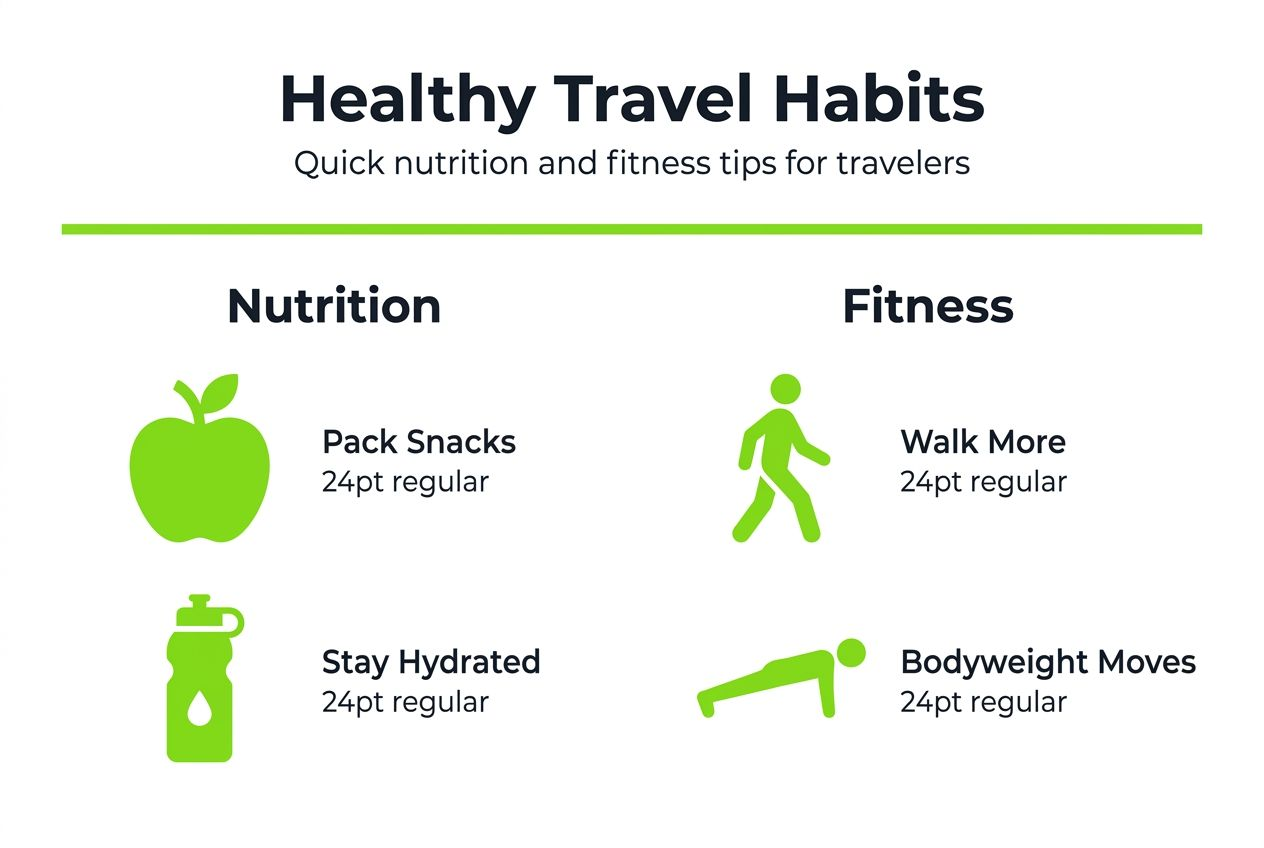
You don’t need a gym to maintain fitness while traveling. Bodyweight exercises deliver effective workouts anywhere: push-ups, squats, lunges, planks, and burpees require zero equipment. These movements engage multiple muscle groups and can be modified for any fitness level.

Minimal equipment expands your options without adding luggage weight. Resistance bands fit in any suitcase and provide variable tension for strength training. A jump rope offers intense cardio in small spaces. Hotel room workouts become genuinely challenging with these simple tools.
Active travel methods turn sightseeing into exercise. Walk instead of taking taxis for short distances. Choose stairs over elevators. Plan walking tours of new cities to explore while accumulating steps. These small decisions add up to significant calorie expenditure.
Technology bridges the gap between home routines and travel constraints. Fitness apps provide guided workouts tailored to your available time and space. Video demonstrations ensure proper form without a trainer present. Many apps sync with wearable devices to track progress automatically.
Exercise can improve travel fatigue symptoms by more than 50% through hormonal and neurological mechanisms. Regular movement combats jet lag, enhances sleep quality, and maintains circadian rhythm alignment.
Follow this simple workout sequence anywhere:
- Warm up with 5 minutes of jumping jacks or high knees
- Complete 3 rounds: 15 push-ups, 20 squats, 30-second plank
- Add 3 rounds: 12 lunges per leg, 15 mountain climbers, 10 burpees
- Finish with 5 minutes of stretching focused on tight areas
- Modify intensity by adjusting repetitions or adding rest periods
Pro Tip: Compare meal planning apps that integrate fitness tracking to coordinate nutrition and exercise in one platform during travel.
Here’s how travel workout types compare:
| Workout Type | Equipment Needed | Intensity Level | Time Required | Space Needed |
|---|---|---|---|---|
| Bodyweight circuits | None | Moderate to high | 20-30 minutes | 6×6 feet |
| Resistance band training | Bands only | Moderate | 25-35 minutes | 6×8 feet |
| Hotel room cardio | None | High | 15-25 minutes | 6×6 feet |
| Walking tours | Comfortable shoes | Low to moderate | 60-120 minutes | Outdoor space |
| Yoga and stretching | Optional mat | Low | 15-30 minutes | 6×6 feet |
Debunking common misconceptions about travel health
Myth: Eating out inevitably means unhealthy choices. Reality: Restaurant meals can align perfectly with your health goals through informed menu selections. Look for grilled proteins, steamed vegetables, and whole grains. Request modifications like dressing on the side or substituting fries for salad. Most establishments accommodate these requests willingly.
Myth: Skipping meals controls weight during travel. Reality: Meal skipping backfires by triggering intense hunger that leads to overeating processed snacks later. Your metabolism slows when you skip meals, making weight management harder. Regular, balanced meals maintain stable blood sugar and prevent impulsive food decisions.
Myth: Maintaining fitness requires gym access. Reality: Bodyweight exercises and minimal equipment routines provide effective workouts anywhere. Progressive overload applies to bodyweight training just like weightlifting. You can maintain and even build strength using these methods.
Your mental health matters as much as physical health during travel. Stress from disrupted routines and unfamiliar environments affects food choices and motivation. Acknowledge these challenges without self-judgment. Small consistent actions matter more than perfect execution.
Common mental barriers include:
- All-or-nothing thinking that abandons goals after one setback
- Perfectionism that creates unnecessary stress around food choices
- Social pressure to overindulge during group travel
- Fatigue that depletes willpower for healthy decisions
Develop behavioral resilience by setting realistic expectations. Aim for 80% adherence to your health routine rather than 100%. This flexibility reduces stress while maintaining progress. Celebrate small wins like choosing water over soda or taking stairs instead of elevators.
Leveraging technology and personalized tools
AI-powered apps transform travel health maintenance from guesswork to precision. These platforms analyze your dietary preferences, fitness level, and travel schedule to generate customized meal and workout plans. Adjustments happen in real time as your circumstances change.
Real-time data analytics provide immediate feedback on your nutrition and activity levels. Track macronutrient intake, calorie expenditure, and hydration status through intuitive dashboards. This visibility helps you course-correct before small deviations become major setbacks.
Video consultations connect you with nutrition experts and fitness coaches regardless of your location. Get personalized advice for navigating local cuisine or modifying workouts based on available facilities. This remote guidance maintains accountability during extended trips.
Wearable device integration captures comprehensive health data automatically. Track steps, sleep quality, heart rate variability, and active minutes without manual logging. Sync this data with nutrition apps to see how food choices affect energy levels and recovery.
Key technology benefits for travelers:
- Personalized meal plans adapt to restaurant menus and local ingredients
- Workout libraries offer equipment-free routines for any space
- Progress tracking maintains motivation through visible results
- Reminder systems prompt hydration, meals, and movement throughout the day
- Community features connect you with other health-focused travelers
Pro Tip: Explore personalized meal plans designed for travelers who need flexible nutrition strategies that adapt to changing environments and schedules.
The best meal planning apps integrate multiple functions: recipe databases, grocery lists, nutritional analysis, and fitness tracking. This consolidation reduces app fatigue and simplifies daily health management. Visit Dietium to discover how integrated platforms streamline your travel health routine.
Practical strategies for implementing healthy travel habits
Pre-trip planning sets you up for success before you leave home. Prepare meals for travel days and pack nutrient-dense snacks in portion-controlled containers. Research restaurant options near your destination and identify grocery stores for fresh food purchases. This preparation eliminates decision fatigue when you’re tired from travel.
Implement these pre-trip steps:
- Create a packing list of healthy snacks and portable meals
- Download fitness apps and queue up bodyweight workout videos
- Research restaurant menus and identify 3-5 healthy options per location
- Pack a refillable water bottle and set hydration reminders
- Schedule workouts in your calendar like business meetings
Hydration strategy requires proactive effort during travel. Cabin humidity levels as low as 10-20% can cause travelers to lose up to 1.5 liters of water during an 8-hour flight. Drink water before feeling thirsty, as thirst indicates existing dehydration. Aim for 8 ounces every hour during flights and long drives.
Flexible workout routines adapt to unpredictable travel schedules. Plan primary workouts for mornings before daily activities begin. Create backup 10-minute routines for days when time is limited. Accept that some days will be rest days, and that’s perfectly fine for long-term progress.
Sleep hygiene techniques combat travel-related fatigue:
- Use blackout curtains or sleep masks to control light exposure
- Maintain consistent sleep and wake times across time zones when possible
- Avoid screens for 30 minutes before bed to support melatonin production
- Keep room temperature cool for optimal sleep quality
- Use white noise apps to mask unfamiliar sounds
Pro Tip: Review meal planning tips for strategies that work specifically during travel, and check out healthy meal ideas that require minimal preparation in hotel rooms.
Manage common travel challenges proactively. Combat fatigue with strategic caffeine timing and power naps under 20 minutes. Address dehydration through consistent water intake and electrolyte supplementation when needed. Fill nutritional gaps with a quality multivitamin during extended trips.
Explore personalized nutrition and fitness solutions at Dietium
Maintaining health during travel becomes significantly easier with expert support and tailored tools. Dietium offers comprehensive solutions that adapt to your unique lifestyle and travel patterns. Our platform combines AI-powered meal planning with personalized fitness guidance to keep you on track wherever you go.
Customized meal plans account for your dietary preferences, health goals, and travel schedule. Whether you’re navigating business dinners or exploring street food markets, you’ll receive practical recommendations that fit your circumstances. Personalized meal plans adjust dynamically as your travel patterns change.
Comprehensive nutritional assessments identify your specific needs and potential deficiencies. Understanding your baseline helps create targeted strategies for travel success. Learn more about nutritional assessment methods that inform personalized recommendations.
Goal-setting frameworks help you define realistic health objectives that account for travel frequency. Our nutrition goals guide walks you through creating sustainable targets that maintain progress without creating stress. Technology integration ensures ongoing support through apps, trackers, and video consultations with experts.
Frequently asked questions about staying healthy while traveling
How can I prevent dehydration on long flights?
Drink 8 ounces of water every hour during the flight, starting before boarding. Avoid excessive alcohol and caffeine, which accelerate fluid loss. Bring an empty refillable bottle through security and fill it immediately after checkpoint.
What are quick exercises I can do in a hotel room?
Bodyweight circuits work perfectly in small spaces: 3 rounds of 15 push-ups, 20 squats, 30-second planks, and 10 burpees. This takes 15 minutes and requires no equipment. Add resistance bands for more variety and progressive overload.
How do I choose healthy options when eating out in unfamiliar places?
Look for grilled proteins, steamed vegetables, and whole grain options on menus. Request modifications like sauce on the side or substituting fried items for healthier alternatives. Research restaurant menus online before arriving to make informed decisions without pressure.
Is it okay to skip meals to avoid unhealthy eating during travel?
No, meal skipping backfires by triggering intense hunger that leads to overeating processed snacks later. Your metabolism slows and blood sugar destabilizes, making healthy choices harder. Eat regular balanced meals even if options are imperfect.
Can technology really help me stay on track with my health goals on the road?
Yes, AI-powered apps provide personalized meal plans and workout routines that adapt to your travel circumstances. Real-time tracking, video consultations, and wearable integration maintain accountability and provide immediate feedback. These tools eliminate guesswork and reduce decision fatigue during trips.


