 Skip to content

TL;DR:
- Eating a healthy diet lowers depression, anxiety, and stress across diverse populations. Consuming foods like nuts, whole grains, and omega-3-rich seafood supports mood by reducing inflammation and promoting gut health. Stable blood sugar and an anti-inflammatory diet are key strategies for improving emotional well-being naturally.
Diet directly shapes mood by altering brain chemistry, gut microbiota, and inflammation levels throughout the body. This is not a wellness trend. A meta-analysis of 633,317 individuals across 23 countries found that people eating healthy diets report significantly lower symptoms of depression, anxiety, and stress compared to those eating poorly. The connection between nutrition and emotional well-being operates through three main pathways: brain function, systemic inflammation, and the gut-brain axis. Understanding how diet affects mood gives you a practical lever for improving how you feel every day, not just your physical health numbers.
What does the research say about diet quality and mood?
The evidence linking food choices to mental health outcomes is now substantial. The meta-analysis of 633,317 individuals reported standardized mean differences of -0.29 for depression, -0.25 for anxiety, and -0.24 for stress in people following healthy dietary patterns. Those numbers confirm that diet quality produces a measurable, consistent shift in mood outcomes across diverse populations.
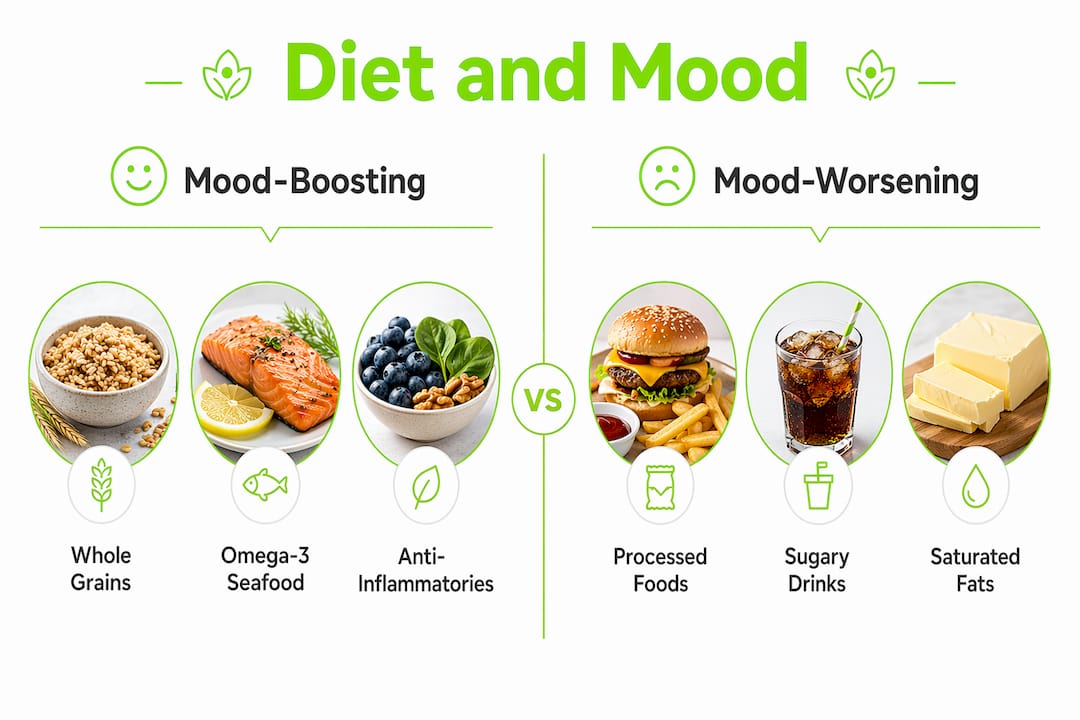
Specific food groups show particularly strong effects. Older adults who eat whole grains five or more times a week are 14% less likely to experience depression symptoms. That reduction is meaningful, especially given how common depression is in aging populations. Nuts deliver a similar benefit. A 2023 study published in Clinical Nutrition found that eating a quarter cup of nuts daily reduces depression risk by 17%.
Seafood rich in omega-3 fatty acids stands out as one of the most studied mood-supporting foods. Weekly intake of 11–16 ounces of seafood is associated with a 43% lower likelihood of depression symptoms in older women, according to a 2024 report in the British Journal of Nutrition. That figure is striking and points to omega-3s as a key driver of the nutrition-depression connection.
| Food group | Mood-related finding | Source |
|---|---|---|
| Whole grains (5+ times/week) | 14% reduced depression risk | Consumer Reports, 2024 |
| Nuts (quarter cup daily) | 17% reduced depression risk | Clinical Nutrition, 2023 |
| Seafood (11–16 oz/week) | 43% lower depression likelihood in older women | British Journal of Nutrition, 2024 |
| Unhealthy diet patterns | Higher depression, anxiety, and stress scores | Meta-analysis, 633,317 individuals |
Unhealthy diets consistently show the opposite pattern. High intake of processed foods, sugary drinks, and saturated fats correlates with elevated depression and anxiety scores across the same large-scale studies. The data does not suggest a minor effect. It points to diet as a primary, modifiable factor in mental health.
How do inflammation and gut health connect food to feelings?
The gut-brain axis is the biological highway that explains much of how food influences emotions. Your gut and brain communicate constantly through nerve signals, hormones, and immune molecules. Harvard Medical School research shows that gut inflammation signals distress molecules to the brain, affecting mood independent of conscious thought. This means what you eat can shift how you feel before you are even aware of it.
The gut also produces the majority of the body’s serotonin. Gut microbiome health directly impacts neurotransmitter production and mood regulation. A diet low in fiber and high in processed foods disrupts the balance of beneficial gut bacteria, which reduces serotonin output and raises the risk of low mood and anxiety. Feeding the right bacteria with fiber-rich foods is one of the most direct ways to support emotional stability through nutrition.

Anti-inflammatory dietary patterns add another layer of protection. A 2026 review in Frontiers in Nutrition found strong evidence that anti-inflammatory diets, including the Mediterranean diet, consistently improve depressive symptoms. The same review noted more mixed results for anxiety, which suggests diet’s impact varies across different mental health conditions. Depression responds more reliably to dietary change than anxiety does.
| Food category | Effect on inflammation | Examples |
|---|---|---|
| Anti-inflammatory | Reduces systemic inflammation, supports gut bacteria | Fatty fish, leafy greens, berries, olive oil, nuts |
| Pro-inflammatory | Increases gut permeability, disrupts microbiome | Processed meats, refined sugars, trans fats, alcohol |
| Fiber-rich | Feeds beneficial gut bacteria, supports serotonin | Oats, legumes, vegetables, whole grains |
| High saturated fat | Promotes inflammatory signaling | Fried foods, fast food, full-fat processed dairy |
Nutrition is increasingly integrated into clinical mental health care settings, reflecting a shift in how clinicians view diet. Food is no longer treated as separate from psychological resilience. It is recognized as a direct input into brain function and emotional regulation.
How does blood sugar regulation affect your mood?
Blood sugar swings are one of the fastest routes from a poor meal to a bad mood. When you eat refined carbohydrates or sugary foods, blood glucose spikes and then crashes. That crash triggers irritability, fatigue, and difficulty concentrating, often within hours of eating.
Dr. Wolfgang Marx of the Food & Mood Centre explains that balanced meals with protein, fiber, and healthy fats stabilize blood glucose and can reduce irritability, fatigue, and brain fog within hours. This is one of the fastest-acting mechanisms in the diet-mood relationship. You do not need weeks of dietary change to feel the difference. Stable blood sugar produces near-immediate improvements, particularly for anxiety symptoms.
Nutrients rarely work in isolation. Tryptophan, an amino acid found in turkey, eggs, and seeds, is a precursor to serotonin. But tryptophan alone does not reliably boost serotonin. Overall dietary synergy of fiber, fats, and proteins drives sustained gut and metabolic benefits that influence mood far more than any single nutrient. Chasing individual “superfoods” misses the bigger picture.
Key factors for blood sugar and mood stability:
- Pair carbohydrates with protein or fat to slow glucose absorption and prevent spikes.
- Eat at regular intervals to avoid the energy crashes that trigger irritability.
- Limit refined sugars and white flour products, which cause the sharpest glucose swings.
- Include fiber at every meal from vegetables, legumes, or whole grains to slow digestion.
Pro Tip: Combine a complex carbohydrate like oats or whole grain bread with a tryptophan-rich food like eggs or pumpkin seeds. The carbohydrate helps transport tryptophan across the blood-brain barrier, which supports serotonin production more effectively than either food alone.
Dietium’s guide on blood sugar balance covers how personalized meal structures can reduce mood swings by keeping glucose levels stable throughout the day.
What foods actually support emotional well-being?
Practical dietary changes for mood support do not require a complete overhaul. The foods that consistently show mood benefits share common traits: they are minimally processed, rich in fiber, and contain nutrients that support brain function and gut health.
Foods to prioritize:
- Fatty fish (salmon, sardines, mackerel): rich in omega-3 fatty acids linked to lower depression risk.
- Leafy greens (spinach, kale): high in folate, which supports neurotransmitter synthesis.
- Berries: contain antioxidants that reduce oxidative stress in the brain.
- Whole grains (oats, brown rice, quinoa): stabilize blood sugar and support serotonin production.
- Nuts and seeds: provide healthy fats, magnesium, and zinc, all tied to mood regulation.
- Legumes (lentils, chickpeas, black beans): high in fiber and plant-based protein for gut health.
- Fermented foods (yogurt, kefir, kimchi): introduce beneficial bacteria that support the gut-brain axis.
Foods to limit:
- Sugary drinks and ultra-processed snacks, which cause blood sugar crashes and increase inflammation.
- Alcohol, which disrupts sleep and depletes B vitamins critical for brain function.
- High-saturated-fat fast foods, which promote gut inflammation and disrupt microbiome balance.
The Mediterranean diet is the most studied dietary pattern for mood support. It combines most of the foods above into a sustainable eating style. Anti-inflammatory dietary patterns like the Mediterranean diet show consistent improvements in depressive symptoms across multiple clinical reviews. Dietary changes produce significant mood improvements over weeks and months. Instant effects mostly arise from blood sugar regulation. Systemic inflammation and microbiome shifts take longer to respond.
Tracking your micronutrient intake helps identify gaps in nutrients like magnesium, zinc, and B vitamins that directly affect mood. Mindful eating also reinforces these benefits. Understanding why mindful eating matters for the brain adds a behavioral layer to the nutritional strategies above.
Key takeaways
Diet quality is the single most modifiable factor in mood regulation, operating through blood sugar stability, gut health, and inflammation control simultaneously.
| Point | Details |
|---|---|
| Diet quality and mood are linked | A meta-analysis of 633,317 people confirms healthy diets reduce depression, anxiety, and stress. |
| Specific foods deliver measurable benefits | Nuts, whole grains, and omega-3-rich seafood each show statistically significant reductions in depression risk. |
| The gut-brain axis is the key mechanism | Gut bacteria produce most of the body’s serotonin, making fiber-rich foods critical for emotional stability. |
| Blood sugar stability improves mood fast | Balanced meals with protein, fiber, and healthy fats can reduce irritability and brain fog within hours. |
| Consistency matters more than superfoods | Sustained dietary patterns, not isolated nutrients, drive lasting improvements in mental health. |
Why I think we’re still underestimating food’s role in mental health
Most people accept that diet affects their waistline. Far fewer treat it as a direct input into how they feel emotionally on a given Tuesday. That gap is the real problem.
What I have found, working through the evidence on this topic, is that the research is far ahead of public awareness. A meta-analysis spanning 633,317 people is not a small pilot study. It is a signal that deserves the same attention we give to medication trials. Yet most people reach for a prescription before they audit their diet.
The other misconception I see constantly is the “mood food” myth. People fixate on a single item, like dark chocolate or turmeric, expecting it to fix their anxiety. That is not how this works. Dietary synergy is the mechanism, not individual nutrients. The whole pattern of eating matters. A handful of walnuts on top of a diet full of processed food will not move the needle.
The lifestyle changes that support mental health, including diet, sleep, and movement, are not alternatives to professional care. They are foundational supports that make every other intervention work better. Nutrition integrated into mental resilience is not a soft add-on. It is a clinical priority that more practitioners are finally taking seriously.
My honest view: the people who see the biggest mood improvements from diet are not the ones who add a superfood. They are the ones who consistently eat more whole foods, fewer processed ones, and pay attention to how their meals make them feel over time. That patience is the actual intervention.
— Srasti
How Dietium supports mood through personalized nutrition
Knowing which foods support mood is one thing. Building a consistent eating pattern around your specific goals, preferences, and health needs is another. Dietium’s personalized diet planning service uses evidence-based customization to create meal structures that stabilize blood sugar, reduce inflammation, and support gut health simultaneously. The Recipians app generates custom meal plans and recipe suggestions aligned with your individual targets, including mental health support. Dietium’s nutritional assessment tools identify gaps in key mood-related nutrients like magnesium, omega-3s, and B vitamins, then translate that data into practical, trackable meal changes.
FAQ
How quickly does diet change your mood?
Blood sugar stabilization can improve mood within hours of a balanced meal. Broader changes from reduced inflammation and improved gut health typically take several weeks to months of consistent dietary change.
What is the best diet for mood and mental health?
The Mediterranean diet shows the strongest and most consistent evidence for reducing depression symptoms. It emphasizes whole grains, fatty fish, vegetables, legumes, nuts, and olive oil.
Does sugar actually worsen mood?
Yes. High sugar intake causes blood glucose spikes followed by crashes, which trigger irritability, fatigue, and difficulty concentrating. Chronic high sugar consumption also promotes inflammation, which negatively affects brain function and mood over time.
Can diet improve anxiety?
Diet can reduce anxiety symptoms, particularly through blood sugar stabilization and gut health improvements. Research shows anti-inflammatory dietary patterns produce more consistent benefits for depression than for anxiety, but stable glucose levels show near-immediate anxiety relief.
Which nutrients matter most for emotional well-being?
Omega-3 fatty acids, magnesium, zinc, B vitamins, and dietary fiber each play documented roles in mood regulation. No single nutrient works alone. The overall dietary pattern determines how effectively these nutrients support brain function and emotional stability.


