 Skip to content

You reach for a spatula but pull out three wooden spoons, a broken whisk, and a ladle you forgot existed. Minutes tick by as you rummage through cluttered drawers while your vegetables overcook. Sound familiar? An organized kitchen transforms this daily frustration into a smooth, efficient cooking experience. With intentional planning and smart storage solutions, you can reduce prep time, eliminate stress, and make meal planning effortless in 2026.
Table of Contents
- Introduction To Kitchen Organization
- Prerequisites: What You Need Before You Start
- Stepwise Method To Organize Kitchen Spaces
- Ergonomic Kitchen Layout And Zone Design
- Storage Solutions For Small Kitchens
- Warnings On Common Mistakes In Kitchen Organization
- Troubleshooting And Maintenance For Long-Term Success
- Expected Results And Outcomes From Kitchen Organization
- Explore Personalized Meal Planning And Nutrition Resources
- Frequently Asked Questions
Key takeaways
| Point | Details |
|——-|———||
| Organized kitchens save time | Proper organization can cut meal prep time by 20-30% through improved workflow and accessibility. |
| Zone-based layouts improve efficiency | Dividing your kitchen into prep, cooking, cleaning, and storage zones reduces unnecessary movement. |
| Decluttering is the critical first step | Removing unused items creates space for essential tools and ingredients you actually use daily. |
| Modular storage maximizes small spaces | Stackable containers and vertical storage can increase usable space by up to 50% in compact kitchens. |
| Regular maintenance prevents backsliding | Monthly audits keep your system functional and adapt to changing cooking habits. |
Introduction to kitchen organization
Kitchen organization means arranging your cooking tools, ingredients, and appliances in logical locations that match how you actually cook. This seemingly simple concept delivers powerful benefits for home cooks and meal planners who want efficiency without frustration.
First, you save time. When every item has a designated spot, you spend seconds instead of minutes locating what you need. Studies show organized cooks reduce meal prep time by 20-30% compared to those working in cluttered spaces.
Second, you reduce stress. Cluttered counters and overflowing cabinets create visual chaos that makes cooking feel overwhelming before you even start. A clean, organized workspace helps you focus on the actual cooking process.
Third, safety improves. Overstuffed drawers can jam or spill sharp knives unexpectedly. Unstable stacks of pots and pans risk falling on your feet. Proper organization eliminates these hazards completely.
For meal planners specifically, organization supports your goals directly. When you can see all available ingredients at a glance, creating weekly meal plans becomes faster and more creative. You avoid buying duplicates of items buried in your pantry. Your prepped containers stack neatly in the fridge, making grab-and-go meals simple on busy mornings.
The connection between physical space and cooking efficiency is straightforward. A well-organized kitchen with defined zones allows you to move smoothly from washing vegetables to chopping to cooking without backtracking. This streamlined workflow matters whether you cook three times weekly or prep an entire week of meals on Sunday afternoon.
Prerequisites: what you need before you start
Before reorganizing your kitchen, gather the right supplies and assess your specific needs. Jumping in without preparation wastes time and leads to incomplete results.
Essential organizational supplies include:
- Clear stackable containers in various sizes for dry goods and leftovers
- Drawer dividers to separate utensils and small tools
- Labels or a label maker for identifying container contents
- Shelf risers to create vertical storage in cabinets
- Turntables for corner cabinets and deep shelves
- Basket organizers for grouping similar items
Next, assess your kitchen honestly. Measure cabinet and drawer dimensions before buying organizers. Note which areas cause the most frustration during cooking. Ask yourself these questions: How often do you cook from scratch versus reheat meals? Do you bake frequently or rarely? Which tools do you grab daily versus monthly?
Understanding kitchen zones transforms how you think about organization. Every kitchen, regardless of size, contains four primary zones:
| Zone | Purpose | Key Items |
|---|---|---|
| Prep Zone | Washing, peeling, chopping | Cutting boards, knives, colanders, mixing bowls |
| Cooking Zone | Stove and oven use | Pots, pans, cooking utensils, spices, oils |
| Cleaning Zone | Dishwashing and waste disposal | Dish soap, sponges, trash bags, dish towels |
| Storage Zone | Pantry items and ingredients | Dry goods, canned items, baking supplies |
Your mindset matters as much as your supplies. Commit to honest decluttering. If you haven’t used an item in six months, you probably won’t miss it. Duplicates rarely serve a purpose in home kitchens. Wedding gifts you felt obligated to keep but never use just consume valuable space.
Plan to dedicate several hours to this project. Rushed organization creates systems you won’t maintain. Schedule your kitchen overhaul when you have uninterrupted time and energy. For comprehensive meal planning integration, explore meal prep tips for beginners to align your organization with weekly cooking routines.
Pro Tip: Take before photos of your kitchen spaces. These images will motivate you when organization feels tedious and let you appreciate your progress afterward.
Stepwise method to organize kitchen spaces
Follow this systematic approach to transform cluttered kitchen areas into efficient workspaces. Each step builds on the previous one, creating lasting organization.
Step 1: Declutter ruthlessly
Empty one zone completely. Remove every item from drawers, cabinets, or pantry shelves. Sort everything into three piles: keep, discard, and donate. Be honest. Broken utensils go in discard. Duplicate tools go in donate unless you genuinely use both. Items you haven’t touched in a year almost certainly belong in donate.
Step 2: Group by frequency and type
Separate your keep pile further. Daily-use items like your favorite spatula, coffee maker, and everyday plates get priority placement. Weekly-use items like specialty pans and baking sheets come next. Occasional-use items like holiday platters and appliances you use monthly get stored in less accessible spots.
Within these frequency groups, sort by type. All baking tools together. All cutting implements together. All food storage containers with matching lids together.
Step 3: Assign items to zones
Place each item in the zone where you actually use it. Knives go in the prep zone near your cutting board. Pots and pans go in the cooking zone near the stove. Dish soap and sponges go in the cleaning zone under the sink. This eliminates running back and forth across your kitchen mid-recipe.
Step 4: Optimize drawer and cabinet interiors
Install dividers in utensil drawers so items don’t shift into a jumbled mess. Use clear containers for pantry items so you can identify contents instantly. Add shelf risers to double your vertical cabinet space. Label everything, even if contents seem obvious now.
The impact of proper drawer organization is substantial:
| Drawer Organization Method | Items Visible | Retrieval Time | Space Efficiency |
|---|---|---|---|
| Without Dividers | 40-50% | 15-30 seconds | Low (wasted gaps) |
| With Dividers | 90-100% | 3-5 seconds | High (maximized) |
Step 5: Schedule regular maintenance
Set a monthly reminder to audit one kitchen zone. Remove expired items. Reorganize containers that have gotten messy. Adjust layouts based on how your cooking habits evolve. This 15-minute monthly investment prevents the gradual slide back into chaos.
For batch cooking enthusiasts, coordinate your organization with batch cooking tips for busy parents to create dedicated spaces for prepped meals. If budget concerns drive your meal planning, pair organization with meal planning on a budget strategies to reduce food waste through better visibility.
Pro Tip: Organize in small sessions if a full kitchen overhaul feels overwhelming. Complete one drawer or cabinet per day. Progress matters more than speed.
Ergonomic kitchen layout and zone design
Beyond simply organizing items, how you arrange your kitchen zones dramatically impacts cooking efficiency and physical comfort. Smart zone design reduces unnecessary steps and prevents fatigue during long meal prep sessions.
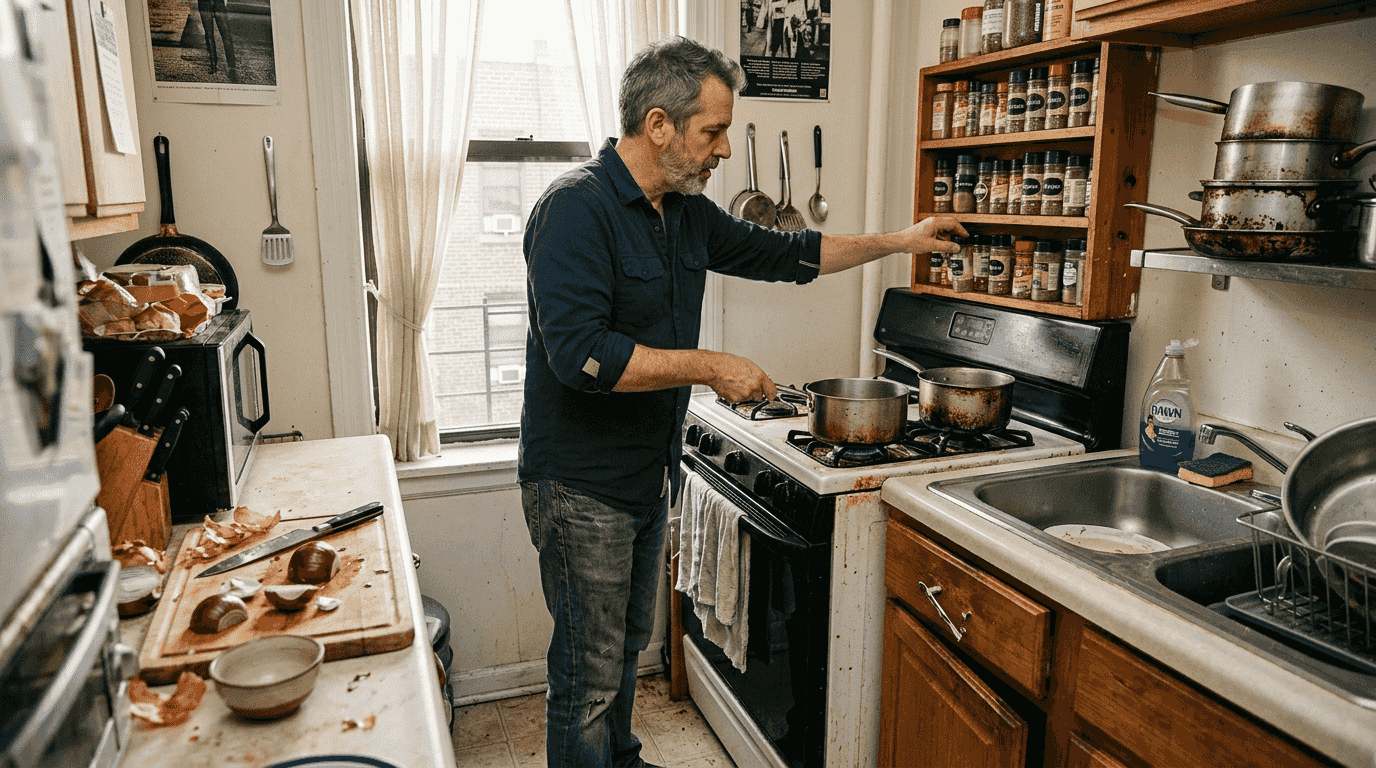
The classic kitchen work triangle connects your sink, stove, and refrigerator in a triangle pattern. While not every kitchen allows this exact layout, the principle remains valuable. Position your most-used zones within easy reach of each other.
Your prep zone should sit between your refrigerator and stove. You grab ingredients from the fridge, prep them at your counter space, then immediately transfer them to cooking. Placing your cutting board and knife block here eliminates carrying armfuls of vegetables across the room.
The cooking zone centers on your stove and oven. Store pots, pans, cooking utensils, spices, and oils within arm’s reach. You should be able to grab a spatula or add seasoning without leaving your cooking position. A utensil holder on the counter next to your stove keeps frequently used tools instantly accessible.
Your cleaning zone naturally centers around the sink and dishwasher. Store dish soap, sponges, dish towels, and trash bags in the cabinet directly underneath or beside the sink. This reduces dripping water across floors when transporting dirty dishes.
The storage zone handles your pantry, whether that means a walk-in pantry, tall cabinet, or set of shelves. Group items by category: baking supplies together, canned goods together, snacks together. Within each category, arrange by frequency of use with daily items at eye level.
Ergonomic principles enhance these zones further:
- Place heavy items like stand mixers and dutch ovens between waist and shoulder height to avoid lifting injuries
- Store daily-use items at eye level for instant visibility
- Reserve high shelves for lightweight, rarely used items
- Keep your most-used knives and cutting boards immediately next to your primary prep surface
- Position frequently grabbed spices in a drawer or rack rather than a cabinet to eliminate repeated bending
These adjustments reduce physical strain and save minutes on every meal. Over a year, this adds up to hours of saved time and significantly less fatigue. Apply these principles alongside 2026 meal planning strategies to coordinate your physical space with your weekly menu.
Storage solutions for small kitchens
Compact kitchens demand creative storage strategies that maximize every square inch. With limited cabinet space and minimal countertops, small kitchen organization requires vertical thinking and multi-functional solutions.
Clear, stackable modular containers transform pantry efficiency. Transfer dry goods like flour, rice, pasta, and cereals into uniform containers. These stack securely without wasted air gaps between mismatched boxes and bags. Research shows stackable containers increase space usage by 30-50% in small kitchens compared to original packaging.
Vertical storage recovers unused wall and cabinet space:
- Install hanging racks inside cabinet doors for pot lids, measuring spoons, and small tools
- Mount magnetic knife strips on walls to free up counter and drawer space
- Add wire shelving units above countertops for frequently used items
- Use stackable shelf risers inside cabinets to create two levels of storage
- Hang S-hooks from rods for mugs, utensils, and small pots
Multi-use tools reduce clutter. A food processor that chops, shreds, and purees eliminates three single-purpose gadgets. A dutch oven functions as a stockpot, roasting pan, and casserole dish. Before buying any new kitchen tool, ask if an existing item already handles that task.
Consolidate duplicates ruthlessly in small kitchens. You truly need only one vegetable peeler, one can opener, and one set of measuring cups. Multiple versions just compete for limited drawer space.
Corner cabinets often become black holes where items disappear. Install turntables to access back corners easily. Pull-out shelving systems make deep cabinets fully functional instead of wasting their rear half.
Slim rolling carts fill narrow gaps between appliances or beside refrigerators. These provide extra storage and workspace you can wheel out when needed then tuck away.
Store items based on shape to maximize space. Nest mixing bowls and pots. Stand baking sheets and cutting boards vertically in slots rather than stacking horizontally. Group similar-sized containers together.
For small kitchens with limited pantry space, maintaining a well-stocked but organized selection of essential healthy pantry staples prevents both shortages and wasteful overcrowding.
Pro Tip: Use the inside of cabinet doors for storage. Adhesive hooks hold pot holders and dish towels. Small wire baskets attach to doors for spices or snacks.
Warnings on common mistakes in kitchen organization
Even with good intentions, several organization mistakes undermine efficiency and create new problems. Avoid these pitfalls to maintain a functional kitchen.
Overstuffing cabinets and drawers ranks as the most common error. When you cram too many items into limited space, nothing remains accessible. Drawers jam. Stacked items topple when you remove one piece. Cabinet doors won’t close properly. Aim to fill storage spaces to only 70-80% capacity, leaving room for easy access and future additions.
Mixing frequently used items with rarely used ones creates constant frustration. Your everyday coffee mug shouldn’t hide behind the punchbowl you use once annually. Separate items by usage frequency to keep daily essentials always accessible.
Poor labeling or opaque containers waste the effort you invested in organization. When you can’t identify contents at a glance, you’ll buy duplicates or forget about ingredients until they expire. Always use clear containers for food storage and label anything that isn’t instantly obvious.
Ignoring ergonomic workflow principles forces unnecessary movement. Storing pots far from the stove means extra steps every time you cook. Placing your knife block across the kitchen from your cutting board creates inefficient back-and-forth trips.
Neglecting safety creates genuine hazards:
- Sharp knives loose in drawers risk cutting your hand when reaching for other items
- Heavy items stored high can fall and cause injury
- Unstable stacks in cabinets topple unexpectedly
- Overcrowded shelves block visibility, causing items to get knocked over
“A cluttered kitchen isn’t just inefficient, it’s dangerous. Proper organization reduces kitchen accidents by creating clear pathways, securing sharp objects, and ensuring heavy items are stored safely at appropriate heights.”
Failing to maintain your organization system guarantees eventual relapse. Without regular audits, items gradually migrate to wrong locations. Containers get messy. New purchases have no designated home. Schedule recurring maintenance or your organized kitchen will deteriorate within months.
For those simultaneously working on health goals, avoid the organization mistakes that parallel common weight loss mistakes like inconsistent habits and unrealistic expectations.
Troubleshooting and maintenance for long-term success
Sustaining kitchen organization requires ongoing attention and flexibility. Even perfectly organized systems need adjustments as your cooking habits evolve and new items enter your kitchen.
Monthly decluttering audits prevent gradual accumulation of unused items. Schedule a recurring 15-minute session to review one kitchen zone. Check pantry expiration dates. Evaluate whether you actually used that specialty tool you bought last month. Remove anything broken, expired, or unused.
Adjust layouts based on changing patterns. If you suddenly start baking weekly, move baking supplies to more accessible locations. If you stop making smoothies daily, relocate your blender from prime counter space to a cabinet. Your organization system should serve your current lifestyle, not some theoretical ideal.
Container integrity matters for long-term success. Inspect storage containers regularly for cracks, broken seals, or missing lids. Replace damaged items promptly before they leak or fail. Check that labels remain legible and accurate.
Common problems have straightforward solutions:
- Containers getting disorganized: Dedicate five minutes after grocery shopping to properly store new items
- Drawers becoming messy again: Re-evaluate if you have too many items for the available dividers
- Pantry items expiring: Move older items to the front when adding new purchases
- Counters accumulating clutter: Designate a “landing zone” basket for items awaiting proper storage
Involve household members in maintenance. If others use your kitchen, teach them the organization system. Label shelves and drawers if needed. When everyone knows where items belong, the system stays intact.
Set phone reminders for monthly maintenance sessions so they actually happen. Treat these appointments as seriously as other commitments. Fifteen minutes monthly prevents the need for another multi-hour reorganization project later.
As you refine your system, refer back to meal prep fundamentals to ensure your organization continues supporting efficient weekly cooking routines.
Pro Tip: Keep a small basket or drawer for items you’re evaluating. If you haven’t used something in three months, it moves to this temporary zone. After another three months without use, donate it confidently.
Expected results and outcomes from kitchen organization
Proper kitchen organization delivers measurable improvements in efficiency, time savings, and cooking enjoyment. Understanding realistic outcomes helps you evaluate success and maintain motivation.
Time savings appear immediately. Organized cooks spend less time searching for ingredients and tools, reducing overall meal prep time significantly. Many home cooks report cutting their prep time by 20-30% once organization systems are in place.
Space efficiency improves dramatically. Even without adding square footage, you gain usable storage through better arrangement and appropriate containers. Small kitchens especially benefit from vertical storage and modular organization.
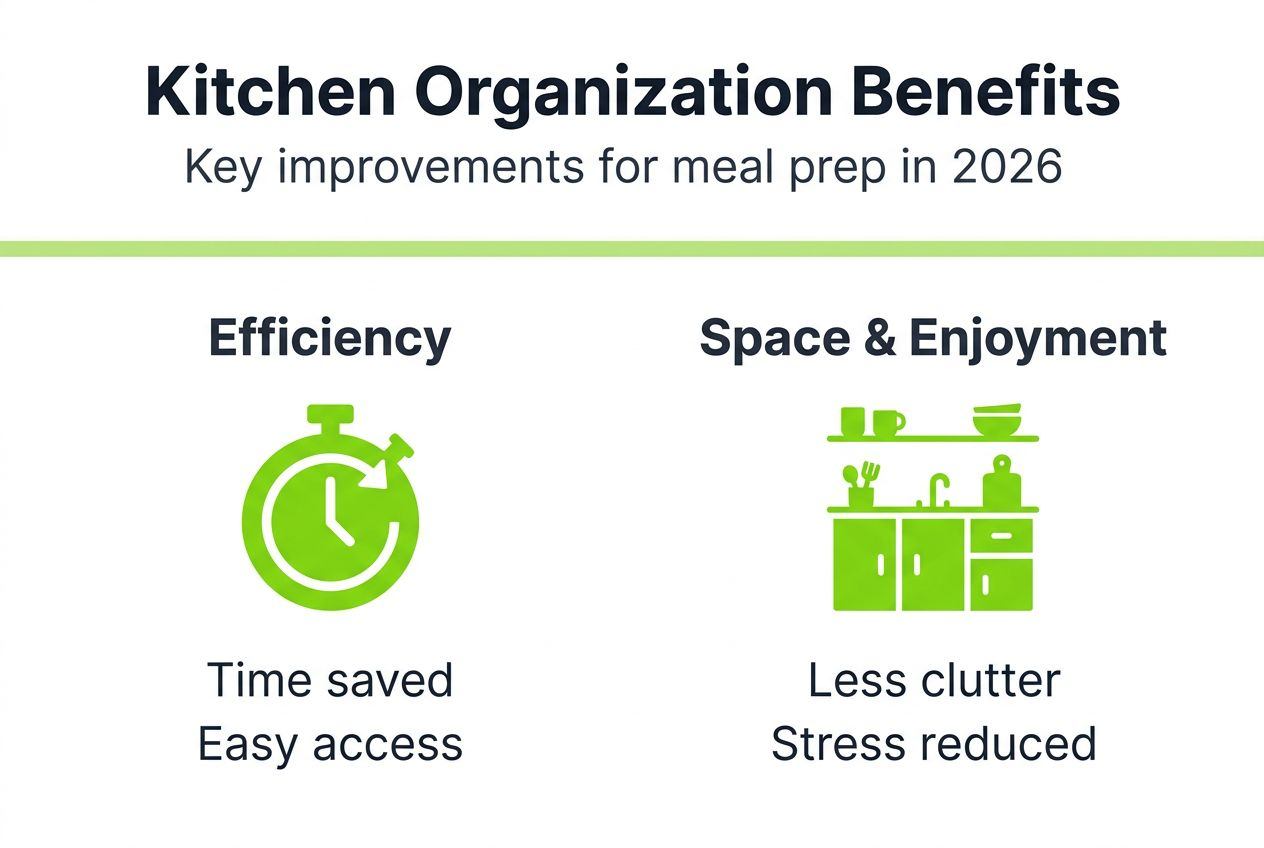
The comparison between organized and disorganized kitchens reveals substantial differences:
| Metric | Disorganized Kitchen | Organized Kitchen | Improvement |
|---|---|---|---|
| Average Prep Time | 25-30 minutes | 18-22 minutes | 20-30% faster |
| Ingredient Visibility | 50-60% | 90-100% | 40-50% better |
| Usable Storage Space | 60-70% | 85-95% | 25-35% more |
| Food Waste | 15-20% | 5-8% | 50-60% less |
| Cooking Stress Level | High | Low | Significantly reduced |
Long-term benefits extend beyond immediate efficiency. Organized kitchens reduce food waste because you can see all available ingredients before shopping. You avoid buying duplicates of items already in your pantry. Expired items get noticed and removed before accumulating.
Cleanliness improves naturally. When everything has a designated home, putting items away becomes automatic. Counters stay clear because tools return to proper storage immediately after use. This creates a positive feedback loop where maintaining organization feels effortless.
Stress reduction may be the most valuable outcome. Cooking in a cluttered, chaotic space triggers anxiety before you even start. An organized kitchen creates calm, making meal preparation enjoyable rather than frustrating.
Track your progress objectively. Time several typical meals before and after organizing to quantify improvements. Note how many times per week you need to run to the store for forgotten ingredients. Monitor how much food you throw away monthly.
Set realistic expectations. Organization won’t turn you into a professional chef overnight, but it removes friction from the cooking process. You’ll feel more motivated to cook at home when your kitchen environment supports rather than hinders your efforts.
Connect your organized kitchen with proper nutrition planning using goal-setting guidance to maximize health outcomes from your efficient meal prep system.
Explore personalized meal planning and nutrition resources
Your newly organized kitchen creates the perfect foundation for efficient meal planning and healthier eating patterns. Dietium offers comprehensive tools that complement your organizational efforts with personalized nutrition guidance.
An organized kitchen naturally supports meal planning success. When you can quickly locate ingredients and tools, preparing planned meals becomes simple rather than stressful. Our personalized meal plans align with your specific health goals, dietary preferences, and schedule.
Family meal planning benefits especially from kitchen organization. Coordinating multiple preferences and schedules requires efficiency that only proper organization enables. Explore our comprehensive family meal planning guide to integrate your organized space with practical weekly menus.
Budget considerations often drive both organization and meal planning decisions. Reducing food waste through better visibility saves money while supporting nutrition goals. Our strategies for mastering meal planning on a budget show how organized kitchens and smart planning work together to reduce grocery costs without sacrificing nutrition quality.
Frequently asked questions
What are the easiest kitchen zones to set up for beginners?
Start with three basic zones: prep, cooking, and cleaning. Group your cutting boards and knives near your main counter workspace for the prep zone. Place pots, pans, and cooking utensils beside your stove for the cooking zone. Keep dish soap and sponges under or beside your sink for the cleaning zone. Use simple physical boundaries like separate drawers or cabinet shelves to maintain distinct areas without complex planning.
How often should I reassess and update my kitchen organization?
Perform monthly audits to declutter and rearrange based on current cooking habits. A 15-minute review catches problems before they become overwhelming. Adjust your organization proactively whenever you add new tools, change meal planning routines, or notice certain areas becoming cluttered repeatedly.
What common mistakes should I avoid to keep my kitchen organized?
Avoid overstuffing drawers and cabinets, which makes items inaccessible and creates safety hazards. Never mix frequently used daily items with rarely used specialty tools in the same storage space. Always use clear, labeled containers instead of opaque ones so you can identify contents instantly. Fill storage spaces to only 70-80% capacity to maintain easy access and prevent jamming.
Can kitchen organization really reduce my meal prep time?
Yes, organized kitchens typically reduce meal prep time by 20-30% compared to cluttered spaces. When every tool and ingredient has a designated location matching your workflow, you eliminate time wasted searching for items. The efficiency compounds over weeks and months, saving hours annually while also reducing cooking stress and frustration.
Recommended
- Essential Meal Prep Tips for Beginners: Save Time and Eat Healthy – Dietium
- Batch Cooking Tips for Busy Parents: Simplify Meal Prep – Dietium
- Meal Prep for Busy People: Smart Tips and Simple Plans – Dietium
- Meal Prep for Beginners: Simple Steps to Healthy Eating – Dietium
- 7 Essential Organization Tips for Busy Professionals – Optio Station: Best Project Management App for Prioritization


