 Skip to content

Food insecurity affects over 800 million people globally, but integrated solutions combining immediate assistance with sustainable local food systems can reduce insecurity rates by up to 20% within five years. This article explores practical, evidence-based strategies empowering individuals and families to achieve reliable, nutritious food access. You’ll discover how technology, nutrition education, and community initiatives create lasting food security beyond temporary relief.
Table of Contents
- Understanding Food Insecurity: Causes And Dimensions
- Common Misconceptions About Food Insecurity Solutions
- Sustainable Local Food Systems And Immediate Assistance
- Government And NGO Support Programs
- Technology Innovations In Food Access
- Nutrition Interventions For Food-Insecure Populations
- Community-Based Food Solutions
- Practical Steps And Resources For Individuals And Families
- Explore Dietium’s Nutrition And Meal Planning Resources
- FAQ
Key takeaways
| Point | Details |
|---|---|
| Integrated solutions work best | Combining immediate food aid with sustainable local systems reduces food insecurity more effectively than single interventions. |
| Technology enhances access | Digital tools like meal planning apps and food resource mapping connect people to affordable, nutritious options efficiently. |
| Nutrition quality matters | Food security requires consistent access to diverse, nutrient-rich foods, not just calorie availability. |
| Community empowers change | Grassroots initiatives like food cooperatives and urban gardens build resilience and long-term food sovereignty. |
| Practical steps accessible now | Government programs, local resources, and budget-friendly planning strategies help families improve food security immediately. |
Understanding food insecurity: causes and dimensions
Food insecurity extends beyond simple hunger to encompass inconsistent access to adequate, nutritious food that supports health and well-being. When families face food insecurity, they often must choose between quantity and quality, frequently sacrificing fresh produce and protein for cheaper, calorie-dense options that lack essential nutrients. This trade-off creates hidden malnutrition even when calorie needs appear met.
Economic instability remains the primary driver, with income volatility making it impossible to budget reliably for groceries. Systemic factors compound individual financial challenges. Food deserts, areas lacking accessible grocery stores with fresh foods, force residents to rely on convenience stores charging premium prices for limited selections. In 2026, approximately 23.5 million Americans live in food deserts, disproportionately affecting low-income communities and communities of color.
The consequences ripple across multiple dimensions of life:
- Physical health deteriorates from nutrient deficiencies and reliance on processed foods high in sodium, sugar, and unhealthy fats
- Mental well-being suffers as chronic stress about meal planning and food budgets contributes to anxiety and depression
- Children’s cognitive development and academic performance decline when nutritional needs go unmet
- Social isolation increases when families cannot afford to share meals or participate in food-centered community events
Understanding these interconnected causes and effects reveals why single-solution approaches prove insufficient. Effective interventions must address immediate hunger while building systems that prevent recurrence.
Common misconceptions about food insecurity solutions
Many well-intentioned efforts fail because they rest on fundamental misunderstandings about food insecurity’s nature and solutions. Correcting these misconceptions enables more effective resource allocation and intervention design.
The most persistent myth equates food insecurity with absolute hunger or starvation. In reality, many food-insecure households consume sufficient calories but lack access to diverse, nutritious foods supporting optimal health. A family might have enough pasta and canned goods to avoid hunger but cannot afford fresh vegetables, lean proteins, or whole grains essential for balanced nutrition.
Another common belief positions food banks as comprehensive solutions. While emergency food assistance provides crucial short-term relief, food banks typically offer inconsistent access and limited nutritional variety. They operate as stopgaps, not sustainable systems addressing root causes like inadequate income or food desert geography. Most families need ongoing support beyond periodic pantry visits.
Some assume government assistance programs alone can eliminate food insecurity. Programs like SNAP (Supplemental Nutrition Assistance Program) significantly reduce hunger and improve dietary quality, yet they cannot solve systemic issues in isolation. Benefit levels often fall short of actual food costs in many regions, and restrictive eligibility criteria exclude working poor families who still struggle to afford adequate nutrition.
Key misconceptions to avoid:
- Believing food quantity matters more than nutritional quality and variety
- Assuming charitable food distribution can replace systemic food access improvements
- Thinking individual behavior change solves problems rooted in economic and structural inequalities
- Expecting single-sector solutions when multi-stakeholder collaboration proves essential
Recognizing food security as a complex, multi-dimensional challenge requiring coordinated efforts across government, nonprofits, businesses, and communities sets the foundation for solutions that actually work.
Sustainable local food systems and immediate assistance
The most effective approach combines immediate relief with long-term system building. Communities with integrated food assistance and urban agriculture programs saw a 20% reduction in food insecurity rates over five years, demonstrating the power of this dual strategy.
Urban agriculture transforms underutilized city spaces into productive food sources accessible to local residents. Community gardens provide fresh produce at minimal cost while teaching valuable growing skills. Rooftop farms, vertical growing systems, and backyard gardens expand food production capacity within neighborhoods experiencing food access challenges. These initiatives reduce reliance on distant supply chains vulnerable to disruption.
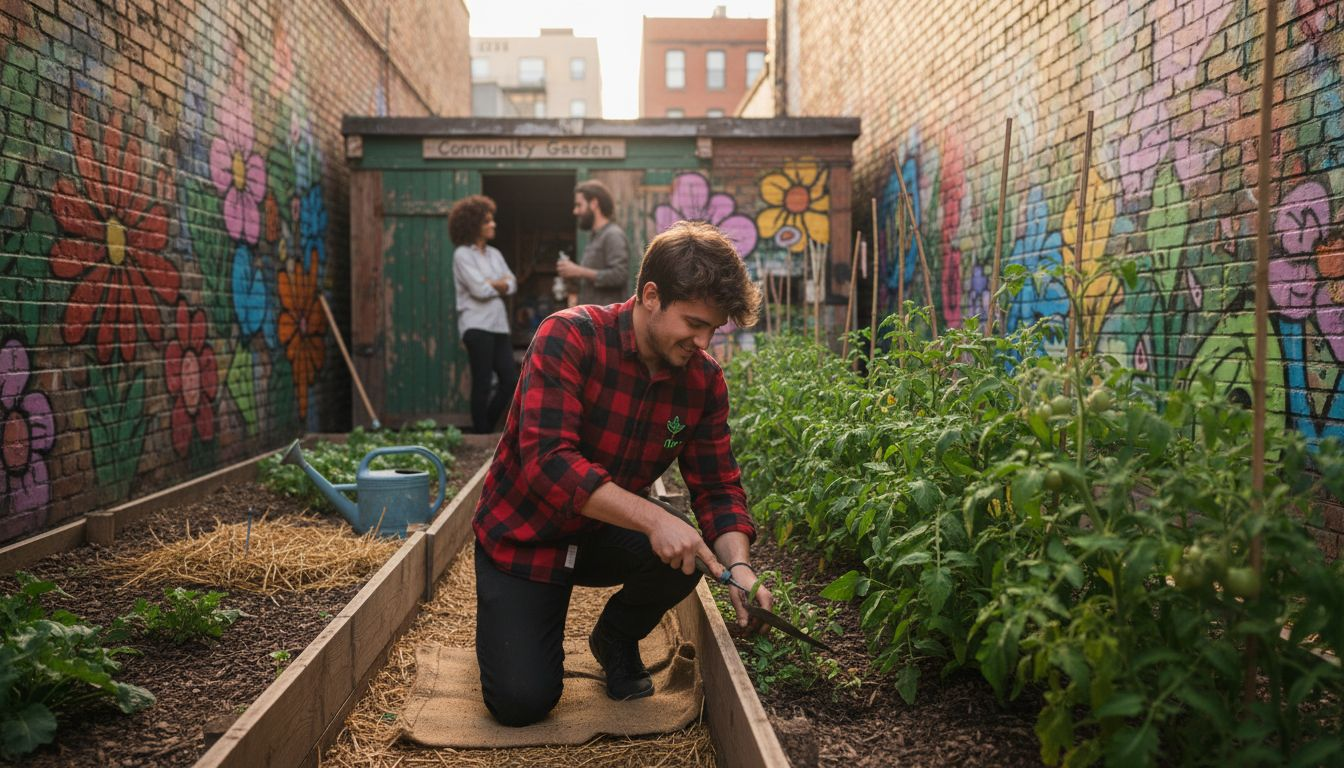
Food sovereignty, the principle that communities should control their food systems, empowers residents to make decisions about what food gets produced and how it’s distributed. When communities grow their own food or support local farmers through direct purchasing arrangements, they build resilience against economic shocks and supply chain failures. This control fosters dignity and self-determination often absent in traditional charity models.
Immediate assistance programs remain vital bridges during crises or transitions:
- Emergency food pantries provide quick access when families face sudden income loss or unexpected expenses
- School meal programs ensure children receive at least one nutritious meal daily regardless of household circumstances
- Senior nutrition programs deliver meals to elderly individuals with mobility or transportation barriers
- Mobile food markets bring fresh options directly into food desert neighborhoods
Pro Tip: When joining a community garden, start with easy-to-grow vegetables like tomatoes, lettuce, and herbs that provide quick returns on minimal investment. Many programs offer free starter plants and expert guidance to build your confidence.
Combining these approaches creates comprehensive support systems addressing both immediate needs and long-term sustainability. Research shows participants in integrated programs report improved nutrition, reduced food costs, enhanced mental health, and stronger community connections. These social benefits often prove as valuable as the food itself, combating the isolation that frequently accompanies poverty.
| Program Type | Primary Benefit | Timeline for Impact |
|---|---|---|
| Emergency food assistance | Immediate hunger relief | Days to weeks |
| Community gardens | Fresh produce access and skills | Months to ongoing |
| Food cooperatives | Reduced costs through bulk buying | Weeks to ongoing |
| Urban agriculture | Local food production capacity | Seasons to years |
Adopting sustainable eating habits complements these community-level efforts by helping individuals make environmentally responsible choices that support local food systems while maintaining nutritional adequacy.
Government and NGO support programs
Government safety net programs form the backbone of food security efforts in most developed nations. SNAP, the largest U.S. nutrition assistance program, serves approximately 42 million people monthly in 2026, providing electronic benefits for purchasing groceries. Studies consistently show SNAP reduces food insecurity and improves dietary quality, particularly for children and elderly participants.
Internationally, the World Food Programme (WFP) delivers emergency food aid and supports sustainable food security initiatives in over 80 countries. WFP combines immediate relief during humanitarian crises with longer-term programs building agricultural capacity and market access for smallholder farmers. This dual approach mirrors the integrated strategy proving most effective at community levels.
Non-governmental organizations fill critical gaps in the safety net:
- Feeding America coordinates a network of 200 food banks and 60,000 food pantries across the U.S., distributing billions of pounds of food annually
- Local food rescue programs collect surplus from restaurants, grocery stores, and farms before it becomes waste, redirecting it to people in need
- Faith-based organizations operate soup kitchens, meal programs, and food pantries often with fewer restrictions than government programs
- Specialized NGOs address specific populations like homeless individuals, refugees, or people living with chronic illnesses requiring dietary modifications
Despite their impact, these programs face significant limitations. Eligibility requirements often create bureaucratic barriers preventing access for those just above income thresholds but still struggling. Application processes require documentation many vulnerable individuals cannot easily provide. Geographic distribution remains uneven, with rural areas particularly underserved.
Benefit levels frequently prove insufficient to cover monthly food costs, especially in high-cost urban areas. SNAP benefits average about $6 per person per day, challenging families to maintain nutritious diets when fresh produce and quality proteins command premium prices. This gap forces difficult choices between food quality and quantity.
Enrollment complexities and stigma also suppress participation. Eligible individuals may not know about available programs or feel shame accessing assistance. Outreach efforts and simplified application processes help, but participation rates suggest millions of eligible people remain unenrolled.
Technology innovations in food access
Digital tools revolutionize how food-insecure populations locate resources, plan meals, and access nutritious options affordably. Technology bridges information gaps that previously prevented people from maximizing available assistance.
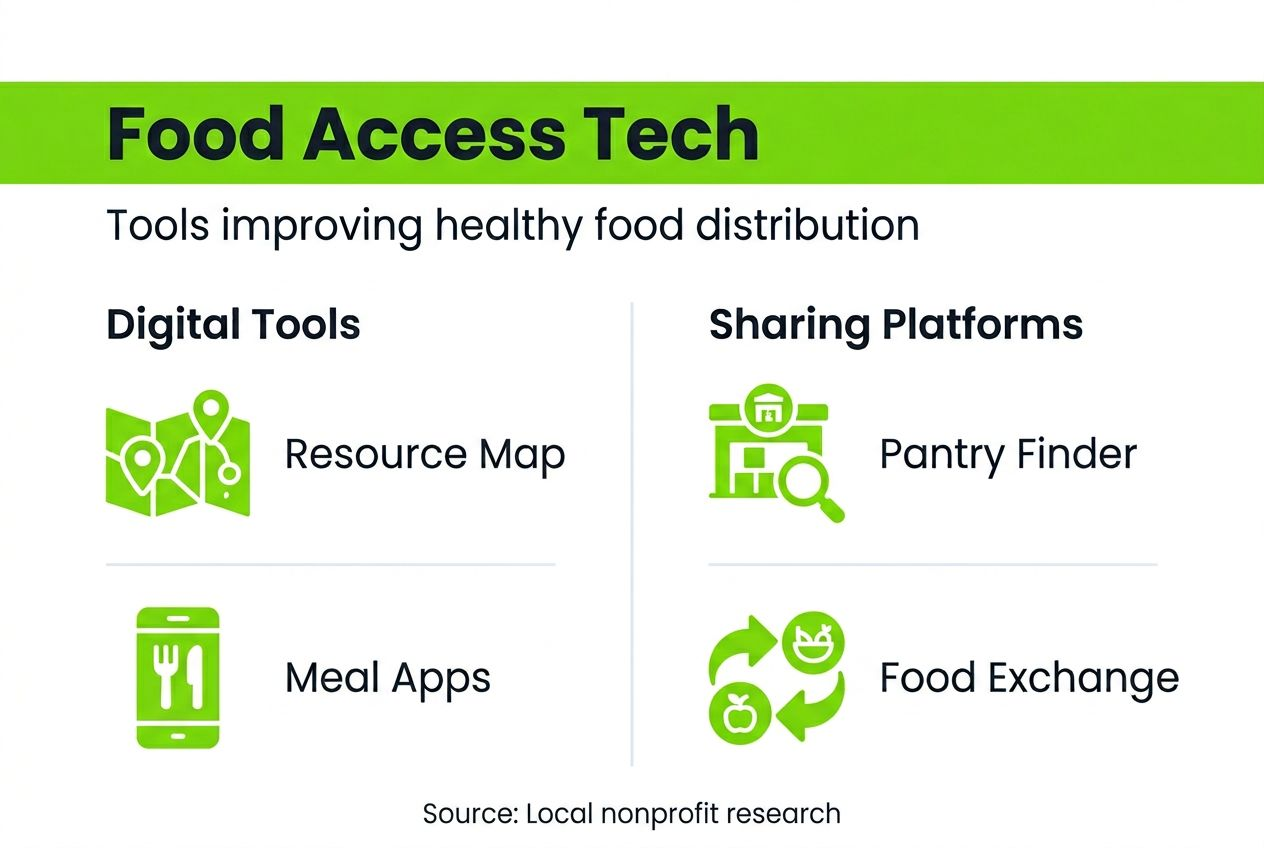
Food resource mapping applications like Feeding America’s food bank locator and local food pantry apps help users find nearby assistance programs with current hours, eligibility requirements, and available items. Real-time updates prevent wasted trips to closed or depleted locations. Some apps allow users to reserve items or schedule pickup times, reducing wait times and improving dignity.
AI-powered systems optimize food distribution by predicting demand patterns and matching surplus inventory with need. Algorithms analyze historical data to forecast which locations will face shortages, enabling proactive redistribution. Machine learning identifies food waste hotspots in supply chains, recovering edible food before disposal. These efficiencies stretch limited resources further and reduce environmental impact.
Meal planning platforms specifically designed for budget-conscious users help families maximize nutrition from limited grocery budgets:
- Recipe databases filtered by cost per serving identify affordable, nutritious meals
- Automated shopping lists organized by store layout save time and reduce impulse purchases
- Substitution suggestions help users adapt recipes to ingredients on sale or already in the pantry
- Nutritional analysis ensures meals meet dietary guidelines despite cost constraints
Pro Tip: Use meal planning apps to build your shopping list around store sales and seasonal produce. Planning weekly menus before shopping reduces food waste and impulse buying, stretching your grocery budget by 20% or more.
Food sharing platforms connect individuals with surplus food to neighbors who can use it, creating hyperlocal distribution networks. Apps like Olio facilitate neighbor-to-neighbor sharing of excess groceries, reducing waste while building community connections. Some platforms connect home gardeners with abundant harvests to nearby families lacking fresh produce access.
Exploring nutritional assessment methods helps you identify specific dietary gaps, while meal planning apps comparison guides selection of tools matching your needs. For time-strapped households, nutrition for busy professionals offers strategies applicable to anyone juggling multiple demands.
Nutrition interventions for food-insecure populations
Addressing food insecurity requires improving not just access but also nutritional quality. Targeted education programs and agricultural interventions ensure vulnerable populations receive adequate micronutrients and make informed dietary choices within budget constraints.
Tailored nutrition education reduced malnutrition markers by 40% in low-income households participating in culturally adapted programs. Effective education goes beyond generic advice, incorporating traditional foods, addressing specific barriers like limited cooking facilities, and providing practical skills for budget shopping. Cooking demonstrations using affordable ingredients build confidence and expand repertoires beyond processed convenience foods.
Nutrition-sensitive agriculture diversifies crop production to enhance micronutrient availability in local food systems. Rather than focusing solely on staple crops providing calories, this approach promotes vegetables, fruits, legumes, and fortified varieties addressing specific deficiencies common in the region. Orange-fleshed sweet potatoes combat vitamin A deficiency. Iron-biofortified beans reduce anemia. A 35% reduction in malnutrition occurred in regions implementing nutrition-sensitive agriculture programs over three to five years.
Micronutrient supplementation provides targeted intervention when dietary diversity remains insufficient:
- Prenatal vitamins ensure pregnant women receive adequate folate, iron, and other nutrients critical for fetal development
- Vitamin D supplements address deficiencies common in populations with limited sun exposure or dark skin tones in northern latitudes
- Multi-vitamins help children meet growth requirements when fresh produce access proves inconsistent
- Calcium and vitamin B12 supplements support bone health and neurological function in older adults
Combining these interventions improves measurable health outcomes. Reduced anemia rates, improved immune function, better growth trajectories in children, and enhanced cognitive performance demonstrate nutrition’s fundamental role in overall well-being.
| Intervention Type | Target Nutrient | Population Benefit |
|---|---|---|
| Cooking education | Diverse nutrients | Budget meal preparation skills |
| Biofortified crops | Vitamin A, Iron, Zinc | Improved micronutrient intake |
| Supplementation | Specific deficiencies | Rapid correction of identified gaps |
| Garden programs | Fresh produce variety | Increased vegetable consumption |
Understanding evidence-based nutrition explained helps you evaluate program quality and make informed choices about interventions worth your time and participation.
Community-based food solutions
Grassroots initiatives empower communities to create locally controlled food systems that address specific neighborhood needs more effectively than top-down programs. Collective action builds social capital while improving food access and affordability.
Food hubs aggregate production from multiple small farmers, creating economies of scale for processing, storage, and distribution. They connect local growers with institutional buyers like schools and hospitals while also offering affordable retail access to community members. Shared infrastructure reduces individual farmer costs and waste while ensuring consistent supply for buyers.
Community kitchens provide commercial-grade cooking facilities for entrepreneurs producing value-added products from local ingredients. A gardener with abundant tomatoes can make and sell sauce. Someone with a treasured family recipe can launch a small catering business. These shared spaces lower startup barriers while creating employment and keeping food dollars circulating locally.
Cooperative buying pools purchasing power, allowing members to access wholesale prices typically reserved for large retailers:
- Bulk buying reduces per-unit costs on staples like grains, beans, and cooking oil
- Direct relationships with producers eliminate middleman markups
- Democratic governance ensures priorities reflect member needs rather than profit maximization
- Educational programming helps members learn about nutrition, cooking, and food systems
Success stories demonstrate tangible impact. A food cooperative in Minneapolis serves over 19,000 members, providing affordable organic produce and supporting 150 local farmers. Community gardens in Detroit transformed over 1,500 vacant lots into productive urban farms, supplying fresh food while beautifying neighborhoods. A food hub in rural Appalachia increased farmer income by 30% while reducing food costs for low-income families by 25%.
These initiatives foster resilience by diversifying food sources and strengthening community bonds. When neighbors know and support each other, informal safety nets emerge naturally. Someone with extra from their garden shares with a struggling family. A cooking club teaches budget-friendly skills. These organic connections often prove more sustainable than formal programs.
Practical steps and resources for individuals and families
Taking action to improve your food security starts with understanding available resources and implementing strategic approaches to maximize nutrition within budget constraints.
-
Access emergency and government assistance programs promptly. Contact your local SNAP office to determine eligibility and begin the application process. Most states offer online applications reducing barriers. Locate nearby food pantries through Feeding America’s tool or by calling 211, a nationwide helpline connecting people to social services. Don’t delay seeking help due to pride or misconceptions about eligibility.
-
Engage with local food initiatives and community gardens. Search for community gardens accepting new members through municipal parks departments, cooperative extension offices, or neighborhood associations. Many provide free plot space, tools, and expert guidance. If gardening isn’t feasible, join a food cooperative or participate in volunteer gleaning programs harvesting surplus from farms and orchards.
-
Use technology tools for efficient meal planning and resource finding. Download apps helping you plan nutritious meals within budget constraints, generate shopping lists, and locate sale items. Explore meal planning on a budget for comprehensive strategies. Technology streamlines the logistical challenges of feeding families affordably, freeing mental energy for other priorities.
-
Participate in nutrition education tailored to your needs. Many health departments, cooperative extension services, and community organizations offer free nutrition classes addressing specific challenges like cooking for diabetes, feeding picky children on limited budgets, or maximizing nutrition from pantry staples. Virtual options increase accessibility for those with transportation or scheduling barriers.
-
Maintain balanced nutrition affordably through budgeting and smart shopping. Plan weekly menus before shopping to reduce impulse purchases and food waste. Buy seasonal produce at peak affordability and nutritional value. Compare unit prices rather than package prices to identify true bargains. Consider store brands offering identical nutrition at lower cost than name brands.
Pro Tip: Batch cooking staples like beans, rice, and soup on weekends creates ready-to-eat components for quick weeknight meals, reducing reliance on expensive convenience foods while improving nutrition.
Starting or joining food cooperatives strengthens community food security:
- Research existing cooperatives through the National Co-op Grocers association or local food councils
- Attend organizational meetings to understand structure, costs, and member expectations
- Start small with informal buying clubs among neighbors before formalizing if no cooperative exists nearby
- Leverage social media to connect with others interested in collective food purchasing
For families with children, meal planning for families guide offers age-specific strategies for involving kids while teaching valuable life skills and healthy habits.
Explore Dietium’s nutrition and meal planning resources
Dietium offers science-backed tools supporting your journey toward food security and optimal nutrition. Our nutritional assessment methods help you identify specific dietary needs and gaps, creating a personalized baseline for improvement. The platform’s AI-powered meal planning generates customized menus matching your nutritional requirements, taste preferences, and budget constraints.
Explore meal planning on a budget for detailed strategies maximizing nutrition from limited grocery dollars. Our recipe database filters by cost per serving, preparation time, and nutritional density, making it simple to find affordable options supporting your health goals. Whether you’re managing chronic conditions requiring dietary modifications or simply seeking to feed your family well despite financial constraints, Dietium’s evidence-based resources complement the practical solutions discussed throughout this article.
FAQ
What are the main causes of food insecurity?
Food insecurity stems primarily from income instability preventing consistent food purchases, limited physical access in food deserts, and systemic inequalities affecting employment and wages. Supply chain disruptions, whether from natural disasters, economic shocks, or global events, compound these underlying vulnerabilities. These factors affect both the quantity of available food and the quality, forcing difficult trade-offs between calories and nutrition.
How do technology tools help people facing food insecurity?
Technology improves food resource mapping, connecting people to nearby pantries, meal programs, and assistance applications through smartphone apps and websites. AI systems reduce waste by optimizing distribution and predicting demand patterns across food bank networks. Meal planning platforms help families maximize nutrition from limited budgets through cost-effective recipe suggestions and smart shopping list generation. These digital tools democratize access to information and resources previously difficult to locate.
What practical steps can families take to improve food security?
Families should immediately apply for government assistance programs like SNAP while connecting with local food pantries for emergency support. Joining community gardens, food cooperatives, or buying clubs reduces costs and builds valuable skills and social networks. Using meal planning apps and nutrition education resources helps stretch budgets while maintaining dietary quality. Engaging with multiple support systems creates resilience against individual program limitations or temporary disruptions.
Why aren’t food banks enough to solve food insecurity?
Food banks provide essential emergency relief but typically offer inconsistent access, limited hours, and nutritional variety insufficient for balanced diets long-term. Many operate on donated surplus, making inventory unpredictable and rarely matching specific dietary needs. Sustainable solutions require addressing root causes like inadequate income, food deserts, and systemic inequalities through integrated approaches combining immediate assistance with community food systems, economic empowerment, and policy changes.


