 Skip to content

Most American professionals admit that their busy schedules directly affect how and what they eat. With constant demands and limited downtime, smart nutrition becomes more than wellness—it is a core part of maintaining focus, energy, and resilience in fast-paced work environments. This guide clarifies the specific dietary needs of American professionals and reveals practical, evidence-based ways to fuel both productivity and health without adding extra stress.
Table of Contents
- Defining Nutritional Needs For Professionals
- Meal Planning Strategies On A Tight Schedule
- Convenient, Healthy Eating On The Go
- Leveraging Technology For Better Nutrition
- Common Nutrition Mistakes To Avoid
Key Takeaways
| Point | Details |
|---|---|
| Nutritional Strategy for Professionals | Busy professionals should adopt a strategic approach to nutrition that prioritizes sustained energy, cognitive performance, and stress management. |
| Efficient Meal Planning | Implementing effective meal preparation techniques can help manage time, reduce stress, and promote healthier eating habits. |
| Technological Solutions | Leveraging technology, such as meal planning apps and nutrition trackers, can simplify dietary management and enhance meal personalization. |
| Avoid Common Mistakes | Recognizing and addressing common nutrition pitfalls, such as skipping meals and relying on convenience foods, is essential for maintaining optimal health and energy levels. |
Defining Nutritional Needs for Professionals
Nutrition for busy professionals demands a strategic approach that goes beyond basic dietary recommendations. The modern professional faces unique challenges: limited time, high stress, and constant cognitive demands that directly impact metabolic requirements and nutritional needs.
Research reveals that emotional states and workplace pressures significantly influence dietary choices. Professionals’ food selection patterns are deeply connected to time constraints and sensory appeal, highlighting the critical need for nutrition strategies that accommodate high-performance lifestyles. Understanding these dynamics means recognizing that nutritional needs aren’t just about calories, but about sustaining energy, mental clarity, and overall professional performance.
Professionals require a nuanced nutritional approach that addresses multiple dimensions of health. Key nutritional priorities include:
- Sustained energy levels
- Cognitive performance optimization
- Stress management through dietary interventions
- Immune system support
- Metabolic efficiency
The intersection of nutrition and professional performance is profound. Academic studies underscore how dietary choices directly impact professional competence and overall wellness, transforming nutrition from a personal choice to a strategic professional asset.
Pro Tip: Meal Preparation Strategy: Dedicate 2-3 hours each weekend to preparing nutrient-dense, portable meals that can sustain your energy throughout demanding workweeks, ensuring consistent nutritional intake without sacrificing time or quality.
Meal Planning Strategies on a Tight Schedule
For busy professionals, meal planning isn’t just about nutrition – it’s about strategic time management and efficient food preparation. Effective meal preparation strategies can transform how professionals approach their weekly nutrition, reducing stress and ensuring consistent, healthy eating habits.
Successful meal planning requires a systematic approach that maximizes time and minimizes daily decision fatigue. Key strategies include:
- Batch cooking protein sources on weekends
- Using versatile kitchen appliances like slow cookers
- Preparing multiple meals simultaneously
- Creating flexible meal templates
- Investing in quality food storage containers
Professionals can streamline their nutrition by adopting smart preparation techniques. Time-saving cooking methods like sheet pan meals and batch preparation can dramatically reduce daily cooking time, allowing more energy for work and personal pursuits. The goal is creating a sustainable system that supports both health and productivity.
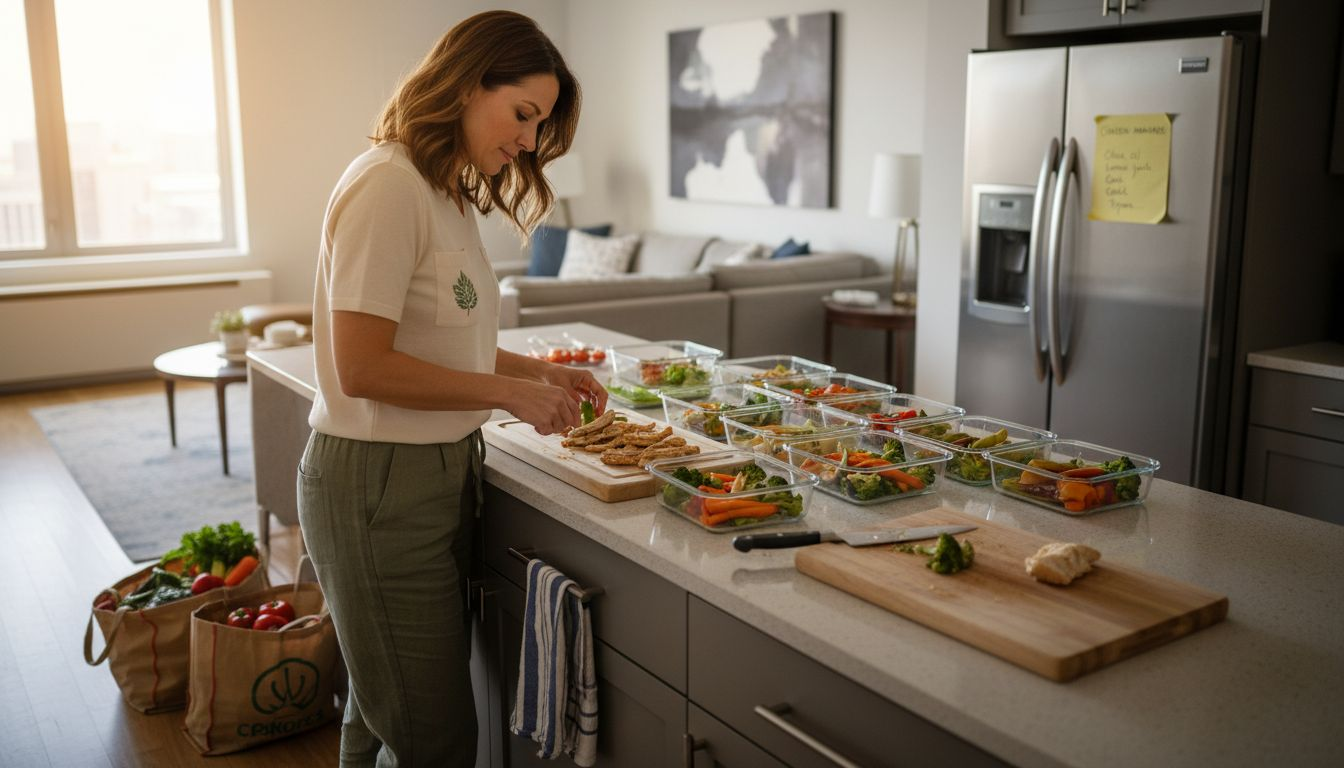
Designing a meal plan requires understanding personal nutritional needs, scheduling constraints, and realistic cooking capabilities. Successful strategies involve creating a weekly template, prepping ingredients in advance, and maintaining a well-stocked pantry with versatile, quick-cooking ingredients.
Pro Tip: Ingredient Efficiency Strategy: Select 4-5 multipurpose ingredients each week that can be transformed into different meals, reducing shopping time and minimizing food waste while maintaining dietary variety.
Here is a comparison of popular time-saving meal prep methods for professionals:
| Method | Typical Prep Time | Ideal For | Notable Advantage |
|---|---|---|---|
| Batch Cooking | 1-2 hours/week | Large families, planners | Maximizes meal output |
| Meal Prepping by Portion | 30-45 min/session | Single servings, variety seekers | Customizable portions |
| Sheet Pan Dinners | 20-30 min/meal | Quick, oven-accessible meals | Minimal cleanup required |
| Grab-and-Go Assembly | 15-20 min/meal | Busy, mobile professionals | Zero cook, high flexibility |
Convenient, Healthy Eating on the Go
Healthy nutrition for professionals doesn’t require elaborate meal preparations or sacrificing convenience. Strategic meal planning can transform everyday eating into a simple, nutritious experience, enabling busy individuals to maintain optimal energy levels without extensive cooking time.
Essential strategies for convenient, nutritious eating include:
- Selecting multipurpose ingredients
- Preparing grab-and-go protein sources
- Investing in portable food containers
- Choosing nutrient-dense snacks
- Planning quick, versatile meals
Professionals can optimize their nutrition by focusing on flexible food options that provide sustained energy. Ingredients like eggs, beans, rice, and seasonal vegetables offer remarkable versatility, allowing rapid meal assembly with minimal preparation time. Quick protein sources such as hard-boiled eggs, canned beans, rotisserie chicken, and pre-cooked grains can be combined into balanced meals within minutes.
Transporting healthy meals requires smart planning and appropriate equipment. Insulated lunch bags, microwave-safe containers, and compact food storage solutions enable professionals to maintain nutritional goals while navigating busy schedules. By preparing ingredients in advance and selecting smart, portable options, individuals can ensure consistent, high-quality nutrition without sacrificing productivity.
Pro Tip: Nutrition Efficiency Strategy: Dedicate 30 minutes weekly to prepping universal ingredients like grilled chicken, cooked quinoa, and chopped vegetables that can be quickly assembled into multiple meal variations throughout your workweek.
Leveraging Technology for Better Nutrition
Technology is revolutionizing how professionals approach nutrition, transforming complex dietary planning into accessible, personalized experiences. Advanced AI frameworks are now generating precise meal recommendations tailored to individual nutritional needs and preferences, making healthy eating more intuitive and achievable than ever before.
Key technological innovations in nutrition management include:
- Personalized meal planning algorithms
- Real-time nutritional tracking apps
- AI-powered dietary recommendation systems
- Smart kitchen appliances
- Nutrition analysis tools
Professionals can now access sophisticated nutrition optimization strategies that go beyond traditional dietary approaches. Data-driven meal planning techniques leverage complex algorithms to balance nutritional requirements with cost efficiency, enabling individuals to make smarter food choices without extensive manual calculations. Machine learning models can analyze personal health data, dietary restrictions, and fitness goals to generate customized nutrition strategies.

Digital nutrition tools provide unprecedented insights into dietary patterns, enabling real-time tracking and intelligent recommendations. Mobile applications can now monitor nutrient intake, suggest balanced meal alternatives, and provide instant nutritional analysis. These technologies transform nutrition from a complex challenge into an accessible, manageable aspect of professional life, empowering individuals to make informed dietary decisions with minimal effort.
Pro Tip: Tech Integration Strategy: Spend 15 minutes weekly exploring one new nutrition technology or app, gradually building a personalized digital ecosystem that supports your specific health and dietary goals.
Below is a summary of nutrition technologies and their primary benefits for busy professionals:
| Technology Type | Key Function | Major Benefit |
|---|---|---|
| Meal Planning Apps | Suggest weekly menus | Saves time, reduces stress |
| Nutrition Trackers | Monitor intake patterns | Helps identify nutrient gaps |
| Smart Kitchen Devices | Automate cooking tasks | Ensures consistency, saves time |
| AI Diet Tools | Tailor meal suggestions | Personalized nutrition plans |
Common Nutrition Mistakes to Avoid
Busy professionals often compromise their health through unintentional dietary missteps that can significantly impact overall wellness. Common nutrition mistakes frequently stem from time constraints and poor meal planning strategies, creating a cycle of unhealthy eating habits that undermines long-term health and performance.
Critical nutritional pitfalls for professionals include:
- Skipping meals
- Relying on convenience foods
- Inconsistent meal timing
- Inadequate protein intake
- Neglecting nutrient diversity
- Consuming excessive caffeine
- Dehydration
Professionals frequently make nutritional compromises that seem convenient but ultimately drain energy and productivity. Lack of strategic meal preparation can lead to repeated poor food choices, creating a cascade of health challenges. Common mistakes like grabbing processed snacks, consuming excessive caffeine, or completely skipping meals disrupt metabolic processes and diminish cognitive performance.
Understanding and addressing these nutritional mistakes requires a proactive approach. Professionals must recognize that dietary choices are not just about sustenance, but about maintaining optimal energy, mental clarity, and long-term health. By implementing strategic meal planning, preparing nutrient-dense snacks in advance, and maintaining consistent eating schedules, individuals can transform their relationship with nutrition.
Pro Tip: Nutrition Reset Strategy: Set a monthly nutrition audit where you review your eating habits, identify recurring mistakes, and develop targeted strategies to replace unhealthy patterns with sustainable, health-supporting choices.
Take Control of Your Nutrition with Smart Tools for Busy Professionals
Busy professionals face unique challenges like limited time, high stress, and the need for sustained energy and cognitive focus. This article highlights how strategic meal planning, stress management through diet, and efficient cooking methods are essential to maintaining productivity and wellness. If you struggle with inconsistent meal timing, skipping meals, or relying on convenience foods that drain your energy, you are not alone.
At Dietium.com, we understand these pain points and offer tailored solutions to make healthy nutrition simple and achievable. Our Recipians app uses advanced AI-powered meal planning algorithms to create customized, nutrient-rich meals based on your busy schedule and personal goals. With tools to track your calorie needs, metabolic health, and body metrics like BMI, you can optimize your nutrition for sustained energy and mental clarity. Explore expert-backed strategies and integrate seamless meal prep routines with video consultations from chefs, helping you avoid common pitfalls like protein deficiency and poor meal timing.
Don’t let time constraints compromise your health and performance. Start transforming your eating habits today with Dietium’s personalized nutrition platform. Harness technology designed specifically for professionals who demand smart, flexible, and sustainable nutrition solutions.
Frequently Asked Questions
How can busy professionals ensure they meet their nutritional needs?
To meet nutritional needs, busy professionals should focus on strategic meal planning, batch cooking, and utilizing versatile ingredients. Meal preparation on weekends and opting for nutrient-dense snacks can help sustain energy levels throughout the workweek.
What are some meal planning strategies for professionals with tight schedules?
Effective meal planning strategies include batch cooking proteins, using slow cookers, preparing multiple meals at once, and creating flexible meal templates. Emphasizing ingredient efficiency by selecting multipurpose foods can minimize shopping time and food waste.
How can technology assist professionals in managing their nutrition?
Technology can aid in nutrition management through meal planning apps, real-time nutritional tracking, and AI-powered dietary recommendations. These tools simplify meal preparation and help professionals track their nutrient intake more effectively.
What common nutrition mistakes should busy professionals avoid?
Common mistakes include skipping meals, relying too heavily on convenience foods, inconsistent meal timing, and inadequate protein intake. Being mindful of these pitfalls and implementing consistent meal planning can help maintain optimal health and productivity.


