 Skip to content

Nutritional yeast is a deactivated strain of Saccharomyces cerevisiae grown on a sugar-rich medium, dried into flakes or powder, and used as a savory condiment that delivers a cheesy, umami-rich flavor without any dairy. For most culinary applications, a small sprinkle works well on pasta, popcorn, or roasted vegetables. Building a sauce or vegan cheese base calls for a larger quantity. One critical note before you start cooking: fortified brands can supply well over 100% of the Daily Value for several B vitamins in a single two-tablespoon serving; which means portion awareness matters as much as flavor.
Table of Contents
- What exactly is nutritional yeast, and how does it differ from other yeasts?
- What nutrients does nutritional yeast actually deliver?
- How do you use nutritional yeast in everyday cooking?
- Six quick nutritional yeast recipes to try this week
- Where to buy nutritional yeast and how to store it
- Who should be cautious about using nutritional yeast?
- Chef and dietitian tips for getting the most out of nooch
- Key Takeaways
- Why nutritional yeast deserves more credit than it gets
- Dietium makes it easier to cook with nutritional yeast every day
- Useful sources and further reading
What exactly is nutritional yeast, and how does it differ from other yeasts?
Processors grow Saccharomyces cerevisiae on molasses or a similar sugar-rich feedstock, then deactivate it with heat and dry it into flakes, granules, or powder. That heat step is the defining difference from baker’s yeast or brewer’s yeast: the cells are dead, so nutritional yeast cannot leaven bread or trigger fermentation. You get all the flavor compounds without any of the biological activity.
Forms and when to use each:
- Flakes: The most common retail form. Ideal for finishing dishes, sprinkling on salads, or stirring into soups where a slightly textured result is fine.
- Granules: A middle ground between flakes and powder; dissolves reasonably well in warm liquids.
- Powder: Best for sauces, dressings, and baked goods where a smooth, fully integrated texture matters.
Fortified vs. unfortified is the label distinction that matters most for health-conscious cooks. Unfortified nutritional yeast contains only the nutrients naturally present after drying. Fortified versions have B vitamins added back in, most importantly B12, which is otherwise absent or minimal. If you follow a plant-based diet and rely on nutritional yeast as a B12 source, always check the label to confirm fortification and the specific amounts per serving. For a broader look at vegan fortified foods, Dietium’s guide covers label reading and safe intake in detail.
What nutrients does nutritional yeast actually deliver?
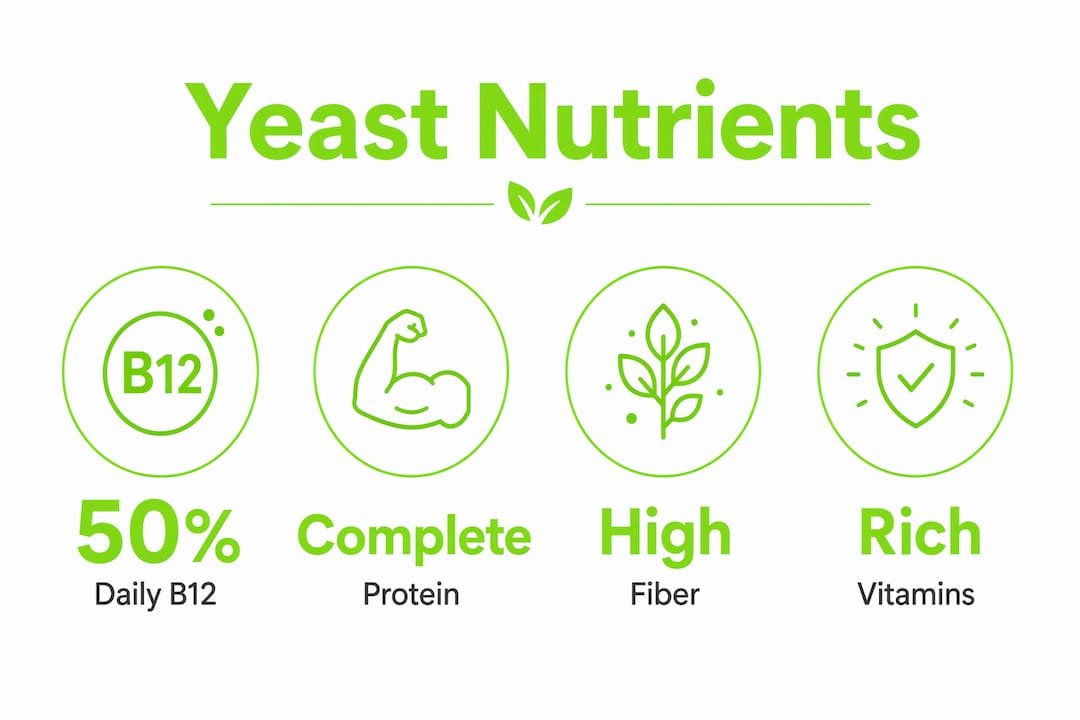
The nutrient profile varies significantly between brands, but a typical two-tablespoon serving of fortified nutritional yeast provides protein (roughly 5–8 g), dietary fiber, zinc, and a concentrated hit of B vitamins. Some fortified brands supply well over 100% of the Daily Value for B1, B2, B6, and B12 in that single serving.
Key insight from registered dietitians: Nutritional yeast is best treated as a condiment, not a supplement. Its B12 content can genuinely support status in vegans and vegetarians when used consistently with fortified products, but the same fortification that makes it valuable also means large daily amounts can push certain B vitamins toward or above their Tolerable Upper Limits.
For vegans and vegetarians, the B12 angle is the most clinically meaningful. B12 is found almost exclusively in animal products, and deficiency carries real neurological risk. Fortified nutritional yeast is one of the few whole-food-format sources available on a plant-based diet. Dietium’s resource on vitamin B12 food sources covers the full picture, including when supplementation is still necessary alongside fortified foods.
The protein in nutritional yeast is also worth noting. It contains all nine essential amino acids, making it a complete protein source, though the amounts per serving are modest. Think of it as a protein-contributing condiment rather than a primary protein source. For readers building high-protein plant meals, pairing nooch with legumes, tofu, or tempeh gives you far more protein per gram than relying on yeast alone.
How do you use nutritional yeast in everyday cooking?
The drying process releases glutamic acid, which gives nutritional yeast its savory, Parmesan-like umami quality. That flavor profile makes it one of the most versatile pantry additions for home cooks. It can thicken, season, and add depth across a wide range of dishes.
Common culinary uses by category:
- Finishing sprinkle: Popcorn, pasta, salads, roasted vegetables, avocado toast. Use 2–4 tsp per serving.
- Pantry seasoning: Stir into cooked grains (quinoa, farro), toss with roasted chickpeas, or blend into spice rubs.
- Sauces and dressings: Thickens soups and sauces and emulsifies into creamy dressings. Use 1/4–1/2 cup for a full sauce build.
- Vegan cheese blends: Combined with soaked cashews, potatoes, or carrots for a creamy, melt-like texture.
- Baking add-ins: Stir into savory quick bread batter, pizza dough, or cracker dough for a subtle cheesy note.
- Patties and meatless loaves: Acts as a binder and flavor booster in veggie burgers and lentil loaves.
Flavor pairing table:
| Ingredient | Why it works with nooch |
|---|---|
| Garlic (sautéed) | Amplifies umami; caramelized sugars deepen the savory base |
| Lemon juice | Brightness cuts through the richness of yeast-heavy sauces |
| Miso paste | Stacks fermented umami for a more complex flavor |
| Smoked paprika | Adds color and a smoky dimension to vegan cheese sauces |
| Toasted cashews | Provides creamy body that yeast alone cannot supply |
| Olive oil | Carries fat-soluble flavor compounds; helps nooch coat ingredients evenly |
| Dijon mustard | Emulsifier in dressings; adds tang that balances the cheesy notes |

Pro Tip: Sauté your garlic or onions first, then pull the pan off the heat before stirring in nutritional yeast. Adding nooch directly to a hot pan can cause bitterness and a slightly grainy texture. Off-heat addition preserves the umami and keeps the flavor clean.
For sauces, use powdered nutritional yeast when you want a completely smooth result. If you only have flakes, pulverize them in a blender before adding to liquids.
Six quick nutritional yeast recipes to try this week
These builds use common pantry items and take under 20 minutes each.
1. Faux Parmesan
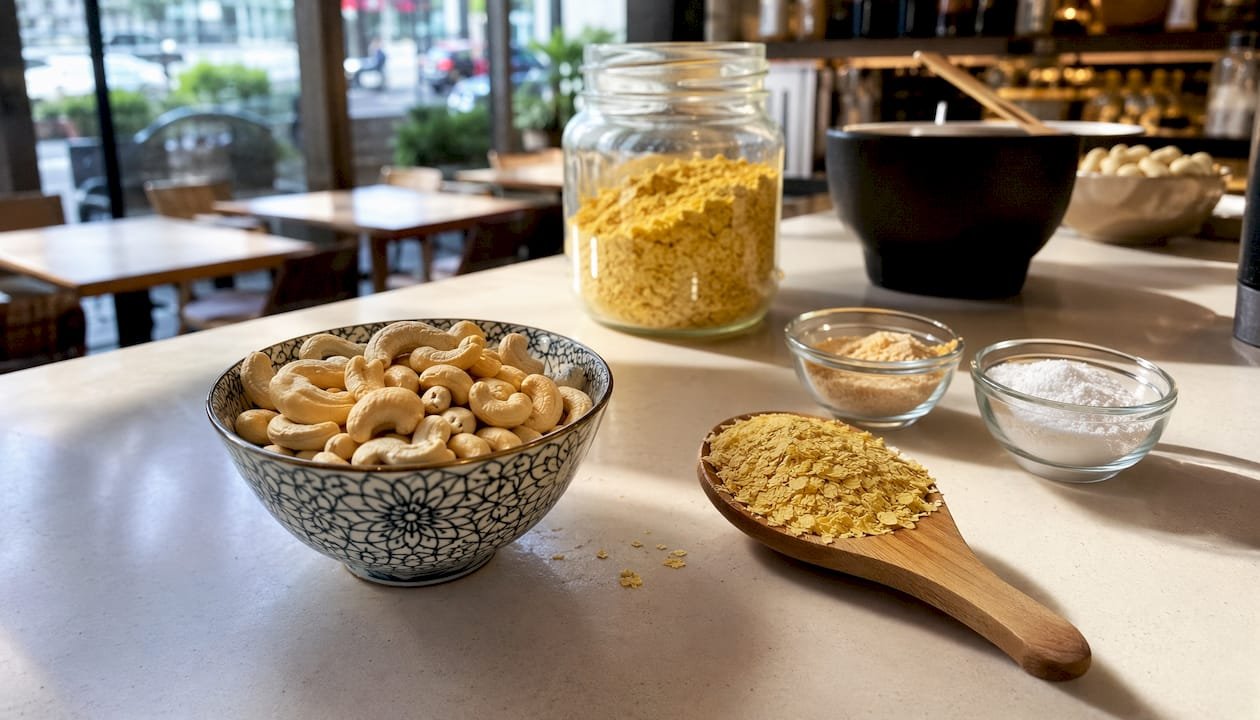
Ingredients: 1/2 cup raw cashews, 3 tbsp nutritional yeast flakes, 1/2 tsp garlic powder, 1/4 tsp salt.
Method: Pulse in a food processor until crumbly. Sprinkle on pasta, pizza, or salads.
Yield: About 3/4 cup | Time: 5 minutes.
2. Quick cashew cheese sauce
Ingredients: 1 cup soaked cashews, 1/4 cup nutritional yeast, 1 cup water, 1 tbsp lemon juice, 1/2 tsp smoked paprika, salt to taste.
Method: Blend until completely smooth; warm gently on the stove.
Yield: About 1.5 cups | Time: 10 minutes.
3. Tofu scramble
Ingredients: 1 block firm tofu (crumbled), 2 tbsp nutritional yeast, 1/2 tsp turmeric, 1/2 tsp garlic powder, salt and pepper.
Method: Sauté tofu in oil for 5 minutes, add spices and nooch off-heat, stir to coat.
Yield: 2 servings | Time: 10 minutes.
4. Nooch popcorn
Ingredients: 4 cups air-popped popcorn, 2 tsp nutritional yeast, 1 tsp olive oil, pinch of smoked paprika.
Method: Drizzle oil over popcorn, toss with yeast and paprika immediately.
Yield: 2 servings | Time: 5 minutes.
5. Creamy yeast dressing
Ingredients: 1/2 cup nutritional yeast, 1/4 cup apple cider vinegar, 1/3 cup olive oil, 1 tbsp soy sauce, 1 clove garlic, 1/4 cup water.
Method: Blend to a creamy emulsion; thin with water as needed.
Yield: About 1 cup | Time: 5 minutes.
6. Savory baked potato topping
Ingredients: 1 large baked potato, 2 tbsp nutritional yeast, 1 tbsp olive oil, 1 tsp chives, salt to taste.
Method: Split potato, drizzle with oil, and top with nooch and chives.
Yield: 1 serving | Time: 5 minutes (potato pre-baked).
For a heartier soup build, a creamy nutritional yeast soup using beans, potatoes, non-dairy milk, and over 1/2 cup of nooch shows how far you can scale the ingredient when building a full dish rather than finishing one.
Where to buy nutritional yeast and how to store it
Where to find it:
- Grocery stores: check the spice aisle, condiment section, or bulk bins at natural-food grocers.
- Health-food stores (Whole Foods, Natural Grocers, co-ops): typically carry multiple brands and forms.
- Online retailers: widest selection of fortified vs. unfortified options and bulk sizes.
What to check on the label:
- Fortified or unfortified (look for B12 specifically if you follow a plant-based diet)
- Form: flakes, granules, or powder
- Sodium content per serving (some brands add salt; others are sodium-free)
- Serving size used for nutrient claims (a “100% DV of B12” claim means nothing without knowing the serving size)
- Packaging date or best-by date; fresher product has a brighter, more pronounced flavor
Storage:
- Keep in an airtight container away from heat, light, and moisture.
- A cool, dry pantry works for most households; refrigeration is not required but extends shelf life in humid climates.
- Properly stored, nutritional yeast typically stays fresh for up to two years. Once you notice a dull or off smell, replace it.
Who should be cautious about using nutritional yeast?
Most people tolerate nutritional yeast well, but a few groups need to pay attention.
Migraine sufferers: Nutritional yeast contains glutamic acid and, in some products, tyramine, both of which are known migraine triggers in susceptible individuals. If you track dietary migraine triggers, introduce nooch in small amounts and monitor your response.
Yeast sensitivities and fungal conditions: Because the yeast is deactivated, it does not behave like live yeast in the body. However, some people with yeast-related sensitivities or certain fungal conditions report discomfort. This is distinct from a true yeast allergy, which is rare but possible. When in doubt, consult a clinician before adding it regularly.
Fortification and Tolerable Upper Limits: Harvard Health advises treating nutritional yeast as a condiment rather than a supplement precisely because fortified brands concentrate B vitamins. The adult Tolerable Upper Limit for niacin (B3), for example, is 35 mg per day. Some fortified products can contribute meaningfully toward that threshold if you use large amounts daily. Sticking to the 2–4 tsp finishing range keeps intake well within safe territory for most adults.
Medication interactions: Nutritional yeast contains tyramine, which can interact with monoamine oxidase inhibitors (MAOIs). Anyone taking MAOIs should avoid it or confirm safety with their prescriber. People with inflammatory bowel conditions or gout may also want to discuss regular use with a clinician, as purines in yeast can be a consideration.
This article is general nutrition information, not medical advice. Confirm serving guidance and any health-specific concerns with a registered dietitian or your healthcare provider.
Chef and dietitian tips for getting the most out of nooch
Serving-size reference table:
| Use case | Amount | Notes |
|---|---|---|
| Finishing sprinkle | 2–4 tsp (5–10 g) | Safe daily range for most adults; use fortified brands with awareness |
| Daily occasional use | 1–2 tbsp | Monitor total B-vitamin intake from all fortified sources |
| Sauce or cheese build | 1/4–1/2 cup | Appropriate for recipes; not a daily single-serving amount |
| Soup base (full recipe) | 1/2 cup + 2 tbsp | Recipe-level use; divided across multiple servings |
Texture tips: To get a genuinely creamy, melt-like result in dishes like mac and cheese, pair nutritional yeast with a structural base. Blended soaked cashews, boiled potatoes, or cooked carrots supply the body and creaminess; the yeast supplies the flavor. Yeast alone produces a thin, grainy sauce.
For ultra-smooth results, powdered nutritional yeast blends more easily than flakes. If flakes are all you have, run them through a high-speed blender before adding to your liquid base.
Pro Tip: Toast nutritional yeast briefly in a dry skillet over medium-low heat for 60–90 seconds before adding it to a dish. The mild toasting deepens the nutty, savory notes without burning. Pull the pan off the heat before adding any liquid to prevent clumping.
Fortified brands remain the better choice for vegans tracking B12, but keep total daily intake from all fortified foods in view. Dietium’s nutritional assessment tools can help you log and monitor cumulative B-vitamin totals across your full diet.
Key Takeaways
Nutritional yeast is most effective when used as a savory condiment in small finishing amounts or as a flavor base in sauces, with fortification awareness guiding how much you use daily.
| Point | Details |
|---|---|
| What it is | Deactivated Saccharomyces cerevisiae with a cheesy, umami flavor; no leavening activity. |
| Typical serving range | Use 2–4 tsp (5–10 g) as a finishing sprinkle; scale to 1/4–1/2 cup when building sauces or cheese bases. |
| Fortification caution | Fortified brands can exceed 100% DV for multiple B vitamins per serving; treat as a condiment, not a supplement. |
| Top cooking technique | Add nooch off-heat after sautéing aromatics to preserve umami and prevent bitterness or graininess. |
| Dietium integration | Dietium’s Recipians app and personalized meal plans help you track B-vitamin totals and scale nooch-based recipes to your goals. |
Why nutritional yeast deserves more credit than it gets
Most articles on nutritional yeast frame it as a vegan cheese substitute and stop there. That framing undersells it and, in one specific way, misleads cooks who are not vegan at all.
The more useful frame is this: nutritional yeast is a flavor-building tool that happens to carry a meaningful nutrient payload. Its glutamic acid content means it functions similarly to Parmesan, miso, or soy sauce in a recipe, amplifying savory depth without adding fat or sodium in the amounts those ingredients typically require. That makes it genuinely useful for anyone trying to cook more flavorful food with fewer calories, not just plant-based eaters.
The caution that most articles gloss over is the fortification issue. Treating a fortified product as a free-use seasoning is a real oversight. A cook who adds 1/4 cup of fortified nooch to a sauce, then sprinkles more on top, and uses it again at lunch, can accumulate B-vitamin levels that approach Tolerable Upper Limits for certain nutrients. That is not a reason to avoid it. It is a reason to know your serving sizes and check your labels, which is exactly the kind of data-aware cooking that produces better long-term health outcomes.
The off-heat technique is the single most underused tip in home kitchens. Cooks who add nutritional yeast directly to a screaming-hot pan and wonder why the result tastes slightly bitter are skipping the one step that separates a mediocre nooch dish from a genuinely good one. Sauté your aromatics, pull the pan, add the yeast. That sequence takes five extra seconds and changes the flavor completely.
Dietium makes it easier to cook with nutritional yeast every day
Knowing how to use nutritional yeast is one thing. Knowing how it fits into your specific daily nutrient targets is another. Dietium’s personalized meal plans and Recipians app let you add nooch-based recipes directly to your weekly plan, track cumulative B-vitamin intake from fortified foods, and get portion-level guidance calibrated to your health goals. If you are managing B12 intake on a plant-based diet or simply want to cook smarter with functional pantry staples, Dietium gives you the data layer that a recipe alone cannot. Visit Dietium to build a personalized plan that puts nutritional yeast to work alongside your full diet.
Useful sources and further reading
- Nutritional yeast: Does this savory, vegan seasoning pack a nutritional punch? — Harvard Health. Balanced overview of nutrients, benefits, and serving guidance from a clinical perspective.
- Caution: sprinkle this savory seasoning with care — Harvard Health. Covers fortification risks, Tolerable Upper Limits, and the condiment-not-supplement framing.
- A Guide to Nutritional Yeast — Food & Wine. Culinary-focused breakdown of forms, flavor science, and cooking applications.
- The Guide to Nutritional Yeast — Frontier Co-op. Practical texture and preparation tips, including powder vs. flakes guidance.
- Top 5 ways to use nutritional yeast — Sharon Palmer, The Plant-Powered Dietitian. Recipe ideas and B-vitamin context from a registered dietitian.
- Nutritional Yeast Dressing — A Virtual Vegan. Quick dressing recipe with proportions.
- Nutritional Yeast Soup — Dreena Burton. Full recipe example showing large-batch nooch use in a blended soup.
- Dietium: Fortified foods for vegans — Label-reading and safe intake guide for plant-based eaters.
- Dietium: Vitamin B12 sources — Complete breakdown of B12 food sources and supplementation strategies.


