 Skip to content

TL;DR:
- High intensity interval training alternates short effort bursts with recovery periods, providing faster cardiovascular and metabolic improvements. Proper structure, adequate rest, and gradual progression are essential for safety and effectiveness for all fitness levels. Combining HIIT with resistance training and proper nutrition enhances overall health and performance outcomes.
High intensity interval training (HIIT) is defined as a structured exercise method that alternates short bursts of near-maximal effort with recovery periods, producing cardiovascular, metabolic, and body composition improvements in significantly less time than traditional cardio. Research confirms HIIT outperforms moderate intensity continuous training (MICT) for VO2max gains and blood glucose control, making it one of the most efficient fitness tools available. The key is structure. Done right, HIIT works for beginners and advanced athletes alike. Done wrong, it leads to burnout, injury, and frustration.
What is high intensity interval training and how do you start?
HIIT workouts are built around one simple principle: work hard, recover, repeat. Typical sessions run 10–30 minutes, including a warm-up and cool-down, making them practical for people with tight schedules. The intensity during work intervals should feel genuinely challenging, not just uncomfortable.
For beginners, the structure is straightforward. Follow these steps to build your first HIIT routine safely:
- Warm up for 5 minutes. Light jogging, jumping jacks, or dynamic stretching prepares your joints and raises your heart rate gradually.
- Start with 15–30 second work intervals. Exercises like bodyweight squats, push-ups, or high knees work well. Keep the effort high but controlled.
- Rest for equal or longer periods. A 1:1 or 1:2 work-to-rest ratio gives your body time to recover before the next round.
- Complete 3–5 rounds. That is enough stimulus for a beginner without overloading the system.
- Cool down for 5 minutes. Slow walking and static stretching reduce heart rate and prevent stiffness.
As fitness improves, you can progress to intermediate formats like the 40/20 protocol: 40 seconds of work followed by 20 seconds of rest, repeated for 15–25 minutes. Three sessions per week is the recommended frequency for building fitness without accumulating excessive fatigue.
Pro Tip: If you cannot maintain your effort level by the final round, your rest periods are too short. Lengthen rest before increasing work duration. Quality of effort matters more than volume.

What are the physiological benefits of HIIT?
HIIT produces measurable improvements across multiple systems in the body. The benefits go well beyond calorie burn during the session itself.
- Cardiovascular fitness. A meta-analysis of 21 randomized controlled trials involving 831 patients found that HIIT improves VO2max more effectively than moderate intensity continuous training in people with type 2 diabetes. VO2max is the gold standard measure of aerobic capacity.
- Blood glucose control. The same research confirmed HIIT’s superiority for fasting blood glucose reduction. This matters for anyone managing metabolic health, not just those with diabetes.
- Insulin sensitivity and fat oxidation. Metabolic benefits like enhanced insulin sensitivity and improved fat oxidation are driven by the intensity of intervals, not the total duration of the session. A 20-minute HIIT session can produce greater metabolic adaptation than a 45-minute moderate jog.
- HDL cholesterol improvement. Regular HIIT raises HDL (the “good” cholesterol), supporting long-term cardiovascular health.
- EPOC effect. HIIT triggers excess post-exercise oxygen consumption (EPOC), meaning your body continues burning calories at an elevated rate for hours after the workout ends. This is the metabolic afterburn effect that makes short sessions surprisingly effective for fat loss.
The metabolic adaptations from HIIT apply to healthy individuals and those with conditions like obesity, insulin resistance, and type 2 diabetes. That broad applicability makes it one of the most studied exercise formats in sports science today. For a deeper look at how these changes connect to weight management, Dietium’s article on metabolic adaptation covers the mechanisms in detail.
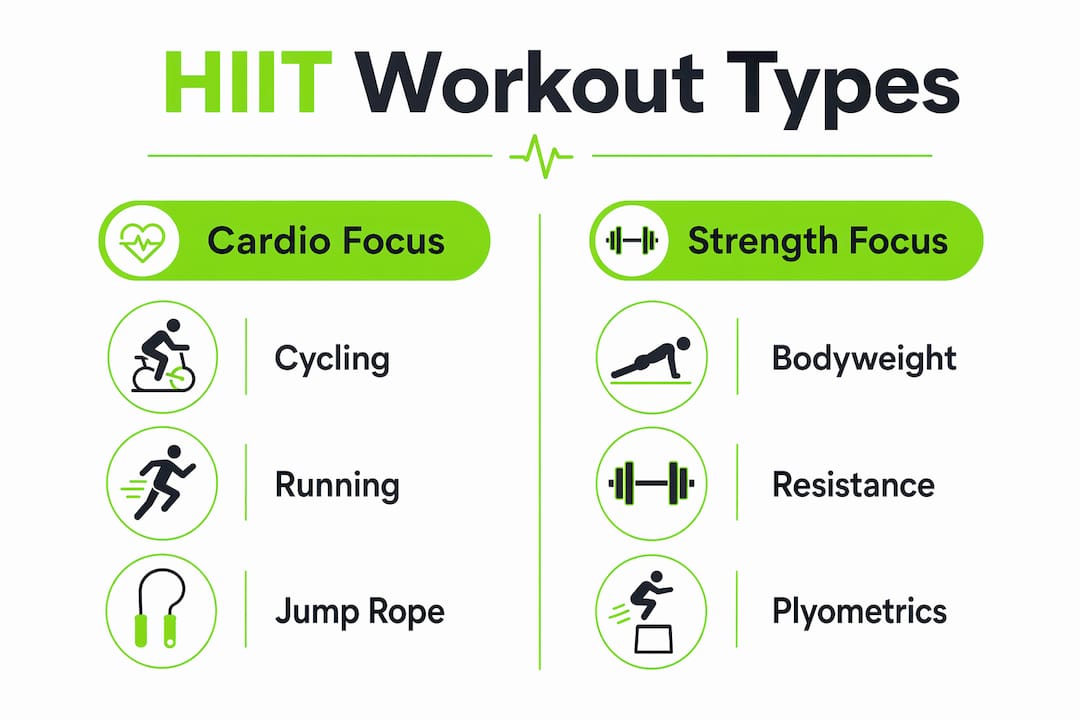
What types of HIIT workouts target different fitness goals?
Not all HIIT formats are the same. The modality you choose shapes the specific adaptations your body makes.
| HIIT Type | Primary Benefit | Best For |
|---|---|---|
| Cycling-type HIIT (C-HIIT) | Cardiovascular endurance, VO2max | Cardio fitness, fat loss |
| Resistance-type HIIT (R-HIIT) | Strength + cardio combined | Muscle endurance, body composition |
| Tabata (20s on / 10s off, 8 rounds) | Anaerobic and aerobic capacity | Time-pressed individuals |
| EMOM (every minute on the minute) | Work capacity, pacing discipline | Intermediate to advanced athletes |
| Ladder intervals | Progressive intensity management | Building tolerance to hard efforts |
Research comparing cycling and resistance HIIT over 8 weeks found that both modalities improve VO2max equally. The key difference is that resistance HIIT produces greater gains in muscular strength, including back squat performance and knee flexion strength. If your goal is cardio fitness alone, cycling-type formats work well. If you want strength alongside endurance, resistance-based formats deliver more.
Several variables determine how hard any HIIT session actually is:
- Work interval length. Longer intervals (2 minutes or more) with variable intensity maximize time spent near VO2max, producing stronger aerobic adaptations than short sprints.
- Recovery type. Active recovery (slow walking) keeps heart rate elevated. Passive recovery (standing still) allows fuller restoration before the next interval.
- Exercise selection. Compound movements like burpees, jump squats, and kettlebell swings recruit more muscle mass and drive higher metabolic demand than isolated exercises.
For readers weighing cardio against strength training more broadly, Dietium’s breakdown of cardio vs. strength training provides a clear framework for deciding what your program needs.
How do you tailor HIIT for your fitness level safely?
HIIT is scalable, but it is not automatically safe for everyone at full intensity from day one. Applying it incorrectly is the most common reason people get injured or quit.
For sedentary individuals or those returning from a long break, moderate intensity interval training is the recommended starting point before progressing to true HIIT. This means working at 60–70% of maximum effort rather than 85–95%. The body needs time to adapt its tendons, joints, and cardiovascular system before handling repeated near-maximal efforts.
Key safety principles to follow at every fitness level:
- Prioritize form over speed. Many people sacrifice technique when fatigue sets in. Clean movement protects joints and produces better results than sloppy reps done fast.
- Respect rest intervals. Rest is not optional. It is what makes the next work interval effective. Cutting rest short reduces intensity quality and increases injury risk.
- Progress gradually. Add one round or increase work interval length by 5–10 seconds per week, not per session.
- Monitor recovery between sessions. Persistent soreness, poor sleep, or declining performance are signs of overtraining. Take an extra rest day when those signals appear.
- Limit sessions to 3 per week. More frequent HIIT without adequate recovery produces diminishing returns and raises injury risk.
Pro Tip: If you are new to exercise, spend 4–6 weeks on beginner workout routines before adding HIIT. Building a base of general fitness makes your first HIIT sessions safer and more effective.
The structured approach to HIIT for beginners recommended by exercise professionals focuses on intensity and form, not volume. Short sessions done well beat long sessions done poorly every time.
Key takeaways
HIIT delivers superior cardiovascular and metabolic results compared to moderate intensity training, but only when structured with proper work-to-rest ratios, appropriate frequency, and progressive intensity matched to your current fitness level.
| Point | Details |
|---|---|
| Session length and frequency | Aim for 10–30 minute sessions, 3 times per week, to build fitness without overtraining. |
| Beginner protocol | Start with 15–30 second work intervals and equal or longer rest before progressing to harder formats. |
| Metabolic benefits | Intensity drives insulin sensitivity and fat oxidation gains, not total session duration. |
| Modality selection | Choose resistance HIIT for strength gains and cycling-type HIIT for pure cardiovascular improvement. |
| Safety first | Sedentary individuals should begin with moderate intensity intervals before advancing to full HIIT protocols. |
Why I think most people misuse HIIT
Most people treat HIIT as a test of toughness rather than a training method. They go all-out every session, skip rest intervals, and wonder why they feel wrecked after two weeks. That is not HIIT. That is just random hard exercise.
What actually works is treating HIIT as planned stress. You choose a work interval, you commit to a rest period, and you repeat that structure consistently. The quality of each interval is what drives adaptation, not how exhausted you feel at the end. I have seen people make better progress with three focused 20-minute sessions per week than with five chaotic hour-long efforts.
The other mistake I see constantly is treating HIIT as a complete fitness program. It is not. HIIT builds cardiovascular fitness and metabolic health exceptionally well. But it does not replace dedicated strength training or lower-intensity aerobic work. The best results come from combining HIIT with resistance training and at least one easy cardio session per week. That combination covers all the physiological bases without burning you out.
Consistency beats intensity every time. A manageable HIIT routine you stick to for six months will always outperform an extreme program you abandon after three weeks.
— Srasti
Fuel your HIIT results with personalized nutrition from Dietium
Training hard without eating right limits your results. HIIT places real demands on your body, and what you eat before and after sessions directly affects recovery, energy, and fat loss. Dietium’s personalized diet plans are built around your specific goals, whether that is losing body fat, building endurance, or improving metabolic health. The platform calculates your calorie needs, macros, and meal timing based on your activity level and body metrics. Pair that with a structured HIIT program and you give your body exactly what it needs to adapt and improve. Dietium also offers personalized meal plans aligned with every health goal, making it straightforward to eat in a way that supports your training.
FAQ
What is high intensity interval training?
High intensity interval training is a structured exercise method that alternates short bursts of near-maximal effort with recovery periods. Sessions typically last 10–30 minutes and produce cardiovascular and metabolic improvements comparable to longer moderate-intensity workouts.
How many times per week should I do HIIT?
Three sessions per week is the recommended frequency for most people. This builds cardiovascular fitness and improves body composition while allowing enough recovery time between sessions to prevent overtraining.
Is HIIT safe for beginners?
HIIT is safe for beginners when introduced gradually. Start with 15–30 second work intervals, equal rest periods, and 3–5 rounds. Sedentary individuals should begin with moderate intensity intervals before progressing to full HIIT protocols.
Does HIIT burn more fat than regular cardio?
HIIT produces greater metabolic adaptations than moderate intensity continuous training, including improved fat oxidation and the EPOC afterburn effect. These benefits are driven by interval intensity, not session length.
What is the difference between Tabata and standard HIIT?
Tabata is a specific HIIT format using 20 seconds of work followed by 10 seconds of rest for 8 rounds, totaling 4 minutes per exercise. Standard HIIT uses variable work-to-rest ratios and session lengths depending on the goal and fitness level.


