 Skip to content

Weight gain often feels straightforward until you realize how many factors shape it beyond just diet and exercise. In busy urban centers across North America and Europe, stress, sleep issues, and genetic risk add layers to the challenge. This article reveals the common myths about weight gain and highlights why data-driven strategies matter, helping you focus on what drives your own results instead of just following generic advice.
Table of Contents
- Defining Weight Gain And Common Myths
- Main Causes: Diet, Activity, And Genetics
- Hormonal And Medical Influences On Weight
- Medications, Stress, And Environmental Factors
- Consequences And Solutions For Weight Gain
Key Takeaways
| Point | Details |
|---|---|
| Weight Gain is Multifactorial | Weight gain results from a combination of diet, genetics, hormones, medications, and lifestyle factors, not just individual choices. |
| Quality Over Quantity in Diet | The type of food consumed impacts the body’s metabolism more significantly than just calorie count. |
| Stress and Sleep Matter | Chronic stress and poor sleep disrupt hormones that regulate appetite, making weight management more challenging. |
| Seek Professional Guidance | Working with healthcare professionals can help address underlying causes of weight gain effectively. |
Defining Weight Gain and Common Myths
Weight gain happens when your body stores more calories than it burns. This simple definition masks a far more complex reality involving hormones, genetics, medications, and lifestyle factors working in concert.
Most people assume weight gain results from eating too much or exercising too little. The truth is messier. Hidden causes of weight gain extend far beyond diet and exercise, including age-related muscle loss, stress-induced cortisol spikes, and poor sleep patterns that disrupt appetite regulation.
What Really Drives Weight Gain
Your body isn’t a simple calorie counter. Multiple systems influence how much weight you gain or lose:
- Age and metabolism: Muscle naturally declines after 30, reducing the calories your body burns at rest
- Hormonal shifts: Changes in estrogen, testosterone, thyroid function, and cortisol directly impact fat storage
- Sleep quality: Poor sleep disrupts leptin and ghrelin, hormones controlling hunger and fullness signals
- Stress levels: Chronic stress elevates cortisol, which can increase appetite and promote abdominal fat storage
- Medications: Certain prescriptions for diabetes, depression, or blood pressure can trigger weight gain as a side effect
- Medical conditions: Thyroid disorders, PCOS, and heart failure can cause weight gain through different mechanisms
Obesity is a complex, chronic disease influenced by genetics, medications, and multiple physiological factors—not simply a result of willpower or dietary choices.
Common Myths That Mislead You
The fitness and diet industry thrives on oversimplifications. Here’s what doesn’t work the way people think it does:
Myth 1: All calories are equal. A 300-calorie donut affects your body differently than 300 calories from almonds. Nutrient density, fiber content, and insulin response vary dramatically.
Myth 2: Low-carb diets are the solution. Restrictive diets promise quick fixes but rarely stick long-term. Your body adapts, cravings intensify, and most people regain the weight.
Myth 3: Skipping meals helps you lose weight. Skipping meals actually backfires. It triggers stronger hunger signals, slows metabolism temporarily, and often leads to overeating later.
Myth 4: You can target fat loss in specific areas. Spot reduction doesn’t exist. Your genetics determine where your body stores and loses fat first.
Myth 5: Weight gain is always a personal failure. This harmful myth ignores the role of genetics, stress, sleep, medications, and medical conditions that influence weight independently of behavior.
Sustainable weight management requires understanding your individual triggers and circumstances, not following generic diet rules that worked for someone else.
Why This Matters for Your Health
Understanding weight gain mechanics helps you stop blaming yourself for factors outside your control. When you know that cortisol from chronic stress influences fat storage, you can address the root problem rather than just eating less.
Pro tip: Track your weight trends alongside stress levels, sleep hours, and medication changes for 3-4 weeks to identify your personal weight gain patterns rather than relying on generic advice.
Main Causes: Diet, Activity, and Genetics
Weight gain doesn’t happen in a vacuum. Three primary forces shape whether your body stores or sheds pounds: what you eat, how much you move, and the genes you inherited.
Understanding these three pillars helps you stop blaming yourself for circumstances partially outside your control. They work together, not independently, which is why cookie-cutter solutions fail so many people.
The Diet Factor
What you eat matters far more than how much. Quality trumps quantity in almost every scenario.

Calorie quantity still counts, but it’s not the complete story. Consuming more calories than you burn creates weight gain, yet this doesn’t mean all calories affect your body equally.
Food quality determines how your body processes energy. Whole foods with fiber, protein, and micronutrients trigger different metabolic responses than processed alternatives with added sugars and refined carbs.
Common dietary patterns that drive weight gain include:
- Ultra-processed foods that spike blood sugar and increase hunger signals
- Sugary drinks that add calories without triggering fullness responses
- Meals lacking protein, which leads to sustained hunger and snacking
- Eating patterns driven by convenience rather than nutrition planning
- Late-night eating that disrupts circadian rhythm eating patterns
Your body metabolizes a donut differently than it metabolizes an apple, even at similar calorie levels.
The Activity Piece
Movement burns calories, but not in the way most people think. You can’t out-exercise a poor diet, and sedentary behavior compounds weight gain over time.
Daily movement matters more than intense workouts. Walking, fidgeting, climbing stairs, and occupational activity burn significant calories across the day.
Exercise frequency influences metabolism and appetite. Regular activity improves insulin sensitivity and hormone balance beyond just the calories burned during exercise.
Muscle mass determines your resting metabolic rate. Each pound of muscle burns more calories at rest than fat tissue, so strength training creates a metabolic advantage.
Genetics: Your Blueprint
Hundreds of genes influence obesity, affecting metabolism, fat storage, and hunger signals. Genetics loads the gun, but environment pulls the trigger.
Your genetic predisposition determines:
- How efficiently your body stores fat
- How responsive you are to calorie restriction
- Your natural appetite levels and fullness signals
- How your metabolism responds to different macronutrient ratios
If both your parents struggled with weight, your genetic risk increases. But genetics alone doesn’t determine your weight outcome—lifestyle factors activate or suppress those genetic tendencies.
Genetics influences your weight potential, but your daily choices determine whether you reach it.
How These Three Interact
These factors don’t work in isolation. A person with genetic susceptibility to weight gain combined with a sedentary job and convenient access to processed foods faces far greater challenges than someone without these overlapping factors.
Your environment, job demands, stress level, sleep quality, and support system all modulate how diet, activity, and genetics express themselves in your body.
Here’s how underlying causes of weight gain compare based on their impact and reversibility:
| Underlying Cause | Main Biological Impact | Reversibility Potential | Requires Medical Oversight |
|---|---|---|---|
| Genetics | Alters metabolism and appetite | Low to moderate | No |
| Medications | Changes appetite, metabolism | Moderate to high | Yes |
| Hormonal Imbalance | Affects fat storage and energy | Moderate if treated | Yes |
| Sedentary Lifestyle | Reduces calorie expenditure | High with activity | No |
| Poor Sleep | Disrupts hunger hormones | High with intervention | Sometimes |
Pro tip: Identify which of these three factors—diet, activity, or genetics—creates the biggest barrier in your specific situation, then address that one first rather than trying to overhaul everything simultaneously.
Hormonal and Medical Influences on Weight
Your hormones act as messengers controlling hunger, energy expenditure, and fat storage. When they fall out of balance, weight gain often follows regardless of diet and exercise efforts.
Medical conditions complicate the picture further. Some diseases and medications directly trigger weight gain through mechanisms you can’t simply “willpower” away.
The Thyroid Connection
Thyroid hormones regulate metabolism and basal metabolic rate, controlling how fast your body burns calories at rest. Even small changes in thyroid function dramatically impact weight.
Hypothyroidism (underactive thyroid) slows metabolism significantly. Your body burns fewer calories, stores more energy, and fluid retention adds extra pounds. Many people gain 10-20 pounds after thyroid dysfunction develops.
Hyperthyroidism (overactive thyroid) speeds metabolism, often causing weight loss despite increased appetite. Treatment typically normalizes metabolism, but weight often returns gradually.
Common thyroid-related weight issues include:
- Sluggish metabolism causing gradual, unexplained weight gain
- Persistent fatigue making exercise feel impossible
- Cold sensitivity and hair loss alongside weight changes
- Medication adjustments that temporarily affect weight
A sluggish thyroid can make weight management feel impossible, even with perfect diet and exercise habits.
Sex Hormones and Aging
Estrogen, testosterone, and progesterone influence where your body stores fat and how efficiently it burns calories. As you age, these hormones decline naturally.
Women in midlife experience estrogen decline during perimenopause and menopause. Fat distribution shifts toward the abdomen, metabolism slows, and weight creeps up even without dietary changes.
Men experience testosterone decline more gradually after 30. Lower testosterone reduces muscle mass, decreases metabolic rate, and increases body fat percentage.
Hormonal changes combine with lifestyle factors to create a perfect storm for weight gain:
- Reduced physical activity from decreased energy
- Slower metabolism requiring fewer calories
- Increased appetite and cravings
- Poor sleep disrupting appetite hormones
Polycystic Ovary Syndrome (PCOS)
This condition affects approximately 1 in 10 women of reproductive age. Insulin resistance lies at PCOS’s core, causing the body to store excess energy as fat regardless of calorie intake.
PCOS-related weight challenges include:
- Difficulty losing weight despite calorie restriction
- Increased hunger and cravings from elevated insulin
- Fat storage concentrated in the abdominal area
- Improved symptoms with insulin-sensitizing approaches
Other Medical Conditions
Multiple health conditions promote weight gain through distinct mechanisms. Hypothyroidism, diabetes, heart failure, depression, and sleep apnea each affect weight through different pathways.
Medications for these conditions often have weight gain as a side effect. Antidepressants, corticosteroids, diabetes medications, and blood pressure drugs commonly cause 5-15 pound weight increases.
Medical conditions and medications causing weight gain require medical oversight, not just lifestyle changes.
When to Seek Medical Evaluation
Consider professional evaluation if weight gain appears without obvious lifestyle changes. Sudden gains, especially with fatigue, mood changes, or appetite shifts, warrant testing.
Your doctor can assess:
- Thyroid function through blood tests
- Cortisol levels and stress hormone status
- Blood sugar control and insulin resistance
- Medication side effects
- Underlying conditions affecting metabolism
Pro tip: Request complete hormone testing including thyroid function, fasting glucose, and insulin levels before assuming your weight gain stems solely from diet and exercise choices.
Medications, Stress, and Environmental Factors
Weight gain doesn’t always originate from personal choices. Medications prescribed to treat other conditions, chronic stress, and your physical environment all exert powerful influences on your body composition.
These factors often operate silently, making weight management feel impossible despite genuine effort and discipline.
Medication-Induced Weight Gain
Certain medications increase appetite and alter metabolism, triggering weight gain as a documented side effect. Your doctor may not volunteer this information, leaving you to discover it unexpectedly.
Common culprits include:
- Antipsychotics used for bipolar disorder and schizophrenia
- Antidepressants including SSRIs and tricyclic drugs
- Corticosteroids for inflammation and autoimmune conditions
- Diabetes medications that increase insulin production
- Blood pressure medications like beta-blockers
- Antihistamines for allergies
These medications work through different mechanisms. Some increase hunger signals directly. Others slow metabolism or cause fluid retention. Some trigger cravings for specific foods.
Medication-induced weight gain creates a dilemma: stopping the medication risks relapse of the original condition, yet the weight gain itself creates new health risks.
Medication-induced weight gain is a legitimate side effect, not a personal failure or lack of willpower.
Chronic Stress and Cortisol
Chronic stress elevates cortisol levels, which promotes fat storage especially around your abdomen, increases appetite for high-calorie comfort foods, and slows metabolism.
Stress affects weight through multiple pathways:
- Increased cortisol signals your body to store energy as fat for survival
- Appetite stimulation creates cravings for sugar and ultra-processed foods
- Metabolic slowdown reduces calories burned at rest
- Sleep disruption impairs appetite hormones and increases hunger
- Mindless eating occurs as stress management without conscious awareness
The irony cuts deep: trying to lose weight creates stress, which increases cortisol, which promotes fat storage. This vicious cycle explains why weight loss feels harder during stressful life periods.
Abdominal fat from chronic stress carries particular health risks. This visceral fat surrounds organs and increases inflammation, diabetes risk, and cardiovascular disease.
Environmental and Lifestyle Barriers
Your surroundings shape eating patterns and activity levels in ways beyond individual willpower.
Food environment includes:
- Limited access to affordable fresh produce in your neighborhood
- Abundant ultra-processed convenience foods within reach
- Social circles centered around restaurant eating and alcohol
- Work culture involving frequent fast-food lunches
- Kitchen design that makes healthy cooking inconvenient
Activity barriers include:
- Sedentary job requiring 8+ hours sitting
- Unsafe neighborhoods discouraging outdoor walking
- Lack of nearby gyms or fitness facilities
- Family obligations limiting exercise time
- Climate or weather patterns reducing outdoor activity
Your environment shapes your weight more than your willpower does.
Socioeconomic Factors
Income level significantly influences weight outcomes. Lower-income neighborhoods typically have fewer grocery stores selling fresh produce, higher food prices, and greater density of fast-food restaurants.
Time poverty affects weight too. Working multiple jobs leaves no energy for meal preparation. Long commutes eliminate exercise opportunities. Stress from financial instability elevates cortisol chronically.
These systemic barriers aren’t individual failures. They’re structural challenges requiring environmental changes, not just personal motivation.
Taking Action
When medications cause weight gain, discuss alternatives with your prescriber. Sometimes switching medications reduces side effects without sacrificing treatment effectiveness.
Stress management directly impacts weight. Meditation, adequate sleep, social connection, and movement all reduce cortisol naturally.
Pro tip: If your weight gain coincided with medication changes or major life stress, address those factors first before intensifying diet and exercise efforts.
Consequences and Solutions for Weight Gain
Weight gain extends far beyond appearance. The health consequences ripple across your body, affecting your heart, metabolism, mental health, and longevity.
The good news? Evidence-based solutions exist. Addressing weight gain requires a comprehensive approach, not perfection in any single area.
Health Consequences of Excess Weight
Excess weight increases risk of heart disease, type 2 diabetes, many cancers, high blood pressure, liver disease, and sleep apnea. Mental health suffers too, with depression and anxiety more common in people with obesity.
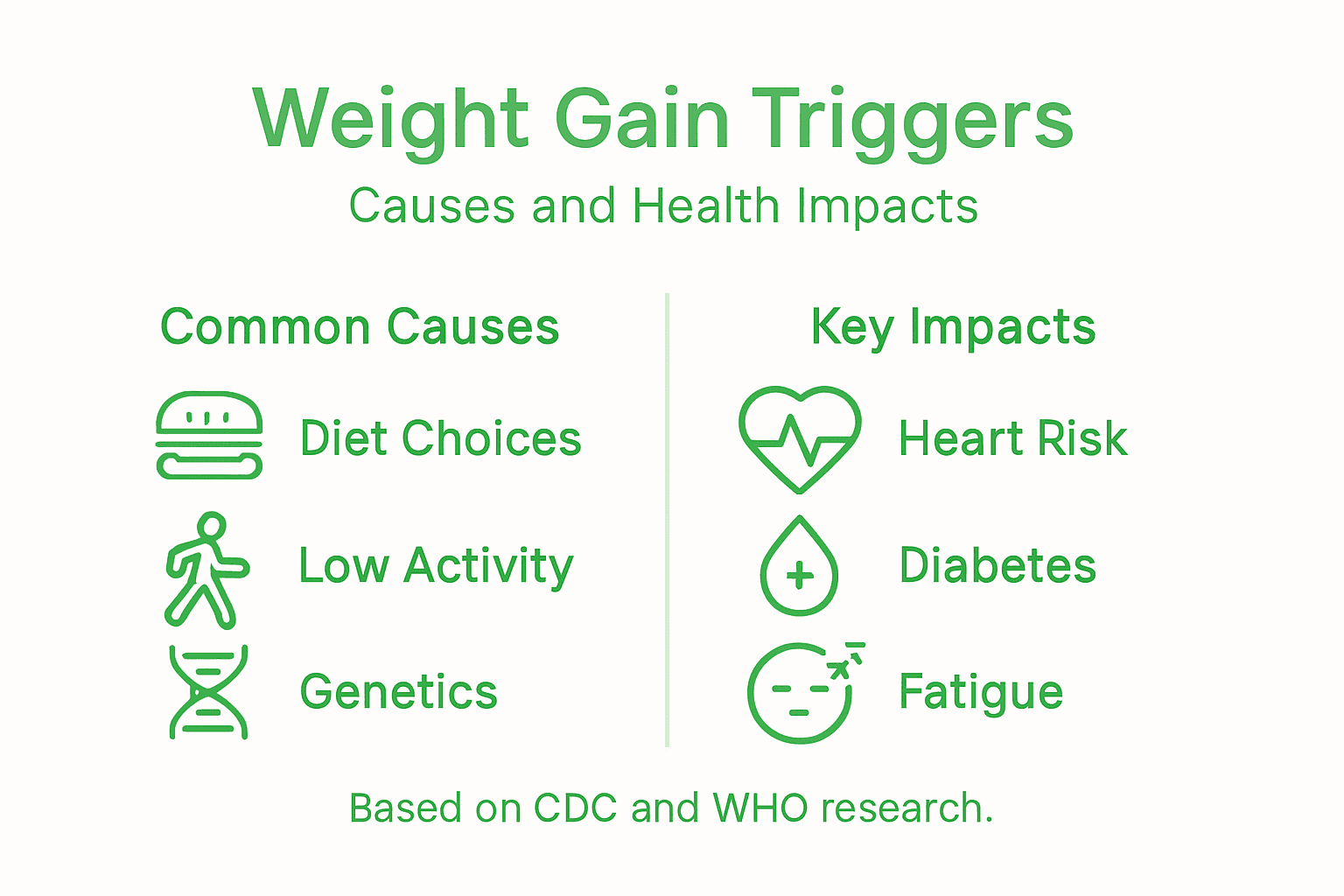
These aren’t hypothetical risks. Each excess pound strains your cardiovascular system, increases inflammation throughout your body, and forces your pancreas to work harder maintaining blood sugar.
Physical health consequences include:
- Heart disease and stroke from increased blood pressure and cholesterol
- Type 2 diabetes from insulin resistance
- Joint damage and arthritis from bearing extra weight
- Sleep apnea disrupting restorative sleep
- Fatty liver disease affecting metabolism
- Multiple cancers including breast, colon, and endometrial
Psychological and social impacts include:
- Depression and anxiety from body image concerns
- Social isolation and reduced quality of life
- Discrimination and stigma affecting mental health
- Reduced confidence and self-esteem
- Difficulty with physical activities you enjoy
Weight gain also carries economic costs: increased medical expenses, medication needs, and lost productivity at work compound the personal burden.
The health consequences of weight gain affect every system in your body, making intervention worthwhile.
Multi-Faceted Solutions
Addressing weight gain requires healthy eating, physical activity, stress management, and sufficient sleep. Single-focus approaches consistently fail because weight is multifactorial.
Nutrition foundation:
- Prioritize whole foods with fiber and protein
- Eliminate liquid calories from sugary drinks
- Plan meals to reduce convenience eating
- Address emotional eating patterns
Movement and activity:
- Start with daily walking, not intense exercise
- Build strength training for metabolic advantage
- Reduce sedentary time through occupational movement
- Choose activities you actually enjoy
Recovery and stress:
Below is a summary of solution strategies and their focus areas:
| Strategy Type | Key Focus | Example Benefit |
|---|---|---|
| Nutritional | Whole foods, planning | Improves fullness, reduces hunger |
| Physical Activity | Movement, strength | Boosts metabolism, burns calories |
| Stress Management | Sleep, relaxation | Lowers cortisol, reduces cravings |
| Medical Treatment | Addressing causes | Corrects underlying imbalances |
- Aim for 7-9 hours sleep nightly
- Practice stress management (meditation, yoga, walking)
- Build social connection and support systems
- Address underlying depression or anxiety
Professional Support and Behavioral Strategies
Healthcare providers can support weight management through evidence-based programs, medications when appropriate, and behavioral counseling. This professional guidance addresses the complex root causes rather than just symptoms.
Behavioral changes matter more than willpower alone. Working with therapists, nutritionists, or coaches helps identify your personal triggers and develop sustainable strategies.
Some people benefit from medications that reduce appetite or improve metabolism. Others find success through structured support programs or apps that track progress.
Creating Sustainable Change
Quick fixes fail consistently. Sustainable weight management means making changes you can maintain indefinitely, not suffering through restrictive protocols.
Start small. One dietary change, one weekly movement session, one sleep improvement. Compound these small changes over weeks and months.
Track what matters to you. For some, that’s weight. For others, energy levels, clothing fit, or fitness performance provide better motivation than numbers on a scale.
Sustainable weight management means building habits you can maintain for life, not enduring temporary suffering.
Pro tip: Focus on adding healthy behaviors (movement, whole foods, sleep) rather than restricting or eliminating foods, which creates psychological resistance and unsustainable deprivation.
Take Control of Your Weight by Understanding Your Unique Triggers
Weight gain is a complex challenge influenced by hormones, genetics, stress, medication, and lifestyle factors. If you have ever felt frustrated by unexplained pounds creeping on despite your best efforts, you know it is not just about calories or willpower. The article highlights key issues like hormonal imbalances, thyroid function, chronic stress effects, and medication side effects that can make weight management seem impossible. Tackling these requires a personalized and data-driven approach that addresses your specific needs and circumstances.
At Dietium’s Recipians app, we empower you to identify and respond to your body’s signals with custom meal plans, fitness routines, and real-time tracking of critical health metrics such as body fat and calorie needs. Our AI-powered tools help monitor changes related to hormones, activity, and nutrition so you can break the cycle of weight gain sustainably. Don’t let hidden causes hold you back from your health goals. Begin your journey today at Dietium.com and discover actionable insights tailored to your lifestyle and biology.
Start taking control now by exploring our personalized nutrition and fitness solutions. The sooner you understand your unique triggers, the sooner you can build lasting habits that fit your life.
Frequently Asked Questions
What are the main causes of weight gain?
Weight gain primarily occurs due to a combination of diet, activity level, and genetics. Factors such as medication, hormonal changes, and stress also play significant roles.
How do hormonal changes influence weight gain?
Hormonal shifts, particularly related to estrogen, testosterone, and thyroid hormones, can significantly affect fat storage and metabolism. These changes can alter appetite and energy expenditure, leading to weight gain.
Can stress lead to weight gain?
Yes, chronic stress elevates cortisol levels, which is linked to increased appetite and fat storage, particularly in the abdominal area. Stress can also lead to emotional eating and poor dietary choices.
How important is sleep for weight management?
Sleep quality is crucial for weight management as it regulates hormones like leptin and ghrelin, which control hunger and satiety. Poor sleep can disrupt these hormones and lead to increased appetite and weight gain.


