 Skip to content

Choosing sweeteners can feel confusing when every grocery aisle promises healthier options for your morning coffee or favorite snack. For millennials and Gen Z who value wellness and smart weight management, the search for sustainable, natural sugar alternatives comes with a lot of hype and hidden myths. This article highlights the truth behind natural sugar alternatives, clearing up common misconceptions and guiding you through safe, effective choices for your dietary needs.
Table of Contents
- Defining Natural Sugar Alternatives And Myths
- Popular Types And Key Differences
- How Natural Alternatives Affect Health
- Comparing Natural And Artificial Sweeteners
- Safe Usage Tips And Common Pitfalls
Key Takeaways
| Point | Details |
|---|---|
| Natural Sugar Alternatives Are Not Metabolically Superior | Despite assumptions, alternatives like honey and maple syrup impact blood sugar similarly to refined sugar. |
| Monitor Total Sugar Intake | Consumers should focus on overall sugar consumption rather than the perceived health benefits of natural alternatives. |
| Understand Sweetener Types and Their Effects | Different sweeteners have varying caloric densities and metabolic impacts, influencing health and dietary choices. |
| Practice Moderation and Awareness | Moderation is essential; track intake to avoid health risks associated with excessive consumption of any sugar type. |
Defining Natural Sugar Alternatives and Myths
Natural sugar alternatives have gained significant popularity among health-conscious individuals seeking healthier ways to satisfy their sweet tooth. While many people assume these alternatives are fundamentally different from traditional sugar, the reality is more nuanced. Natural sugar sources like honey, maple syrup, and coconut sugar are often perceived as superior options, but they share crucial biochemical similarities with refined sugar.
Understanding the true nature of these alternatives requires examining their core characteristics:
- Plant-Based Origins: Derived directly from natural sources like agave, coconut, and maple trees
- Minimal Processing: Less refined compared to white sugar
- Trace Nutrient Content: Some alternatives contain small amounts of minerals and vitamins
- Similar Metabolic Impact: Ultimately converted to glucose in the body
Contrary to popular belief, natural sugar alternatives are not metabolically superior. Glycemic response remains similar, meaning these alternatives can still impact blood sugar levels comparable to traditional sugar. The body processes fructose and glucose from natural sources essentially the same way it processes refined sugar.
While natural sugar alternatives might seem healthier, their fundamental sugar composition remains remarkably consistent with traditional sweeteners.
Consumers should focus on total sugar intake rather than assuming natural alternatives offer significant health advantages. Understanding sugar metabolism reveals that excessive consumption of any sugar type can contribute to potential health risks like diabetes and heart disease.
Key myths about natural sugar alternatives include:
- They are calorie-free
- They do not impact blood sugar
- They are nutritionally superior to refined sugar
- They can be consumed without limitation
Pro tip: Always read nutrition labels and monitor total sugar intake, regardless of the source’s perceived naturalness.
Popular Types and Key Differences
Natural sugar alternatives come in diverse forms, each with unique characteristics and metabolic impacts. Nutritive sweeteners encompass a wide range of options that provide calories and varying levels of sweetness, from traditional sugars to more complex natural alternatives.
The primary categories of sugar alternatives include:
- Sugars: Honey, maple syrup, coconut sugar, agave nectar
- Sugar Alcohols: Xylitol, erythritol, sorbitol
- Artificial Sweeteners: Aspartame, sucralose, saccharin
- Natural Low-Calorie Sweeteners: Stevia, monk fruit extract
Metabolic Differences play a crucial role in understanding these alternatives. Sweetener classifications reveal significant variations in how different sweeteners impact blood sugar and overall health. Sugar alcohols, for instance, typically cause lower blood sugar spikes compared to traditional sugars, making them attractive for individuals managing dietary concerns.
Not all sweeteners are created equal – their chemical structure and metabolic processing can dramatically differ.
Each category presents unique benefits and potential drawbacks. Artificial sweeteners provide intense sweetness with minimal calories, while natural alternatives like honey offer trace nutrients alongside their sweetening properties. Sugar alcohols present a middle ground, providing reduced calorie content and gentler blood sugar responses.
Here’s how some common sugar alternatives compare on key features:
| Sweetener Type | Calories per Teaspoon | Glycemic Impact | Common Culinary Uses |
|---|---|---|---|
| Honey | About 20 | Moderate | Baking, tea, dressings |
| Maple Syrup | About 17 | Moderate | Pancakes, glazing, desserts |
| Coconut Sugar | About 15 | Moderate | Baking, coffee, sauces |
| Xylitol (Sugar Alcohol) | About 10 | Low | Sugar-free gum, baking |
| Stevia (Plant Extract) | 0 | Minimal | Coffee, tea, smoothies |
| Sucralose (Artificial) | 0 | Minimal | Baking, beverages |
Key comparative characteristics include:
- Caloric density
- Glycemic index impact
- Sweetness intensity
- Potential health benefits or risks
- Taste profile and culinary applications
Pro tip: Experiment with different natural sugar alternatives in small quantities to understand their unique flavor profiles and personal metabolic responses.
How Natural Alternatives Affect Health
Natural sugar alternatives might seem like a healthier choice, but their impact on health is far more complex than many realize. The common misconception that “natural” automatically equals “healthy” can lead to potential nutritional pitfalls and misunderstood health consequences.
Key health considerations for natural sugar alternatives include:
- Caloric Impact: Many alternatives still contribute significant calories
- Blood Sugar Response: Different sweeteners trigger varying glycemic reactions
- Metabolic Processing: Natural doesn’t guarantee safer metabolic outcomes
- Potential Nutritional Benefits: Some alternatives offer trace minerals
The human body processes natural sweeteners remarkably similarly to refined sugars. Nutritional research consistently demonstrates that excessive sugar consumption – regardless of its source – can contribute to significant health risks such as obesity, insulin resistance, and cardiovascular complications.
Natural sugar alternatives are not a magic health solution – moderation remains the key to metabolic wellness.
Specific health implications vary across different natural sweetener types. Honey, for instance, contains antioxidants and trace minerals, while artificial sweeteners might trigger different insulin responses. Sugar alcohols present a unique metabolic profile with potentially lower glycemic impacts.

Consider these differences in how sweetener types may affect health:
| Sweetener Group | Potential Benefit | Key Risk Factor |
|---|---|---|
| Natural Sugars | Contains trace nutrients | Contributes to calorie intake |
| Sugar Alcohols | Lower blood sugar impact | May cause digestive discomfort |
| Artificial Sweeteners | No added calories | Possible effects on gut health |
| Plant-Derived Extracts | Minimal metabolic response | Bitterness in some applications |
Potential health risks associated with natural sugar alternatives include:
- Increased cardiovascular strain
- Potential metabolic disruptions
- Hidden caloric contributions
- Unpredictable insulin responses
- Digestive system challenges
Pro tip: Consult a nutritionist to understand how specific natural sugar alternatives might interact with your individual metabolic profile.
Comparing Natural and Artificial Sweeteners
Sweetener varieties present complex nutritional landscapes with significant metabolic differences that impact health, weight management, and dietary choices. Natural and artificial sweeteners occupy unique spaces in nutritional science, each offering distinct characteristics that challenge traditional sugar consumption.
Key comparative characteristics include:
- Caloric Density:
- Natural sweeteners: Contain calories
- Artificial sweeteners: Zero or minimal calories
- Sweetness Intensity:
- Natural sweeteners: Moderate sweetness
- Artificial sweeteners: Extremely high sweetness
- Metabolic Response: Varied glycemic and insulin impacts
- Nutritional Profile: Different trace mineral and antioxidant contents
The fundamental differences extend beyond simple calorie calculations. Artificial sweetener research reveals complex metabolic interactions that challenge straightforward health assumptions. Some artificial alternatives may trigger unexpected insulin responses or gut microbiome changes, despite their zero-calorie promise.
Not all sweeteners are nutritionally equivalent – each carries unique metabolic consequences.
Artificial sweeteners typically provide intense sweetness with minimal caloric impact, making them attractive for weight management. However, long-term health implications remain under scientific scrutiny. Natural sweeteners like honey and maple syrup offer trace nutrients but still contribute significant calories.
Comparative health considerations include:
- Potential metabolic disruptions
- Blood sugar regulation
- Cardiovascular risk factors
- Gut microbiome interactions
- Long-term consumption effects
Pro tip: Rotate between different sweetener types and monitor your individual physiological response to understand personal metabolic reactions.
Safe Usage Tips and Common Pitfalls
Regulatory guidelines for sweetener consumption establish critical boundaries for safe sugar alternative usage. Understanding these parameters helps consumers make informed dietary choices while minimizing potential health risks associated with excessive or inappropriate sweetener intake.
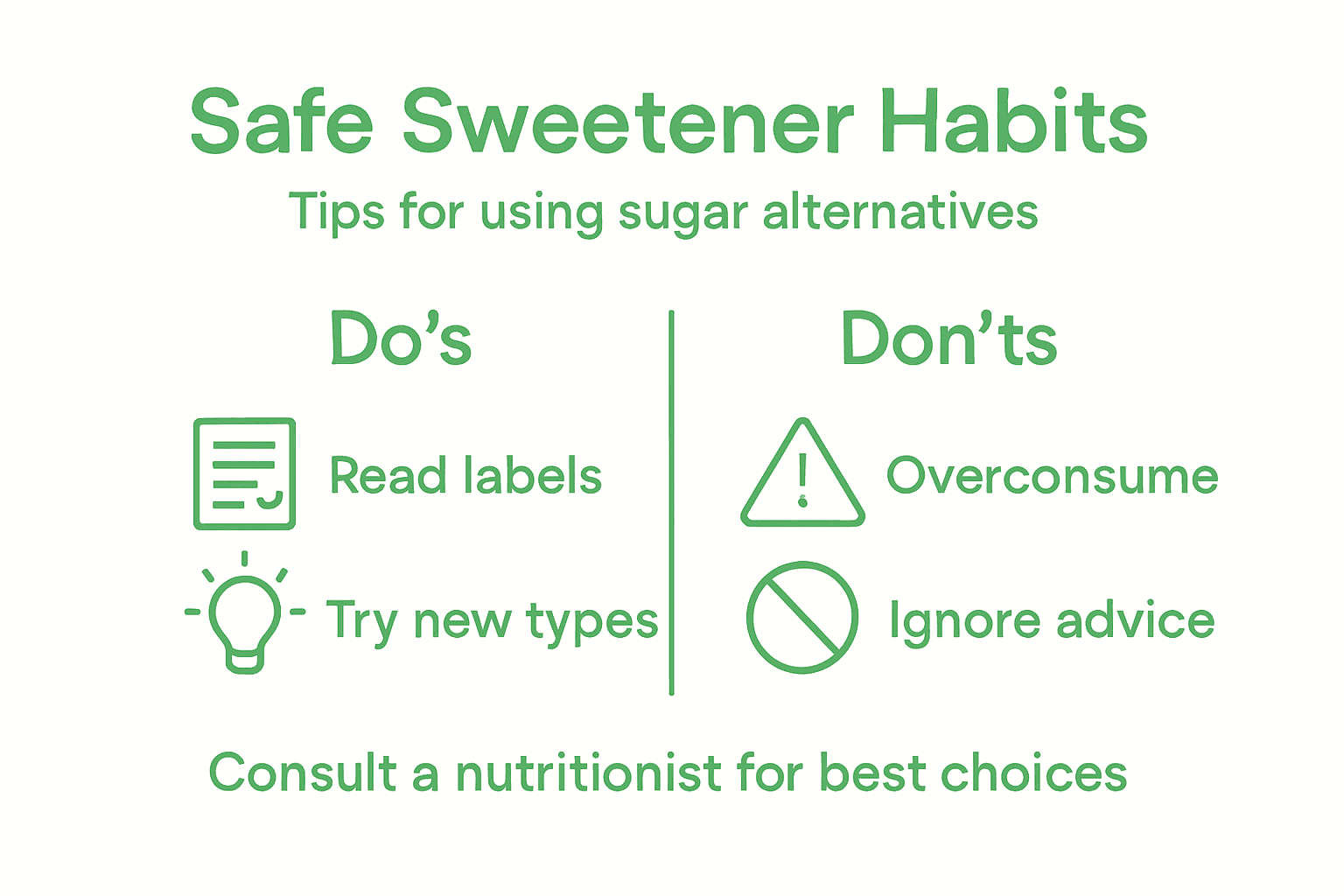
Key safety strategies include:
- Portion Control:
- Track daily sweetener intake
- Stay within recommended Acceptable Daily Intake (ADI) levels
- Label Awareness:
- Read nutrition labels carefully
- Identify hidden sugar sources
- Metabolic Monitoring:
- Observe individual bodily responses
- Adjust consumption accordingly
Most individuals underestimate the complexity of sugar alternative consumption. Dietary guidelines recommend limiting added sugars to less than 10% of total daily calories, which requires careful tracking and mindful selection of sweetening agents.
Moderation and awareness are your most powerful tools in managing sugar alternative intake.
Common pitfalls consumers encounter include:
- Overconsumption of zero-calorie sweeteners
- Assuming natural equals harmless
- Ignoring cumulative sweetener intake
- Failing to recognize hidden sugar sources
- Neglecting individual metabolic differences
Pro tip: Maintain a weekly sweetener diary to track your intake and identify potential negative physiological reactions.
Embrace Smarter Sweetness Choices with Personalized Nutrition Support
Navigating the complexities of natural sugar alternatives can be overwhelming. The article highlights critical challenges like understanding caloric impact, glycemic responses, and the myths surrounding “natural” sweeteners. If you want to manage your sugar intake effectively while enjoying sweetness without compromising your health goals, relying on personalized guidance is essential. Addressing your unique metabolic responses and tracking total sugar consumption are key steps to achieving balanced wellness.
Dietium.com offers a powerful solution with the Recipians app designed to deliver custom meal plans and recipe suggestions that incorporate healthier sugar alternatives in moderation. Our AI-powered tools like calorie calculators and body metrics tracking help you monitor how different sweeteners affect your body. This means you can make informed decisions backed by data rather than myths. Start transforming your approach to sweetness today by exploring expert resources and real-time monitoring at Dietium.com. Take control now and experience nutrition personalized for your lifestyle.
Frequently Asked Questions
What are natural sugar alternatives?
Natural sugar alternatives are sweeteners derived from natural sources like plants, including honey, maple syrup, and coconut sugar. They are often less refined than traditional sugar and may contain trace nutrients.
How do natural sugar alternatives affect blood sugar levels?
Natural sugar alternatives can impact blood sugar levels similarly to traditional sugars. Despite being perceived as healthier, they still contain sugars that can raise glucose levels in the body.
Are natural sugar alternatives healthier than refined sugar?
Natural sugar alternatives are not necessarily healthier than refined sugar. While they may offer trace nutrients, they still contribute calories and can affect metabolism similarly to traditional sugars. Moderation is essential.
What are some common myths about natural sugar alternatives?
Common myths include the beliefs that natural sugar alternatives are calorie-free, do not affect blood sugar, are nutritionally superior to refined sugars, and can be consumed without limits. It’s important to be aware of these misconceptions when choosing sweeteners.


