 Skip to content

Most American adults consume more than twice the recommended daily limit of added sugar, driving a global surge in health challenges like weight gain and fatigue. For people in urban environments, hidden sugars can undermine even the best eating habits. If you are seeking practical data-driven ways to cut back, this guide reveals how smart tracking tools and meal planning can transform your approach to sugar intake.
Table of Contents
- Step 1: Assess Current Sugar Intake Using Smart Tools
- Step 2: Identify Hidden Sugars In Everyday Foods
- Step 3: Replace High-Sugar Items With Healthier Options
- Step 4: Customize Meal Plans For Lower Sugar Consumption
- Step 5: Monitor Progress And Refine Your Strategy
Quick Summary
| Key Insight | Explanation |
|---|---|
| 1. Track your sugar intake accurately | Use digital tools to log meals and analyze daily sugar consumption. This leads to informed dietary choices. |
| 2. Identify hidden sugars in foods | Read nutrition labels carefully to spot sugars in processed items. Recognize alternative names for sugar to avoid excess intake. |
| 3. Swap high-sugar foods for healthier options | Replace sugary snacks and drinks with healthier alternatives like fruits and unsweetened beverages to lower sugar intake. |
| 4. Customize meal plans to reduce sugar | Tailor dietary strategies to your health goals. Focus on whole foods and nutrient density to stabilize blood sugar. |
| 5. Regularly monitor and adjust your strategy | Track your progress systematically and adapt your approach based on your individual responses to dietary changes. |
Step 1: Assess current sugar intake using smart tools
Understanding how much sugar you consume daily is crucial for making informed dietary choices. Modern technology offers precise methods for quantifying sugar intake that go beyond traditional guesswork, enabling individuals to track their nutritional patterns with unprecedented accuracy.
To effectively assess your sugar consumption, start by utilizing digital tools designed specifically for nutritional tracking. These smart calculators and apps can help you log food intake, analyze ingredient labels, and provide real-time insights into your daily sugar consumption. The Food Frequency Questionnaires and digital tracking methods offer comprehensive approaches to monitoring your sugar intake across different food categories.
Begin by selecting a reputable sugar intake calculator that allows you to input your daily meals and snacks. These tools typically break down sugar content by type standard meals, hidden sugars in processed foods, and beverages. Pay special attention to added sugars versus natural sugars in fruits and whole foods.
Pro tip: Keep a detailed food diary for at least one week before using digital tracking tools to ensure the most accurate baseline assessment of your current sugar consumption.
Compare key smart tools for tracking sugar consumption:
| Tool Type | Main Benefit | Typical Feature |
|---|---|---|
| Nutrition Tracker Apps | Real-time food analysis | Barcode scanning |
| Food Diaries | Baseline habit awareness | Manual entry |
| Glycemic Index Calculators | Blood sugar impact insight | Food impact ratings |
| Meal Planning Software | Custom diet adjustments | Recipe suggestions |
Step 2: Identify hidden sugars in everyday foods
Learning to spot hidden sugars is crucial for managing your overall dietary health. Many processed foods contain unexpected sugar sources that can quickly escalate your daily sugar intake without you realizing it. From seemingly healthy breads to savory condiments, sugars are strategically embedded in numerous food products.
To effectively identify hidden sugars, start by carefully reading nutrition labels and ingredient lists. Look for alternative names like corn syrup, dextrose, maltose, and sucrose these are all sugar variations that manufacturers use to mask total sugar content. Pay special attention to processed foods across different categories including breads, soups, and savory items, which often contain surprising amounts of added sugars.
Utilize the Glycemic Index calculator to understand how different foods impact your blood sugar levels. This tool can help you distinguish between naturally occurring sugars and added sugars, enabling more informed food choices that support your wellness goals.
Here’s a quick reference of sugar types found in common foods:
| Sugar Type | Typical Sources | Nutritional Impact |
|---|---|---|
| Added Sugars | Sodas, baked goods | Quick blood sugar spikes |
| Natural Sugars | Fruits, dairy products | Gradual energy release |
| Hidden Sugars | Sauces, breads, condiments | Unnoticed calorie intake |
| Artificial Sweeteners | Diet sodas, sugar-free snacks | Minimal calories, mixed evidence |
Pro tip: Scan ingredient lists from top to bottom, as ingredients are listed in descending order by weight, helping you quickly identify if sugar appears near the top of the list.
Step 3: Replace high-sugar items with healthier options
Public health strategies increasingly emphasize the importance of replacing high-sugar items with nutritious alternatives that support long-term wellness. Understanding how to make strategic food swaps can dramatically reduce your daily sugar intake while maintaining satisfying eating habits.

Start by identifying common high-sugar items in your diet and finding smart replacements. Swap sugary sodas with unsweetened sparkling water or herbal tea, replace candy with fresh fruits, and substitute processed snacks with nuts or vegetable sticks. The goal is creating comprehensive consumer behavior changes that prioritize naturally low-sugar whole foods which nourish your body more effectively.
Consider exploring healthy food swap strategies that make nutritional transitions easier. Focus on gradual replacements that dont feel like deprivation but instead introduce delicious, nutrient-dense alternatives that keep you feeling satisfied and energized.
Pro tip: Keep a variety of healthy snacks readily available to prevent falling back on sugary convenience foods during moments of hunger.
Step 4: Customize meal plans for lower sugar consumption
Developing personalized dietary strategies tailored to individual health goals is crucial for effectively reducing sugar intake. Your meal plan should reflect your unique nutritional needs, lifestyle, and preferences while systematically minimizing added sugars.
Begin by conducting a comprehensive assessment of your current eating patterns. Adaptive meal planning approaches that consider baseline sugar consumption can lead to more sustainable dietary changes, especially when customized to your individual responsiveness. Focus on creating personalized meal plans that align with your specific health objectives, incorporating whole foods, lean proteins, and complex carbohydrates that naturally stabilize blood sugar levels.
Design your weekly meal strategy by gradually replacing high sugar items with nutrient dense alternatives. Prioritize whole grains, vegetables, lean proteins, and fruits with lower glycemic indexes. Experiment with meal preparation techniques that enhance flavor without relying on added sugars.
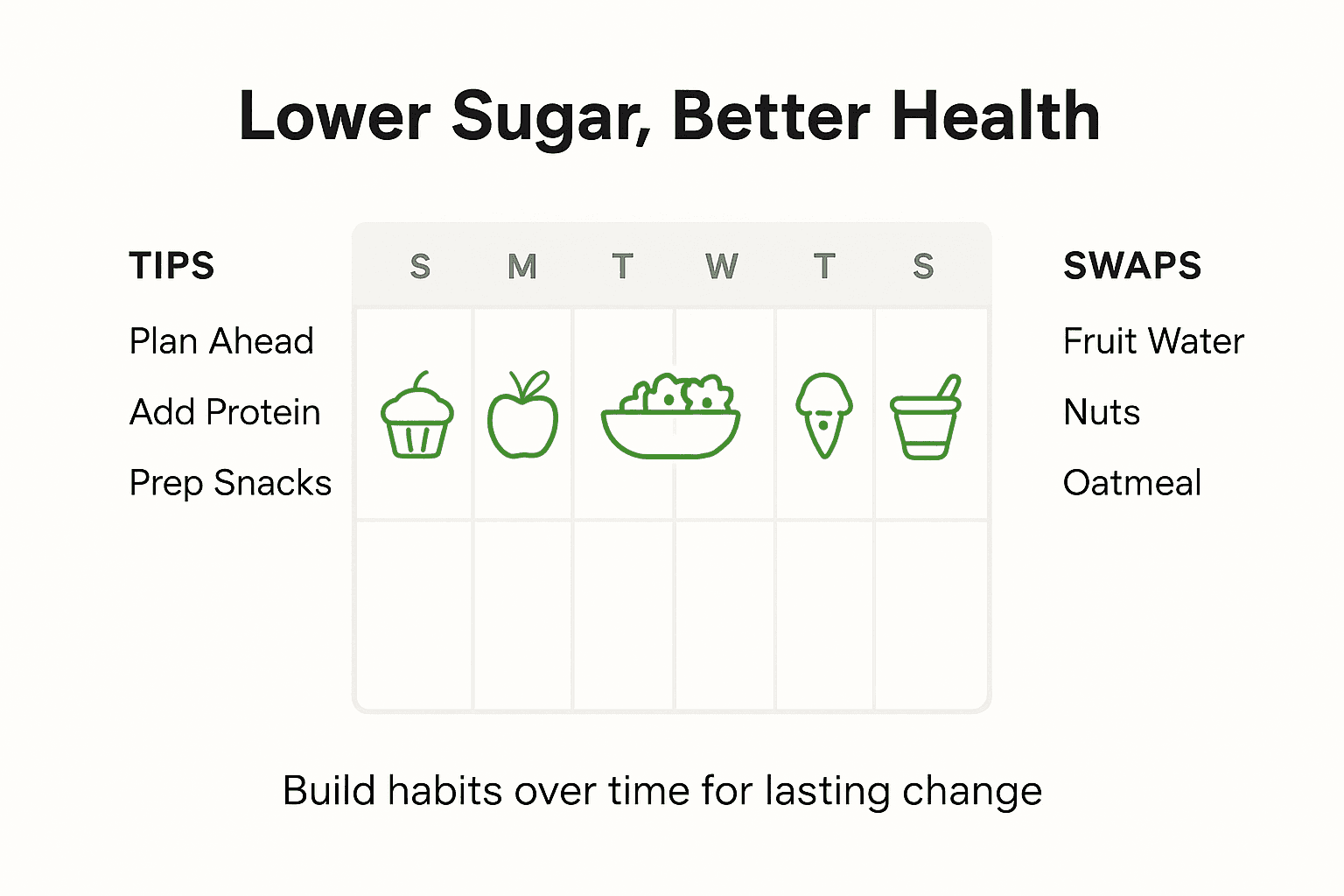
Pro tip: Prepare weekly meal templates in advance and stock your kitchen with low sugar ingredients to make healthy eating feel effortless and sustainable.
Step 5: Monitor progress and refine your strategy
Tracking your sugar reduction journey requires systematic monitoring and adaptive approaches that help you understand your individual progress and make necessary adjustments.
Establish clear metrics for tracking your sugar intake by utilizing tools like Food Frequency Questionnaires and digital nutrition tracking apps. Ongoing evaluations enable dynamic strategy refinement based on your personal health responses, ensuring that your approach remains effective and tailored to your unique metabolic profile. Regular check ins will help you identify patterns, recognize challenges, and celebrate incremental victories in your wellness journey.
Document your weekly sugar intake, energy levels, and overall well being. Pay attention to how your body responds to dietary changes and be willing to modify your approach. Some strategies might work brilliantly for a few weeks and then require subtle adjustments to maintain momentum.
Pro tip: Schedule monthly self assessments to review your progress and recalibrate your sugar reduction strategy, treating it as an evolving personal wellness experiment.
Take Control of Your Sugar Intake with Personalized Support
Reducing sugar naturally for lasting wellness can feel overwhelming when trying to assess hidden sugars and create sustainable meal plans. This article highlights key challenges such as accurately tracking sugar consumption, identifying hidden sugar sources, and making effective food swaps. If you are aiming to break free from confusing labels and frustrating guesswork, you need tools that adapt to your unique lifestyle and health goals.
At Dietium.com, our innovative Recipians app offers personalized meal plans and recipe suggestions designed to lower sugar intake without sacrificing flavor or convenience. Using AI-powered calculators for nutrition tracking, you can effortlessly monitor your sugar levels, customize meals based on your preferred foods, and stay motivated with a clear roadmap tailored just for you. Let us help you transform these insights into action with easy-to-follow, data-driven strategies that keep you energized and on track.
Start your journey to lasting wellness today by exploring how personalized nutrition can simplify your sugar reduction goals. Visit Recipians now and discover smarter ways to eat well while managing sugar naturally.
Frequently Asked Questions
How can I assess my current sugar intake effectively?
To assess your current sugar intake, start by using a reliable nutrition tracking app or sugar intake calculator. Log your daily meals and analyze ingredient labels to understand where hidden sugars may be present.
What are some common hidden sugars in processed foods?
Common hidden sugars include ingredients such as corn syrup, dextrose, and maltose. Always read nutrition labels carefully, focusing on items like breads, sauces, and processed snacks that may contain unexpected sugars.
What are some practical food swaps to reduce sugar consumption?
You can swap sugary drinks for unsweetened tea or sparkling water and replace candy with fresh fruits or nuts. Implementing these changes can help you lower your sugar intake significantly over time.
How should I create a meal plan to lower my sugar intake?
To create a lower sugar meal plan, focus on incorporating whole foods, lean proteins, and complex carbohydrates. Gradually introduce these foods into your diet over the next few weeks to ease the transition.
How can I monitor my progress in reducing sugar intake?
Regularly track your sugar consumption using food diaries or nutrition tracking apps to monitor your progress. Reassess your plan every month to adjust your strategies and celebrate milestones as you improve your eating habits.
What is a realistic timeline for seeing results after reducing sugar?
You can expect to begin noticing changes in your energy levels and overall health within 30 to 60 days of reducing sugar. Consistency is key, so sticking to your new habits will yield the best results.


