 Skip to content

Questions still swirl about vegan diets and protein, but the truth is more empowering than the myths. For health-conscious vegans, understanding complete protein means unlocking flexible, science-backed nutrition without obsessing over each meal. Recent findings confirm plant protein combinations throughout the day can provide all nine essential amino acids. This guide helps you cut through outdated beliefs so you can enjoy diverse, satisfying meals and make smarter choices with reliable tech tools.
Table of Contents
- Defining Complete Protein And Common Myths
- Plant-Based Proteins And Amino Acids
- Combining Vegan Foods For Complete Protein
- Technology Tools For Tracking Protein Intake
- Risks, Deficiencies, And Practical Mistakes
Key Takeaways
| Point | Details |
|---|---|
| Understanding Complete Proteins | A complete protein contains all nine essential amino acids; both animal and strategic plant combinations can meet this requirement. |
| Dietary Variety is Crucial | Consuming a diverse range of plant proteins throughout the day ensures comprehensive amino acid intake without needing to combine proteins in a single meal. |
| Technology in Nutrition Tracking | Advanced tracking apps facilitate personalized monitoring of protein intake, making it easier for vegans to achieve their nutritional goals. |
| Addressing Nutritional Risks | Vegans should be aware of potential deficiencies and consider strategic supplementation and dietary diversity to mitigate these risks. |
Defining Complete Protein and Common Myths
Understanding complete proteins is crucial for vegans seeking optimal nutrition. While many people believe plant-based diets cannot provide adequate protein, science reveals a more nuanced reality. Protein composition myths have long misled individuals about dietary requirements.
A complete protein contains all nine essential amino acids in proportions necessary for human health. Contrary to popular belief, plant sources can absolutely meet these requirements. The key is understanding how amino acids work and strategically combining different plant proteins throughout your daily diet.
- Essential amino acids cannot be produced by the human body
- Animal proteins traditionally contained all nine amino acids
- Plant proteins require strategic combination for full nutritional profile
- The body efficiently recycles amino acids across different meals
Common myths surrounding protein intake often stem from outdated nutritional understanding. Plant protein misconceptions frequently suggest that vegans struggle to obtain complete proteins, which scientific research definitively challenges.
The human body is remarkably adaptable. It doesn’t require consuming all amino acids simultaneously in a single meal. Instead, consuming a varied diet with multiple plant protein sources throughout the day ensures comprehensive amino acid intake.
Plant-based diets can absolutely provide complete protein profiles when approached thoughtfully and strategically.
Protein quality depends not on the source being exclusively animal or plant-based, but on the overall amino acid composition. Beans, lentils, quinoa, and various nuts offer robust protein profiles that, when combined, create nutritionally complete meals.
Pro tip: Track your protein sources across multiple meals rather than obsessing about combining proteins in a single sitting.
Plant-Based Proteins and Amino Acids
Plant proteins represent a diverse and sophisticated nutritional landscape that goes far beyond traditional dietary stereotypes. Strategic protein combinations can effectively meet human nutritional requirements through intelligent food selection and understanding amino acid profiles.
Different plant sources offer unique amino acid compositions, making strategic combinations crucial for comprehensive nutrition. Essential amino acid sources include:
- Legumes (beans, lentils)
- Cereals and pseudocereals (quinoa, amaranth)
- Nuts and seeds
- Oilseeds
- Algae and emerging protein sources like duckweed
Modern food technology has dramatically improved plant protein digestibility and nutritional value. Advanced protein mixture modeling demonstrates that carefully designed plant protein combinations can match or even exceed animal protein profiles in essential amino acid content.
The human body’s remarkable adaptability allows efficient amino acid utilization across varied protein sources. Unlike outdated nutritional beliefs, vegans can absolutely achieve complete protein intake through diverse and thoughtful dietary planning. Plant proteins additionally offer significant advantages like increased dietary fiber and beneficial bioactive compounds.
Intelligent plant protein combinations can provide comprehensive nutrition equivalent to animal-based protein sources.
Nutritional science continues to validate plant-based protein strategies, revealing that protein quality depends more on overall amino acid composition than singular protein source type. Quinoa, for instance, stands out as a complete protein containing all nine essential amino acids in balanced proportions.

Here’s a comparison of key plant protein sources and their amino acid completeness:
| Protein Source | Amino Acid Profile | Digestibility | Notable Benefit |
|---|---|---|---|
| Quinoa | Complete (all 9 essential) | High | Balanced nutrition |
| Lentils | Lacks methionine | Moderate | High fiber content |
| Almonds | Lacks lysine | High | Healthy fats and minerals |
| Soybeans | Nearly complete | High | Versatile protein options |
| Rice | Lacks lysine | High | Easy to pair in meals |
Pro tip: Rotate your protein sources weekly to ensure comprehensive amino acid intake and maximize nutritional diversity.
Combining Vegan Foods for Complete Protein
Achieving a balanced complete protein profile requires strategic dietary planning and understanding how different plant foods complement each other. Protein combination strategies reveal that vegans can easily meet their nutritional needs through intelligent food pairings.
Successful protein combination techniques involve mixing foods with complementary amino acid profiles. Some classic and effective combinations include:
- Rice and beans
- Hummus with whole wheat pita
- Quinoa and lentils
- Nut butter on whole grain bread
- Tofu with brown rice
Contrary to outdated nutritional myths, these combinations do not require simultaneous consumption in a single meal. The human body efficiently stores and recycles amino acids throughout the day, allowing flexibility in protein intake timing.
Nutritional science has demonstrated that dietary diversity is more important than rigid meal-by-meal protein matching. A varied diet incorporating multiple plant protein sources ensures comprehensive amino acid intake, supporting optimal health and muscle maintenance for vegans.
Dietary variety, not strict protein combination rules, ensures complete nutritional profiles.
Modern nutritional research emphasizes that protein complementation is a dynamic process. Different plant proteins can be consumed across meals and still provide a complete amino acid profile, giving vegans significant dietary flexibility.
Pro tip: Create a weekly meal plan that rotates protein sources to naturally achieve comprehensive amino acid intake.
Technology Tools for Tracking Protein Intake
Technology has revolutionized how vegans monitor their nutritional intake, particularly protein consumption. Digital nutrition tracking platforms now offer sophisticated tools that transform dietary management into an intelligent, personalized experience.
Modern tracking technologies provide comprehensive features for protein monitoring:
- AI-powered food recognition apps
- Nutritional database integration
- Macro and micronutrient tracking
- Personalized protein intake recommendations
- Real-time dietary analysis
- Customizable meal planning interfaces
These advanced technologies go beyond simple calorie counting. Advanced food frequency questionnaires now enable precise tracking of protein sources, distinguishing between plant and animal proteins with remarkable accuracy.
Artificial intelligence has dramatically transformed nutrition monitoring, enabling users to receive instant feedback about their protein intake. These smart platforms can analyze dietary patterns, suggest complementary protein combinations, and provide actionable insights for maintaining optimal nutritional balance.
Technology bridges the gap between dietary intentions and actual nutritional achievement.
The integration of machine learning algorithms allows for increasingly personalized nutrition recommendations. Vegan users can now receive tailored advice about protein intake that considers individual metabolic needs, activity levels, and specific health goals.
Pro tip: Select nutrition tracking apps that offer detailed plant-based protein breakdowns and personalized recommendations.
Risks, Deficiencies, and Practical Mistakes
Nutritional vulnerabilities in vegan diets demand strategic planning to prevent potential health complications. Understanding these risks is crucial for maintaining optimal nutrition and preventing long-term deficiencies.
Common nutritional risks for vegans include potential shortfalls in:
- Vitamin B12
- Bioavailable iron
- Calcium
- Zinc
- Iodine
- Vitamin D
- Long-chain omega-3 fatty acids
- Selenium
Practical mistakes often emerge from inadequate dietary diversity and insufficient supplementation. Nutrient bioavailability challenges reveal that plant-based proteins have different absorption characteristics compared to animal proteins, requiring more intentional nutritional strategies.
Older adults following vegan diets face heightened challenges in meeting amino acid requirements. Plant proteins typically have lower digestibility and less optimal amino acid profiles, necessitating careful dietary planning and potential targeted supplementation.
Strategic supplementation and dietary diversity are key to mitigating nutritional risks in plant-based diets.
Modern nutritional science recommends comprehensive approaches including food fortification, strategic supplementation, and consuming biofortified crops. Understanding nutrient interactions and potential absorption limitations is crucial for maintaining optimal health on a vegan diet.
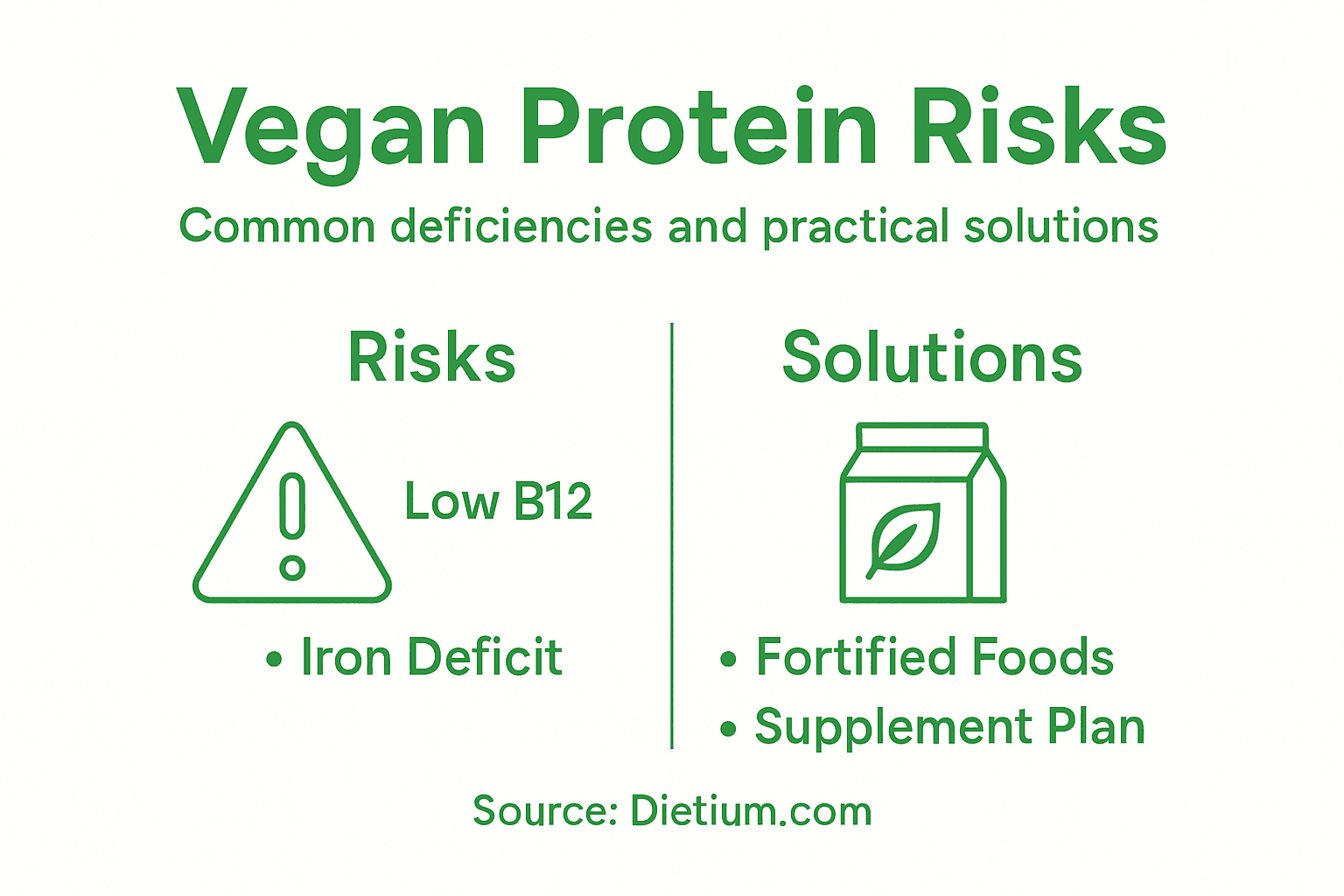
A quick summary of common nutritional risks for vegans and recommended solutions:
| Potential Risk | Impact Area | Recommended Solution |
|---|---|---|
| Vitamin B12 deficiency | Nervous system | Use fortified foods, supplement |
| Iron bioavailability | Energy metabolism | Combine with vitamin C |
| Calcium shortfall | Bone health | Choose fortified beverages |
| Omega-3 deficit | Heart, brain | Take algae-based supplements |
| Zinc and iodine | Immune function | Incorporate sea vegetables |
| Vitamin D deficiency | Bone health | Supplement or sun exposure |
Pro tip: Consult a registered dietitian specializing in plant-based nutrition to create a personalized supplementation strategy.
Mastering Complete Protein Intake on a Vegan Diet
Navigating the myths and complexities of complete protein sources can feel overwhelming for anyone committed to a vegan lifestyle. Whether you worry about combining the right plant proteins or tracking essential amino acid intake across meals, these challenges can create uncertainty and impact your nutritional confidence. You want clear guidance on how to consume a varied, balanced diet without the stress of rigid meal rules or risking deficiencies.
At Dietium.com, we understand these struggles because we blend cutting-edge technology with personalized nutrition science. Our Recipians app helps you design custom meal plans that incorporate diverse vegan protein sources like quinoa, lentils, and nuts, ensuring you hit your amino acid goals effortlessly. Through AI-powered food and health calculators, you get real-time insights into your protein completeness and overall nutrient profile so you can nourish your body smartly. Stop guessing and start thriving with trusted tools and expert-backed strategies crafted for your unique needs.
Ready to demystify vegan protein and build meals that support your health goals? Explore tailored recipes and meal plans that make complete protein intake simple and stress-free. Visit Recipians to take control of your nutrition today and experience the confidence that comes from eating well with intelligent support.
Frequently Asked Questions
What is a complete protein?
A complete protein contains all nine essential amino acids in the right proportions needed for human health. These amino acids cannot be produced by the body and must be obtained through diet.
Can vegans get complete proteins from plant sources?
Yes, vegans can obtain complete proteins from plant sources by strategically combining different protein sources throughout their meals, such as legumes, grains, nuts, and seeds.
Do I need to combine proteins in the same meal to get all essential amino acids?
No, it’s not necessary to combine proteins in a single meal. The body can utilize amino acids from different meals consumed throughout the day to achieve a complete protein profile.
What are some good plant-based combinations for complete protein?
Some effective plant-based combinations include rice and beans, hummus with whole wheat pita, and quinoa with lentils, as they provide complementary amino acid profiles.
Recommended
- 8 Best Protein Sources for Vegans Explained Simply – Dietium
- Nutrient Dense Vegan Foods: Optimizing Health – Dietium
- 7 Essential Superfoods for Vegans and Their Health Benefits – Dietium
- Optimal Protein Intake – Science-Backed Wellness Benefits – Dietium
- Alternative Proteins: Are Plants Enough for Dogs?


