 Skip to content

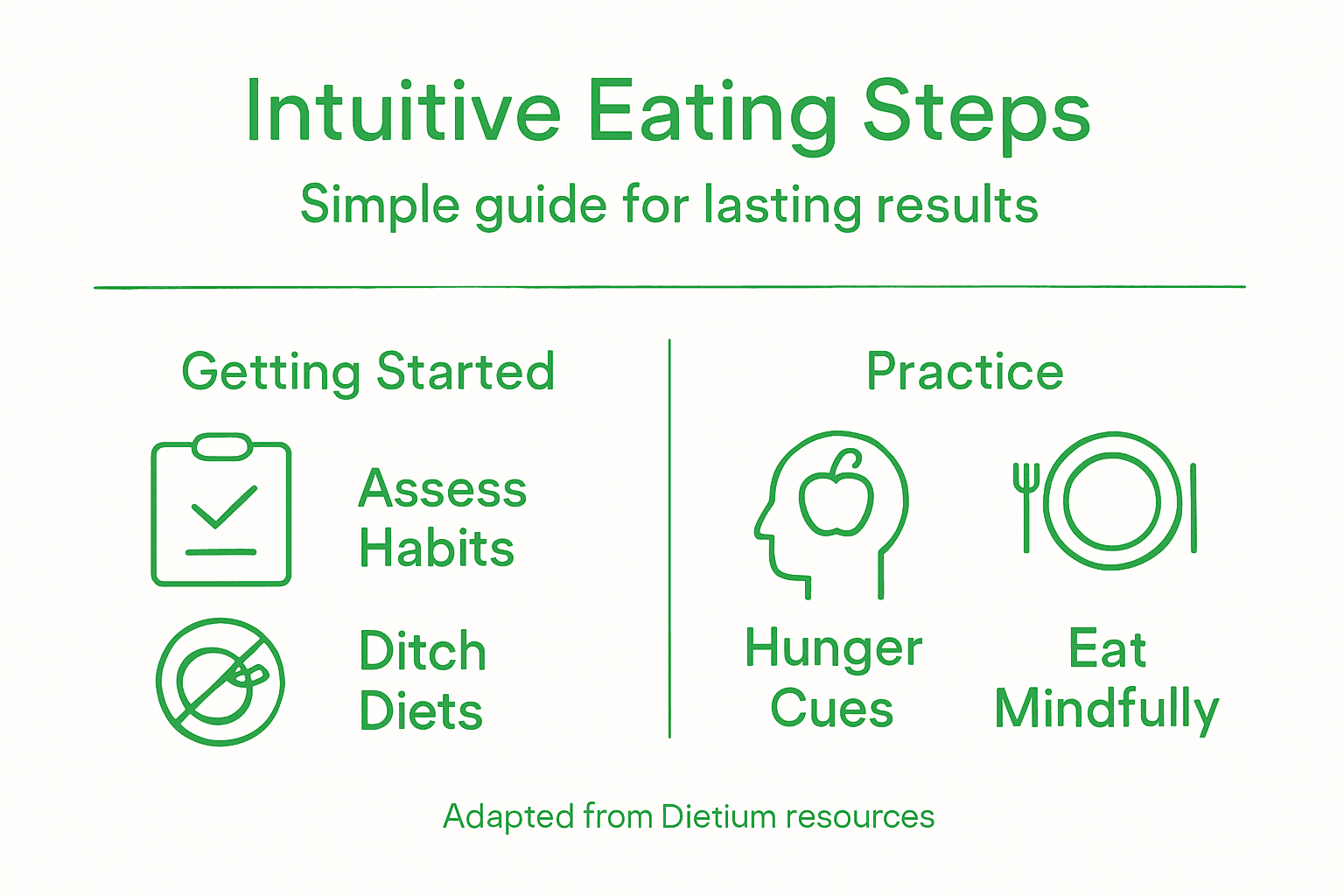
Trying to change your approach to food can feel confusing when every new diet brings a fresh set of rules. For many health-conscious adults, restrictive eating can lead to stress, frustration, or even unhealthy eating patterns. Intuitive eating offers a refreshingly different path by focusing on self-awareness without criticism and tuning into your body’s natural cues. In this guide, you will discover simple steps to objectively assess your current eating patterns and begin building a more balanced, personalized relationship with food.
Table of Contents
- Step 1: Assess Current Eating Patterns Objectively
- Step 2: Identify and Remove Restrictive Diet Behaviors
- Step 3: Tune In to Hunger and Fullness Signals
- Step 4: Choose Nourishing Foods for Satisfaction
- Step 5: Track Progress and Adjust Intuitively
Quick Summary
| Key Insight | Explanation |
|---|---|
| 1. Assess your eating patterns | Track food intake and emotions to identify your relationship with food and establish a foundation for intuitive eating. |
| 2. Eliminate restrictive diets | Recognize and remove harmful eating rules to foster a flexible, balanced approach that honors your body’s hunger cues. |
| 3. Tune into hunger signals | Learn to recognize your body’s hunger and fullness cues for a more mindful and responsive eating pattern. |
| 4. Choose nourishing foods | Select nutrient-dense foods that satisfy both physical and emotional needs, promoting a positive relationship with eating. |
| 5. Track your progress compassionately | Use a reflective journal to monitor progress and adjust your approach, focusing on self-awareness rather than perfection. |
Step 1: Assess current eating patterns objectively
Understanding your current eating behaviors is the first crucial step in developing an intuitive eating approach. By objectively analyzing your existing relationship with food, you can create meaningful and sustainable changes that support your overall health and well-being.
To effectively assess your eating patterns, start by tracking your food intake and emotional responses without judgment. Systematic research on intuitive eating scales suggests using structured methods to gain comprehensive insights into your nutritional habits. Consider these key strategies:
- Keep a detailed food journal for 1-2 weeks
- Note not just what you eat, but how you feel before and after meals
- Record hunger and fullness levels using a numerical scale from 1-10
- Identify emotional triggers that influence your eating behaviors
- Track patterns of mindless versus mindful eating
The goal is to develop self-awareness without criticism. Longitudinal studies indicate that objectively tracking internal hunger cues can help predict and modify psychological and behavioral health outcomes. By understanding your current eating patterns, you create a foundation for more intuitive and balanced nutrition.
Objective assessment is about understanding, not judging your current relationship with food.
Pro tip: Use a digital tracking app or simple notebook to maintain consistent and honest documentation of your eating behaviors and emotional responses.
Step 2: Identify and remove restrictive diet behaviors
Identifying and removing restrictive diet behaviors is crucial for developing a healthier relationship with food. By understanding and dismantling harmful eating patterns, you can create a more intuitive and sustainable approach to nutrition.
Research on emotional eating interventions highlights the importance of recognizing and eliminating diet restrictions that can lead to unhealthy behaviors. Here are key strategies to help you identify and remove restrictive diet behaviors:
- Recognize common restrictive diet patterns
- Labeling foods as “good” or “bad”
- Extreme calorie counting
- Completely eliminating food groups
- Following rigid diet rules
- Track your emotional responses to food and eating
- Identify trigger situations that prompt restrictive behaviors
- Challenge negative thoughts about food and body image
- Practice self-compassion and non-judgmental awareness
Understanding that restrictive dieting can lead to disordered eating and poor mental health is crucial. The goal is to develop a more balanced, flexible approach to nutrition that honors your body’s natural hunger and fullness cues.

Here’s a summary of how intuitive eating strategies differ from typical restrictive dieting:
| Approach | Focus | Long-Term Impact | Emotional Outcome |
|---|---|---|---|
| Intuitive Eating | Honors hunger and fullness cues | Sustainable and adaptive | Reduces guilt, increases self-trust |
| Restrictive Dieting | Follows rigid rules and restrictions | Often short-lived, leads to cycles | Increases anxiety, may foster shame |
Intuitive eating is about listening to your body, not controlling it through restrictive rules.
Pro tip: Create a list of foods you’ve previously restricted and gradually reintroduce them without guilt, focusing on enjoying the experience of eating.
Step 3: Tune in to hunger and fullness signals
Learning to recognize and respond to your body’s natural hunger and fullness signals is a fundamental aspect of intuitive eating. This step will help you develop a more mindful and responsive relationship with your internal nutritional cues.
Mindful eating interventions focus on enhancing bodily awareness and understanding your body’s true nutritional needs. To effectively tune into your hunger and fullness signals, consider these practical strategies:
- Learn the hunger and fullness scale
- 1 = Extremely hungry (feeling weak, irritable)
- 5 = Neutral, comfortable
- 10 = Uncomfortably full, experiencing physical discomfort
- Practice mindful eating techniques
- Eat slowly and without distractions
- Take small bites and chew thoroughly
- Pause midway through meals to assess your hunger level
- Distinguish between physical and emotional hunger
- Recognize subtle body signals
- Slight stomach growling
- Decreased energy levels
- Subtle shift in concentration
Developing sensitivity to these internal cues takes time and practice. The goal is to create a natural, responsive eating pattern that honors your body’s genuine nutritional needs.
Below is a quick reference for reading hunger and fullness signals during meals:
| Scale Level | Hunger/Fullness Signal | Recommended Response |
|---|---|---|
| 2-4 | Mild hunger, growling stomach | Consider starting to eat |
| 5-6 | Satisfied, not hungry nor full | Pause, observe if more food is needed |
| 8-9 | Full, slight discomfort | Stop eating, reflect on fullness |
Your body has an innate wisdom about its nutritional requirements. Learn to listen.
Pro tip: Keep a small journal to track your hunger levels before, during, and after meals to develop a more intuitive understanding of your body’s signals.
Step 4: Choose nourishing foods for satisfaction
Transitioning from restrictive eating to an intuitive approach means selecting foods that genuinely nourish and satisfy your body. This step is about making food choices that support your physical and emotional well-being.
Intuitive eating emphasizes physical satisfaction over restrictive patterns by prioritizing foods that make you feel good. Consider these strategies for choosing nourishing foods:
- Focus on nutrient-dense food groups
- Colorful vegetables and fruits
- Whole grains
- Lean proteins
- Healthy fats
- Experiment with food textures and flavors
- Pay attention to how different foods make you feel after eating
- Balance nutritional needs with personal enjoyment
- Include foods that provide both energy and pleasure
Nourishing foods are not about strict rules but about creating a positive, sustainable relationship with eating. The goal is to choose foods that provide physical satisfaction and support your overall health.
Nourishment is about feeding your body what it needs while enjoying the experience.
Pro tip: Create a personal “favorites” list of foods that make you feel energized and satisfied, and rotate these into your regular meals.
Step 5: Track progress and adjust intuitively
Tracking your intuitive eating journey is about understanding your progress without judgment. This step helps you develop a flexible, compassionate approach to your nutrition and well-being.
Ongoing self-monitoring supports lasting intuitive eating changes by allowing you to reflect on your eating experiences and make informed adjustments. Consider these strategies for tracking and adapting:
- Maintain a reflective eating journal
- Note hunger and fullness levels
- Record emotional states during meals
- Document food enjoyment
- Track energy levels after eating
- Review your journal weekly
- Identify patterns without self-criticism
- Celebrate small victories
- Be willing to adjust your approach
The goal is not perfection but consistent, compassionate self-awareness. Tracking helps you understand your body’s unique signals and develop a more intuitive relationship with food.
Progress in intuitive eating is about learning, not achieving a perfect score.
Pro tip: Use a digital app or simple notebook, but focus on honest reflection rather than strict documentation.
Embrace Intuitive Eating with Personalized Support from Dietium
Starting your intuitive eating journey means tuning in to your body’s hunger and fullness cues and letting go of restrictive dieting habits. This shift can feel challenging as you work to build self-awareness, remove guilt around food, and find satisfaction in nourishing choices. If you are ready to overcome these barriers and create lasting healthy habits Dietium.com offers a powerful solution designed just for you.
Our Recipians app provides customized meal plans and recipe suggestions precisely aligned with your nutritional needs and personal preferences. By using advanced AI tools that track your calorie needs body metrics and fitness progress Dietium helps you stay connected to your bodys signals while ensuring you get the nourishment and pleasure you deserve. Dive deeper into your intuitive eating path with expert guidance and tailored resources available at Dietium. Start today and transform your relationship with food in a way that supports both your body and mind.
Frequently Asked Questions
How can I start intuitive eating naturally?
To start intuitive eating naturally, begin by assessing your current eating patterns without judgment. Track what you eat, how you feel, and your hunger levels for 1-2 weeks to gain insight into your relationship with food.
What steps should I take to identify restrictive diet behaviors?
To identify restrictive diet behaviors, make a list of any rigid rules or labels you apply to food. Challenge these thoughts and gradually reintroduce previously restricted foods to promote a healthier mindset around eating.
How do I tune in to my hunger and fullness signals?
To tune in to your hunger and fullness signals, use a numerical hunger scale from 1-10 to assess your level of hunger before and after meals. Practice mindful eating by slowing down and being present during meals to better recognize your body’s signals.
What types of nourishing foods should I choose?
Choose nutrient-dense foods such as colorful fruits and vegetables, whole grains, lean proteins, and healthy fats. Focus on making intentional food choices that provide both energy and satisfaction without strict rules.
How can I track my progress in intuitive eating?
Track your progress by maintaining a reflective eating journal where you note your hunger levels, emotional states, and food enjoyment. Review your journal weekly to identify patterns and celebrate small victories in your intuitive eating journey.
What should I do if I struggle with intuitive eating?
If you struggle with intuitive eating, practice self-compassion and remember that progress takes time. Consider revisiting the foundational steps, such as objectively assessing your eating patterns, and allow yourself the space to adjust your approach as needed.
Recommended
- Master Intuitive Eating for Beginners: A Step-by-Step Guide – Dietium
- Diet vs Lifestyle Change – Impact on Lasting Health – Dietium
- Healthy Relationship With Food: Complete Guide – Dietium
- Complete Guide to Building Healthy Habits – Dietium
- Improving Gut Health Process for Enhanced Wellbeing
- 7 Effective Types of Therapy for Adults to Improve Well-Being – ReviveHealthTherapy


