 Skip to content

You push your limits at the gym, monitor your health metrics, and strive to optimize every aspect of wellness, but hydration often gets sidelined or misunderstood. Fluid balance drives far more than physical thirst, shaping energy, mental clarity, and every movement. Backed by research showing the human body is made up of about 60 percent water, smart hydration strategies can unlock better performance, sharper cognition, and faster recovery. Here you will discover how tailored solutions and innovative tracking can turn hydration into your next wellness upgrade.
Table of Contents
- What Hydration Means For Your Body
- How Hydration Supports Physical Performance
- Cognitive And Mood Benefits Of Adequate Hydration
- Common Causes And Signs Of Dehydration
- Personalized Hydration: Calculators And Smart Tracking
Key Takeaways
| Point | Details |
|---|---|
| Importance of Hydration | Hydration is crucial for maintaining physiological functions, with water influencing everything from cellular processes to cognitive performance. |
| Impact on Physical Performance | Proper hydration is vital for athletes, affecting cardiovascular efficiency, muscle endurance, and cognitive coordination during physical activity. |
| Cognitive and Mood Effects | Adequate hydration supports brain function, enhancing attention, memory, and emotional regulation, while dehydration can impair cognitive capabilities. |
| Personalized Hydration Approaches | Utilizing technology for monitoring hydration needs allows for tailored recommendations based on individual physiological data, enhancing health management. |
What Hydration Means for Your Body
Hydration represents far more than simply drinking water – it’s the foundational process that enables your body’s complex physiological functions. Water is not just a beverage, but a critical biological mechanism that supports every cellular process in your system.
The human body is predominantly composed of water, with approximately 60% of body weight dedicated to this essential fluid. Critical cellular functions depend on maintaining proper hydration levels, influencing everything from basic metabolic processes to advanced cognitive performance.
Key bodily systems profoundly impacted by hydration include:
Here’s how hydration influences different body systems:
| Body System | Hydration Role | Impact of Insufficient Hydration |
|---|---|---|
| Circulatory | Transports nutrients and oxygen | Reduced nutrient delivery |
| Temperature Regulation | Maintains core temperature | Increased overheating risk |
| Waste Expulsion | Assists kidney filtration | Toxin buildup risk |
| Joints | Lubricates synovial fluid | Stiffness and discomfort |
| Cells & Organs | Cushions vital structures | Weakened cellular function |
- Circulatory system: Water helps transport nutrients and oxygen throughout the body
- Temperature regulation: Enables efficient sweating and heat dissipation
- Waste elimination: Supports kidney function and toxin removal
- Joint lubrication: Maintains synovial fluid for smooth movement
- Cellular protection: Cushions and supports critical organ systems
Dehydration can trigger a cascade of physiological disruptions. Signs like thirst, headaches, dark urine, and fatigue signal your body’s urgent need for fluid replenishment. These symptoms indicate that your internal systems are struggling to maintain optimal performance.
Proper hydration is not just about drinking water, but strategically supporting your body’s complex metabolic requirements.
Pro tip: Monitor your urine color as a quick hydration status indicator – pale yellow suggests good hydration, while dark amber signals an immediate need to increase fluid intake.
How Hydration Supports Physical Performance
Hydration is the secret weapon for athletes and fitness enthusiasts seeking peak physical performance. Athletic performance depends critically on maintaining optimal fluid balance, which directly impacts multiple physiological systems.

When you’re physically active, your body’s hydration needs become dramatically more complex. Fluid balance influences everything from cardiovascular efficiency to muscle function and cognitive performance. Even a minimal dehydration of 2% body weight can significantly impair your physical capabilities and increase potential heat stress risks.
Key performance areas directly impacted by hydration include:
- Cardiovascular function: Maintains blood volume and efficient heart performance
- Muscle endurance: Prevents premature fatigue and supports sustained muscle contraction
- Temperature regulation: Enables effective cooling through sweating
- Cognitive coordination: Maintains mental clarity and reaction times
- Energy metabolism: Supports efficient nutrient transportation and cellular processes
Prolonged physical activities demand strategic hydration approaches. Athletes must focus on fluid intake before, during, and after exercise, with particular attention to electrolyte replacement during intense or extended performances.
Hydration is not just about drinking water – it’s about maintaining a precise internal balance that supports maximum physical potential.
Pro tip: Weigh yourself before and after intense workouts to understand your specific fluid loss rate and develop personalized hydration strategies.
Cognitive and Mood Benefits of Adequate Hydration
Water is a critical element for brain function, with the brain composed of approximately 73% water. Cognitive performance relies deeply on maintaining proper hydration levels, directly impacting mental clarity and emotional well-being.
Dehydration goes far beyond physical discomfort – it can fundamentally alter your mental landscape. Neurological functioning becomes compromised with even mild fluid loss, triggering a cascade of cognitive disruptions that affect concentration, memory recall, and emotional stability.
Key cognitive domains impacted by hydration include:
- Attention span: Maintains focus and reduces mental fatigue
- Memory processing: Supports short-term and long-term memory functions
- Executive decision-making: Preserves rational thinking and problem-solving abilities
- Emotional regulation: Prevents mood swings and reduces irritability
- Stress response: Helps manage physiological stress reactions
Beyond immediate mental performance, consistent hydration plays a crucial role in long-term brain health. Regular fluid intake supports neurotransmitter synthesis, neural communication, and potentially helps prevent age-related cognitive decline.
Proper hydration isn’t just about quenching thirst – it’s about maintaining your brain’s optimal operating environment.
Pro tip: Keep a water bottle within reach and set hourly reminders to take small, consistent sips throughout the day to maintain steady cognitive function.
Common Causes and Signs of Dehydration
Dehydration is a complex physiological state that emerges when your body loses more fluids than it replenishes. Dehydration symptoms vary significantly depending on age, health status, and environmental conditions, making awareness crucial for maintaining optimal health.
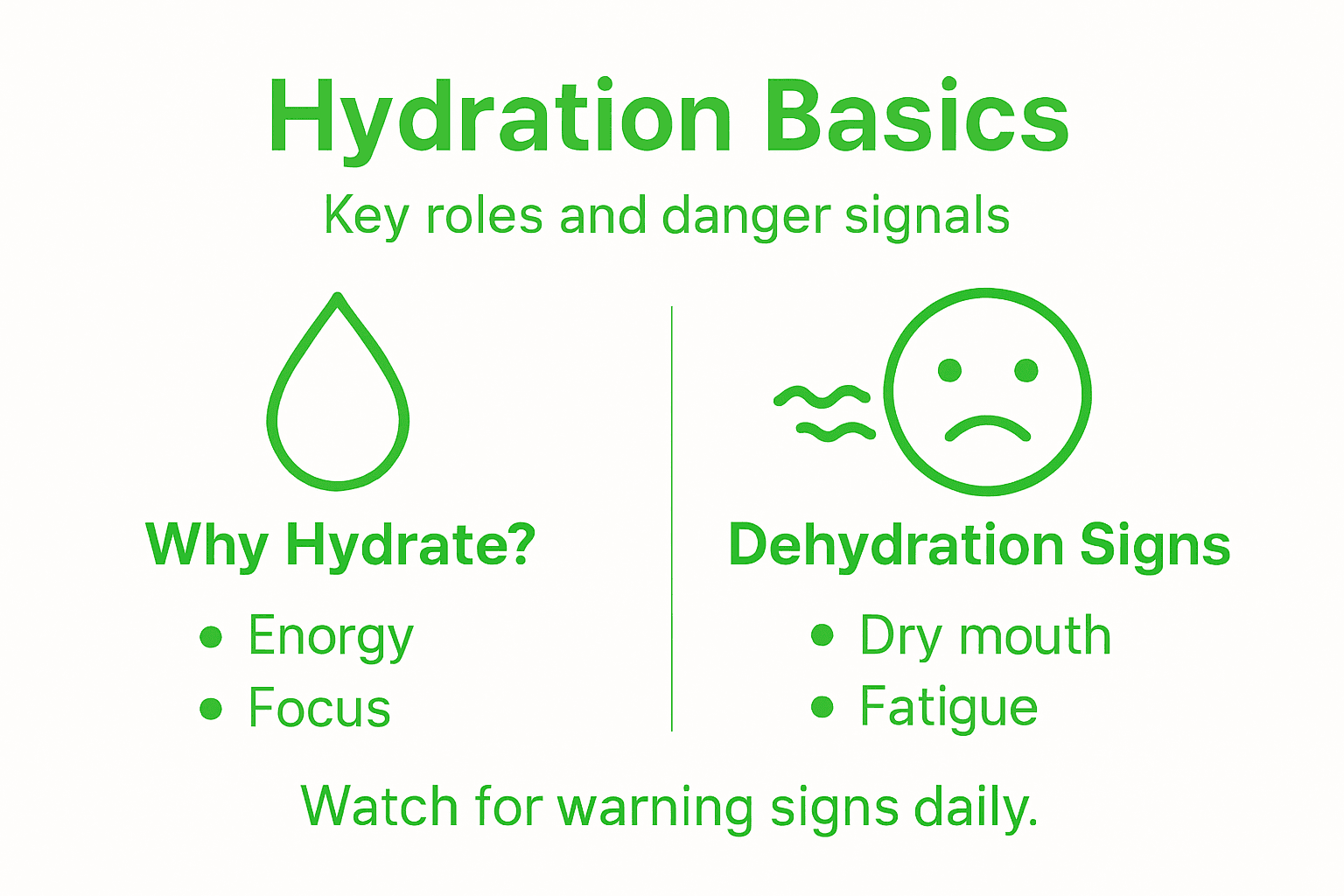
Multiple factors can trigger fluid loss, creating a cascade of potential health risks. Fluid depletion occurs through various mechanisms, with some causes more prevalent than others. Understanding these triggers can help you proactively manage your hydration status and prevent potential complications.
Common causes of dehydration include:
The table below summarizes common causes and severity levels of dehydration:
| Cause Category | Typical Trigger | Potential Consequence |
|---|---|---|
| Environmental | Heat or high perspiration | Faster onset dehydration |
| Illness | Vomiting, diarrhea, fever | Rapid fluid loss |
| Inadequate Intake | Limited fluid consumption | Gradual dehydration |
| Medication | Diuretics or BP drugs | Increased urination |
| Chronic Condition | Diabetes, kidney disease | Ongoing fluid imbalance |
- Excessive sweating: During intense physical activity or in hot environments
- Illness-related fluid loss: Diarrhea, vomiting, and high fever
- Insufficient water intake: Not drinking enough fluids throughout the day
- Medications: Certain diuretics and blood pressure treatments
- Chronic medical conditions: Diabetes and kidney disorders
Recognizing dehydration’s early warning signs is critical for preventing more severe health complications. Symptoms range from mild indicators to serious physiological disruptions that demand immediate attention.
Warning signs of dehydration across different severity levels:
- Mild dehydration:
- Increased thirst
- Dry mouth
- Reduced urination
- Darker urine color
- Moderate dehydration:
- Dizziness
- Rapid heartbeat
- Confusion
- Extreme fatigue
- Severe dehydration:
- Significant cognitive impairment
- Extremely low blood pressure
- Rapid breathing
- Potential loss of consciousness
Dehydration is not just a temporary inconvenience, but a potential health emergency that requires swift and informed action.
Pro tip: Monitor your urine color throughout the day – pale yellow indicates good hydration, while dark amber signals an immediate need to increase fluid intake.
Personalized Hydration: Calculators and Smart Tracking
The future of hydration management lies in personalized, technology-driven solutions that transform how we understand our body’s fluid needs. Wearable hydration-monitoring technologies are revolutionizing our approach to tracking and maintaining optimal hydration levels with unprecedented precision.
Modern hydration tracking goes beyond traditional water intake recommendations. Smart monitoring systems leverage advanced sensors and multimodal data collection to provide real-time insights into your body’s unique physiological requirements. These innovative technologies capture nuanced details about your hydration status that generic guidelines cannot address.
Key features of advanced hydration tracking technologies include:
- Continuous physiological monitoring: Real-time tracking of hydration markers
- Multimodal sensor integration: Electrical and optical sensor technologies
- Personalized recommendations: Custom hydration guidance based on individual metrics
- Activity-based fluid insights: Adaptive tracking during exercise and daily activities
- Mobile app integration: Convenient tracking and visualization of hydration data
The emergence of sophisticated hydration calculators and tracking tools enables individuals to move beyond one-size-fits-all approaches. By collecting data on factors like age, weight, activity level, climate, and personal health conditions, these technologies generate highly personalized hydration recommendations.
Advanced hydration tracking technologies typically offer:
- Baseline hydration assessment
- Real-time fluid loss monitoring
- Personalized intake recommendations
- Performance and recovery insights
- Historical trend analysis
Personalized hydration tracking represents a paradigm shift from reactive to proactive health management.
Pro tip: Choose a hydration tracking tool that offers comprehensive metrics and integrates seamlessly with your existing fitness and health monitoring ecosystem.
Maximize Your Hydration and Wellness with Personalized Nutrition
Struggling to maintain optimal hydration despite knowing its crucial role in physical performance, cognitive clarity, and overall body function? The article highlights how dehydration disrupts vital systems and impairs mental and physical stamina. If you find it challenging to track your fluid needs or balance hydration with nutrition and activity, you are not alone. Achieving and sustaining peak hydration requires more than just drinking water—it demands personalized strategies tailored to your metabolism, lifestyle, and health goals.
At Dietium.com, we bridge this gap by offering the innovative Recipians app, which designs custom meal plans and fitness routines that align with your hydration status alongside your nutrition and physical activity. Incorporate science-based recommendations and real-time body metrics monitoring to help you adjust fluid intake proactively. With AI-powered health and fitness calculators, you can track your body metrics such as BMI and calorie needs, ensuring your hydration supports your unique physiology every step of the way. Do not wait for fatigue or cognitive fog to slow you down. Take control now by visiting Dietium Recipians and start a personalized hydration and wellness routine designed for your best self. Your body and mind deserve nothing less.
Frequently Asked Questions
What role does hydration play in the circulatory system?
Hydration is crucial for the circulatory system as it helps transport nutrients and oxygen throughout the body, ensuring that all organs function optimally.
How can dehydration affect physical performance?
Even mild dehydration of just 2% of body weight can impair physical performance by affecting cardiovascular function, muscle endurance, and cognitive coordination, thereby increasing fatigue and the risk of heat stress.
What are common signs of dehydration to watch for?
Common signs of dehydration include increased thirst, dry mouth, dark urine, dizziness, confusion, and fatigue, with severe cases potentially leading to significant cognitive impairment and low blood pressure.
How can I track my hydration levels effectively?
You can track your hydration levels by monitoring your urine color, using wearable hydration-monitoring technologies, or employing hydration calculators that consider your individual metrics like age, weight, and activity level.
Recommended
- How Much Water to Drink a Day Calculator (2025 Guide) – Dietium
- Daily Water Intake Calculator- How Many Water Bottles a Day?
- How Much Water to Drink: Daily Guide for Every Lifestyle 2025 – Dietium
- Recovery Nutrition for Athletes: Enhancing Performance and Healing – Dietium
- Hair Nutrition Food: Boosting Growth and Vitality | MyHair


