 Skip to content

Choosing foods for effective weight management and balanced nutrition often leaves even the most motivated individuals conflicted. The concept of calorie density offers clarity, revealing that not all calories are equal and food quality impacts metabolic health beyond basic counting. For anyone looking to improve their meal planning strategy, understanding calorie density unlocks smarter, more sustainable choices that promote lasting wellness over restrictive dieting.
Table of Contents
- Calorie Density Defined And Key Misconceptions
- How Calorie Density Influences Food Choices
- Comparing Low And High Calorie Density Foods
- Role Of Calorie Density In Weight Management
- Common Pitfalls And Smarter Meal Planning
Key Takeaways
| Point | Details |
|---|---|
| Calorie Density Matters | Understanding calorie density helps in making informed dietary choices that prioritize food quality over mere calorie counting. |
| Misconceptions About Calories | Not all calories have the same impact on health; nutrient composition is crucial for effective weight management. |
| Smart Meal Planning | Develop effective meal planning strategies focused on low-calorie density foods to enhance satiety and nutritional intake. |
| Holistic Approach to Weight Management | Effective weight management combines nutrition quality, physical activity, and behavioral strategies for long-term success. |
Calorie Density Defined and Key Misconceptions
Understanding calorie density goes far beyond simple mathematical calculations of energy intake. Calorie density represents the number of calories per gram or volume of food, revealing critical insights into nutritional quality that many people misunderstand.
Contrary to popular belief, not all calories are created equal. Nutrient composition dramatically impacts how calories are processed by our bodies, challenging the simplistic notion that weight management is just about consuming fewer calories. The complex interplay between food type, metabolism, and gut microbiota means that caloric intake is more nuanced than basic arithmetic.
Key misconceptions about calorie density include:
- Calorie counting equals healthy eating: Simply tracking total calorie intake ignores the nutritional value of foods
- All calories have identical metabolic effects: Different foods trigger different hormonal and metabolic responses
- Low-calorie foods are always healthiest: Some nutrient-dense foods have higher calorie counts but provide essential nutrition
The fundamental truth is that food quality matters more than quantity. A diet focused on nutrient-dense foods with balanced caloric content supports better overall health and sustainable weight management.
Pro tip: Focus on consuming whole, minimally processed foods that provide high nutritional value relative to their calorie content.
How Calorie Density Influences Food Choices
Food choices are far more complex than simply selecting items based on taste or hunger. Calorie density plays a crucial role in determining what and how much we eat, influencing our nutritional intake and overall health in ways most people don’t realize.

Human eating behaviors are remarkably adaptive to food energy density, revealing an intricate relationship between the calories in our food and our consumption patterns. Research demonstrates that people unconsciously adjust their portion sizes based on the caloric concentration of different foods, a sophisticated mechanism that helps regulate overall energy intake.
Key factors influencing food choices through calorie density include:
- Satiety signals: Higher calorie-dense foods can trigger faster fullness sensations
- Portion control: People naturally consume smaller portions of energy-dense foods
- Metabolic responses: Different calorie densities provoke unique hormonal reactions
- Psychological perceptions: Visual cues about food volume impact eating decisions
Humans possess an innate nutritional intelligence that helps moderate calorie intake based on food energy concentration.
Interestingly, portion size adjustments occur subconsciously depending on a food’s calorie density. This means our bodies have sophisticated mechanisms to prevent overconsumption, challenging previous assumptions about mindless eating.
Pro tip: Choose foods with lower calorie density and larger portion volumes to feel satisfied while maintaining a balanced diet.
Comparing Low and High Calorie Density Foods
Calorie density is not just a nutritional concept but a powerful tool for making informed dietary choices. Understanding the fundamental differences between low and high calorie density foods can dramatically transform how we approach nutrition and weight management.
Nutrient-dense foods provide essential health benefits with fewer calories, challenging the traditional notion that all calories are created equal. Low calorie density foods typically contain high water and fiber content, allowing individuals to consume larger volumes while maintaining a lower overall calorie intake.
Key characteristics of low and high calorie density foods include:
- Low Calorie Density Foods:
- High water content
- Rich in fiber
- Typically fruits, vegetables, and whole grains
- Provide sustained energy
- Support weight management
- High Calorie Density Foods:
- Processed ingredients
- High in added fats and sugars
- Compact energy sources
- Often nutrient-poor
- Can lead to rapid weight gain
The quality of calories matters more than the quantity consumed.
Processed foods with high calorie density pose significant health risks, including increased likelihood of obesity, diabetes, and cardiovascular diseases. By contrast, low calorie density foods offer a strategic approach to maintaining a healthy weight while ensuring optimal nutrient intake.
Here’s how low and high calorie density foods impact nutrition and health:
| Aspect | Low Calorie Density Foods | High Calorie Density Foods |
|---|---|---|
| Volume per Calorie | Large portions for fewer calories | Small portions, higher calories |
| Nutrient Content | Rich in vitamins and minerals | Often lower in nutrients |
| Satiety Effect | Promotes lasting fullness | May cause frequent hunger |
| Health Risks | Supports healthy weight | Linked to chronic diseases |
Pro tip: Prioritize whole, unprocessed foods and learn to visually assess portion sizes to manage calorie intake effectively.
Role of Calorie Density in Weight Management
Weight management is far more complex than simple calorie counting. Calorie density emerges as a critical strategy that goes beyond traditional approaches, offering a nuanced perspective on how we consume and process food.
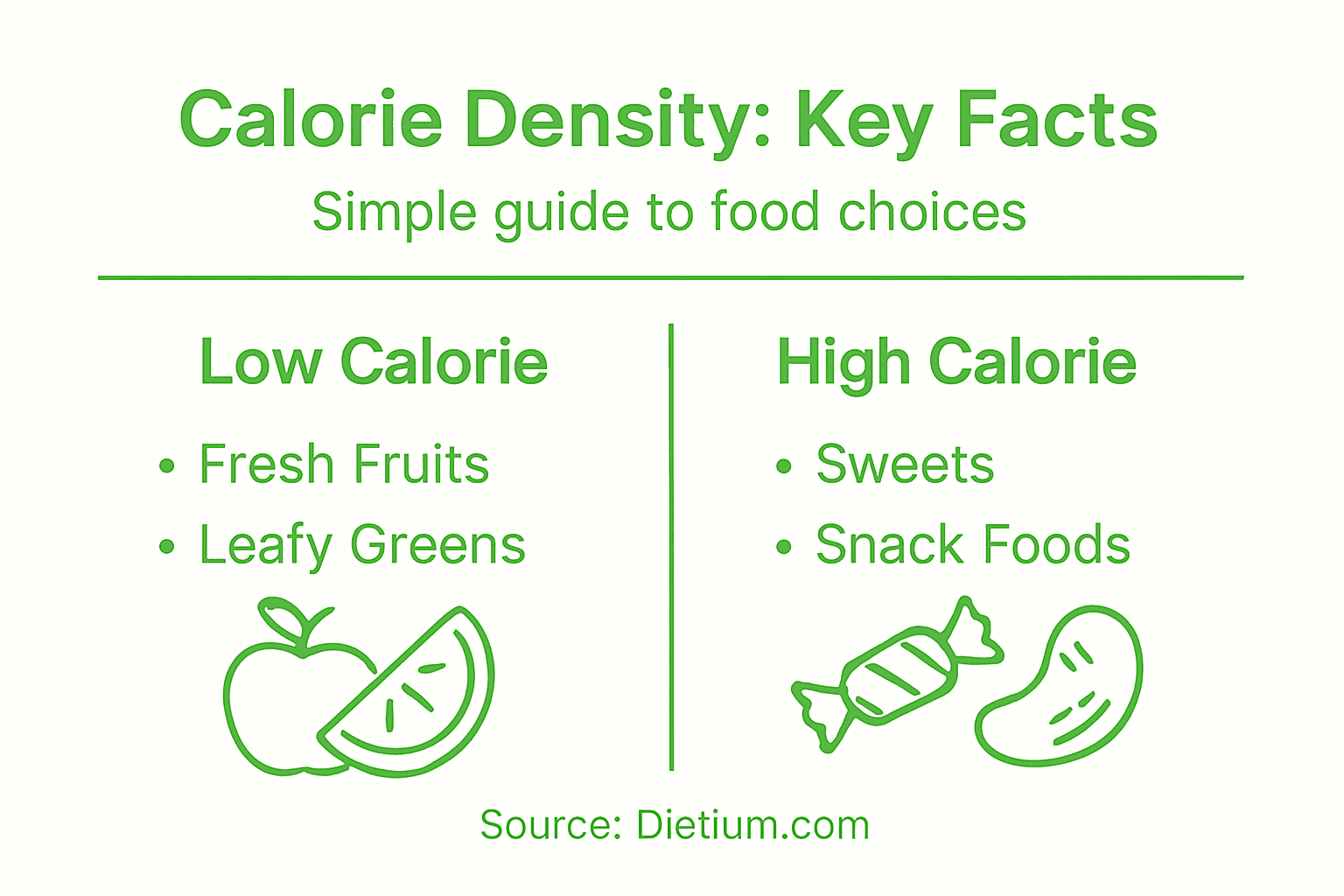
Reducing dietary energy density supports long-term weight control, revealing that people naturally consume a consistent food volume. By selecting foods with lower calorie density, individuals can eat satisfying portions while maintaining a lower overall calorie intake.
Key strategies for using calorie density in weight management include:
- Volume-based eating:
- Choose foods with high water content
- Prioritize low-calorie, nutrient-rich options
- Maintain feeling of fullness with fewer calories
- Metabolic benefits:
- Reduce hunger signals
- Stabilize blood sugar levels
- Support sustainable weight loss
- Improve overall nutritional intake
Effective weight management is about food quality, not just calorie quantity.
Comprehensive weight management requires holistic dietary approaches, integrating nutrition, physical activity, and behavioral strategies. This multifaceted approach ensures long-term success beyond temporary weight loss, addressing metabolic health and psychological well-being.
Pro tip: Focus on building meals around low-calorie density foods while maintaining portion sizes that keep you satisfied and energized.
Common Pitfalls and Smarter Meal Planning
Navigating the complexities of calorie density requires more than good intentions. Many individuals stumble into predictable nutritional traps that undermine their health and weight management goals, often without realizing the subtle mechanisms at play.
Meal planning challenges extend beyond simple calorie counting, revealing intricate barriers that prevent sustainable dietary changes. Incomplete nutritional strategies can lead to unintended compensatory eating, where individuals unconsciously consume additional calories in other meals, negating potential weight management benefits.
Common meal planning pitfalls include:
- Nutritional Misconceptions:
- Overemphasizing calorie quantity
- Ignoring food quality
- Neglecting portion size variations
- Underestimating hidden calories
- Strategic Planning Failures:
- Poor ingredient selection
- Inconsistent meal preparation
- Lack of dietary diversity
- Insufficient nutrient tracking
Smart meal planning is about creating sustainable, enjoyable eating patterns, not restrictive dieting.
Digital nutrition tools can transform meal planning effectiveness, providing personalized insights that help individuals optimize their dietary approaches. By integrating technology with nutritional knowledge, people can develop more nuanced and adaptable eating strategies.
The following table summarizes smart meal planning strategies that address common pitfalls:
| Common Pitfall | Smarter Meal Planning Strategy | Example Approach |
|---|---|---|
| Overemphasizing calories | Focus on food quality | Choose whole grains over refined snacks |
| Ignoring portion control | Use visual cues for sizing | Fill half your plate with vegetables |
| Poor ingredient selection | Plan meals around produce | Build salads with diverse veggies |
| Inconsistent preparation | Schedule prep time weekly | Batch cook staples in advance |
Pro tip: Invest in a digital meal planning tool that tracks both calorie density and nutrient content to create more balanced, intelligent nutrition strategies.
Take Control of Your Calorie Density Journey with Personalized Support
Understanding and managing calorie density is essential for making smarter food choices that promote lasting health and weight management. If you struggle with balancing portion sizes, recognizing nutrient-dense foods, or overcoming common meal planning pitfalls highlighted in the article, you are not alone. Many face these challenges daily, feeling overwhelmed by confusing nutritional information or frustrated by ineffective dieting methods.
At Dietium.com, we offer an advanced, personalized solution designed to help you navigate these complexities with confidence. Our Recipians app creates custom meal plans focused on low-calorie density, nutrient-rich foods while considering your unique body metrics and goals. With integrated AI-powered tools for tracking calories, body fat, and metabolic responses, you gain precise insights to optimize your nutrition and enjoy satisfying meals without guilt.
Discover the difference that tailored nutrition guidance can make. Start your journey today with Dietium to experience smarter portion control, improved eating habits, and sustainable weight management. Take the first step now and empower yourself to make healthier choices confidently.
Frequently Asked Questions
What is calorie density and why is it important?
Calorie density refers to the number of calories per gram or volume of food. It is important because it helps individuals make healthier food choices by understanding the nutritional quality of what they consume, leading to better weight management and overall health.
How do low calorie density foods support weight management?
Low calorie density foods are typically high in water and fiber, allowing individuals to eat larger portions while consuming fewer calories. This can promote feelings of fullness and satisfaction, aiding in weight control.
Can eating high calorie density foods lead to health issues?
Yes, high calorie density foods, which are often processed and high in added sugars and fats, can contribute to health risks such as obesity, diabetes, and cardiovascular diseases due to their low nutritional value and tendency to promote overeating.
What are some examples of low and high calorie density foods?
Low calorie density foods include fruits, vegetables, and whole grains, which are nutrient-rich and hydrating. In contrast, high calorie density foods include processed snacks, sweets, and fast food, which are usually energy-dense and low in essential nutrients.
Recommended
- Understanding the Benefits of Tracking Calories for Health – Dietium
- Understanding Calorie Deficit: The Key to Weight Management – Dietium
- Tracking Calorie Intake: A Simple Guide for Better Health – Dietium
- Calorie Needs by Age: Complete Guide to Daily Requirements – Dietium
- Hair Nutrition Food: Boosting Growth and Vitality | MyHair


