 Skip to content

The weekday rush can leave little time for meals that actually keep you going. For health-focused professionals in cities from New York to London, skipping proper nutrition often means battling mid-afternoon fatigue. Getting the right mix of macronutrients—carbohydrates, proteins, and fats—matters, since the body uses these to create real, lasting energy for both mind and body. With smart meal choices, you can power through meetings, workouts, and creative projects without feeling drained.
Table of Contents
- What Makes Foods Boost Energy
- Types of Energy-Boosting Nutrients
- Best Foods for Lasting Energy
- Smart Meal Ideas for Busy Lifestyles
- Common Mistakes and Energy Drainers
Key Takeaways
| Point | Details |
|---|---|
| Balanced Nutrition is Key | A mix of complex carbohydrates, lean proteins, and healthy fats supports sustained energy levels throughout the day. |
| Micronutrients Matter | Vitamins and minerals play critical roles in energy metabolism, despite not providing calories directly. |
| Meal Planning is Essential | Strategic meal preparation can enhance energy management for busy lifestyles by ensuring nutritious options are readily available. |
| Avoid Common Energy Drainers | Maintain consistent meals, stay hydrated, and manage stress to counteract factors that deplete energy levels. |
What Makes Foods Boost Energy
Understanding how foods contribute to energy requires examining the complex metabolic processes that transform nutrients into cellular fuel. When we consume food, our body initiates an intricate biochemical process of breaking down nutrients to generate power for physiological functions. This energy production involves multiple metabolic pathways that convert different macronutrients into usable cellular energy.
Carbohydrates, proteins, and fats serve as primary energy sources, each playing a unique role in sustaining bodily functions. Simple carbohydrates provide rapid energy spikes, while complex carbohydrates and proteins offer more sustained fuel. Whole grains, lean proteins, and healthy fats enable a steady nutrient release, preventing sudden energy crashes. The body strategically metabolizes these nutrients, storing or burning them based on immediate physiological requirements.
Metabolism operates through sophisticated cellular mechanisms where nutrients are transformed into adenosine triphosphate (ATP), the fundamental energy currency powering nearly all biological processes. Different cell types metabolize nutrients uniquely, ensuring efficient energy distribution across various bodily systems. The rate of metabolism depends on factors like age, muscle mass, physical activity, and overall health status.
Pro tip: Consume a balanced mix of complex carbohydrates, lean proteins, and healthy fats to maintain consistent energy levels throughout the day.
Types of Energy-Boosting Nutrients
Understanding the different types of nutrients that contribute to energy production is essential for optimizing your metabolic performance. Macronutrients provide the primary energy sources for the human body, consisting of carbohydrates, proteins, and fats. Each of these nutrient categories plays a unique role in fueling bodily functions and maintaining sustained energy levels.
Carbohydrates are the body’s most efficient energy source, breaking down quickly to provide immediate fuel for cellular processes. Simple carbohydrates deliver rapid energy spikes, while complex carbohydrates offer more stable and prolonged energy release. Proteins contribute to energy production more indirectly, supporting muscle maintenance and metabolic functions. Fats serve as a concentrated energy reserve, providing long-lasting fuel that takes longer to metabolize but offers sustained power for extended activities.
Micronutrients, including essential vitamins and minerals, act as critical catalysts in energy metabolism. B-complex vitamins, vitamin C, magnesium, and iron play pivotal roles in converting nutrients into usable cellular energy. These micronutrients do not directly provide calories but are fundamental in supporting the biochemical processes that enable efficient energy production and metabolic function.
Pro tip: Combine different macronutrients in your meals to create a balanced energy profile that supports sustained metabolic performance throughout the day.
Here is a summary of how different nutrients impact energy levels:
| Nutrient Type | Main Function | Energy Profile | Example Foods |
|---|---|---|---|
| Simple Carbohydrates | Rapid energy boost | Quick spike, short duration | White bread, fruit juice |
| Complex Carbohydrates | Steady energy release | Sustained, gradual | Brown rice, oats |
| Proteins | Muscle repair & metabolism | Indirect, long-term | Chicken, lentils |
| Fats | Long-term energy storage | Slow, extended | Avocado, salmon |
Best Foods for Lasting Energy
Building sustainable energy requires strategic nutritional choices that support metabolic function and brain health. Complex carbohydrates offer steady energy release through whole grains, fruits, vegetables, and legumes that provide essential fiber and consistent nutrient absorption. These foods help maintain stable blood sugar levels, preventing the dramatic energy fluctuations associated with processed and simple sugar consumption.
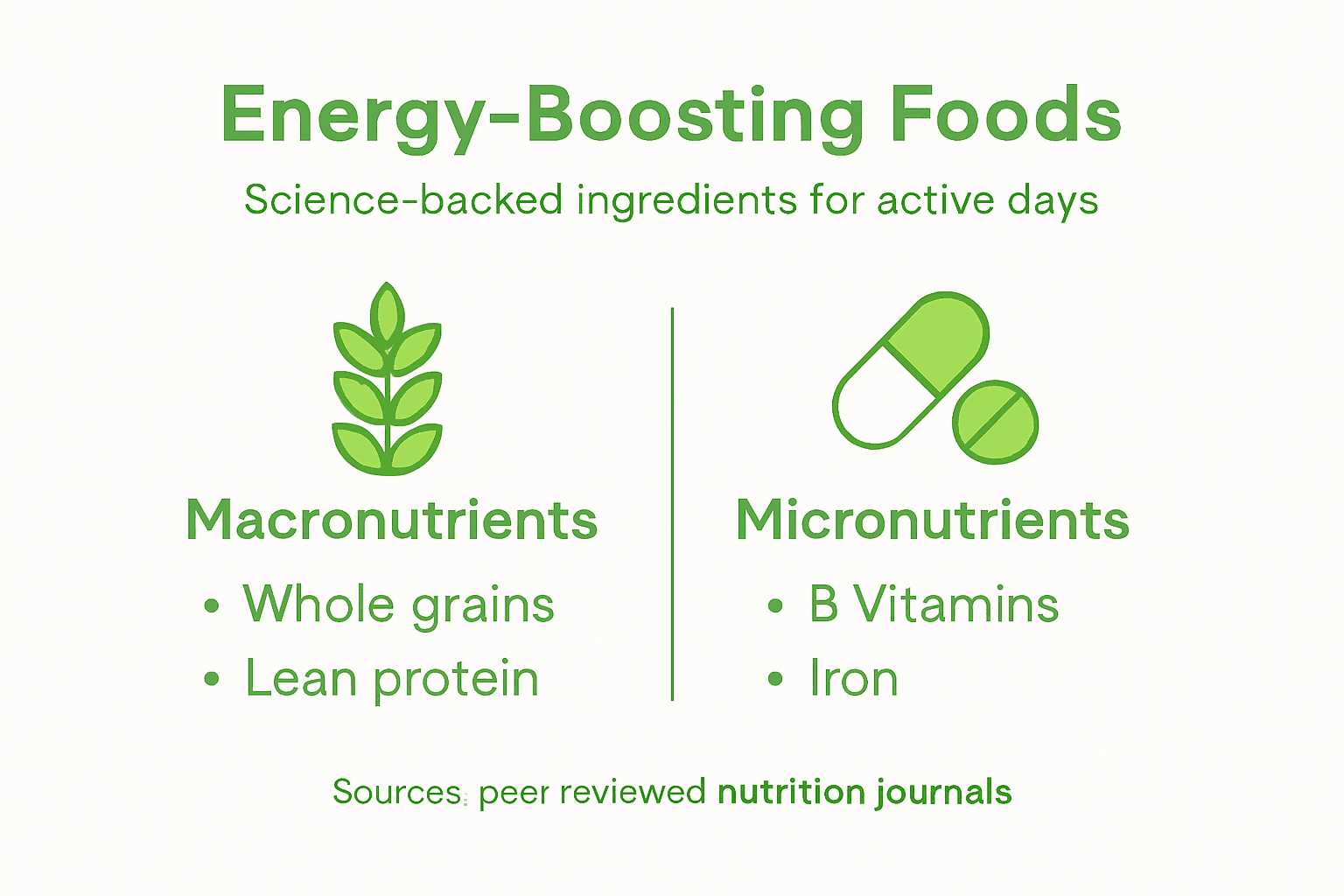
Green leafy vegetables, fatty fish, and nuts emerge as nutritional powerhouses for sustained vitality. Omega-3 rich salmon, walnuts, and spinach deliver essential nutrients that support cognitive function and metabolic efficiency. Lean proteins like chicken, turkey, and plant-based alternatives help maintain muscle health and provide steady energy without inducing drowsiness, making them ideal for maintaining productivity throughout the day.

Berries, tea, and moderate caffeine sources represent intelligent energy-boosting options. These foods contain flavonoids and antioxidants that support brain function while providing gentle stimulation. Importantly, they offer a balanced approach to energy enhancement, avoiding the harsh crashes associated with high-sugar or heavily processed alternatives. By combining these nutrient-dense foods strategically, individuals can create a comprehensive approach to maintaining consistent mental and physical performance.
Pro tip: Prepare balanced meals that combine complex carbohydrates, lean proteins, and healthy fats to create a sustained energy profile that supports your daily activities.
Smart Meal Ideas for Busy Lifestyles
Navigating nutrition with a demanding schedule requires strategic planning and efficient preparation techniques. Meal planning becomes crucial for busy professionals seeking to maintain consistent energy and balanced nutrition. The key is developing a systematic approach that transforms meal preparation from a time-consuming task into a streamlined, manageable process that supports overall health and productivity.
Successful meal strategies involve batch cooking, utilizing versatile ingredients, and designing flexible recipes that can be quickly assembled or reheated. Consider preparing protein-rich base ingredients like grilled chicken, quinoa, or roasted vegetables that can be mixed and matched across multiple meals. Portable options such as mason jar salads, overnight oats, and protein-packed wraps provide nutrient-dense alternatives that can be prepared in advance and easily transported to work or consumed during short breaks.
Technology and smart kitchen tools can significantly simplify meal preparation for time-constrained individuals. Slow cookers, instant pots, and meal prep containers enable efficient cooking and storage, allowing busy professionals to create multiple meals simultaneously. Investing in high-quality, reusable containers with compartments helps portion control and ensures balanced nutrition, while digital meal planning apps can assist in tracking nutritional intake and generating shopping lists that optimize time and budget.
Pro tip: Dedicate two hours on weekends to batch cooking and portioning meals, creating a week’s worth of nutritious, ready-to-eat options that support your energy and health goals.
Common Mistakes and Energy Drainers
Understanding the subtle factors that diminish personal energy requires a comprehensive approach to lifestyle management. Common energy zappers significantly impact performance through a complex interplay of nutritional, psychological, and physiological elements. Poor dietary choices, chronic stress, inadequate sleep, and sedentary behaviors create a cascading effect that progressively depletes mental and physical reserves.
Nutritional mistakes represent a primary mechanism of energy drainage. Skipping meals, consuming excessive simple sugars, and maintaining irregular eating patterns disrupt metabolic stability and trigger dramatic blood sugar fluctuations. Dehydration compounds these issues, reducing cellular efficiency and cognitive function. Caffeine and alcohol, when consumed without strategic moderation, further destabilize energy metabolism, creating artificial stimulation followed by pronounced fatigue.
Psychological factors like chronic stress and unmanaged emotional states profoundly impact energy levels. Persistent mental tension triggers hormonal responses that divert physiological resources, leading to exhaustion. Sedentary lifestyles amplify these challenges by reducing metabolic efficiency and cardiovascular conditioning. Prolonged sitting, minimal physical activity, and limited exposure to natural light contribute to a cumulative energy deficit that undermines overall wellness and productivity.
Compare common energy mistakes and their impact:
| Mistake | How It Drains Energy | Suggested Fix |
|---|---|---|
| Skipping meals | Causes blood sugar drops | Eat regular meals |
| Too much sugar | Leads to energy crashes | Choose complex carbs |
| Dehydration | Reduces cognitive function | Drink more water |
| Inadequate sleep | Impairs metabolic processes | Maintain sleep routine |
Pro tip: Create a daily energy management routine that includes balanced nutrition, consistent sleep schedule, stress reduction techniques, and regular physical movement to counteract common energy draining patterns.
Unlock Lasting Energy with Personalized Nutrition and Smart Meal Planning
Feeling drained by irregular meals and energy crashes is a common struggle highlighted in the article. You want steady fuel throughout your busy day using a balanced mix of complex carbohydrates, lean proteins, and healthy fats. The challenge is making these science-backed food choices practical and consistently integrated into your lifestyle. Understanding the critical role of nutrient timing and metabolic balance is only the first step.
At Dietium.com, our innovative platform offers tailor-made solutions to these exact pain points. With our Recipians app, you receive personalized meal plans that fit your metabolic needs and daily schedule, avoiding common mistakes like skipping meals or overloading on simple sugars. Take advantage of AI-powered calculators to track your calorie needs and body metrics ensuring your energy intake matches your unique physiology. Start optimizing your nutrition today and experience the difference steady energy can make in productivity and well-being.
Ready to break free from energy slumps and build lasting vitality? Visit Dietium Recipians now to craft your custom meal strategy and discover tools designed to keep you energized every day.
Frequently Asked Questions
What types of foods provide the best energy boost?
Complex carbohydrates (like whole grains, fruits, and vegetables), lean proteins (such as chicken and legumes), and healthy fats (like avocados and nuts) are the best foods for sustained energy levels throughout the day.
How do carbohydrates affect energy levels?
Carbohydrates are the body’s primary energy source. Simple carbohydrates provide quick spikes in energy, while complex carbohydrates offer a more sustained and stable energy release, preventing crashes.
What role do micronutrients play in energy production?
Micronutrients such as B vitamins, vitamin C, magnesium, and iron are essential for energy metabolism. They help convert macronutrients into usable energy, supporting overall metabolic functions.
How can I manage my energy levels throughout a busy day?
To manage energy levels, focus on eating regular, balanced meals that include a mix of complex carbohydrates, lean proteins, and healthy fats. Staying hydrated, obtaining adequate sleep, and incorporating physical activity into your routine are also important.
Recommended
- 8 Healthy Snacks for Work to Boost Your Energy – Dietium
- 7 Smart High Protein Snacks to Boost Your Daily Nutrition – Dietium
- 8 Healthy Snacks for Travel to Keep You Energized – Dietium
- 7 Smart Snack Food Ideas for Healthier Living – Dietium
- GREEN VEGETABLE PROTEINS’ IMPORTANCE TO YOU VOCAL HEALTH – TMRG Solutions


