 Skip to content

Bold food labels and smart nutrition apps make daily choices simple, but not every vegan option on the shelf delivers what your body needs to thrive. For health-focused vegans from the United States to Canada and beyond, understanding nutrient density quantifies essential nutrients relative to caloric content matters far more than counting calories. This guide gives you the know-how to recognize which foods truly fuel your fitness, support plant-powered weight management, and deliver lasting results.
Table of Contents
- What Makes A Food Nutrient Dense?
- Top Nutrient Dense Vegan Foods Explained
- Key Nutrients Vegans Must Monitor Closely
- Protein Quality And Bioavailability In Vegan Diets
- Avoiding Common Vegan Nutrition Mistakes
Key Takeaways
| Point | Details |
|---|---|
| Nutrient Density Over Calories | Focus on foods that provide high essential nutrients for low calories to optimize health outcomes. |
| Strategic Food Choices | Incorporate a variety of nutrient-dense foods like leafy greens, legumes, and whole grains to meet dietary needs. |
| Monitor Key Nutrients | Pay attention to important nutrients like Vitamin B12, Iron, and Omega-3 fatty acids that may require supplementation in a vegan diet. |
| Prioritize Quality Protein | Combine diverse plant protein sources and distribute protein intake throughout the day for optimal muscle recovery and performance. |
What Makes a Food Nutrient Dense?
Nutrient density fundamentally measures how many essential nutrients you get relative to the calories consumed. Think of it as the nutritional bang for your buck. A food packed with vitamins, minerals, fiber, and bioactive compounds while staying low in calories represents high nutrient density. Conversely, foods that deliver mostly empty calories with minimal micronutrients score low on the nutrient density scale. The key distinction is that nutrient density quantifies essential nutrients relative to caloric content, which differs significantly from energy density, which only measures how many calories a food contains.
What separates genuinely nutrient-dense foods from the rest? Nutrient-dense options deliver vitamins, minerals, and fiber while keeping added sugars, saturated fats, and sodium minimal. For vegans specifically, this matters enormously. You’re already eliminating animal products, so maximizing nutrient extraction from plant-based sources becomes non-negotiable for optimizing your health outcomes. The foods that consistently rank highest include:
- Leafy greens and cruciferous vegetables (packed with iron, calcium, and phytonutrients)
- Legumes and pulses (protein, fiber, and complex B vitamins)
- Whole grains (sustained energy plus essential minerals)
- Nuts and seeds (healthy fats, vitamin E, and trace minerals)
- Berries and colorful fruits (antioxidants and micronutrients)
Nutrient density scoring models now guide dietary decisions at individual and public health levels. These frameworks identify which foods genuinely contribute to your nutritional goals while accounting for both beneficial components and potentially problematic ones like excess sodium or saturated fat. Unlike calorie counting alone, which ignores nutritional quality entirely, nutrient density assessment ensures your meals build health rather than just fill your stomach.
Here’s a comparison of nutrient density versus energy density and their impact on food choices:
| Concept | Focus | Example Foods | Impact on Diet Decisions |
|---|---|---|---|
| Nutrient Density | Nutrients per calorie | Spinach, lentils, berries | Encourages nutrient-rich choices |
| Energy Density | Calories per weight | Oils, processed snacks | Prioritizes calorie intake |
Understanding how nutrient density guides food choices empowers you to make strategic dietary decisions aligned with your fitness and weight management goals. A 200-calorie serving of raw spinach delivers roughly 10 times more micronutrients than 200 calories of refined pasta. Your body notices that difference across weeks and months of consistent eating.
Pro tip: When choosing between vegan options, mentally assess the nutrient-to-calorie ratio by checking if a food provides multiple micronutrients, fiber, or bioactive compounds within a reasonable calorie amount rather than reaching for processed vegan alternatives that merely mimic animal products.
Top Nutrient Dense Vegan Foods Explained
Building a vegan diet that actually supports your fitness goals and weight management requires knowing which foods deliver the most nutritional value. A well-planned vegan diet built around nutrient-dense plant foods can meet most of your nutrient requirements when you include diverse sources. The key is understanding which specific foods work hardest for your health.
Powerhouse Vegetables and Greens
Leafy greens like kale and spinach are non-negotiable for nutrient density. These dark leafy vegetables pack vitamins A, C, and K alongside calcium and iron. The iron in plant-based sources has lower bioavailability than animal products, which matters for vegans, but pairing greens with vitamin C-rich foods like tomatoes or citrus enhances absorption significantly. Cruciferous vegetables like broccoli and Brussels sprouts deliver sulfur compounds that support cellular health while remaining incredibly low in calories.

Complete Proteins and Legumes
Quinoa stands out as a complete protein source containing all nine essential amino acids, making it rare among plant foods. Legumes like lentils, chickpeas, and black beans deliver protein, fiber, and minerals in one package. Hemp seeds provide omega-3 fatty acids alongside complete protein, addressing a nutrient concern for vegans. Chia and flax seeds offer similar benefits plus soluble fiber that supports digestive health and satiety between meals.
Nutrient-Dense Carbohydrates and Antioxidants
Whole grains provide sustained energy with B vitamins and minerals intact, unlike refined versions stripped during processing. Berries, particularly blueberries and raspberries, deliver antioxidants and vitamins while staying relatively low in calories. These foods work together synergistically. A bowl combining quinoa, roasted broccoli, hemp seeds, and fresh berries creates a meal hitting multiple micronutrient targets while supporting your fitness performance.
The strategy is rotating through diverse plant-based whole foods rather than relying on the same few options. Your body adapts to repetitive eating patterns, and nutritional variety ensures you’re covering all micronutrient bases. Each food group addresses different nutritional needs, so incorporating vegetables, legumes, seeds, whole grains, and fruits across your weekly meals creates the foundation for optimized health.
Pro tip: Prep a rotating list of five to seven go-to nutrient-dense vegan foods and build different meals from them throughout the week, rotating in seasonal varieties to maximize both nutrient intake and prevent taste fatigue.
Key Nutrients Vegans Must Monitor Closely
Switch to veganism and suddenly you’re responsible for tracking nutrients that animal products delivered automatically. This isn’t about restriction or missing out. It’s about being intentional. Certain nutrients become trickier on a plant-based diet because they exist in lower quantities in plant foods or absorb less efficiently in your body. The good news: knowing which ones to monitor means you can easily address them through strategic food choices or supplements. Vitamin B12, bioavailable iron, calcium, zinc, iodine, vitamin D, and omega-3 fatty acids represent the primary areas requiring attention for vegans aiming to optimize health.
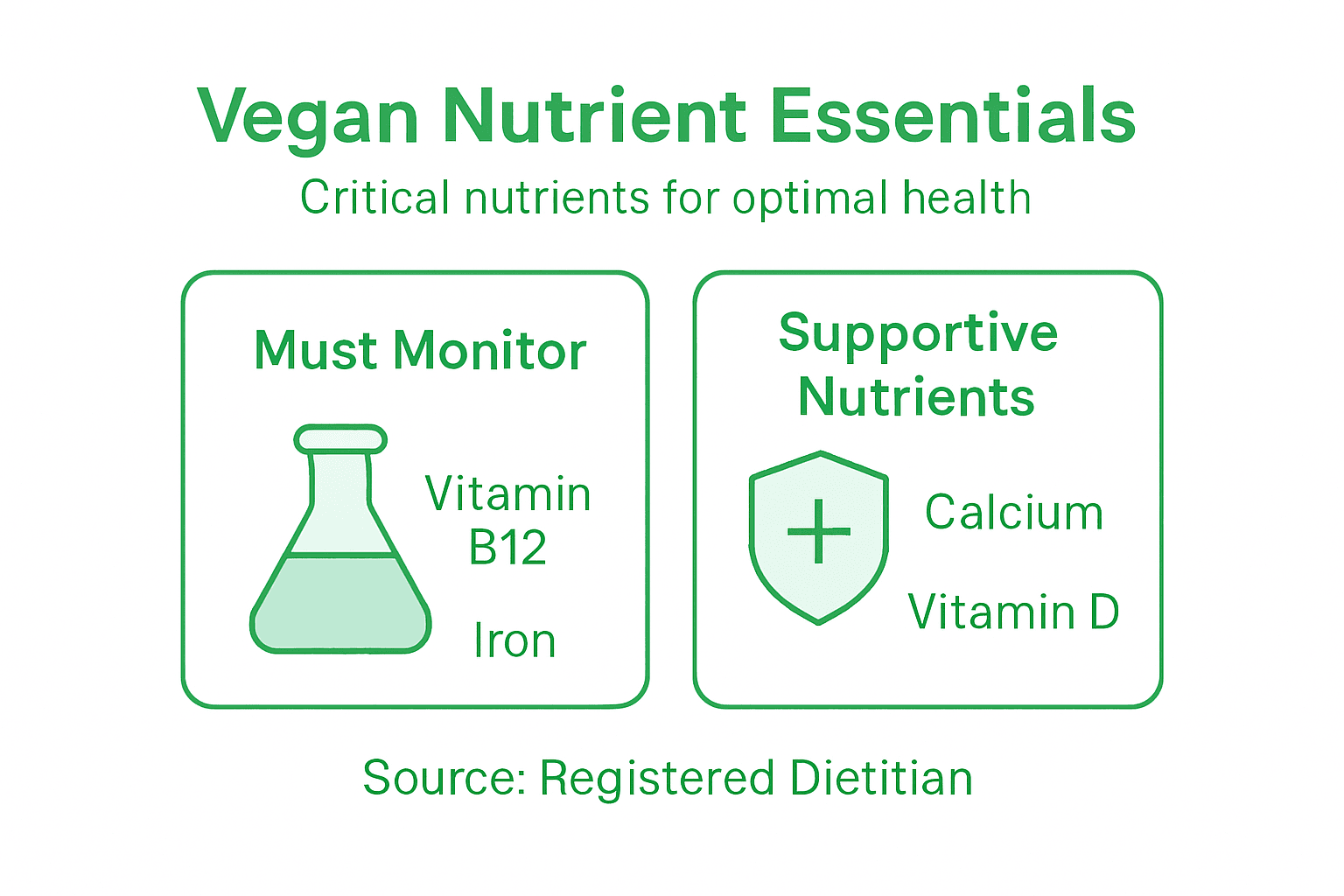
The Critical Four You Cannot Ignore
Vitamin B12 stands as the non-negotiable supplement for every vegan. Your body cannot produce it, and reliable plant sources simply don’t exist in nature. B12 deficiency develops slowly, sometimes taking years to show symptoms, but when it hits, neurological damage becomes real. Fortified plant milks, nutritional yeast, and supplements all work. Pick one and commit to it consistently.
Iron demands attention because plant-based iron absorbs less efficiently than iron from meat. The strategy here involves pairing iron-rich foods like lentils and dark leafy greens with vitamin C sources. A spinach salad with lemon dressing enhances iron absorption dramatically compared to spinach alone. Adequate protein sources for vegans also contribute iron alongside protein, creating multi-nutrient meals.
Calcium and vitamin D work together. Fortified plant milks handle calcium when you consume consistent amounts. Vitamin D proves trickier because sunlight exposure varies by location and season. Many vegans benefit from supplementation, particularly in northern climates during winter months when sun exposure drops significantly.
Secondary but Important Nutrients
Omega-3 fatty acids, particularly EPA and DHA, require intentional inclusion. Ground flax seeds, chia seeds, and walnuts provide ALA, which your body converts to EPA and DHA, but the conversion rate stays relatively low. Algae supplements offer direct EPA and DHA sources without relying on conversion. For your fitness performance and recovery, omega-3s matter for reducing inflammation and supporting brain health.
Zinc and iodine round out the monitoring list. Legumes and seeds provide zinc, though absorption varies. Iodized salt or seaweed occasionally covers iodine needs, though seaweed varies wildly in iodine content, making supplementation more reliable.
The reality: a well-planned vegan diet covers most nutrient bases through whole foods. Strategic supplementation addresses the gaps. Getting bloodwork done annually shows you exactly where you stand rather than guessing. That data transforms vague concerns into concrete knowledge.
Below is a reference table summarizing key nutrients vegans should monitor and common vegan sources:
| Nutrient | Importance | Notable Vegan Sources | Monitoring Tips |
|---|---|---|---|
| Vitamin B12 | Prevents neurological issues | Fortified milks, supplements | Monthly intake tracking recommended |
| Iron | Supports energy & immunity | Lentils, spinach, tofu | Pair with vitamin C for absorption |
| Calcium | Bone health | Fortified milks, leafy greens | Ensure daily intake consistency |
| Omega-3 Fatty Acids | Brain & heart health | Flaxseed, walnuts, algae oil | Consider algae supplements |
Pro tip: Create a simple monthly tracking sheet for your key nutrients, noting sources from your diet and supplementation, then cross-reference with annual bloodwork to identify exactly which nutrients need adjustment rather than following generic recommendations.
Protein Quality and Bioavailability in Vegan Diets
Protein gets talked about constantly in vegan nutrition conversations, but here’s what often gets missed: the amount matters far less than the quality. You can hit your daily protein targets and still fall short nutritionally if you’re not eating the right combinations. Plant proteins have structural components that make them harder for your body to digest compared to animal proteins. Additionally, plant proteins contain limiting amino acids like lysine and leucine that restrict how efficiently your body uses the total protein you consume.
This doesn’t mean plant-based protein fails you. It means you need strategy. When research examined New Zealand vegans, roughly half of them didn’t meet adequacy for key amino acids when adjusted for actual digestibility, despite getting enough total protein grams. The difference between hitting 50 grams of protein and hitting 50 grams of high-quality, bioavailable protein is substantial for your muscle recovery, workout performance, and overall body composition goals.
Combining Proteins Strategically
The solution involves combining varied plant protein sources rather than relying on single sources. Pairing legumes with grains creates a complete amino acid profile. Rice and beans together provide all nine essential amino acids your body cannot manufacture. Lentils with quinoa works equally well. Peanut butter on whole grain toast combines different amino acid patterns. The key is intentional pairing within meals or across your day.
Superfoods for vegans like hemp seeds, pumpkin seeds, and nutritional yeast offer protein with higher amino acid density and improved digestibility compared to some other plant sources. These aren’t magic solutions, but they shift the efficiency of your protein consumption upward.
Meal Distribution Matters More Than You Think
Spread protein intake throughout your day rather than loading it into one meal. Your body processes roughly 20 to 40 grams of protein optimally per meal for muscle protein synthesis. Consuming 100 grams of protein at dinner while eating 10 grams at breakfast creates inefficiency. Distributing 60 grams across breakfast, lunch, and dinner maximizes what your body actually uses. Older vegans require even closer attention to this strategy, as aging bodies become less efficient at processing plant proteins.
The digestibility challenge remains real, but it’s completely manageable through conscious food selection and meal timing. Your fitness performance and body composition reflect not just total protein but bioavailable protein actually used by your muscles.
Pro tip: Combine at least two different plant protein sources in each main meal, space protein across all eating occasions throughout the day, and prioritize legumes and seeds over processed meat alternatives to maximize amino acid diversity and bioavailability.
Avoiding Common Vegan Nutrition Mistakes
Most vegans don’t fail because of the diet itself. They fail because of preventable mistakes that compound over time. The good news: knowing what goes wrong helps you sidestep those pitfalls entirely. Nutritional deficiencies in vegan diets often arise from unbalanced food selections and lack of variety rather than from veganism being inherently flawed. You can eat vegan for years and still miss critical nutrients simply through poor planning and assumption rather than through the diet’s structure itself.
The Mistake of Assuming “Vegan” Equals “Healthy”
Not all vegan foods deliver nutrition. Oreos, French fries, and plant-based processed meats are technically vegan. Eating these regularly while neglecting whole foods creates caloric surplus with minimal micronutrient density. Your weight climbs, your energy crashes, and your fitness goals stall while you technically stay compliant with veganism. The first mistake is treating “vegan” as synonymous with “healthy.” It’s a starting point, not a destination. Processed vegan alternatives designed to mimic animal products often contain excessive sodium, added oils, and refined carbohydrates that undermine your health goals.
Instead, anchor your diet around whole plant foods. Vegetables, legumes, whole grains, nuts, and seeds form the foundation. These foods deliver nutrients that processed alternatives simply cannot match. When you reach for convenience foods, make them the exception rather than the default.
Insufficient Protein and Micronutrient Monitoring
The second major mistake involves not tracking protein intake strategically. You calculate daily requirements once, assume you’re fine, and never revisit the number. Life changes. Training increases. Body composition shifts. Your protein needs evolve, yet your eating pattern stays static. This creates a slow slide into inadequate amino acid intake that doesn’t show up immediately but compounds into reduced recovery, weaker performance, and diminished muscle maintenance.
Beyond protein, most vegans never monitor micronutrient status through bloodwork. Vitamin B12, iron, vitamin D, calcium, and omega-3 fatty acids remain afterthoughts rather than tracked metrics. You can’t optimize what you don’t measure. Annual bloodwork combined with dietary tracking reveals exactly where you stand instead of relying on guesswork and assumptions.
The Integration Problem
A third mistake involves treating nutrition as separate from food enjoyment and meal planning. Sustainable vegan nutrition requires integrating it into daily meal decisions rather than viewing supplementation and tracking as burdensome additions. When nutrient density becomes your baseline expectation for meals, optimization happens naturally. You select foods by their nutritional profile first, then build meals around them. This transforms nutrition from a chore into the foundation of your eating strategy.
Education changes everything. Understanding why certain combinations matter, how bioavailability works, and which nutrients require attention removes the guesswork. Personalized dietary guidance tailored to your goals and activity level beats generic recommendations every time.
Pro tip: Track your diet for one week every quarter using a nutrition app like Cronometer to identify gaps in specific micronutrients, then adjust your food selections rather than defaulting to supplementation without baseline data.
Unlock Your Nutrient Dense Vegan Potential with Personalized Support
Struggling to maximize nutrient density in your vegan diet while managing key nutrients like vitamin B12, iron, and omega-3s is a common challenge. You want to avoid the pitfalls of unbalanced meal choices and ensure protein quality and bioavailability support your fitness and health goals. The article highlights how understanding nutrient-to-calorie ratios and careful nutrient monitoring are essential for long-term wellness and energy.
At Dietium, we help you turn this knowledge into action. Our Recipians app offers personalized vegan meal plans designed to optimize nutrient density and balance critical nutrients effortlessly. With AI-powered tools, you can track your calories, body metrics, and daily nutrient intake to identify gaps before they impact your health. This means you get real-time guidance on improving your nutrition without guesswork. Start crafting meals that deliver the powerful combination of vitamins, minerals, complete proteins, and antioxidants your body needs by exploring custom meal solutions tailored to your lifestyle.
Take control of your vegan nutrition today. Visit Dietium’s Recipians now and start building a nutrient-dense vegan diet that supports your health goals and prevents common dietary mistakes. Don’t wait until deficiencies hold you back. Your optimized vegan lifestyle begins with smart planning and precise tracking.
Frequently Asked Questions
What are nutrient-dense vegan foods?
Nutrient-dense vegan foods are those that provide a high amount of essential nutrients, such as vitamins, minerals, fiber, and bioactive compounds, relative to their calorie content. Examples include leafy greens, legumes, whole grains, nuts, seeds, and colorful fruits.
How can I optimize my vegan diet for nutrient density?
To optimize your vegan diet for nutrient density, focus on incorporating a variety of whole plant foods, such as fresh vegetables, whole grains, legumes, nuts, and seeds. Aim to minimize processed foods that tend to be low in nutrients.
Why should I monitor specific nutrients on a vegan diet?
On a vegan diet, some nutrients such as vitamin B12, iron, calcium, and omega-3 fatty acids may be less available or absorbed less efficiently from plant sources. Monitoring these nutrients ensures you meet your dietary needs and helps prevent deficiencies.
What is the importance of protein quality in a vegan diet?
The quality of protein in a vegan diet is crucial since plant proteins can have lower bioavailability compared to animal proteins. Combining various plant protein sources can help create a complete amino acid profile and maximize overall protein utilization in the body.


