 Skip to content

Most advice about weight loss sets people up for quick fixes instead of lasting change. For health-conscious individuals in urban environments, especially those following the American trend for technological wellness tools, slow weight loss provides a proven path toward results that actually stick. Research from the Centers for Disease Control shows that losing just one to two pounds per week increases the chances of maintaining a healthier weight long-term. Discover how small, strategic shifts create success you can sustain without burnout.
Table of Contents
- What Slow Weight Loss Really Means
- Biological Benefits Over Rapid Diets
- Psychological Impact On Long-Term Success
- Risks And Downsides Of Quick Weight Loss
- Building Healthy Habits For Lasting Results
Key Takeaways
| Point | Details |
|---|---|
| Sustainable Approach | Slow weight loss focuses on gradual progress through healthy habits rather than crash diets, aiming for 1 to 2 pounds per week. |
| Biological Benefits | Gradual weight loss supports metabolic efficiency and health improvements while minimizing risks of muscle loss and hormonal imbalances. |
| Psychological Resilience | Successful weight management requires a mental shift, incorporating self-efficacy and stress management to support sustainable changes. |
| Habit Formation | Building healthy habits through consistent actions and environmental design enhances the likelihood of long-term health transformations. |
What Slow Weight Loss Really Means
Slow weight loss represents a sustainable, health-focused approach to body transformation that prioritizes gradual, consistent progress over dramatic short-term changes. Unlike crash diets or extreme fitness programs, slow weight loss focuses on making incremental lifestyle modifications that can be maintained long-term. Sustainable weight loss strategies encourage developing healthy habits rather than pursuing rapid, potentially harmful weight reduction methods.
At its core, slow weight loss means losing approximately 1 to 2 pounds per week through balanced nutrition and regular physical activity. This gradual pace allows your body to adapt metabolically while preserving muscle mass and maintaining overall physiological stability. The Centers for Disease Control emphasizes that this steady approach is more likely to result in lasting weight maintenance compared to aggressive weight loss techniques that can disrupt metabolic processes and lead to potential health complications.
The fundamental principles of slow weight loss include creating a moderate calorie deficit, engaging in consistent exercise, prioritizing nutrient-dense foods, and developing sustainable lifestyle habits. This approach recognizes that weight management is not just about numbers on a scale, but about creating holistic health transformations that support long-term wellness and metabolic efficiency. By focusing on gradual changes, individuals can build resilient habits that support sustained weight management without experiencing the physical and psychological burnout associated with extreme dieting.
Pro tip: Track your progress using non-scale metrics like energy levels, clothing fit, and body measurements to stay motivated during your slow weight loss journey.
Biological Benefits Over Rapid Diets
Slow weight loss approaches offer profound biological advantages that extend far beyond simple number reductions on a scale. Metabolic adaptations from controlled dietary strategies trigger complex physiological changes that support long-term health and wellness. Unlike rapid diets that shock the body’s systems, gradual weight reduction allows metabolic processes to adjust naturally, promoting sustainable transformation at the cellular level.
Research demonstrates that controlled weight loss stimulates beneficial molecular changes, such as converting white fat to calorie-burning brown fat. This process increases metabolic efficiency and offers protection against chronic diseases like type 2 diabetes. The body responds more positively to incremental changes, generating molecules like irisin that enhance metabolic function without triggering stress responses associated with extreme dietary restrictions.
Furthermore, slow weight loss supports critical biological regeneration mechanisms. Studies reveal that controlled dietary approaches can lower biological age, reduce insulin resistance, and decrease liver fat accumulation. By avoiding the metabolic disruptions caused by crash diets, individuals can maintain muscle mass, support immune function, and create a more stable internal environment conducive to long-term health improvements.

Pro tip: Incorporate strength training and protein-rich meals to preserve muscle mass during your gradual weight loss journey, supporting metabolic health and sustainable body composition changes.
Psychological Impact on Long-Term Success
The journey of sustainable weight loss is fundamentally a psychological challenge that extends far beyond physical transformations. Long-term weight management strategies require developing robust psychological resilience and a profound understanding of personal behavioral patterns. Unlike quick-fix approaches that create temporary changes, successful weight loss demands a comprehensive mental shift that supports lasting lifestyle modifications.
Psychological research reveals that self-regulation and self-efficacy are critical components in maintaining weight loss success. Individuals who approach weight management as a holistic lifestyle transformation rather than a temporary diet demonstrate significantly higher long-term success rates. By cultivating a growth mindset, people can reframe challenges as opportunities for learning and personal development, reducing the likelihood of experiencing shame or frustration associated with traditional weight loss methods.
Moreover, stress management plays a crucial role in sustainable weight loss trajectories. Chronic psychological stress can undermine weight management efforts by triggering hormonal imbalances and emotional eating patterns. Developing culturally relevant, personalized stress-reduction techniques can help individuals create more stable and supportive environments for their health goals. By integrating psychological support with behavioral strategies, people can build more resilient approaches to weight management that honor their unique emotional and physical needs.
Key psychological factors for sustainable weight loss are summarized below:
| Factor | Contribution to Success | Example Actions |
|---|---|---|
| Self-Efficacy | Builds confidence for consistency | Setting realistic short-term goals |
| Growth Mindset | Encourages learning from setbacks | Reflecting on challenges weekly |
| Stress Management | Reduces emotional eating | Practicing mindfulness techniques |
| Social Support | Increases accountability | Sharing progress with friends |
Pro tip: Create a weekly reflection journal to track your emotional triggers, celebrating non-scale victories and understanding the psychological aspects of your weight loss journey.
Risks and Downsides of Quick Weight Loss
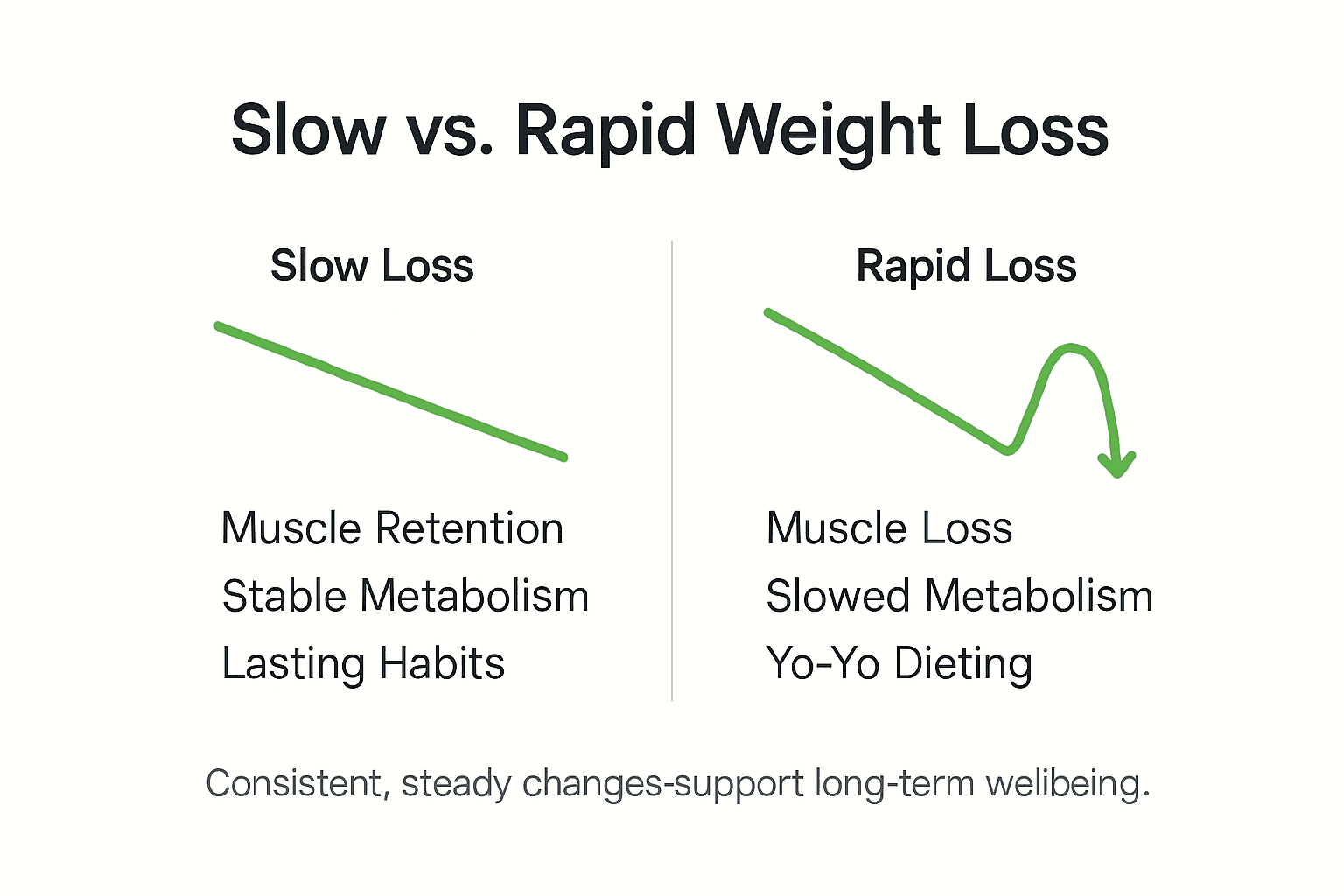
Rapid weight loss strategies frequently promise dramatic transformations but conceal significant physiological risks that can dramatically undermine long-term health goals. Metabolic consequences of quick weight loss involve complex biological responses that disrupt the body’s natural equilibrium, creating potential health complications far beyond simple weight fluctuations. These aggressive approaches trigger a cascade of metabolic adaptations that can ultimately sabotage weight management efforts.
The human body responds to sudden caloric restrictions by activating protective mechanisms that paradoxically make sustained weight loss more challenging. Rapid weight reduction often leads to muscle mass deterioration, decreased metabolic rate, and heightened hunger hormone production. These physiological changes create a perfect storm for potential weight regain, where the body becomes more efficient at storing energy and less responsive to traditional weight loss strategies.
Furthermore, quick weight loss approaches frequently neglect critical nutritional requirements, potentially causing significant micronutrient deficiencies and compromising overall health. The psychological toll of these restrictive methods can be equally damaging, creating cycles of frustration and negative self-perception that undermine long-term wellness objectives. By ignoring the complex interplay between physical, metabolic, and psychological factors, rapid weight loss strategies risk creating more problems than they solve.
Here’s a comparison of slow and rapid weight loss effects:
| Aspect | Slow Weight Loss | Rapid Weight Loss |
|---|---|---|
| Metabolic Health | Supports stable metabolism | Disrupts metabolic processes |
| Muscle Mass | Preserves muscle tissue | High risk of muscle loss |
| Hunger Levels | Maintains steady appetite | Increases hunger hormones |
| Long-Term Success | Promotes lasting results | High likelihood of regain |
| Nutritional Adequacy | Easier to meet requirements | Risk of deficiencies |
Pro tip: Consult a registered dietitian to develop a personalized, gradual weight loss plan that considers your unique metabolic profile and nutritional needs.
Building Healthy Habits for Lasting Results
Successful weight management transcends temporary diet plans, focusing instead on systematically building sustainable lifestyle habits. Transforming health requires more than willpower; it demands strategic behavioral modifications that create lasting, automatic responses to nutrition and physical activity. By understanding the psychological mechanisms behind habit formation, individuals can design personalized approaches that seamlessly integrate healthier choices into their daily routines.
Habit development follows a precise neurological pattern where repetitive actions gradually become unconscious behaviors. Environmental design plays a crucial role in this process, allowing individuals to create predictable triggers that naturally guide them toward healthier decisions. By strategically restructuring living spaces, meal preparation methods, and daily schedules, people can essentially reprogram their automatic responses, making nutritious choices feel more intuitive and less like a constant struggle.
Comprehensive habit formation involves multiple interconnected strategies, including clear goal setting, progress tracking, and building robust support systems. Successful lifestyle transformations recognize that lasting change emerges from small, consistent actions rather than dramatic, unsustainable overhauls. Understanding individual psychological barriers, planning for potential obstacles, and leveraging social accountability can dramatically increase the likelihood of maintaining long-term health improvements.
Pro tip: Create a visual habit tracker that allows you to celebrate small daily wins and gradually build momentum toward your larger health transformation.
Embrace Sustainable Weight Loss with Personalized Support
The challenge of slow weight loss is making consistent progress while preserving metabolic health and psychological well-being as highlighted in the article. You want gradual fat reduction that protects muscle mass, avoids metabolic disruptions, and strengthens your mindset for long-term success. Slow weight loss means creating steady habits, managing hunger, and building resilience against emotional eating. These goals require actionable guidance, tailored meal planning, and tracking tools designed to fit your unique biology and lifestyle.
Dietium.com’s innovative platform directly addresses these challenges by offering personalized nutrition and fitness solutions through the Recipians app. With features like AI-powered calorie calculators, customized meal plans, and fitness routines, you gain precise control over your moderate calorie deficit and exercise balance. The convenience of real-time tracking and video consultations helps maintain motivation and supports habit formation. Don’t settle for quick fixes that risk your health. Experience the benefits of slow, steady progress combined with cutting-edge technology at your fingertips.
Start your sustainable weight loss journey today by visiting Dietium Recipians and transform your health with smart, science-backed tools that empower lasting change.
Frequently Asked Questions
What are the benefits of slow weight loss compared to rapid weight loss?
Slow weight loss supports stable metabolism, preserves muscle mass, and promotes lasting results. Rapid weight loss can disrupt metabolic processes and lead to muscle loss, making long-term success more challenging.
How much weight should I expect to lose with a slow weight loss approach?
A sustainable rate of slow weight loss is approximately 1 to 2 pounds per week. This gradual pace helps your body adapt while maintaining overall health and physiological stability.
What strategies can I use for effective slow weight loss?
To achieve slow weight loss, create a moderate calorie deficit, engage in regular exercise, prioritize nutrient-dense foods, and develop sustainable lifestyle habits that focus on holistic health transformation.
How does psychological support impact slow weight loss success?
Psychological support is crucial for maintaining weight loss. Developing self-efficacy, managing stress, and cultivating a growth mindset can enhance resilience and promote lasting lifestyle changes.


