 Skip to content

More than half of American adults have tried some form of diet, but many find themselves frustrated by confusing food rules and lack of lasting results. Nutrition advice shifts constantly, making it hard to know what really works. Discover how macro counting offers a practical, science-backed way to take charge of your eating habits, helping you make smart choices that fit your lifestyle without the guesswork.
Table of Contents
- What Macro Counting Really Means
- Types of Macros and Their Functions
- How Macro Tracking Supports Health Goals
- Integrating Macro Counting With Modern Tools
- Potential Pitfalls and Common Mistakes
Key Takeaways
| Point | Details |
|---|---|
| Macro Counting Overview | Macro counting emphasizes tracking macronutrients—proteins, carbohydrates, and fats—rather than just calories, enhancing nutritional quality and metabolic health. |
| Personalized Nutrition | This approach allows for tailored dietary strategies that adapt to individual fitness and health goals, promoting sustainable eating habits. |
| Technology Integration | Modern apps simplify macro tracking, enabling precise monitoring and real-time insights into dietary habits for better nutrition management. |
| Common Pitfalls | Successful macro counting requires accuracy and awareness to avoid common mistakes like misestimating portion sizes and neglecting overall nutrient quality. |
What Macro Counting Really Means
Macro counting represents a strategic nutritional approach that moves beyond simple calorie tracking by focusing on the specific types of nutrients fueling your body. At its core, macro counting involves precisely tracking the grams of three primary macronutrients: proteins, carbohydrates, and fats. Unlike traditional dieting methods, this approach recognizes that not all calories are created equal, and the quality of those calories significantly impacts your metabolic health.
Understanding macronutrients requires recognizing their unique roles. Macronutrients are nutrients required in large amounts, each serving critical functions in your body’s energy production and physiological processes. Proteins help build and repair muscle tissue, carbohydrates provide quick energy, and fats support hormone production and cellular functions. By tracking these nutrients intentionally, you gain granular control over your nutritional intake, allowing for more personalized and precise dietary management.
Macro counting transforms nutrition from a one-size-fits-all approach to a tailored strategy. Tracking the grams of proteins, carbohydrates, and fats enables individuals to customize their diet based on specific goals like muscle building, weight loss, or athletic performance. This method goes beyond simple calorie restriction, focusing instead on nutrient composition. Whether you’re an athlete seeking optimal performance, someone managing a health condition, or simply aiming to improve overall wellness, macro counting provides a systematic framework for understanding and optimizing your nutritional intake.
The beauty of macro counting lies in its flexibility and precision. Unlike restrictive diets that eliminate entire food groups, this approach allows you to enjoy a diverse range of foods while maintaining a strategic balance of nutrients. By understanding your body’s unique macronutrient needs, you can create sustainable eating habits that support your health goals without feeling deprived or overwhelmed.
Types of Macros and Their Functions
Macronutrients are the foundational building blocks of nutrition, comprising three primary categories: carbohydrates, proteins, and fats. Macronutrients include carbohydrates, proteins, and lipids, each serving distinct roles that are essential for maintaining optimal health and supporting bodily functions. Understanding these macros goes beyond simple calorie counting and delves into the complex ways each nutrient contributes to your overall well-being.
Carbohydrates stand as the body’s primary energy source, quickly converting into glucose to fuel cellular activities. Carbohydrates serve as the body’s primary energy source, powering everything from brain function to muscle movement. Proteins play a critical role in tissue repair, muscle development, and creating essential enzymes and hormones. They are the fundamental building blocks for muscle growth and recovery, making them particularly important for athletes and individuals engaged in regular physical activity.
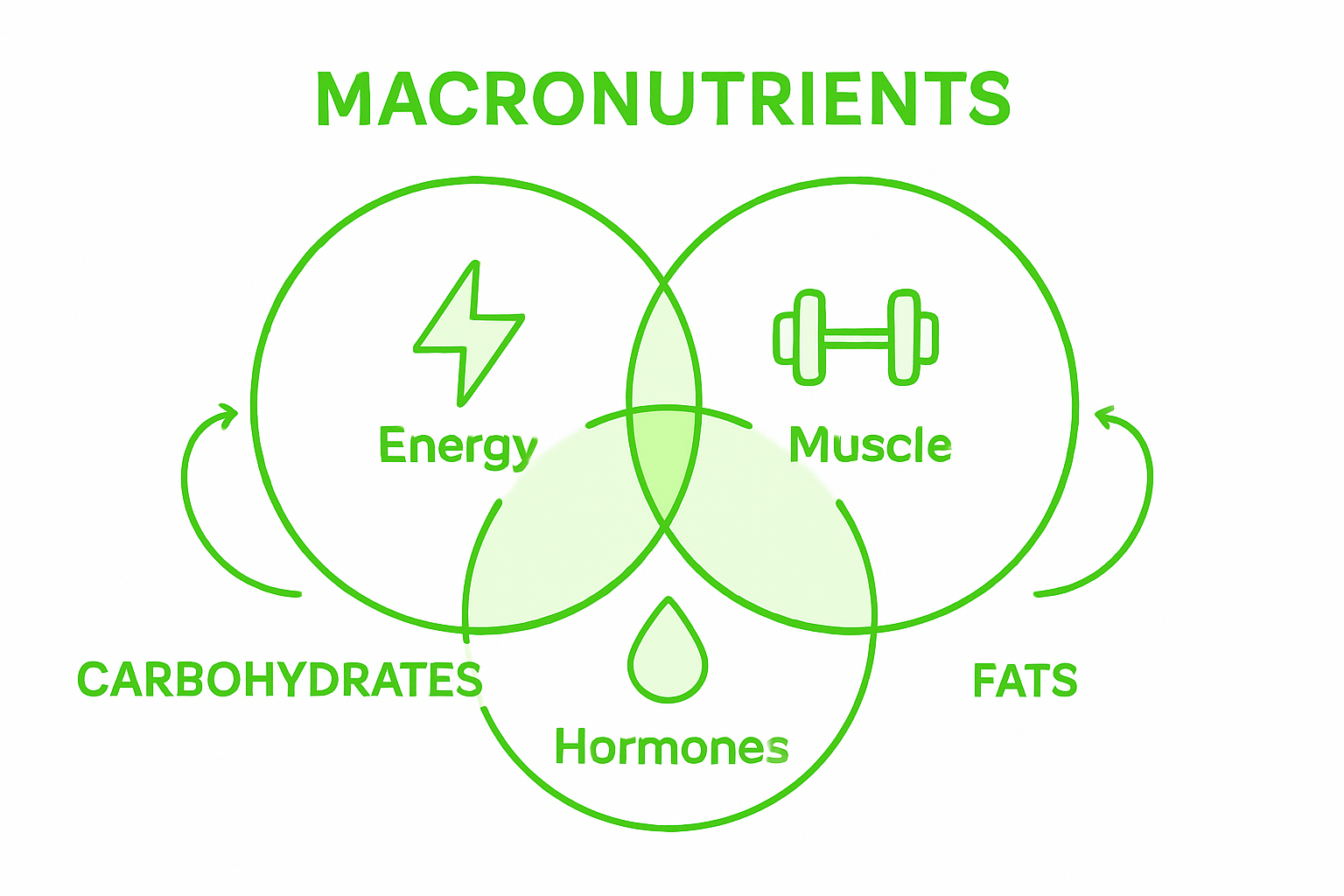
Fats, often misunderstood, are crucial for hormone production, cell membrane structure, and long-term energy storage. Lipids support low-intensity exercise and provide a concentrated energy source that helps maintain body temperature and protect vital organs. Each macronutrient operates uniquely, with proteins supporting structural needs, carbohydrates providing quick energy, and fats offering sustained fuel and critical metabolic functions.
By understanding these macronutrient roles, individuals can develop more targeted nutrition strategies. The complete macro tracking guide can help you balance these nutrients precisely, ensuring that your diet supports your specific health and fitness goals. Whether you aim to build muscle, lose weight, or enhance athletic performance, knowing how each macro functions empowers you to make informed dietary choices that align with your body’s unique requirements.
How Macro Tracking Supports Health Goals
Macro tracking transforms nutrition from a guessing game into a precise science, offering individuals a powerful tool for achieving personalized health objectives. Tracking macronutrient intake helps in making informed food choices, managing energy balance, and achieving specific health objectives, providing a level of nutritional control that generic diets simply cannot match. This approach allows you to move beyond simple calorie counting and focus on the quality and composition of your food intake.

Targeted Health Optimization becomes possible through strategic macro tracking. Different health goals require unique nutritional approaches, and macro tracking enables precise adjustments. Athletes might prioritize protein intake for muscle recovery, while weight loss seekers could balance macros to create a sustainable caloric deficit. Understanding macronutrient consumption is essential for maintaining energy levels and supporting bodily functions, which means your diet becomes a deliberate instrument for achieving specific wellness outcomes.
The real power of macro tracking lies in its adaptability and personalization. By meticulously monitoring protein, carbohydrate, and fat intake, individuals can fine-tune their nutrition to support everything from muscle building and weight management to improving metabolic health and athletic performance. This approach transforms nutrition from a one-size-fits-all model to a tailored strategy that responds to your body’s unique needs and goals.
For those seeking a systematic approach to nutrition, tracking macros for optimal health represents more than a diet strategy—it’s a comprehensive lifestyle management tool. Whether you’re managing a chronic condition, preparing for athletic competition, or simply aiming to improve overall wellness, macro tracking provides the precision and insights needed to make informed nutritional decisions that align perfectly with your individual health journey.
Integrating Macro Counting With Modern Tools
The digital revolution has transformed macro tracking from a complex, time-consuming process into an accessible and streamlined approach to nutrition management. Utilizing modern tools and applications can simplify the process of tracking macronutrient intake, enabling individuals to monitor their dietary habits with unprecedented precision and ease. Technology has bridged the gap between nutritional science and personal health management, making sophisticated dietary tracking available to everyone.
Digital Nutrition Platforms have emerged as game-changers in personalized health tracking. Digital platforms and apps offer convenient methods for monitoring macronutrient consumption, providing real-time insights into nutritional intake. These tools can automatically calculate macro ratios, suggest balanced meal plans, and even integrate with fitness trackers to create a comprehensive view of your health and nutrition. Advanced algorithms can now translate complex nutritional data into user-friendly graphics and actionable recommendations.
The integration of smart technology with nutrition tracking goes beyond simple record-keeping. Modern apps can scan food labels, recognize restaurant meals, and provide instant macro breakdowns. Some advanced platforms use artificial intelligence to learn your dietary preferences, suggest personalized recipes, and adapt recommendations based on your evolving health goals. This technology transforms macro tracking from a manual chore into an intelligent, adaptive system that grows with your nutritional journey.
For health-conscious individuals seeking a systematic approach, how to calculate macros for personal health goals represents the intersection of technology and personalized nutrition. Whether you’re an athlete fine-tuning performance, managing a health condition, or simply aiming to optimize your diet, these modern tools provide the precision and convenience needed to make informed nutritional decisions. The future of nutrition is not just about tracking what you eat, but understanding how each bite contributes to your overall health and wellness strategy.
Potential Pitfalls and Common Mistakes
Macro counting requires precision and awareness, as even well-intentioned individuals can fall into several common tracking traps. Common mistakes in macro counting include misestimating portion sizes and neglecting the quality of macronutrient sources, which can significantly undermine the effectiveness of your nutritional strategy. Understanding these potential pitfalls is crucial for maintaining an accurate and beneficial macro tracking approach.
One of the most critical errors is becoming overly fixated on numbers while losing sight of overall nutritional quality. Potential pitfalls involve focusing solely on macronutrient quantities without considering overall dietary balance and nutrient diversity, which can lead to nutritionally incomplete meals. For instance, hitting your protein target with processed meats or meeting carbohydrate goals through sugary snacks might technically satisfy macro requirements but fails to provide essential micronutrients and fiber needed for optimal health.
Precision in measurement becomes paramount when tracking macros. Common mistakes include using inaccurate measuring tools, eyeballing portion sizes, and not accounting for cooking methods that can alter nutritional content. Many individuals underestimate portion sizes, leading to unintentional calorie and macro discrepancies. Weighing foods, using digital food scales, and consulting verified nutritional databases can help mitigate these measurement challenges and ensure more accurate tracking.
For those committed to mastering macro tracking, how to calculate macros for personal health goals requires a holistic approach that balances technical accuracy with nutritional intelligence. Successful macro tracking is not about perfection but about developing a sustainable, informed relationship with your nutritional intake. By remaining flexible, focusing on whole food sources, and understanding that occasional imperfections are part of the journey, you can transform macro tracking from a rigid system into a powerful tool for personalized nutrition.
Take Control of Your Nutrition With Personalized Macro Tracking
Understanding why to count macros unlocks the door to personalized nutrition benefits by addressing specific challenges like achieving balanced nutrient intake and tailoring diets to your unique health goals. The article highlights common pain points such as misestimating portion sizes and the need for precise tracking of proteins, carbohydrates, and fats to optimize energy and performance. These challenges can often leave you feeling overwhelmed or unsure if your diet truly supports your body’s needs.
Dietium.com offers a powerful solution to these struggles through our advanced AI-driven tools and the innovative Recipians app. Enjoy customized meal plans, recipe suggestions, and fitness routines designed to align perfectly with your targeted macronutrient goals and lifestyle. With seamless device integration and expert video consultations, you gain confidence in your nutrition choices every step of the way. Start mastering your macros today with the support you deserve. Visit Recipians now and transform macro counting from a confusing task into a straightforward path to health and wellness.
Frequently Asked Questions
What are the main benefits of counting macros?
Counting macros offers personalized nutrition benefits that help individuals optimize their diet according to specific health goals, such as weight loss, muscle building, or enhancing athletic performance. It allows for greater flexibility and control over nutrient intake.
How do I determine my ideal macronutrient ratios?
To determine your ideal macronutrient ratios, consider your specific health goals, activity level, and body composition. Many online calculators and nutritional guides can help you calculate recommended ratios based on these factors.
Can I still enjoy a variety of foods while counting macros?
Yes, macro counting is designed to be flexible, allowing you to enjoy a diverse range of foods while ensuring you meet your nutritional targets. This approach helps promote sustainable eating habits without feeling deprived.
What are some common mistakes people make when counting macros?
Common mistakes in macro counting include misestimating portion sizes, focusing solely on reaching macro targets without considering overall nutritional quality, and neglecting the diversity of food sources, which can lead to nutritionally incomplete meals.


