 Skip to content

Most American adults now report that food ingredient lists are nearly as important as calorie counts when making meal decisions. This shift highlights a growing movement toward clean eating, as more health-conscious people seek out whole foods and natural choices worldwide. If you want to cut through the confusion, understand what clean eating means in daily life, and discover how it can energize your lifestyle, you will find helpful guidance right here.
Table of Contents
- Defining Clean Eating In Everyday Life
- Core Principles Of Clean Eating Habits
- Typical Foods And What To Avoid
- Common Myths And Misunderstandings
- Benefits And Risks Of Clean Eating
Key Takeaways
| Point | Details |
|---|---|
| Emphasize Whole Foods | Focus on incorporating fresh, minimally processed foods into your diet for improved nutrition and health benefits. |
| Avoid Processed Ingredients | Strive to eliminate artificial additives and refined sugars from your meals to maximize nutritional value. |
| Gradual Changes for Sustainability | Implement small, manageable adjustments to your diet, such as replacing one processed item with a whole food alternative. |
| Balance and Flexibility | Maintain a flexible approach to clean eating, prioritizing personal health goals over rigid dietary restrictions. |
Defining Clean Eating in Everyday Life
Clean eating represents a nutrition philosophy focused on consuming whole, minimally processed foods that nourish your body and support optimal health. At its core, this approach prioritizes natural ingredients and eliminates artificial additives, preservatives, and refined substances. Whole food diet strategies demonstrate how selecting nutrient-dense foods can transform your overall wellness.
The fundamental principle of clean eating involves choosing foods in their most natural state. This means selecting fresh vegetables, fruits, whole grains, and high-quality proteins that have undergone minimal processing. According to research from Harvard Health, clean eating emphasizes consuming foods that are free from unnecessary chemicals and artificial ingredients, promoting a more wholesome approach to nutrition.
Implementing clean eating doesn’t require a complete diet overhaul overnight. Instead, focus on gradual, sustainable changes like incorporating more whole foods, reading ingredient labels carefully, and reducing processed food intake. Whole foods typically include fresh produce, lean proteins, whole grains, nuts, and seeds that have not been significantly altered from their original form. The goal is creating a balanced diet that provides maximum nutritional value while minimizing exposure to artificial substances.
Pro Tip for Clean Eating Success: Start by replacing one processed food item in your daily diet with a whole food alternative. This small change can create significant momentum toward healthier eating habits and help you build sustainable nutrition practices.
Core Principles of Clean Eating Habits
Clean eating is a nutrition strategy that goes beyond simple dietary choices, representing a comprehensive approach to consuming foods that maximize health and wellness. Understanding sustainable eating habits helps individuals transform their relationship with food by focusing on whole, nutrient-dense ingredients. According to research from Michigan State University, clean eating involves selecting natural and wholesome foods, particularly those free from artificial chemicals, additives, and preservatives.

The core principles of clean eating center around several key practices. Core nutrition strategies emphasize consuming whole foods in their most natural state, which means prioritizing fresh fruits, vegetables, whole grains, lean proteins, and minimally processed ingredients. Whole ingredients are the foundation of this approach, with a strong focus on reducing refined sugars, eliminating artificial additives, and preparing meals from scratch whenever possible.
Implementing clean eating requires a strategic approach to food selection and preparation. The methodology involves carefully reading ingredient labels, choosing foods with minimal processing, and understanding the nutritional value of each item. By selecting unrefined, minimally processed foods, individuals can maximize nutrient intake while reducing exposure to artificial substances. This approach supports overall health by providing the body with essential nutrients in their most natural and bioavailable form.
Pro Tip for Clean Eating Success: Start your clean eating journey by gradually replacing processed foods with whole food alternatives, focusing on one meal or ingredient at a time to make sustainable dietary changes.
Typical Foods and What to Avoid
Navigating the world of clean eating requires understanding which foods support optimal health and which can potentially undermine your nutritional goals. Food safety practices play a crucial role in selecting the right ingredients for a clean eating lifestyle. According to Harvard Health, the ideal clean eating diet emphasizes whole, nutrient-dense foods that provide maximum nutritional benefits while minimizing processed ingredients.
The recommended foods in a clean eating approach include a diverse range of whole, minimally processed ingredients. These typically encompass fresh vegetables and fruits, whole grains like quinoa and brown rice, lean proteins such as grass-fed meats, wild-caught fish, legumes, nuts, seeds, and low-fat dairy products. Each of these food groups offers unique nutritional advantages, providing essential vitamins, minerals, and macronutrients that support overall health and wellness.
Conversely, clean eating requires strategic avoidance of certain food categories. Processed foods, refined sugars, artificial additives, and ingredients with unpronounceable names are primary targets for elimination. This includes packaged snacks, sugary beverages, pre-prepared meals with lengthy ingredient lists, and foods containing high levels of preservatives, artificial colors, and flavor enhancers. The goal is to consume foods as close to their natural state as possible, maximizing nutritional intake while reducing exposure to potentially harmful synthetic substances.
Pro Tip for Clean Ingredient Selection: Develop a habit of reading food labels and choosing items with five or fewer recognizable ingredients to ensure you’re making clean eating choices.
Here’s how typical clean eating foods compare to those best avoided:
| Food Type | Clean Eating Example | Commonly Avoided Example | Key Nutritional Difference |
|---|---|---|---|
| Protein | Wild-caught salmon | Processed deli meat | Less sodium, more healthy fats |
| Grain | Quinoa | White bread | More fiber, fewer additives |
| Snack | Raw almonds | Potato chips | Higher nutrients, no trans fats |
| Beverage | Herbal tea | Sugary soda | No added sugars, natural flavors |
| Dairy | Plain Greek yogurt | Flavored low-fat yogurt | Less sugar, more protein |
Common Myths and Misunderstandings
Clean eating has become a popular nutrition approach, but its widespread adoption has also spawned numerous misconceptions that can mislead well-intentioned individuals. Understanding healthy eating strategies helps dispel these myths and promotes a more balanced perspective on nutrition. Psychology Today highlights that one of the most significant challenges is the lack of a standardized definition, which leads to widespread confusion about what clean eating actually means.
One prevalent myth suggests that clean eating requires complete elimination of entire food groups or strict, inflexible dietary restrictions. In reality, a balanced clean eating approach emphasizes moderation and nutritional diversity rather than extreme limitations. Another common misunderstanding is the belief that simply labeling a food as ‘clean’ automatically makes it healthy. Nutritional value depends on multiple factors, including ingredient quality, preparation method, and overall dietary context. These oversimplified interpretations can potentially lead to nutritionally imbalanced diets and unhealthy relationships with food.
Perhaps the most dangerous misconception is that clean eating guarantees superior health outcomes or serves as a universal solution for wellness. Harvard Health warns that such thinking can lead to potentially harmful dietary practices, including orthorexia – an obsessive focus on eating foods one considers healthy. Clean eating should be viewed as a flexible nutritional approach that prioritizes whole, minimally processed foods, not as a rigid ideology or a one-size-fits-all solution. The key is understanding that nutritional needs vary between individuals and that flexibility, balance, and personal health goals should always take precedence.
Pro Tip for Myth-Proofing Your Diet: Consult a registered dietitian or nutritionist to develop a personalized eating plan that meets your unique health requirements and avoids falling into common clean eating misconceptions.
Benefits and Risks of Clean Eating
Clean eating represents a nuanced nutritional approach with significant potential benefits and potential drawbacks that require careful consideration. Nutrient-dense food strategies can help individuals make informed decisions about their dietary choices. Research from Harvard Health indicates that while clean eating can offer substantial health advantages, it also carries potential risks that demand a balanced, mindful approach.
The primary benefits of clean eating include improved nutritional intake, increased consumption of whole foods, and reduced exposure to artificial additives and processed ingredients. By prioritizing fresh, minimally processed foods, individuals can potentially enhance their overall health, support better metabolic function, and reduce the risk of chronic diseases. Consuming whole fruits, vegetables, lean proteins, and unrefined grains provides essential nutrients, vitamins, and minerals that support optimal bodily functions and long-term wellness.
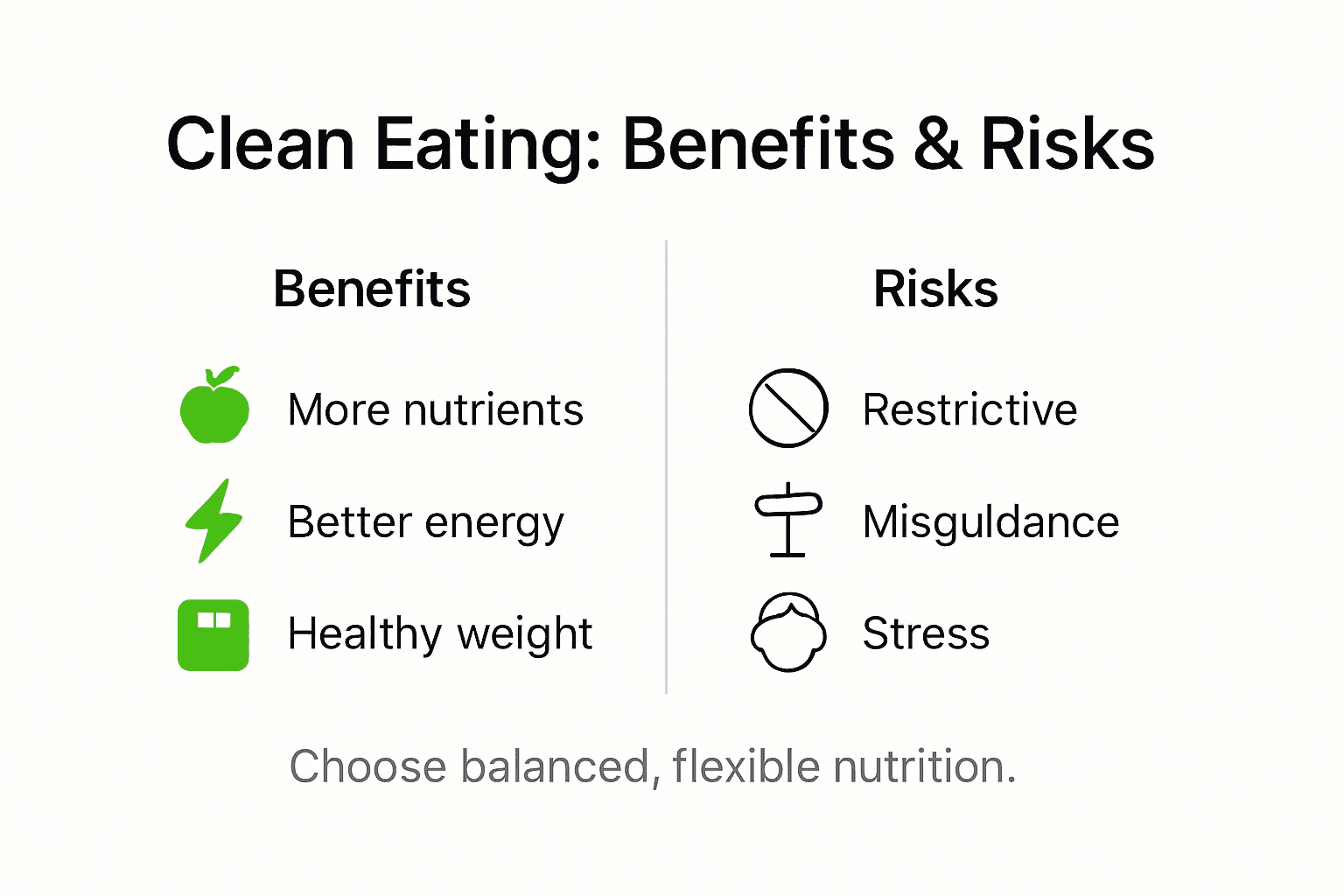
However, the potential risks of clean eating are equally significant and often overlooked. Pubmed research suggests that an overly rigid approach can lead to psychological challenges, including increased dietary restraint and potential development of disordered eating patterns. Some individuals might become excessively focused on food purity, leading to social isolation, anxiety around food choices, and a potentially unhealthy relationship with nutrition. The key is maintaining a flexible, balanced perspective that emphasizes overall health and personal well-being rather than adhering to an inflexible, restrictive dietary ideology.
Pro Tip for Balanced Nutrition: Adopt a moderate clean eating approach that allows occasional flexibility, focuses on nutrient diversity, and prioritizes your mental and physical health over strict dietary rules.
Below is a summary of the potential benefits and risks associated with clean eating:
| Aspect | Potential Benefit | Potential Risk |
|---|---|---|
| Physical | Improved energy and digestion | Nutrient gaps from overrestriction |
| Psychological | Greater mindfulness around food choices | Increased anxiety about food purity |
| Social | Easier meal planning and prepping | Social isolation due to strict requirements |
| Long-term | Reduced chronic disease risk | Risk of developing disordered eating patterns |
Take Control of Your Clean Eating Journey Today
Navigating the challenges of clean eating means understanding how to make balanced, sustainable nutrition choices while avoiding common pitfalls like overrestriction or confusion over what foods really nourish your body. If you want to embrace a clean eating lifestyle that prioritizes whole, minimally processed foods without the stress or misinformation, it is essential to have personalized support tailored to your unique needs and goals.
At Dietium, our Recipians app is designed to simplify your clean eating experience by providing customized meal plans and recipe suggestions that align with your nutritional preferences. Whether you seek to improve your diet quality, reduce processed foods, or build healthy habits, our platform also integrates AI-powered tools to track key body metrics including BMI and calorie needs. With access to expert advice and real-time activity tracking, you can avoid the common clean eating misconceptions and build sustainable habits that really work.
Ready to transform your approach to nutrition? Explore how Dietium’s Recipians meal planning and nutrient-dense food strategies can empower you to take control today. Start your personalized clean eating journey now at Dietium for smarter, balanced nutrition choices.
Frequently Asked Questions
What does clean eating mean?
Clean eating focuses on consuming whole, minimally processed foods that nourish the body and support optimal health. It emphasizes natural ingredients and excludes artificial additives and preservatives.
What are the core principles of clean eating?
The core principles include choosing whole foods in their natural state, like fresh fruits, vegetables, whole grains, and lean proteins. It also involves reducing processed foods and understanding the nutritional value of ingredients.
Which foods should I prioritize in a clean eating diet?
Prioritize fresh vegetables, fruits, whole grains (like quinoa and brown rice), lean proteins (such as grass-fed meats and wild-caught fish), legumes, nuts, seeds, and low-fat dairy products to maximize nutritional benefits.
Are there any risks associated with clean eating?
Yes, an overly rigid approach to clean eating can lead to psychological issues, including increased anxiety about food choices and potential disordered eating patterns. It’s important to maintain a balanced perspective and practice moderation.


