 Skip to content

Sorting through endless nutrition advice can leave tech-savvy vegan expectant mothers weighing what truly matters for both their health and their baby’s development. Pregnancy on a vegan diet comes with unique concerns, especially about critical nutrients like vitamin B12, iron, calcium, and vitamin D. Backed by research such as the Danish Society of Obstetrics and Gynecology guideline, well-balanced vegan diets can be safe during pregnancy when supplemented appropriately. This resource will illuminate key concepts and practical strategies to support a healthy, evidence-based vegan pregnancy.
Table of Contents
- Defining Vegan Pregnancy Nutrition And Key Concepts
- Types Of Vegan Diets And Nutritional Variations
- Essential Nutrients And Supplementation Needs
- Meal Planning Strategies For Every Trimester
- Managing Risks And Avoiding Deficiencies
Key Takeaways
| Point | Details |
|---|---|
| Vegan Pregnancy Diet Planning | A well-balanced vegan pregnancy diet requires careful nutrient planning and supplementation to meet the needs of both mother and fetus. |
| Key Nutrients for Vegans | Essential nutrients like Vitamin B12, Iron, and Omega-3 fatty acids must be prioritized to avoid deficiencies during pregnancy. |
| Trimester-Specific Nutrition | Nutritional strategies should adapt throughout each trimester to support the evolving health requirements of both mother and baby. |
| Professional Guidance | Consulting with a registered dietitian specializing in plant-based nutrition is vital for developing a personalized dietary plan. |
Defining Vegan Pregnancy Nutrition and Key Concepts
A vegan pregnancy diet represents a carefully planned nutritional approach that eliminates all animal products while ensuring comprehensive maternal and fetal nutritional needs are met. This specialized dietary strategy requires strategic planning and informed supplementation to support optimal health throughout pregnancy.
Vegan pregnancy nutrition centers on consuming plant-based foods that deliver essential nutrients through strategic food selections and targeted supplementation. Nutrient balance during pregnancy demands particular attention, especially regarding protein, calcium, iron, and critical micronutrients that traditionally come from animal sources.
Key nutritional considerations for vegan pregnancy include:
- Protein sources from legumes, nuts, seeds, and fortified plant proteins
- Comprehensive vitamin B12 supplementation
- Iron-rich plant foods like spinach, lentils, and fortified grains
- Calcium sources including fortified plant milks and leafy greens
- Omega-3 fatty acids from algae-based supplements
- Vitamin D through sunlight exposure and targeted supplements
The Danish Society of Obstetrics and Gynecology guideline confirms that well-balanced vegan diets can be safe during pregnancy when supplemented appropriately. This research underscores the importance of careful nutritional planning and professional guidance to mitigate potential nutrient deficiency risks.
Pro tip: Consult a registered dietitian specializing in plant-based nutrition to develop a personalized vegan pregnancy meal plan that meets all your nutritional requirements.
Types of Vegan Diets and Nutritional Variations
Vegan diets encompass diverse nutritional approaches that eliminate animal products while offering varying levels of dietary complexity and nutrient management. Understanding these variations becomes crucial during pregnancy, where nutritional precision can significantly impact maternal and fetal health.
Comparative nutritional research reveals multiple vegan dietary patterns, each with unique nutritional profiles and supplementation requirements. These dietary variations include whole food, raw vegan, and processed plant-based approaches, each presenting distinct challenges and benefits for pregnant individuals.
Common vegan dietary variations include:
- Whole Food Vegan Diet: Emphasizes minimally processed, nutrient-dense plant foods
- Raw Vegan Diet: Focuses on uncooked, plant-based foods below 118°F
- High Protein Vegan Diet: Prioritizes plant protein sources like legumes and fortified products
- Low Processed Vegan Diet: Minimizes packaged and artificial plant-based foods
- Gluten-Free Vegan Diet: Eliminates gluten while maintaining plant-based nutrition
Each dietary variation requires careful planning to ensure comprehensive nutrient intake. Complete protein sources play a critical role in maintaining nutritional balance, particularly during pregnancy when protein demands increase significantly.
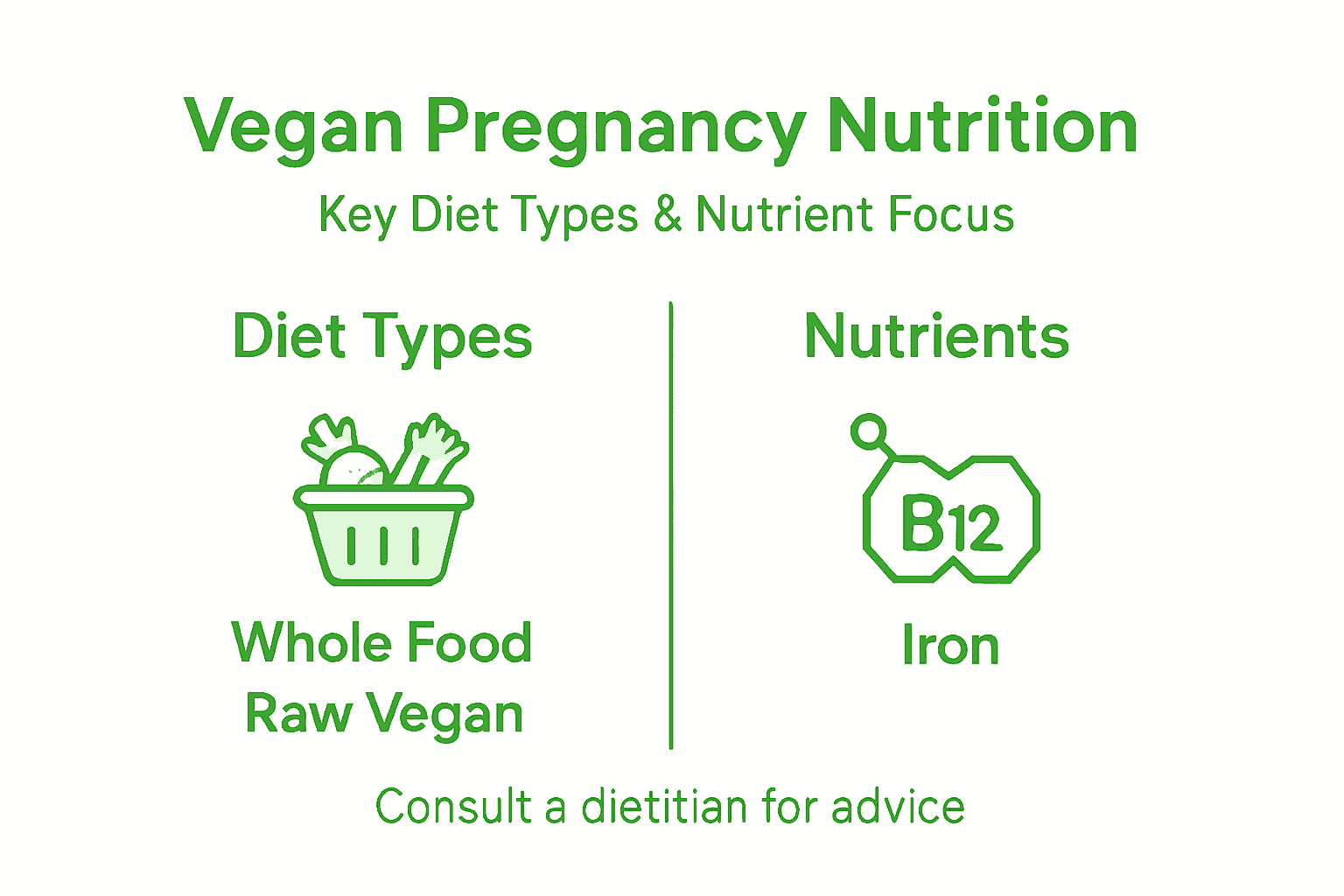
This comparison highlights the characteristics of common vegan pregnancy diet variations:
| Diet Variation | Nutritional Focus | Unique Consideration |
|---|---|---|
| Whole Food | Unprocessed, nutrient-rich foods | Broad micronutrient coverage |
| Raw Vegan | Uncooked plant foods only | Requires careful protein planning |
| High Protein Vegan | Legumes, tempeh, fortified products | Supports increased pregnancy needs |
| Gluten-Free Vegan | Excludes gluten grains | Ensure variety in whole grains |
Nutritional diversity within vegan diets can provide comprehensive maternal health support when implemented with professional guidance and targeted supplementation.
Pro tip: Consult a registered dietitian specializing in plant-based prenatal nutrition to develop a personalized vegan diet plan tailored to your specific health needs and pregnancy requirements.
Essential Nutrients and Supplementation Needs
Vegan pregnancy nutrition demands strategic nutrient supplementation to address potential dietary gaps and support optimal maternal and fetal health. Pregnant individuals following plant-based diets must pay special attention to specific micronutrients that are traditionally obtained from animal sources.

Critical supplementation guidelines emphasize the importance of targeted nutritional interventions during pregnancy, highlighting key nutrients that require careful monitoring and potential supplementation.
Essential nutrients for vegan pregnancy include:
- Vitamin B12: Critical for neurological development and red blood cell formation
- Folate: Crucial for preventing neural tube defects
- Iron: Supports increased blood volume and prevents anemia
- Calcium: Maintains bone health for mother and developing fetus
- Vitamin D: Supports immune function and bone metabolism
- Omega-3 Fatty Acids: Derived from algae-based supplements for brain development
- Zinc: Supports immune system and cell growth
- Iodine: Essential for thyroid function and fetal brain development
Micronutrient deficiency research suggests that careful supplementation can mitigate potential nutritional risks associated with vegan diets during pregnancy. Professional guidance becomes essential in developing a comprehensive nutritional strategy.
Here’s a summary of key nutrients for vegan pregnancy and their primary plant-based sources:
| Nutrient | Main Vegan Sources | Supplement Recommendation |
|---|---|---|
| Protein | Lentils, tofu, quinoa | Fortified plant protein powder |
| Iron | Spinach, lentils, pumpkin seeds | Prenatal supplement with iron |
| Calcium | Fortified almond milk, bok choy | Vegan-friendly calcium supplement |
| Vitamin B12 | Fortified cereals, nutritional yeast | Direct B12 tablet or sublingual |
| Omega-3 (DHA/EPA) | Chia seeds, walnuts, flaxseed | Algae-based omega-3 supplement |
| Vitamin D | Fortified soy milk, mushrooms | Vitamin D2 or D3 (vegan source) |
Precise nutritional planning and targeted supplementation can effectively support maternal health and fetal development on a vegan diet.
Pro tip: Schedule a comprehensive nutritional assessment with a registered dietitian specializing in plant-based prenatal nutrition to develop a personalized supplementation plan.
Meal Planning Strategies for Every Trimester
Vegan pregnancy nutrition requires dynamic meal planning that adapts to the changing physiological demands of each trimester. Understanding the unique nutritional requirements during different stages of pregnancy becomes crucial for maintaining maternal and fetal health.
Strategic trimester-specific nutritional research highlights the importance of tailoring dietary intake to support the evolving needs of both mother and developing baby throughout gestation.
Nutritional strategies for each trimester include:
First Trimester:
- Focus on folate-rich foods
- Manage potential morning sickness with gentle, nutrient-dense meals
- Establish foundational nutritional habits
Second Trimester:
- Increase protein intake
- Incorporate more iron-rich plant foods
- Add calcium-dense vegan sources
Third Trimester:
- Maximize nutrient density
- Support increased caloric needs
- Prepare for postpartum recovery
Pregnancy meal planning requires careful consideration of nutrient balance, food variety, and individual dietary preferences. Consulting with a nutrition specialist can help develop a personalized approach that meets specific health requirements.
Successful vegan pregnancy nutrition is about adaptability, strategic nutrient intake, and holistic dietary planning.
Pro tip: Maintain a food diary to track nutrient intake and discuss variations with your healthcare provider to ensure comprehensive nutritional support.
Managing Risks and Avoiding Deficiencies
Vegan pregnancy nutrition requires a proactive approach to identifying and mitigating potential nutritional risks. Understanding the complex landscape of potential deficiencies becomes crucial for maintaining optimal maternal and fetal health throughout gestation.
Comprehensive nutritional risk assessment reveals significant challenges specific to plant-based diets during pregnancy, highlighting the need for strategic dietary planning and targeted supplementation.
Common nutritional risks for vegan pregnant individuals include:
Micronutrient Deficiency Risks:
- Vitamin B12 depletion
- Insufficient calcium intake
- Potential iron metabolism challenges
- Reduced vitamin D levels
- Limited omega-3 fatty acid absorption
Potential Pregnancy Outcome Risks:
- Increased likelihood of small-for-gestational-age newborns
- Potential lower birth weight
- Compromised neurological development
- Reduced maternal bone density
Strategic approaches to risk management involve:
- Regular comprehensive blood panels
- Professional nutritional counseling
- Targeted supplementation protocols
- Consistent dietary monitoring
- Personalized nutrition planning
Micronutrient tracking becomes essential for vegan pregnant individuals to ensure comprehensive nutritional support and mitigate potential health risks.
Proactive nutritional management can effectively transform potential dietary risks into opportunities for optimal maternal and fetal health.
Pro tip: Schedule quarterly nutritional assessments with a registered dietitian specializing in plant-based prenatal nutrition to create a dynamic, responsive dietary strategy.
Elevate Your Vegan Pregnancy Nutrition Journey with Tailored Support
Navigating the complex nutritional needs of a vegan pregnancy requires precise planning and ongoing guidance. Challenges like ensuring adequate intake of vitamin B12, iron, calcium, and omega-3 fatty acids can feel overwhelming without the right tools. This article highlights the importance of strategic supplementation and trimester-specific meal planning to support both maternal health and fetal development.
Take control of your pregnancy nutrition with personalized meal plans designed around your unique needs. At Dietium, our Recipians app offers custom vegan meal suggestions and nutrient tracking to help you meet your increased protein and micronutrient demands safely and effectively. Combine this with our AI-powered calculators to monitor your body’s changing metrics and make informed adjustments every step of the way.
Start building a well-balanced, evidence-based vegan pregnancy plan today. Visit Dietium Recipians now and take the first step toward optimal health for you and your baby.
Frequently Asked Questions
What essential nutrients should I focus on during a vegan pregnancy?
Key nutrients to focus on during a vegan pregnancy include protein, vitamin B12, iron, calcium, omega-3 fatty acids, and vitamin D. It’s crucial to plan your diet to include rich sources of these nutrients and consider appropriate supplements as needed.
How can I ensure adequate protein intake on a vegan pregnancy diet?
To ensure adequate protein intake during a vegan pregnancy, incorporate a variety of plant-based protein sources such as lentils, beans, tofu, quinoa, nuts, and seeds into your meals. You may also consider fortified plant proteins if necessary.
What supplementation is recommended for vegan pregnant individuals?
Recommended supplements for vegan pregnant individuals include vitamin B12, iron, calcium, omega-3 fatty acids (from algae sources), and vitamin D. It’s advisable to consult with a healthcare provider to tailor supplementation to your specific needs.
How can I manage the risk of nutrient deficiencies during a vegan pregnancy?
To manage nutrient deficiencies during a vegan pregnancy, regularly monitor your nutrient intake, consult with a registered dietitian, consider blood tests for vitamin levels, and establish a meal plan that includes diverse, nutrient-dense foods.


