 Skip to content

Most advice about superfoods gets it wrong. While the market is full of bold promises, no legal or scientific standard exists for what makes a food a true superfood. Many health-conscious millennials and Gen Z are drawn to superfoods thanks to trends from American wellness influencers and global marketing, yet confusion still clouds which foods actually deserve this title. This guide breaks down the myths, reveals the categories, and helps you identify smart, evidence-based additions for your nutrition routine.
Table of Contents
- Defining Superfoods And Common Misconceptions
- Categories And Examples Of Popular Superfoods
- How Superfoods Support Health And Wellness
- Balancing Superfoods With A Healthy Diet
- Practical Ways To Add Superfoods Daily
Key Takeaways
| Point | Details |
|---|---|
| Understand the Concept of Superfoods | Superfoods are nutrient-dense foods that support health, but they are not miracle items that drastically change wellness overnight. |
| Focus on Balanced Nutrition | Incorporate a variety of whole, minimally processed foods into your diet instead of relying solely on superfoods for health improvements. |
| Recognize Marketing Influence | Consumer perceptions of superfoods can be heavily influenced by marketing; approach their claims with skepticism. |
| Plan for Nutritional Diversity | Rotate superfood selections weekly to maximize nutrient intake without overwhelming your diet. |
Defining Superfoods and Common Misconceptions
The term superfood has gained significant traction in recent years, yet most people misunderstand its true meaning. Scientific definitions remain unclear about what actually constitutes a superfood. Contrary to popular belief, no single food magically transforms health overnight.
Superfoods are not miraculous products with supernatural properties, but nutrient-dense foods containing higher concentrations of antioxidants, vitamins, minerals, and other beneficial compounds. The marketing around superfoods often creates unrealistic expectations, suggesting they can single-handedly prevent diseases or dramatically improve wellness. In reality, nutrition works through balanced, varied dietary patterns.
Research indicates that consumer perceptions of superfoods are heavily influenced by marketing strategies. Public understanding frequently associates superfoods with exotic, imported items perceived as exceptionally healthy. Women, younger consumers, and organic food enthusiasts tend to have more positive impressions of these nutritional powerhouses. However, scientific evidence suggests no legal or standardized definition exists for what qualifies as a superfood.
Pro tip: Approach superfood claims critically and focus on incorporating a diverse range of whole, minimally processed foods into your diet rather than chasing trendy ingredients.
Categories and Examples of Popular Superfoods
Superfoods represent a diverse range of nutrient-rich foods that offer exceptional health benefits. Top superfoods in 2023 are predominantly plant-based, spanning multiple categories that cater to different nutritional needs and dietary preferences. These foods are strategically selected for their high concentration of vitamins, minerals, antioxidants, and other beneficial compounds.

The primary categories of superfoods include plant-based proteins, fermented foods, seeds, fruits, nuts, leafy greens, and aquatic botanicals. Key examples within these categories feature chia seeds, hemp seeds, blueberries, avocados, pistachios, almonds, kale, spinach, algae, seaweed, and green tea. Each category offers unique nutritional profiles that support immune function, reduce inflammation, and promote overall wellness. Fermented foods like kimchi and kombucha provide additional probiotic benefits, while ancient grains and nondairy milks offer alternative nutritional sources for diverse dietary needs.
Here’s a structured summary of superfood categories and nutritional strengths:
| Superfood Category | Key Examples | Primary Nutrients | Notable Health Benefit |
|---|---|---|---|
| Fruits | Blueberries, Acai | Vitamins, Antioxidants | Immune support, cell protection |
| Seeds | Chia, Hemp | Omega-3s, Fiber | Heart and digestive health |
| Leafy Greens | Kale, Spinach | Vitamin K, Iron | Bone health, energy production |
| Fermented Foods | Kimchi, Kombucha | Probiotics, Minerals | Gut health, immunity |
| Nuts | Almonds, Pistachios | Healthy fats, Protein | Brain and heart support |
| Aquatic Botanicals | Algae, Seaweed | Iodine, Antioxidants | Thyroid function, inflammation |
Nutritionists emphasize that superfoods are most effective when integrated into a balanced diet. While these foods contain concentrated nutrients, they should complement—not replace—a varied and comprehensive nutritional approach. How to incorporate superfoods into meals requires strategic planning and understanding of individual health goals and dietary restrictions.
Pro tip: Rotate your superfood selections weekly to ensure a broad spectrum of nutrients and prevent dietary monotony.
How Superfoods Support Health and Wellness
Bioactive compounds in superfoods play a critical role in supporting overall health and wellness. Nutrient-rich foods offer powerful preventive health benefits by providing essential macro and micronutrients that help regulate bodily functions and protect against chronic diseases.
The primary health support mechanisms of superfoods include reducing oxidative stress, managing inflammation, and boosting immune system functionality. Antioxidants found in foods like blueberries, kale, and chia seeds help neutralize free radicals, potentially lowering risks of cancer, heart disease, and neurological disorders. Specific compounds such as flavonoids and phenolics contribute to cardiovascular health by regulating blood pressure and supporting metabolic processes. Nutrient-packed powerhouses for wellness also provide fiber for improved digestion and healthy fats that support heart and brain function.
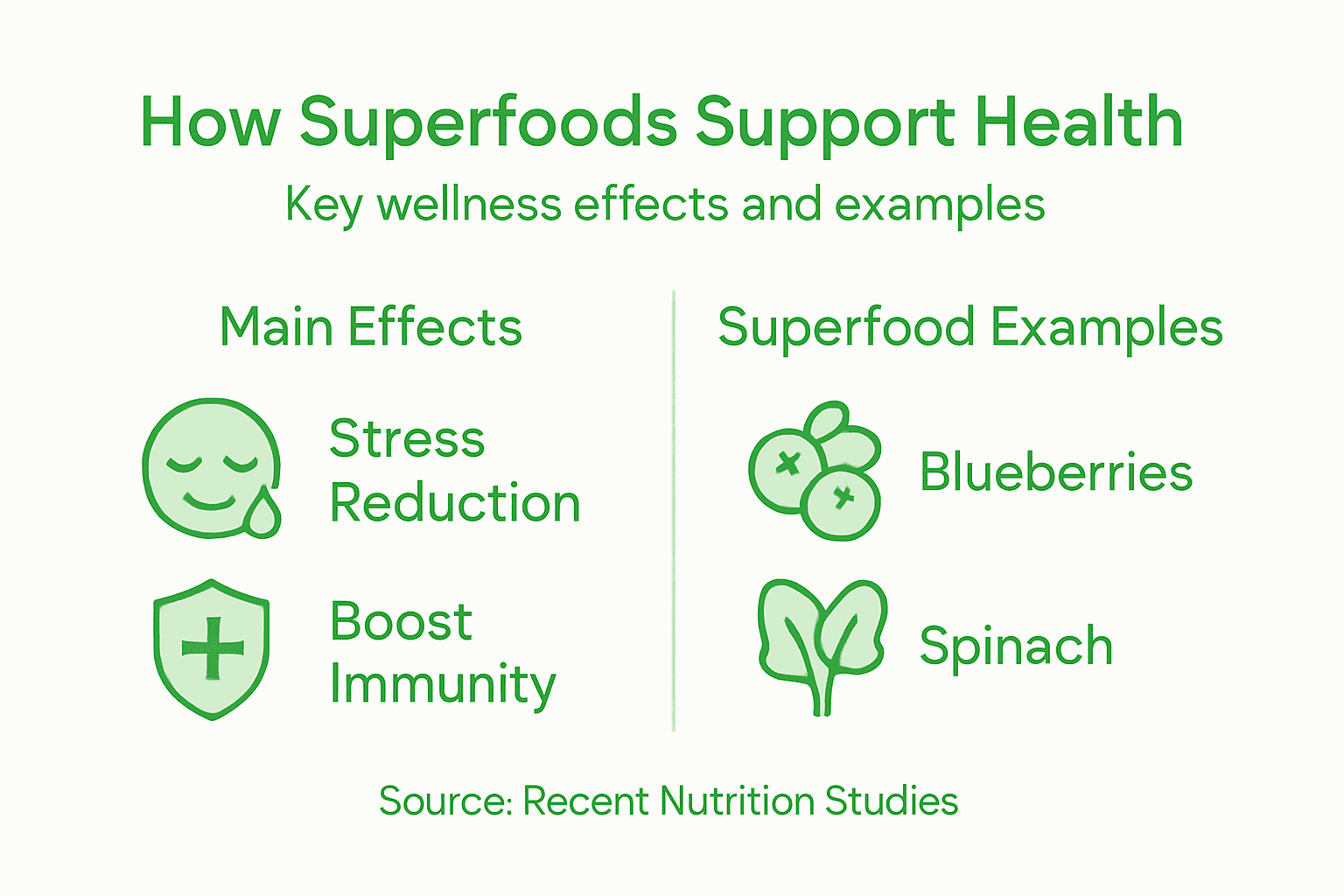
Compare the main mechanisms by which superfoods benefit health:
| Mechanism | Example Superfoods | How It Helps the Body |
|---|---|---|
| Reduces Oxidative Stress | Blueberries, Kale | Lowers risk of chronic disease |
| Manages Inflammation | Chia Seeds, Salmon | Eases swelling, boosts recovery |
| Supports Immunity | Leafy Greens, Yogurt | Enhances defense against illness |
| Improves Digestion | Fermented Foods | Balances gut microbiome |
These nutritional powerhouses work synergistically to enhance bodily functions, with each superfood offering unique benefits. For instance, salmon provides omega-3 fatty acids, while leafy greens deliver essential vitamins and minerals. The key is understanding that no single food is a magic solution, but rather a strategic combination of nutrient-dense foods can significantly improve overall health and wellness.
Pro tip: Integrate a variety of colorful superfoods into your daily diet to maximize nutritional diversity and health benefits.
Balancing Superfoods With a Healthy Diet
Nutritional balance is crucial when incorporating superfoods into your daily diet. Superfoods are not magic solutions but strategic components that complement a well-rounded nutritional approach. While they offer concentrated nutrients, they should enhance rather than replace comprehensive dietary practices.
Plant-based diets rich in superfoods demonstrate significant potential for reducing chronic disease risks. Plant-based nutrition strategies highlight the importance of choosing minimally processed, nutrient-dense foods over highly processed alternatives. The key is understanding that variety and moderation across food groups matter more than obsessing over individual superfoods. A balanced diet includes proteins, complex carbohydrates, healthy fats, and a spectrum of vitamins and minerals from diverse sources.
Successful integration of superfoods requires thoughtful planning. Rather than treating them as miraculous cure-alls, view them as nutritional boosters that add extra benefits to your existing diet. This means incorporating foods like chia seeds, kale, blueberries, and salmon strategically alongside whole grains, lean proteins, and varied vegetables. Nutritional experts recommend rotating different superfoods to ensure a broad range of nutrients and prevent dietary monotony.
Pro tip: Create weekly meal plans that include 2-3 different superfoods to maximize nutritional diversity without overwhelming your diet.
Practical Ways to Add Superfoods Daily
Nutrient integration can be seamless and enjoyable when approached creatively. Easy superfood incorporation strategies transform mundane meals into nutritional powerhouses without complex preparation or sacrificing taste. The key is finding simple, adaptable methods that fit naturally into existing eating patterns.
Breakfast presents an excellent opportunity for superfood infusion. Try blending acai, blueberries, and bananas into morning smoothies, sprinkling chia seeds over oatmeal, or adding chopped nuts to yogurt. Lunch and dinner can be enhanced by tossing kale into salads, incorporating quinoa as a protein-rich grain base, or garnishing dishes with avocado and walnuts. Versatile superfood meal strategies enable quick nutritional upgrades across different meal types.
The most effective approach involves gradual, intentional integration rather than dramatic dietary overhauls. Experiment with different combinations, pay attention to personal taste preferences, and remember that consistency matters more than perfection. Rotating different superfoods ensures a broad spectrum of nutrients while preventing flavor fatigue. Consider keeping staples like chia seeds, turmeric, leafy greens, and nuts readily available to make spontaneous healthy choices easier.
Pro tip: Prep superfood ingredients in advance during weekly meal planning to ensure quick, effortless nutritional boosts.
Unlock the Real Power of Superfoods with Personalized Nutrition
The article highlights the confusion and challenges around superfoods and emphasizes that no single food can deliver miraculous health benefits alone. If you are looking to balance nutrient-rich superfoods with a healthy diet to truly support your wellness goals you need more than just information. You need personalized guidance to integrate these nutrient-dense foods effectively while tracking your unique body metrics and dietary needs.
At Dietium.com, our Recipians app offers customized meal plans that incorporate a variety of superfoods tailored to your individual goals. Using AI-powered tools you can monitor your BMI, calorie needs, and nutrient intake easily so that your diet stays balanced and sustainable. Stop chasing trends and start building a real lifestyle with evidence-based strategies. Explore how to add superfoods strategically into your meals without overwhelming your routine by visiting https://dietium.com/recipians today.
Take control of your health now by leveraging personalized nutrition solutions that bring clarity and convenience to your wellness journey.
Frequently Asked Questions
What are superfoods and how do they benefit health?
Superfoods are nutrient-dense foods that are rich in antioxidants, vitamins, and minerals. They support health by reducing oxidative stress, managing inflammation, and boosting immune function.
How can I incorporate superfoods into my daily diet?
You can easily incorporate superfoods by adding them to meals, such as blending berries into smoothies, sprinkling chia seeds over oatmeal, or adding leafy greens to salads. Try to rotate different superfoods weekly for maximum benefits.
Are there specific categories of superfoods I should focus on?
Yes, popular categories include fruits (like blueberries), seeds (such as chia and hemp), leafy greens (like spinach and kale), nuts (like almonds), and fermented foods (such as kimchi and kombucha). Each category offers unique health benefits.
Can superfoods replace a balanced diet?
No, superfoods should complement a balanced diet rather than replace it. It’s essential to maintain a variety of whole, minimally processed foods from all food groups for optimal health.
Recommended
- Whole Food Diet Benefits: Complete Wellness Breakdown – Dietium
- Top Superfoods for Weight Loss in 2025: A Complete Guide – Dietium
- 7 Must-Know Nutrient Dense Foods List for Better Health – Dietium
- Top 5 Superfoods and How to Incorporate Them Into Your Meals – Dietium
- Trattamento Rinforzante dei Capelli con Erbe Ayurvediche – Parrucchiere Organic Milano
- What foods can you not eat with dental implants? – Albania Dental Implants


