 Skip to content

Philippines Life Expectancy: Amazing Insights into Filipino Lifespan
When it comes to Philippines life expectancy, we aren’t just talking statistics, graphs or numerals. We’re revealing a story of life. The miracle of a mother who bore children and fed them amidst hardship, a father migrating abroad in search of a better life, a grandparent who still remembers the old song at twilight. There are millions behind those numbers. Millions of hope, laughter, and bayanihan.
A baby born in the Philippines in the year 2025 can expect to live for nearly 74 years. life expectancy at birth Philippines tells a compelling story of struggles overcome and progress made from combating infectious diseases and improving sanitation to advancing education and expanding access to health care.
And yet, beyond the encouraging averages, there are contrasts that tell a bigger story. Your life span in the Philippines depends on where you live, how much you earn, and what sort of care you get. A baby born in Metro Manila should expect to live some years longer than a child born in a far-flung Mindanao province — not because of destiny, but due to opportunity, accessibility, and awareness.
Cultural practices impact our life expectancy of filipino too. What we eat deeply impacts how long we live; a Filipino meal is generally ample, generous, although often teaming with salt and oil; many Filipinos have a love for celebration, gilás, and while it brings joy, it sometimes does this at the expense of our long term healthy wellbeing. And yet, the Filipino life span continues its upward climb, a product of westernized success, and of our natural hardiness.
And perhaps most importantly of all, our life expectancy of filipino is more than just a product of our health systems and statistics. It is quality of life, living long and living well. For us “well” means not just quantity of health, but quality as well; it means a life lived for each other, together, in faith.
As we enter the world of trends and facts behind the Philippines average life expectancy of filipino, we will find out:
- How much it has improved through the years
- What factors still affect the Filipino length of life
- How it compares to its Asian neighbours
- What it foretells for the next generation of Filipinos
These are rather numbers, yes, but they are numbers of people; how a year more of life can be a year more of fulfilled, enriched, and shared living.
Life Expectancy at Birth Philippines: The Latest Picture
As of a few years ago (2025), the average Filipino is expected to live until 71-73. In other words, babies born in the Philippines today can expect to live, on average, into their early seventies.
| Year | Male Life Expectancy | Female Life Expectancy | Overall Average |
| 2000 | 66 years | 72 years | 69 years |
| 2010 | 68 years | 74 years | 71 years |
| 2020 | 70 years | 76 years | 73 years |
| 2025 | 71 years | 77 years | 74 years (projected) |
Fact: Filipino women tend to outlive men by around 5–6 years, a pattern seen in many countries due to differences in lifestyle, biology, and risk exposure.
Life Span in the Philippines: What Shapes It

life span in the Philippines is influenced by many intertwined factors – from access to health care to the socio-economic environment.(seemore)
1. Healthcare System & Access
Health care access is a critical aspect of life expectancy of filipino . In the Philippines, access to quality health care is still a challenge. While PhilHealth has increased its coverage, there are still urban – rural gaps. In cities it is easier to reach hospitals with the needed facilities, but in rural areas, it’s harder to find medical facilities and doctors. Quick Fact: There’s about 1 doctor per 10,000 Filipinos vs the WHO target of 1 doctor for EVERY 1,000 indigent patients!
2. Diet and Lifestyle
Accessibility to Healthcare is a major factor affecting life expectancy of filipino and has been a major barrier for those who want to live long and healthy lives. Although PhilHealth has expanded its coverage from 30% to 60%, there still exists a disparity between Urban and Rural areas, as it is much easier for urban residents to find hospitals and other appropriate Medical Facilities in their area than it is for rural residents, who often must travel long distances for basic health care needs.
3. Physical Activity and Community Spirit
Although there are dietary challenges, Filipinos nevertheless remain healthy and stay active from our daily routines, labour and community activities.
- Social bonds are equally key, and family closeness and community spirit lessen mental stress and promote happiness.
- “A joyous heart is good medicine.” — Proverb 17:22
Rural vs. Urban Life Expectancy of Filipinos
- Urban Filipinos:
- Have access to healthcare.
- More sedentary.
- More stressed.
Rural Filipinos:
- Earthen ovens, simple diets, and physical labor equals cleaner lungs.
- No hospital or specialist in sight.
- Strangely enough, despite having better access to the facilities the cities have,
- Filipinos in the countryside reported lower BS levels of chronic disease.
Child Mortality and Life Expectancy at Birth Philippines
Improving the life expectancy of filipino with the main focus being to cut down the infant.A few government health drives, like the “Expanded Immunization Program” and maternal care work, have reduced infant mortality by more than 50% in twenty years.
| Indicator | 2000 | 2025 (projected) |
| Infant mortality rate (per 1,000 live births) | 30 | 12 |
| Maternal mortality rate (per 100,000 births) | 120 | 65 |
Every baby who survives those early years contributes to raising the national life expectancy of filipino average.
Cultural and Emotional Health: The Hidden Lifespan Boosters
Universal Optimism
Filipinos are incredibly optimistic and family-oriented people.
You can still hear laughter and singing in the worst situations and live in faith, and with that, the stress can melt away, and you feel emotionally fit again. Psychologists found that this way of life has actual implications for the length of our lives. Stress reduction, good social ties and a sense of purpose are true contributing factors to a long life.
The Aging Filipino Population
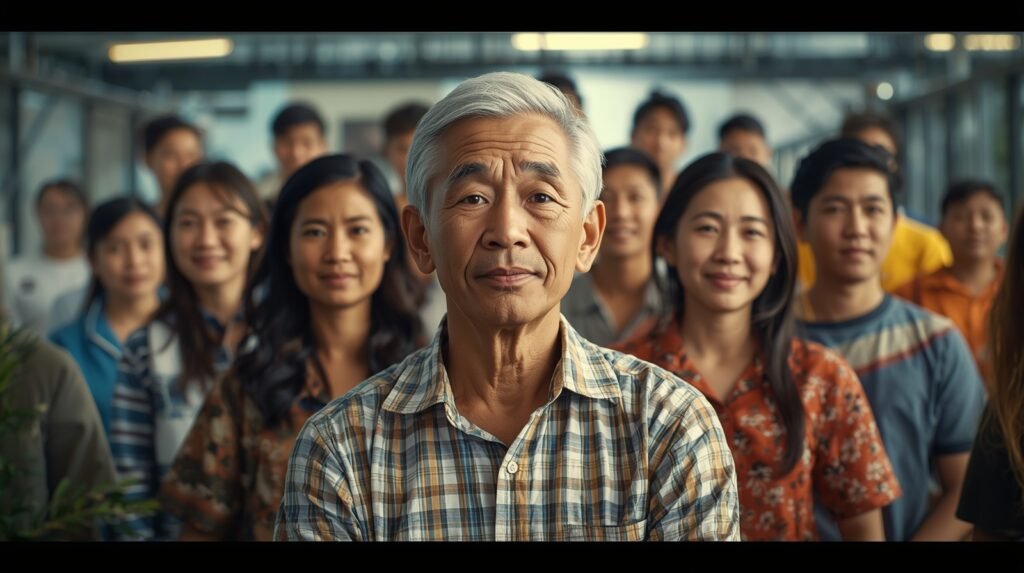
With rising life expectancy of filipino comes a growing senior population.
By 2050, nearly 20% of Filipinos will be aged 60 or older — a demographic shift that brings both opportunities and challenges.(seemore)
| Age Group | Population (2025 est.) | % of Total |
| Under 15 | 27 million | 24% |
| 15–59 | 65 million | 57% |
| 60+ | 18 million | 16% |
Programs like the Senior Citizens Act and social pensions aim to support this growing group, ensuring dignity and care for the elderly.
Lifestyle Diseases and the Filipino Lifespan
The greatest dangers to life span in the Philippines today are non-communicable diseases (NCDs):
- heart disease
- stroke
- diabetes
- cancer
- Prevention is better
Education, screening and advocacy of healthier lifestyles can prolong the living years of Filipinos by several active years.
Quick stats: 1 in 4 Filipino adults have high blood pressure, 1 in 10 have diabetes, and 40% do not exercise regularly. Doctors estimate that the national life expectancy of filipino can go up by 3-5 years if risk factors could be reduced by 20 percent.
Education and Economic Impact on Life Expectancy
Education equals life. The more educated a Filipino, the more likely he or she will:
- Earn more
- Get better healthcare
- Be healthier overall
The fact: in a 2024 study by the Department of Health, a college-educated Filipino will live 8 years longer than someone who finished only high school. If there will be a continued economic boom, rising salaries, and free access to health care across the board, we may yet be at an average of over 75 years of filipino by 2030.
Conclusion
The life expectancy of filipino has greatly improved, with current statistics revealing that the life expectancy of filipino increased from below 60 years in the 1960s to an average of almost 74 years. This trend not only reflects the increase in technology and medical capabilities but also indicates the strong resolve and hope of the Filipino people, embodied by their values of bayanihan (helping others in the community), adaptability, and resilience.
Over the decades, the country has overcome numerous challenges in terms of health care, including communicable diseases, typhoons, and other natural disasters. Today, more people are living longer, healthier, and more empowered than their predecessors because of improvements made in public health systems, education levels, nutrition awareness, and other supportive efforts by many organizations and individuals within the nation.
However, the journey to improve the quality of life for all Filipinos does not end here. The next step must be to take the years we have added to the lifespan and ensure that the years added will be quality and filled with dignity and joy. It should be about not just surviving, but living a full and thriving life, both for those who are elderly and for the younger generations who will be in a better position to have better quality of life due to increased education, health information, and resources available to them.
If the current trends in increasing the quality and number of living years for Filipinos continue, through strong health reform, improved living conditions, and an ongoing increased awareness of public health and wellness by the public, then it is very likely that the average expected Philippine life expectancy may reach more than 80 years by 2050. This will be a remarkable milestone for the nation, demonstrating the shift from being a developing health care system to a nation where all people can live in sustainable and healthy ways.
“To live long is good, but to live well is better,” speaks to how the journey will continue into the future for the life of the Filipino people.
Long life is a wonderful gift, and while living a long life is certainly a victory, the real win comes from how you will have lived those years with others in laughter, how you have made your family stronger through love for them, and how your happiness in being together has unified you as a community. The Filipino’s journey to an extended life will not only add hours and days to one’s life but also create memories and experiences that add to the quality of each hour and day lived.
As we look to the future of the Filipino’s journey to longevity, we see science continuing to advance and people growing through new experiences and through each other; however, we can also be assured that the Filipino heart is still the biggest contributor to a full, long, and productive life because of the heart’s resiliency, joy, and hope. When we think of the road ahead for Filipinos towards a long life, we see a future where the Filipino’s quality of life will improve along with the quantity of years. The legacy will be one of health, happiness, and enduring strength for generations to come.


