 Skip to content

Longevity goes far beyond adding years to your life. For British professionals striving to stay energetic and productive, the real challenge is maintaining vitality and wellness as you age. Although many believe family history is everything, research shows genetics account for only about 25 percent of human lifespan variation, making your daily health decisions the true driver. Discover how personalized nutrition and smart lifestyle choices can redefine your aging story and empower better health for years to come.
Table of Contents
- Longevity Defined And Common Myths
- Dietary Patterns Linked To Long Life
- Cellular Mechanisms Driven By Nutrition
- Personalizing Longevity Nutrition Plans
- Risks And Mistakes In Anti-Aging Diets
Key Takeaways
| Point | Details |
|---|---|
| Genetics vs. Lifestyle | Genetics contribute about 25% to longevity, while lifestyle choices account for around 75%. Focus on personal health decisions for better outcomes. |
| Dietary Patterns Matter | Consuming nutrient-dense, predominantly plant-based diets significantly impacts longevity and quality of life. Aim for diverse, whole foods to optimize health. |
| Personalized Nutrition | Customizing dietary strategies based on individual biological factors can enhance health outcomes as nutrient responses vary greatly among individuals. |
| Avoid Common Dietary Mistakes | Extreme diets and over-supplementation can damage health; seek balanced nutrition that meets age-related needs. Consulting professionals is recommended for personalized guidance. |
Longevity Defined and Common Myths
Longevity represents more than simply living a long time – it encompasses maintaining vitality, health, and quality of life throughout aging. While many people imagine longevity as reaching extreme old age, scientific understanding reveals a complex interplay of genetic and lifestyle factors that determine how we age.
Genetic research demonstrates that human lifespan variation emerges from multiple influences, with genetics accounting for approximately 25 percent of potential lifespan outcomes. This means lifestyle choices play a dramatically larger role in determining how long and how well we live. Contrary to popular belief, longevity is not predetermined by family history alone but significantly shaped by personal health decisions.
Here’s how genetics and lifestyle contribute differently to longevity:
| Factor | Contribution to Lifespan | Key Impact |
|---|---|---|
| Genetics | About 25% | Sets baseline longevity potential |
| Lifestyle | About 75% | Modifies health span and quality |
| Social Environment | Variable | Shapes daily habits and stress |
| Medical Access | Supportive | Can optimize but not guarantee outcomes |
Common myths about longevity persist despite scientific evidence. Many people believe that exceptional longevity requires exceptional wealth or access to advanced medical treatments. However, studies of centenarian populations worldwide reveal that consistent healthy habits matter far more than income or medical interventions. These populations consistently demonstrate common behaviors: moderate physical activity, plant-based diets, strong social connections, stress management, and purposeful living.
Pro Tip: Track your daily habits across nutrition, exercise, sleep, and stress management to progressively optimize your personal longevity potential.
Dietary Patterns Linked to Long Life
Dietary choices represent one of the most powerful levers for influencing long-term health and longevity. Research consistently demonstrates that healthy dietary patterns significantly impact lifespan, with certain nutritional approaches offering remarkable benefits in extending both life expectancy and quality of life.
Comprehensive studies highlight specific nutritional strategies that promote longevity. A nutrient-dense diet emphasizing whole grains, vegetables, fruits, nuts, and omega-3 fatty acids emerges as a critical foundation. This approach involves consuming a diverse range of plant-based foods while strategically limiting processed meats, added sugars, and saturated fats. The goal is not just caloric intake, but nutritional quality that supports cellular health and reduces chronic disease risk.

Some populations worldwide, known as “Blue Zones,” demonstrate extraordinary longevity through consistent dietary patterns. These regions share common nutritional characteristics: predominantly plant-based diets, moderate protein consumption, minimal processed foods, and an emphasis on whole, unrefined ingredients. Their dietary approaches reveal that longevity is less about restrictive eating and more about balanced, mindful nutrition that provides comprehensive cellular support.
This table highlights dietary patterns and their main benefits for longevity:
| Dietary Pattern | Typical Foods | Longevity Benefit |
|---|---|---|
| Mediterranean | Olive oil, fish, vegetables | Reduces heart disease risk |
| Blue Zones | Beans, whole grains, greens | Enhances cellular health |
| DASH | Low-fat dairy, nuts, fruits | Supports blood pressure control |
| Plant-Based | Legumes, nuts, fruits | Lowers chronic disease risk |
Pro Tip: Create a weekly meal plan that incorporates at least five different colored vegetables to ensure broad nutritional diversity and maximize potential longevity benefits.
Cellular Mechanisms Driven by Nutrition
Nutrition represents a powerful intervention point for modulating cellular health and aging processes. Molecular pathways respond dynamically to nutritional inputs, revealing intricate connections between diet and cellular function that extend far beyond basic caloric requirements.
At the cellular level, nutritional components interact with complex biological systems, influencing gene expression, metabolic efficiency, and inflammatory responses. Specific nutrients can trigger epigenetic modifications, potentially altering cellular aging trajectories. Antioxidants, for instance, combat oxidative stress by neutralizing free radicals, while omega-3 fatty acids help regulate inflammatory signaling pathways that directly impact cellular longevity and resilience.
Personalized nutrition research is uncovering how individual biological variations create unique dietary responses. This emerging field suggests that nutritional interventions are not one-size-fits-all, but instead require nuanced approaches that consider genetic predispositions, microbiome composition, and metabolic characteristics. By understanding these individual differences, researchers can develop targeted nutritional strategies that optimize cellular health and potentially slow aging mechanisms.
Pro Tip: Incorporate a diverse range of colorful, nutrient-dense foods to provide comprehensive cellular support and enhance your body’s natural repair mechanisms.
Personalizing Longevity Nutrition Plans
Nutrition is not a one-size-fits-all solution, and emerging research confirms that personalized dietary strategies optimize health outcomes. Individual biological variations significantly impact how our bodies process and respond to different nutrients, making customized nutrition plans critical for maximizing longevity potential.
Advanced precision nutrition approaches integrate multiple data points to create comprehensive dietary recommendations. These include genetic profiling, metabolic assessments, microbiome analysis, and lifestyle factors. By understanding an individual’s unique biological blueprint, nutritionists can design targeted interventions that address specific metabolic needs, potential nutritional deficiencies, and genetic predispositions that influence aging and disease risk.
Cultural preferences and personal experiences also play a crucial role in developing sustainable nutrition plans. Effective personalization goes beyond scientific metrics to incorporate individual food preferences, cooking traditions, and lifestyle constraints. This holistic approach ensures that dietary recommendations are not just scientifically sound but also practical and enjoyable, increasing the likelihood of long-term adherence and successful health optimization.
Pro Tip: Conduct a comprehensive health assessment that includes genetic testing, metabolic screening, and detailed nutritional history to create a truly personalized longevity nutrition strategy.
Risks and Mistakes in Anti-Aging Diets
Anti-aging diet strategies often fall prey to dangerous misconceptions that can compromise long-term health. Nutritional needs change dramatically with aging, requiring careful, informed approaches that go beyond simplistic calorie restriction or trendy dietary fads.
Common mistakes include radical dietary elimination, over-supplementation, and ignoring individual metabolic requirements. Many individuals mistakenly believe that extreme diets or drastic calorie reductions will slow aging, when in fact these approaches can accelerate cellular damage, weaken immune function, and disrupt essential metabolic processes. Proper anti-aging nutrition demands a balanced approach that provides adequate protein, essential nutrients, and supports overall metabolic health.
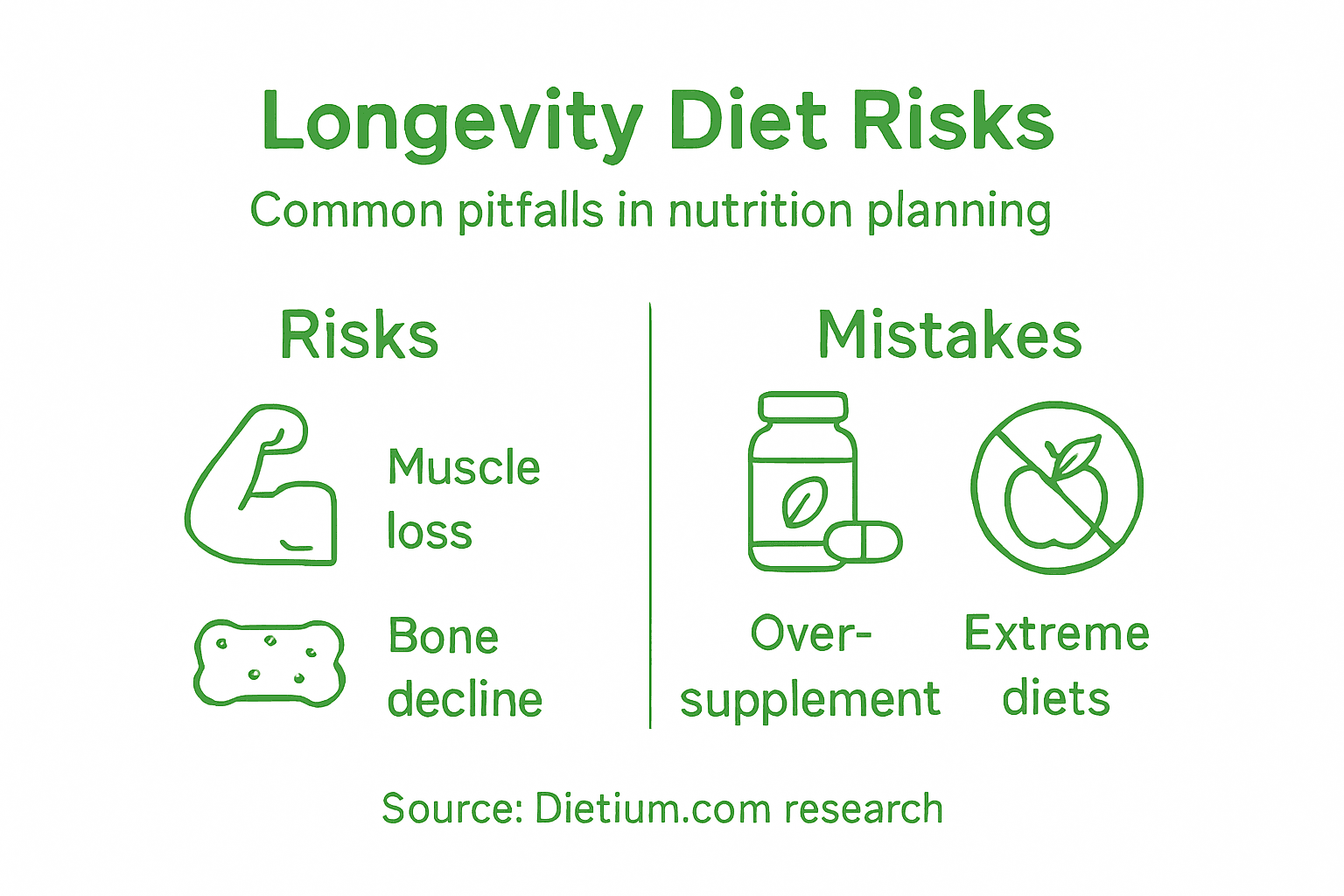
Nutritional risks become more pronounced as we age, with potential consequences ranging from muscle loss and reduced bone density to compromised immune function. Professional guidance becomes crucial in navigating these complex nutritional landscapes. Effective anti-aging diets must account for individual variations in metabolism, existing health conditions, and specific nutritional requirements that change throughout different life stages.
Pro Tip: Consult a registered dietitian to develop a personalized nutrition plan that addresses your specific age-related nutritional needs and health goals.
Unlock Your Personalized Path to Longevity and Vitality
Understanding that longevity depends heavily on informed nutrition and lifestyle choices is the first step toward a healthier future. The article emphasizes how genetics account for only a fraction of lifespan while nutrition and personalized dietary strategies play a major role in optimizing cellular health and slowing aging. If you are motivated by the goal to improve your quality of life through evidence-based nutrition, avoiding common anti-aging diet mistakes, and embracing tailored meal plans, then you need tools designed specifically for your unique needs.
At Dietium.com, our innovative platform empowers you to transform these scientific insights into daily action. With the Recipians app, you gain access to custom meal plans, precise nutritional tracking, and AI-powered calculators for a comprehensive approach to managing your body’s metrics like BMI, calorie needs, and body fat. Our seamless device integration and expert video consultations help you stay on track every step of the way. Start your journey now with personalized nutrition guidance that adapts to your biology and lifestyle. Why wait to embrace a vibrant longer life Join Dietium today and experience a proven, data-driven path to vitality you can trust.
Frequently Asked Questions
What is longevity, and how is it defined?
Longevity encompasses not just living a long life but also maintaining vitality, health, and quality of life as one ages. It involves a combination of genetic and lifestyle factors that influence how we age.
How much do genetics influence longevity compared to lifestyle?
Genetics account for about 25% of lifespan outcomes, while lifestyle choices contribute approximately 75%. This means personal health decisions play a much larger role in determining how long and how well we live.
What dietary patterns are linked to increased longevity?
Dietary patterns associated with longevity include the Mediterranean diet (rich in olive oil and fish), the diets of Blue Zone populations (focused on beans and whole grains), and plant-based diets. These diets promote cellular health and reduce chronic disease risk.
How can personalized nutrition plans enhance longevity?
Personalized nutrition plans take into account individual biological variations, metabolic needs, and genetic factors. By tailoring dietary strategies to a person’s unique health profile, these plans can optimize health outcomes and enhance longevity potential.
Recommended
- Understanding Healthy Aging Tips for a Fulfilling Life – Dietium
- Predict your Life Expectancy – AI Death Calculator
- Evidence-Based Nutrition: Transforming Personal Health Choices – Dietium
- elderly people exercise,7 Powerful Exercises for Elderly People Over 60
- Hair Nutrition Food: Boosting Growth and Vitality | MyHair


