 Skip to content

Every workout session leaves you questioning whether chasing lower numbers on the scale actually delivers the results you want. For tech-savvy fitness enthusiasts, understanding body recomposition shifts the focus from simple weight loss toward smarter strategies that foster lean muscle and melt fat without sacrificing progress. This guide explains why recomposition matters for metabolic health, highlighting proven methods to reshape your physique using personalized nutrition and data-driven training.
Table of Contents
- What Is Body Recomposition And Why It Matters
- How Body Recomposition Differs From Weight Loss
- Key Methods For Achieving Recomposition Results
- Nutrition And Exercise Strategies That Work
- Risks, Limitations, And Common Mistakes
- Alternatives To Body Recomposition Approaches
Key Takeaways
| Point | Details |
|---|---|
| Body Recomposition Focuses on Composition | It prioritizes fat loss while preserving or increasing muscle mass, leading to enhanced metabolic health. |
| Nutritional and Exercise Strategies are Key | Implementing high-protein diets and progressive resistance training is essential for effective body recomposition. |
| Avoid Common Mistakes | Individuals should refrain from aggressive calorie deficits and ensure adequate protein intake to support muscle growth. |
| Consider Holistic Alternatives | Exploring diverse wellness practices such as yoga or Pilates can offer sustainable approaches to fitness beyond traditional methods. |
What Is Body Recomposition and Why It Matters
Body recomposition represents a transformative approach to fitness that goes beyond traditional weight loss. Unlike conventional dieting strategies that focus solely on reducing pounds, body recomposition targets metabolic health by simultaneously decreasing body fat while maintaining or increasing lean muscle mass.
At its core, body recomposition is about changing your body’s composition rather than just shrinking its overall size. This means you could potentially weigh the same on the scale but look dramatically different – with less fat and more muscle definition. The process involves strategic nutrition and targeted exercise designed to preserve muscle tissue while creating a metabolic environment that promotes fat burning.
The significance of body recomposition extends far beyond aesthetic goals. Research indicates this approach offers multiple health benefits:
- Improves metabolic rate by increasing muscle mass
- Enhances insulin sensitivity
- Supports long-term weight management
- Increases overall functional strength
- Promotes sustainable body transformation
Muscle tissue is metabolically active, meaning it burns more calories even at rest compared to fat tissue. By prioritizing muscle preservation and growth, body recomposition helps create a more efficient metabolic engine. Scientific studies have demonstrated that this approach can be particularly effective for individuals seeking sustainable body changes across diverse populations.
Pro tip: Track your body composition through measurements like body fat percentage and muscle mass instead of relying solely on weight scale readings.
How Body Recomposition Differs From Weight Loss
Traditional weight loss and body recomposition might seem similar, but they represent fundamentally different approaches to transforming your physique. Weight loss strategies primarily focus on reducing total body weight, often without considering the composition of that weight loss – which can include muscle, fat, and water.
Body recomposition takes a more nuanced approach. Instead of simply trying to make the number on the scale decrease, this method targets specific body tissues. The goal is to reduce body fat while simultaneously preserving or increasing muscle mass. This means you could potentially maintain the same overall weight but dramatically change how your body looks and functions.
Key differences between weight loss and body recomposition include:
- Weight loss: Prioritizes total weight reduction
- Body recomposition: Focuses on fat loss and muscle preservation
- Weight loss: Can result in muscle tissue breakdown
- Body recomposition: Actively prevents muscle loss
- Weight loss: Often leads to metabolic slowdown
- Body recomposition: Maintains or increases metabolic rate
Metabolic impact is another critical distinguishing factor. Scientific research demonstrates that body recomposition approaches can more effectively maintain muscle tissue, which is metabolically active and burns more calories at rest compared to fat tissue. This means individuals practicing body recomposition can potentially achieve a more efficient metabolism and long-term sustainable body transformation.
Here’s a concise comparison showing how body recomposition differs from traditional weight loss approaches:
| Aspect | Body Recomposition | Weight Loss |
|---|---|---|
| Focus | Fat loss & muscle gain | Total weight reduction |
| Scale Changes | Weight may stay similar | Scale weight declines |
| Metabolic Rate | Maintains or increases | Often slows down |
| Body Appearance | Improved definition | May lose muscle tone |
Pro tip: Invest in body composition measurements like skinfold calipers or bioelectrical impedance to track your progress more accurately than traditional weight scales.
Key Methods for Achieving Recomposition Results
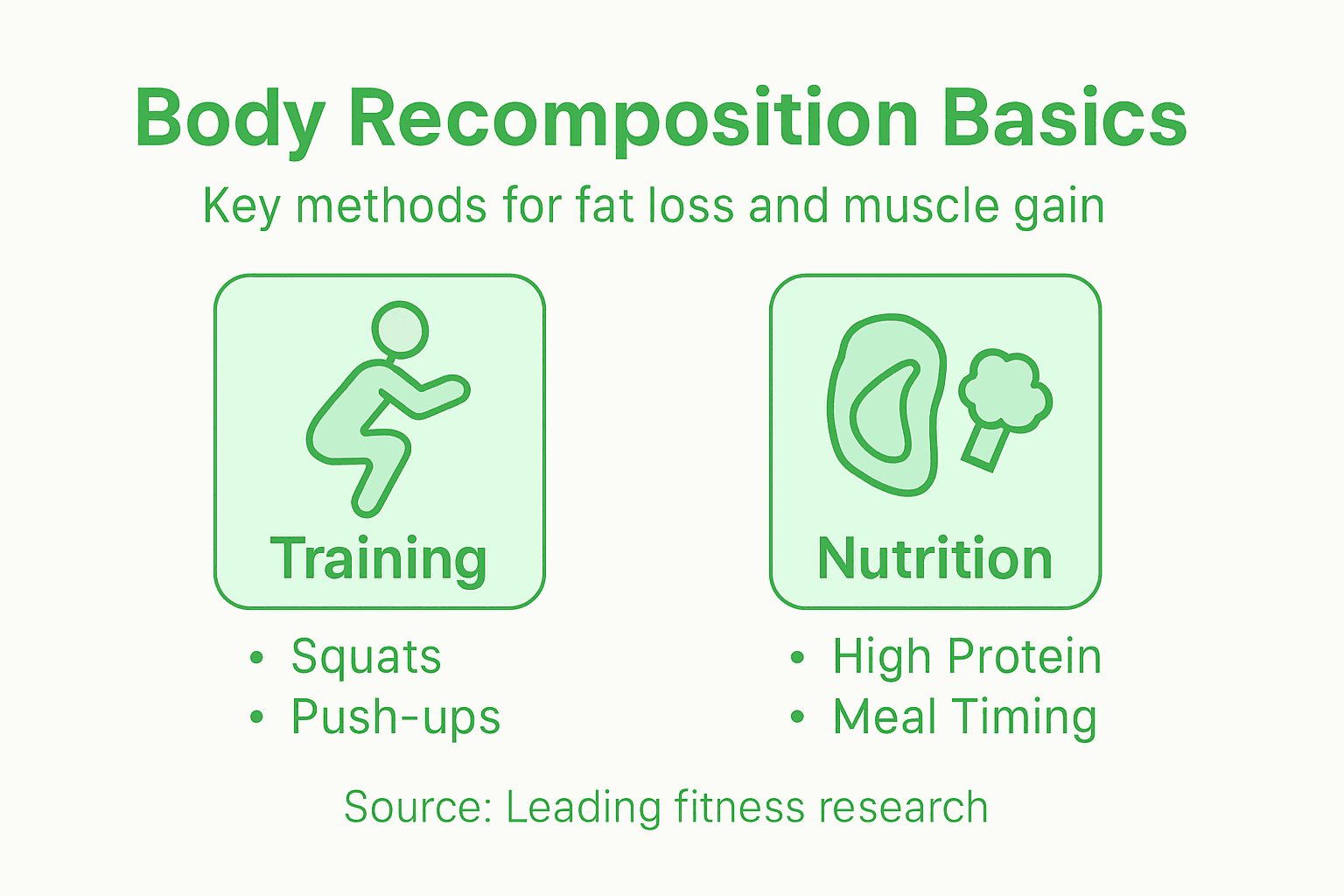
Resistance training forms the cornerstone of successful body recomposition, providing the critical stimulus for muscle preservation and growth. Strategic training approaches focus on progressive overload, which means systematically increasing weight, frequency, or volume of exercises to continually challenge muscle groups and prevent adaptation plateaus.

Nutritional strategies play an equally crucial role in transforming body composition. Dietary interventions involving high-protein intake and strategic caloric management are essential. The goal is to create a slight caloric deficit while maintaining sufficient protein consumption to support muscle protein synthesis and prevent muscle breakdown.
Key methods for achieving body recomposition include:
- Implement progressive resistance training
- Focus on compound movements like squats and deadlifts
- Consume adequate protein (1.6-2.2 grams per kilogram of body weight)
- Create a moderate caloric deficit (10-20% below maintenance)
- Prioritize strength training over cardio
- Track body composition, not just scale weight
Nutrition timing also plays a significant role in body recomposition. Consuming protein-rich meals around workout periods helps maximize muscle protein synthesis and supports recovery. This approach ensures that the body has the necessary nutrients to rebuild and strengthen muscle tissue while simultaneously managing fat loss.
Pro tip: Consider working with a nutrition professional who can help design a personalized body recomposition plan tailored to your specific metabolic needs and fitness goals.
Nutrition and Exercise Strategies That Work
Molecular-level exercise responses reveal complex interactions between nutrition, muscle growth, and metabolic adaptation. Successful body recomposition requires a strategic approach that synchronizes workout intensity with precise nutritional support, ensuring your body has exactly what it needs to transform simultaneously.
Resistance training remains the primary stimulus for muscle preservation and growth. The key is implementing progressive overload techniques that continuously challenge muscle groups while maintaining proper form and technique. This means gradually increasing weight, repetitions, or exercise complexity to prevent plateaus and stimulate ongoing muscular development.
Critical strategies for effective body recomposition include:
- Consume 1.6-2.2 grams of protein per kilogram of body weight
- Design resistance training programs targeting major muscle groups
- Implement periodization in workout routines
- Maintain a moderate caloric deficit (10-20% below maintenance)
- Use compound movements like squats, deadlifts, and bench presses
- Track body composition metrics monthly
- Consider strategic supplementation like creatine monohydrate
Nutritional timing plays a pivotal role in maximizing body recomposition results. High-protein dietary interventions combined with strategic calorie management can significantly enhance muscle protein synthesis while promoting fat loss. Consuming protein-rich meals around workout periods helps optimize recovery and muscle growth potential.
Pro tip: Invest in a body composition scale or periodic professional measurements to track your progress more accurately than traditional weight scales.
The following table summarizes nutrition and exercise strategies for effective body recomposition:
| Component | Key Strategy | Main Benefit |
|---|---|---|
| Protein Intake | 1.6-2.2 g/kg body weight | Supports muscle building |
| Resistance Training | Major muscle groups, progressive overload | Increases strength, preserves muscle |
| Caloric Deficit | 10-20% below maintenance | Promotes steady fat loss |
| Workout Nutrition | Protein-rich meals around workouts | Enhances muscle recovery |
Risks, Limitations, and Common Mistakes
Body recomposition challenges stem from complex physiological limitations and common misconceptions about muscle growth and fat loss. Individuals often underestimate the intricate balance required between nutrition, exercise intensity, and recovery, leading to potential setbacks in their transformation journey.
The natural rate of muscle growth represents a significant limitation, with most individuals capable of gaining only 250-500 grams of muscle per week. Attempting to accelerate this process through excessive calorie consumption or extreme training protocols can backfire, potentially resulting in unwanted fat gain instead of lean muscle development.
Common mistakes in body recomposition include:
- Implementing overly aggressive calorie deficits
- Neglecting protein intake requirements
- Ignoring recovery and rest periods
- Expecting unrealistic rapid transformations
- Misunderstanding energy balance principles
- Inconsistent training and nutrition approaches
- Failing to track body composition metrics
Hormonal factors play a critical role in body recomposition success. Thermodynamic principles underlying metabolic processes demonstrate that simply reducing calories or increasing exercise intensity does not guarantee optimal results. Individual variations in metabolism, testosterone levels, and genetic predispositions significantly impact the body’s ability to simultaneously build muscle and burn fat.
Pro tip: Consult a professional nutritionist or certified fitness trainer to develop a personalized body recomposition strategy that accounts for your unique physiological characteristics.
Alternatives to Body Recomposition Approaches
While body recomposition represents a targeted fitness strategy, individuals seeking holistic wellness have multiple alternative approaches to physical transformation. Mind and body practices offer comprehensive alternatives that focus on overall health and performance beyond traditional muscle-building and fat-loss techniques.
Alternative approaches provide nuanced pathways to improve physical fitness and mental well-being. These methods emphasize integrated wellness strategies that differ from the intense, metrics-driven body recomposition model. Instead of focusing solely on muscle mass and body fat percentages, these alternatives prioritize comprehensive health optimization through diverse techniques.
Different wellness approaches include:
- Yoga for flexibility and strength
- Tai chi for balance and stress reduction
- Pilates for core strengthening
- Acupuncture for recovery and energy flow
- Mindfulness meditation for stress management
- Low-impact resistance training
- Swimming and water-based exercises
- Functional movement training
Holistic fitness practices offer more gentle, sustainable approaches to physical transformation. They recognize that wellness extends beyond muscle composition and weight metrics, incorporating mental health, stress reduction, and overall functional movement capabilities. These alternatives can complement or serve as potential substitutes for traditional body recomposition strategies, particularly for individuals with different physical capabilities or wellness goals.
Pro tip: Explore multiple fitness approaches and listen to your body to find the most sustainable and enjoyable wellness strategy for your unique needs.
Achieve Your Body Recomposition Goals with Personalized Support
Understanding body recomposition means knowing that success depends on balancing fat loss with muscle gain while maintaining metabolic health. The challenge lies in tracking true progress beyond the scale by focusing on metrics like muscle mass and body fat percentage. Many struggle with designing effective resistance training, managing protein intake, and calibrating calorie deficits to avoid common pitfalls such as muscle loss or metabolic slowdown.
At Dietium, we provide tailored solutions that align with the scientific principles outlined in this article. Our AI-powered tools help you monitor body composition changes accurately and create custom meal plans and fitness routines designed to support progressive overload and optimal protein consumption. Explore how our Recipians app delivers personalized nutrition and workout suggestions to keep you motivated and on track for sustainable transformation. If you want to transform your body efficiently and safely, start today by visiting Dietium nutrition and fitness tools and empower your journey with data-driven guidance.
Take control of your transformation now and experience a smarter way to recomposition that truly matches your unique needs.
Frequently Asked Questions
What is body recomposition?
Body recomposition is a fitness approach that focuses on simultaneously decreasing body fat while maintaining or increasing lean muscle mass. It emphasizes changing your body composition rather than just losing weight.
How does body recomposition differ from traditional weight loss?
Unlike traditional weight loss, which prioritizes total weight reduction, body recomposition focuses on fat loss while preserving or increasing muscle mass. This can lead to a more toned appearance without significant changes on the scale.
What are effective methods for achieving body recomposition results?
Key methods include incorporating resistance training, maintaining a high-protein diet, creating a moderate caloric deficit, and focusing on compound exercises. Tracking body composition metrics is also essential for monitoring progress.
What are common mistakes people make when trying to achieve body recomposition?
Common mistakes include implementing overly aggressive calorie deficits, neglecting protein intake, ignoring recovery, expecting rapid results, and failing to track body composition. Understanding energy balance is crucial for success.


